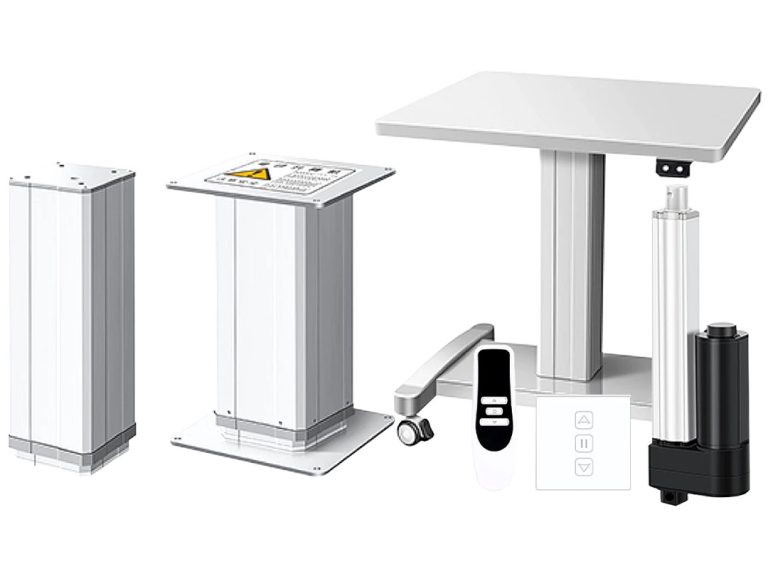
Verwirrt zwischen 2-stufigen und 3-stufigen Hebesäulen? Erfahren Sie die wichtigsten Unterschiede in der Höhenverstellung, Stabilität und Kosten, um den richtigen Motor für Ihren Stehschreibtisch auszuwählen.
The choice between a 2-stage and 3-stage lifting column depends on lifting height, stability, installation space, load capacity, and the user experience required by the equipment. A 2-stage column is often simpler and cost-effective, while a 3-stage column can provide a wider height range and more compact retracted size.
Inhalt
Verständnis von elektrischen Hebesäulen
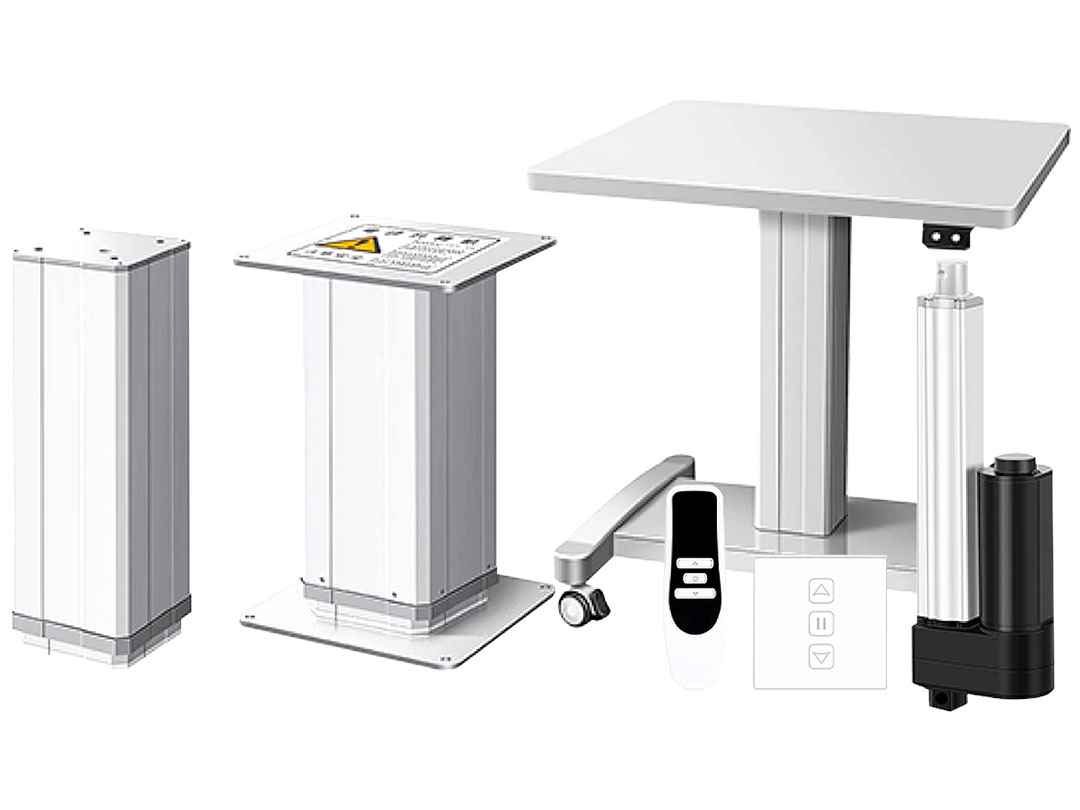
Elektrische Hebesäulen sind das Rückgrat jedes höhenverstellbaren Stehschreibtisches. Diese anspruchsvollen Mechanismen verwenden Elektromotoren, um die Schreibtischoberfläche anzuheben und abzusenken, sodass Benutzer während des Arbeitstags zwischen Sitz- und Stehpositionen wechseln können. Die „Stufen“ beziehen sich auf die Anzahl der teleskopischen Segmente, die sich aus- und einfahren, um die gewünschte Höhenverstellung zu erreichen.
Der Unterschied zwischen 2-stufigen und 3-stufigen Säulen ist nicht nur eine Frage der Komplexität - er beeinflusst alles von der minimalen Höhenfähigkeit bis zum maximalen Hubbereich und macht diese Entscheidung entscheidend für ergonomischen Komfort und Zugänglichkeit.
Was ist eine 2-stufige Hebesäule?
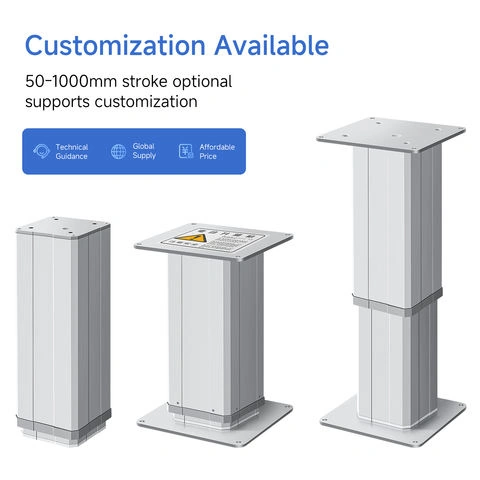
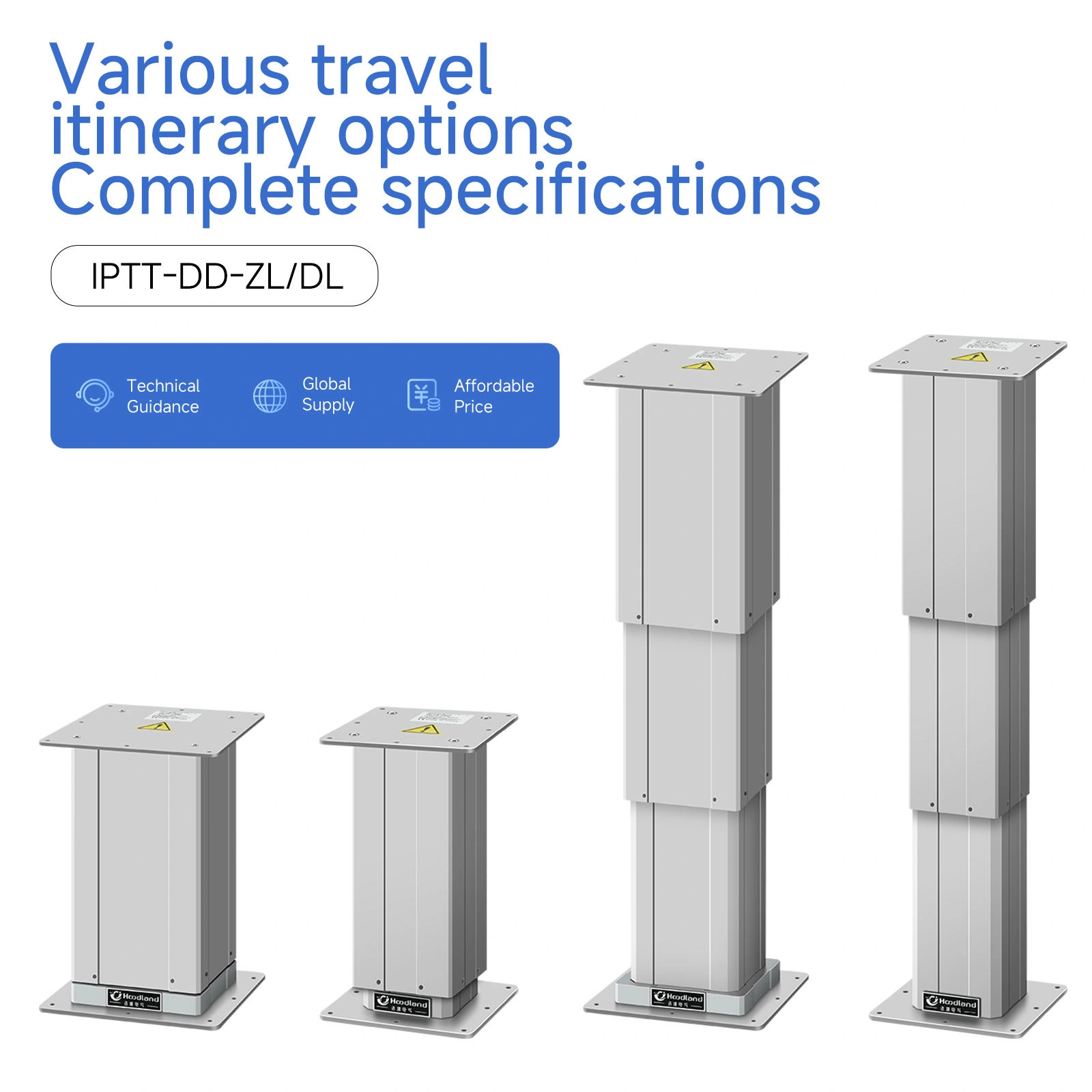
Eine 2-stufige Hebesäule besteht aus zwei teleskopischen Segmenten, die innerhalb voneinander gleiten, um die Höhe anzupassen. Im ausgefahrenen Zustand tritt das innere Segment aus dem äußeren Gehäuse heraus, um die Hebebewegung zu erzeugen. Dieses Design ist seit Jahren der traditionelle Standard in der Stehschreibtischbranche.
Eigenschaften von 2-stufigen Säulen
2-stufige Säulen bieten typischerweise einen moderaten Höhenverstellungsbereich, der normalerweise etwa 25-30 Zentimeter (10-12 Zoll) umfasst. Die einfachere Konstruktion führt oft zu einem budgetfreundlicheren Preis, wodurch diese Säulen bei Einstiegspreis- und mittleren Stehschreibtischrahmen beliebt sind.
The mechanical simplicity of 2-stage designs generally means fewer potential points of failure and easier maintenance. For many users, especially those with standard height requirements and tighter budgets, 2-stage columns provide reliable performance without unnecessary complexity.
Was ist eine 3-stufige Hebesäule?
A 3-stage lifting column adds an additional telescopic segment to the design, creating a three-tiered extension mechanism. This extra stage allows for more dramatic height adjustments while maintaining a compact retracted height—similar to how a tripod collapses into a smaller form factor when fully retracted.
Vorteile von 3-stufigen Säulen
Lower Initial Height: One of the most significant advantages of 3-stage columns is their ability to achieve a lower minimum height. This is particularly important for wheelchair users who require the desk to be at a lower position to comfortably roll beneath. It also benefits spaces with low ceiling clearance or architectural constraints.
Higher Maximum Lift Range: A 3-stage design can provide a different retracted and extended height range than a 2-stage design, depending on the selected column. Confirm the actual desk geometry, travel, minimum and maximum height, and user or accessibility requirements for the finished workstation.
Smoother Extension: With multiple stages extending gradually, users often report a smoother and more controlled lifting experience. The progressive extension can feel more premium and engineered, though this is somewhat subjective.
Our IPY75 single column lift desk and IPY70 mobile stand-up desk showcase these 3-stage advantages, delivering exceptional height range flexibility for diverse applications.
Direkter Vergleich: 2-stufig vs. 3-stufig
Funktion
2-Stage Column
3-Stage Column
Minimum Height
Higher (typically 70-75cm)
Lower (typically 60-65cm)
Maximum Height
Limited (typically 115-120cm)
Higher (typically 125-135cm)
Höhenbereich
25-30cm (10-12 inches)
40-50cm (16-20 inches)
Complexity
Simpler mechanism
More complex engineering
Kosten
Generally lower
Generally higher
Smoothness
Good
Ausgezeichnet
Accessibility
Begrenzt
Ausgezeichnet
Welche Säule ist die richtige für Ihre Anwendung?
Wählen Sie eine 2-stufige Säule, wenn:
Budget is a primary concern: 2-stage columns typically cost less, making them excellent for cost-conscious projects or bulk deployments
Standard height requirements: If your users fall within average height ranges and your space has standard ceiling clearances
Simplicity is preferred: For applications where minimal complexity translates to easier maintenance and troubleshooting
Fixed configurations: When designing single-position standing desks without extreme height variation needs
Wählen Sie eine 3-stufige Säule, wenn:
Accessibility is paramount: Wheelchair users require lower desk heights to roll beneath comfortably
Tall users are your audience: The extended height range accommodates users over 6 feet tall more effectively
Variable applications: When the same desk frame might be used in different settings with varying height requirements
Premium positioning: Higher-end 3-stage columns can differentiate your product offering as a premium solution
Echte Anwendungen
Gesundheits- und Zugänglichkeitsumgebungen
For healthcare or accessibility-related workstations, stage count alone does not establish suitability or ADA compliance. Define minimum and maximum surface height, clearance, approach space, controls, stability, load, and the applicable accessibility requirements for the finished workstation, then evaluate the selected column and desk geometry against them.
Professionelle Büroumgebungen
Many modern offices now accommodate diverse workforce demographics, including both shorter and taller employees. A 3-stage standing desk frame provides the flexibility to serve this diverse population without requiring multiple desk configurations. Whether the additional height range is useful depends on the user population, workstation dimensions, and actual operating range required.
Homeoffice und Wohnnutzung
Heimbüros stellen oft besondere Herausforderungen dar – unterschiedliche Deckenhöhen, eingeschränkte Möglichkeiten zur Möbelplatzierung und Nutzer unterschiedlicher Körpergröße, die sich denselben Raum teilen. Dreistufige elektrische Hubsäulen lösen diese Gegebenheiten elegant und erfreuen sich daher zunehmender Beliebtheit im privaten Bereich.
Die Entscheidung treffen
Die Wahl zwischen 2-stufigen und 3-stufigen Hebesäulen hängt letztendlich von Ihren spezifischen Anforderungen und Benutzerdemografien ab. Berücksichtigen Sie diese Fragen:
u003cstrongu003eWho are your primary users?u003c/strongu003e
If wheelchair accessibility is a requirement, compare the finished desk’s height range, clearances, controls, stability, and applicable accessibility requirements; stage count alone does not establish accessibility.
u003cstrongu003eWhat is your height range requirement?u003c/strongu003e
Confirm the required minimum and maximum desk height and the selected column’s travel for the intended users; stage count alone is not sufficient.
u003cstrongu003eWhat is your budget constraint?u003c/strongu003e
Compare 2-stage and 3-stage quotations against the required height range, load, speed, controls, quantities, and service requirements.
u003cstrongu003eHow important is smoothness of operation?u003c/strongu003e
3-stufige Säulen bieten oft ein verfeinertes Verlängerungsgefühl.
u003cstrongu003eWhat are your space constraints?u003c/strongu003e
Niedrigere Mindesthöhen von 3-stufigen Säulen helfen in engen Räumen.
Ist eine 3-stufige Hebesäule deutlich stabiler als eine 2-stufige?
Obwohl beide für Stabilität konstruiert sind, bieten 3-stufige Säulen in der Regel überlegene Steifigkeit bei maximalen Höhen aufgrund einer erhöhten Segmentüberlappung. Für Standard-Bürohöhen bietet eine hochwertige 2-stufige Säule jedoch ausgezeichnete Stabilität für typische Büroanwendungen.
Können 2-stufige Säulen kürzere Benutzer oder Kinder aufnehmen?
2-stage columns usually have a minimum height of u003cstrongu003e70-75cmu003c/strongu003e, which may be too high for children or shorter individuals. For a more inclusive height range (starting at u003cstrongu003e60-65cmu003c/strongu003e), a 3-stage column is the better choice.
Gibt es einen Unterschied in der Einstellungsgeschwindigkeit zwischen den beiden?
Adjustment speed is configuration-specific. Compare the exact 2-stage and 3-stage builds by motor, gearing, controller, load, travel, and specified speed under the relevant test conditions; do not assume a fixed percentage advantage from stage count alone.
Welche Säulenart ist kosteneffektiver für große Büroausstattungen?
A 2-stage column may be appropriate for some volume projects, but cost-effectiveness depends on required height range, load, speed, stability, controls, quantities, service requirements, and the selected supplier configuration.
Fazit
Sowohl 2-stufige als auch 3-stufige elektrische Hebesäulen haben ihren Platz im Markt für Stehschreibtische. Die 2-stufige Option bietet zuverlässige, kosteneffektive Leistung für Standardanwendungen, während 3-stufige Säulen wie unser IPY70 und IPY75 überlegene Flexibilität, Zugänglichkeit und einen erweiterten Höhenbereich bieten.
For manufacturers and businesses designing adjustable desks, the decision should align with target user needs. If the project requires a particular minimum or maximum height, travel, load, speed, stability, or control architecture, compare the exact 2-stage and 3-stage configurations against those requirements. Do not select by stage count or premium positioning alone.
Explore our range of lifting columns and electric lifting columns to compare candidate configurations for your standing desk frame requirements. We also offer comprehensive Stehschreibtischen und Rahmen, standing desk frame bases and legs Optionen, um Ihr Projekt abzuschließen.
Erhalten Sie Experteneinblicke in die industrielle Bewegungssteuerung
Die Auswahl des richtigen elektrischen linearen Aktuators oder Hebensäule ist entscheidend für die Leistung Ihres Projekts. Als professioneller Hersteller von Bewegungssteuerungen & Automatisierung, helfen unsere Ingenieure Ihnen, die Lastkapazität, den Hub, und die IP-Bewertungen basierend auf Ihrer spezifischen Anwendung anzupassen. Teilen Sie uns Ihre technischen Anforderungen für eine maßgeschneiderte Lösung mit.
ActuLift unterstützt End-to-End-Anpassungen, vom strukturellen Design und Hubparametern bis hin zu Branding und Gehäusefinishes, damit Sie eine starke Markenidentität aufbauen können.
Schnelle Reaktion & Prototyping
Wir verstehen die Bedeutung von Geschwindigkeit in der B2B-Beschaffung und nutzen optimierte Produktionsabläufe, um effiziente Antworten von der Mustentwicklung bis zur Serienlieferung sicherzustellen.
Quality Documentation & Traceability
Quality and traceability requirements vary by project. Ask ActuLift for the applicable inspection records, product specifications, drawings and available compliance documentation for the selected model and order.