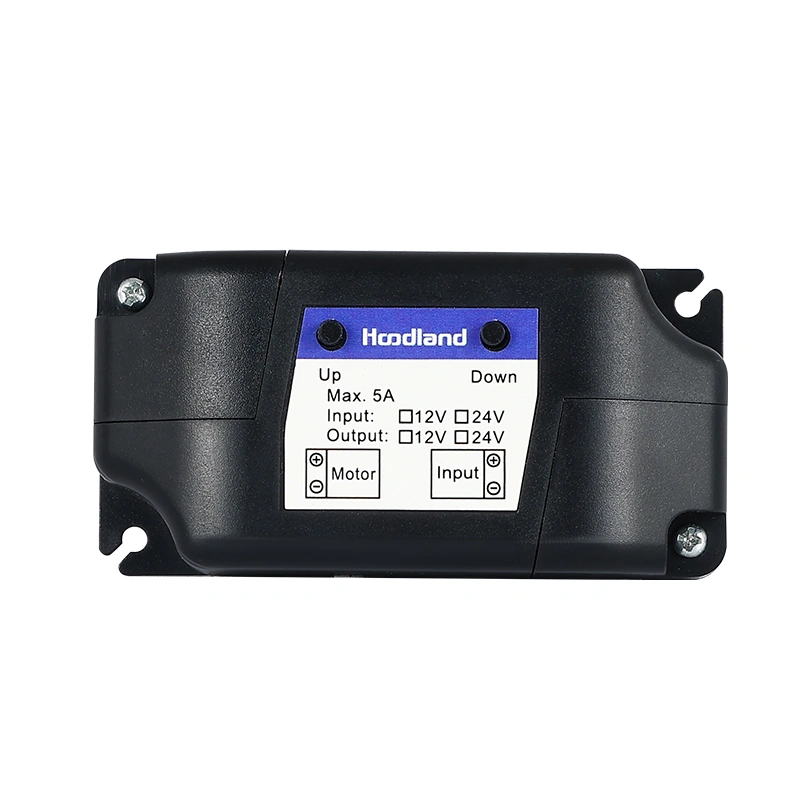
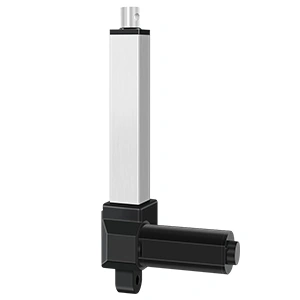
Overcurrent protection can be part of a linear-actuator electrical architecture when the motor, controller and load case require it. ActuLift currently references an optional “XB” current-limit feature, but no separate published XB specification was found on the site; confirm the exact implementation, threshold, response, reset behavior and protection scope for the selected actuator/order.
Comprensión de la protección contra límite de corriente (XB)
Dentro actuador lineal systems, high current can arise from stall, excessive load, binding, supply/control faults or wiring problems. The resulting risk depends on the motor, driver/controller, wiring, protection devices, duty cycle and complete machine design. If the fault investigation includes conductor identification or controller connections, review the 5-wire linear actuator wiring guide before changing wiring.
The XB option should be treated as a configuration-specific current-limit feature. Before using it in a design specification, request documentation for what is sensed, the threshold/tolerance, trip response, reset/recovery behavior, fault output if any, and the exact actuator/controller combinations covered.
¿Qué hace diferente la protección XB?
Do not assume XB is automatically resetting, PCB-integrated, solid-state, or faster than a fuse/breaker from this article alone. Compare the selected XB implementation with the required upstream fuse/breaker, motor-driver protection and machine-level fault handling using current product/order documentation.
Cómo funciona la protección contra sobrecorriente XB
Electronic current limiting can be implemented in several ways. For XB, confirm the actual sensing and switching architecture from the selected actuator/controller documentation rather than treating the generic examples below as product facts.
Detección y sensado de corriente
A current-limit implementation needs a defined current-sensing method, trip threshold, tolerance and response logic. Confirm those parameters for the selected XB configuration; do not assume a precision shunt/resistor or a factory-set value unless documented.
Response time is a design parameter that must be stated and tested for the selected implementation. Do not assume microsecond detection or a particular damage time from this article.
Mecanismo de desconexión instantánea
When a current threshold is exceeded, the selected protection architecture may limit, interrupt or otherwise alter motor drive. Confirm the actual XB trip behavior and switching device/driver architecture rather than assuming an instant disconnect or a specific MOSFET/IGBT implementation.
Potential objectives of an overcurrent-protection design can include:
- Motor protection: reduce exposure to excessive current when the implementation and threshold are correctly matched to the motor and load case
- Driver / wiring protection: coordinate current limiting with driver, wiring, fuse/breaker and supply ratings; current limiting does not automatically provide voltage-transient protection
- Fault-energy reduction: limit fault energy as one layer in the electrical safety design; it does not eliminate fire or machine-safety risk
- System coordination: verify how the actuator protection interacts with the controller, power supply and upstream protection; do not assume downstream equipment is automatically protected
Recuperación de energía reversible
The phrase “reverse power recovery” should not be interpreted as a universal self-reset function without documentation. Confirm whether the selected XB configuration latches, auto-resets, requires command reversal, requires a power cycle, or uses another recovery sequence.
After a trip, recovery behavior must be defined together with fault-clearing criteria and machine-level safety logic. Verify the actual selected configuration before designing an automatic restart path.
- Recovery method: document whether operator action, command reversal, reset or power cycling is required
- Repeat-trip behavior: confirm whether repeated trips are allowed, latched, timed or otherwise limited
- Safe restart: define when motion may resume at finished-system level; do not assume automatic restart is safe or enabled
Por qué la protección XB es importante para tus aplicaciones
Entornos de automatización industrial
Dentro automatización industrial configuraciones, los actuadores lineales operan con frecuencia bajo condiciones de carga variables. Actuadores lineales de duty pesado utilizados en equipos de fabricación a menudo enfrentan obstrucciones inesperadas o problemas de alineación que crean condiciones temporales de sobrecorriente.
In industrial automation, current limiting may help manage certain stall or overload conditions, but the benefit depends on threshold, trip curve, load, controller and machine logic. It does not guarantee avoidance of downtime or equipment damage.
Condiciones al aire libre y rigurosas
For outdoor or harsh environments, electrical protection must be evaluated together with temperature, vibration, moisture, corrosion, enclosure, connector and cable requirements. The environmental-protection actuator category does not prove XB availability or outdoor reliability for every configuration.
- Automatización de equipos agrícolas
- Puertas y barreras exteriores
- Sistemas de seguimiento solar
- Controles de embarcaciones marítimas
Aplicaciones críticas para la seguridad
For safety-related, emergency or care/regulated equipment, current limiting is only one possible electrical protection layer. The finished system requires hazard analysis, fault-response design, applicable standards/compliance work and validation; XB must not be described as assurance that electrical faults cannot compromise the function.
Integración del sistema de control
XB/controller integration is configuration-specific. Confirm compatible control boxes/controllers, whether a trip/status signal is exposed, its electrical/interface definition, and how the finished system handles that fault.
Especificaciones técnicas y consideraciones
Configuraciones de umbral de corriente
No independent public XB specification was found on the current site. For a selected actuator/order, request these parameters explicitly:
- Rated / normal current: selected actuator current under the stated load, speed, voltage and duty conditions
- Trip threshold: threshold, tolerance and any time/current characteristic for the selected XB configuration
- Response time: measured/guaranteed response conditions for the selected configuration, if specified
- Recovery / reset behavior: latch, auto-reset, reversal, power-cycle or other sequence, including any delay if applicable
Directrices de aplicación
Al especificar la protección XB para su aplicación, considere:
- Características de carga: Las cargas de alta inercia pueden causar corrientes de arranque breves que podrían activar la protección si no se consideran adecuadamente
- Ciclo de trabajo: Ciclos frecuentes pueden requerir ajustes en los parámetros de protección para evitar disparos innecesarios
- Factores ambientales: Las temperaturas extremas pueden afectar tanto la electrónica de protección como las características del motor
- Integración del sistema: define how the controller/machine handles an XB trip and the documented recovery behavior
Consejos para la resolución de problemas
If a selected actuator/order includes XB current limiting, diagnose trips or missing trips against the approved electrical diagram, actuator load/current data and XB configuration documentation:
Disparos frecuentes
Si su actuador se dispara con frecuencia, investigue estas causas comunes:
- Alineación mecánica: inspect alignment, side load, obstruction and the selected actuator’s maintenance/lubrication requirements
- Load / stall condition: compare actual static, dynamic and peak load with the selected actuator’s approved load/current data
- Supply / voltage drop: measure voltage at the actuator/controller under load and verify supply, wiring and connector losses against the documented range
- Wiring / connector issues: inspect polarity, resistance, loose/corroded connections, cable damage and controller interfaces
Protección no activa
If expected current limiting does not occur, stop testing until the selected configuration and protection documentation are verified:
- Confirm that XB is actually included in the ordered actuator/controller configuration and identify its documented threshold/response
- Inspect the documented protection/controller circuit and wiring only according to the service procedure; do not assume a PCB-level architecture
- Verify supply, grounding/return path, controller wiring and test method against the approved electrical diagram
Conclusión
XB should be treated as an optional, configuration-specific current-limit function whose electrical behavior must be confirmed for the selected actuator/controller. Define the required trip threshold, tolerance, response, reset/recovery and coordination with fuse/breaker, driver and machine-level fault logic before approval.
Do not infer reduced maintenance cost, longer equipment life, higher reliability or safety-critical suitability from the XB option name alone. Validate the complete electrical/mechanical fault response under representative load, supply and environmental conditions.
For an XB requirement, provide the selected actuator/model, supply, rated/peak current, load/stall case, controller, duty cycle, reset behavior and machine-level fault requirements, then request the applicable current-limit documentation in the quotation/order package.
Sources & Evidence Boundary
- Primary evidence: selected ActuLift actuator/controller quotation, drawing, electrical specification and order-specific XB documentation. No separate public XB specification was found on the current site.
- ActuLift Linear Actuators — category for candidate actuator platforms; XB availability and implementation must be confirmed per selected model/order.
nnn
Control-system handoff: For commercial control-hardware and digital-motion selection, use Controles y soluciones digitales, then confirm voltage, current limit, actuator compatibility, feedback, wiring and fault behavior for the selected system.
n