Linear Actuators for Agricultural Machinery: Selection Guide
À medida que avançamos para 2026, os atuadores lineares elétricos estão substituindo a hidráulica tradicional na agricultura moderna. Este artigo explora como soluções de controle de movimento especializadas, avaliadas em IP65, estão revolucionando a precisão das semeadoras, o posicionamento de implementos de trator e o controle da barra de pulverização para maior eficiência e confiabilidade agrícola.
Electric linear actuators are one motion option for agricultural machinery when a project requires electrically controlled linear movement. Their suitability depends on load, stroke, speed, duty cycle, environment, mounting, controls, feedback, power architecture and service requirements. This guide focuses on those engineering inputs rather than claiming a universal 2026 adoption trend or performance advantage over hydraulic systems.
Tabela de Conteúdos
Por que a Agricultura Precisa de Atuadores Lineares Especializados
Agricultural equipment may encounter temperature variation, dust, moisture, fertilizer or chemical exposure, vibration, shock and uneven terrain. The relevant environmental envelope should be defined for the actual machine and site, then matched to the selected actuator, cable, connector, mounting orientation and protection documentation.
Hydraulic and electric actuation each have system-level tradeoffs. An electric actuator can remove the hydraulic-fluid circuit from a motion function, but that does not by itself guarantee lower maintenance, higher reliability or better positioning. Compare force, speed, duty cycle, power availability, controls, thermal behavior, serviceability, contamination risk and failure modes for the actual mechanism.
Automated agricultural equipment may use linear motion for seeding-depth adjustment, implement positioning, spray-boom height control and other functions. Required positioning tolerance, update rate, feedback, control logic and resulting agronomic performance are system-level requirements; actuator selection alone does not establish crop-yield or input-efficiency gains.
Environmental Protection: Define the Required IP Rating
Ingress protection should be specified from the machine’s real exposure and cleaning conditions. An IP code is one part of that requirement, but there is no universal IP65 minimum for every agricultural actuator application. Define dust, water, washdown, condensation, mounting orientation, cable/connector interfaces and surrounding enclosure conditions first.
For a configuration legitimately rated IP65, the first digit 6 denotes a dust-tight enclosure and the second digit 5 denotes protection against water jets under the applicable standardized test conditions. That rating does not automatically cover pressure washing, immersion, chemicals, UV exposure, corrosion, every connector arrangement or every mounting orientation.
Use the Atuadores Lineares à Prova d'Água category only as a discovery path. Before approval, request the exact model- and configuration-specific IP evidence and confirm the complete actuator/cable/connector arrangement against the project exposure and cleaning method.
Where fertilizer, pesticide, salt, cleaning chemicals or other corrosive media are present, define the actual exposure and request the selected build’s material, rod, coating, seal and compatibility information. Do not infer stainless construction, chemical resistance or longer service life from an “industrial” or “agricultural” label.
Load Capacity for Agricultural Mechanisms
Required actuator force must be calculated from the mechanism rather than from an application label. For implement arms, hatches, linkages or soil-engagement mechanisms, include geometry, lever arm, direction, friction, peak/dynamic load, holding load, shock, safety factor and side-load conditions before selecting a product family.
O Atuadores Lineares Pesados category is a starting point for higher-load project review, not evidence of a universal force range, internal construction or continuous-duty capability. Confirm the selected build’s rated load, speed under load, duty cycle, mounting, environment and test conditions.
Load, geometry and control requirements should be defined carefully in applications such as:
Controle de Precisão de Sembradoras
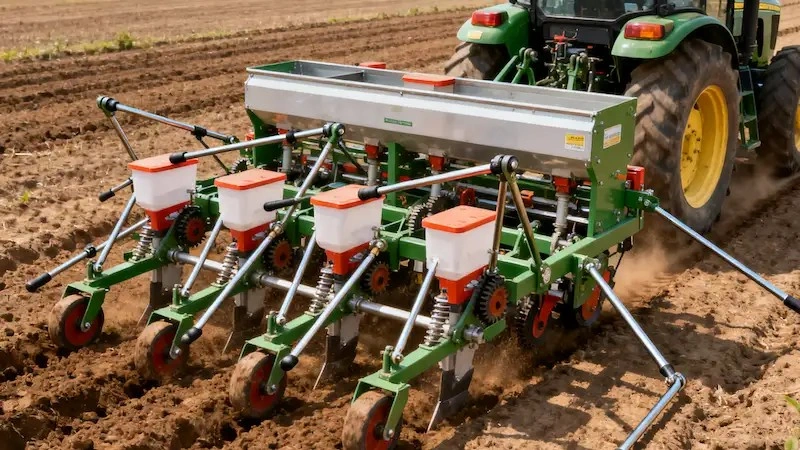
Seeder mechanisms may require controlled depth or implement-position adjustment as soil or operating conditions change. Define the required travel, load, positioning tolerance, feedback, control response and mechanical guidance for the actual seeder. Agronomic outcomes such as emergence or yield depend on the complete seeding system and field conditions, not the actuator alone.
If automated depth control is required, specify the necessary adjustment frequency, travel, response time, resolution and allowable error from the machine-control design. Do not assume a universal adjustment rate or superiority over a hydraulic implementation without project-specific measurements.
Posicionamento de Implementos de Trator
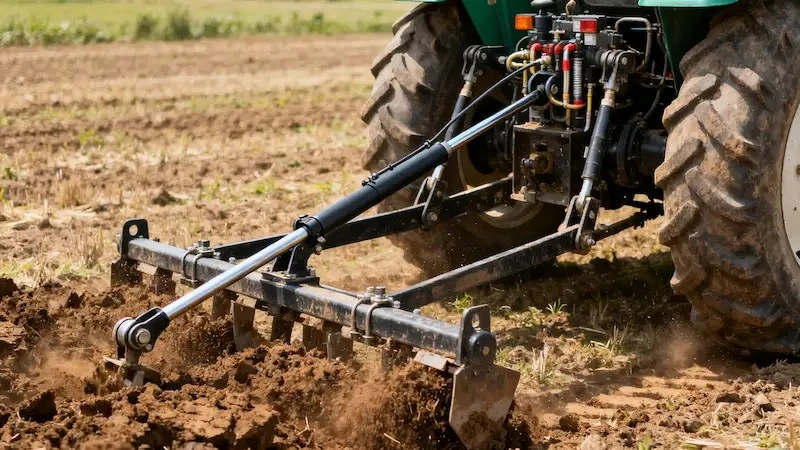
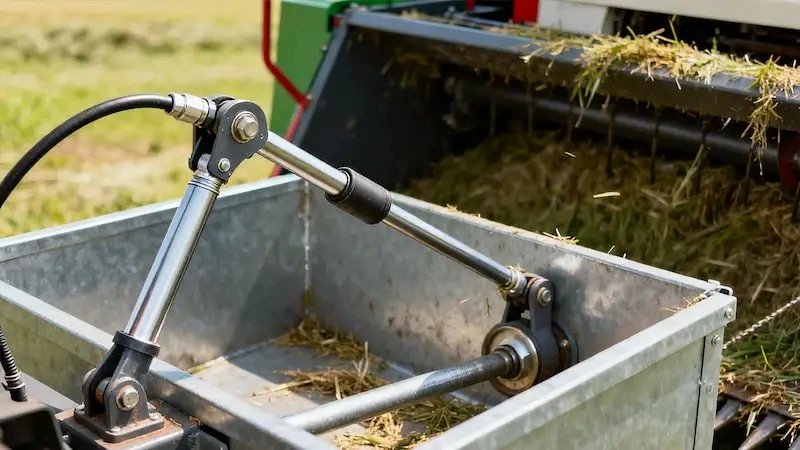
Linear actuators can be evaluated for attachment positioning tasks such as angle adjustment, lift/lower functions or equipment setup when the load path, travel, speed, mounting, duty cycle, controls and environment match the selected actuator configuration.
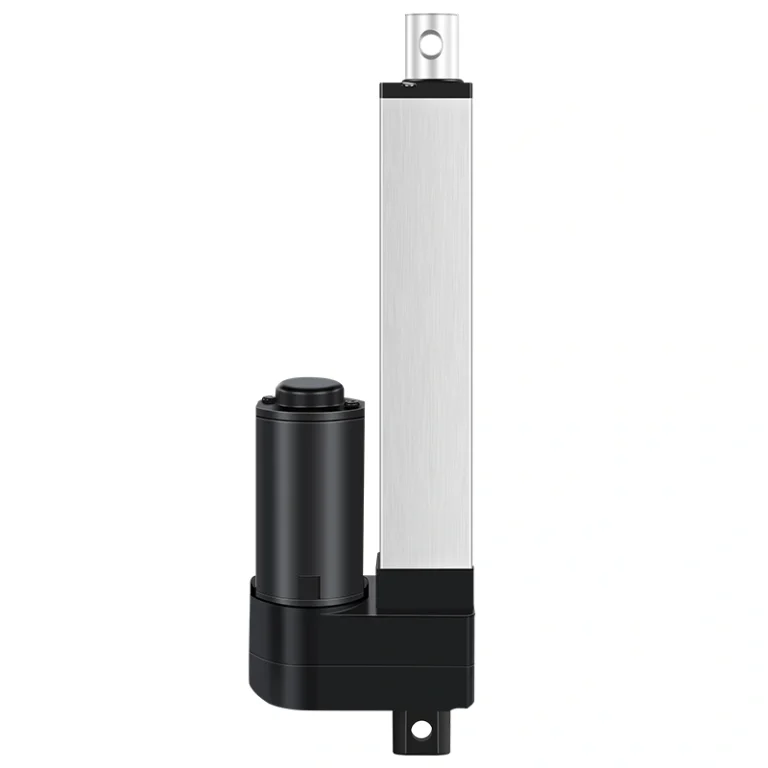
O IP6000 is currently presented as a configurable OEM actuator platform. Its product page does not publish a universal 6000N agricultural rating; load, stroke, speed, feedback, environmental protection and duty-cycle requirements must be confirmed for the selected build and validated in the target mechanism.
Controle de Altura de Barras de Pulverização
Spray-boom systems may require height adjustment as terrain or canopy conditions change. Define the permitted height error, travel, load, response time, feedback method, controller behavior, mechanical guidance and fault handling for the complete boom-control system.
An electric actuator can be one component of that control loop, but response time and positioning performance depend on the actuator, feedback, controller, mechanism, sensor strategy and commissioning. Do not infer reduced chemical use or improved application accuracy without system-level validation.
Integration Considerations for Agricultural Motion Systems
For an agricultural motion project, review the following integration questions without assuming a particular technology-adoption trend:
Automation / machine-control integration: define commanded positions, allowable error, update rate, feedback source, controller interface, calibration and fault behavior from the actual equipment architecture. Do not assume a particular positioning accuracy from the actuator category.
Feedback / diagnostics: if the project requires position, current, force, temperature or other diagnostic data, confirm which signals the selected actuator/controller actually provides and how those signals will be used. Connectivity and predictive-maintenance functions are system features, not automatic actuator capabilities.
Energy architecture: compare the complete electric and hydraulic system using the project duty cycle, efficiency at the real operating point, standby behavior, peak power, controls and auxiliary loads. A technology label alone does not establish an energy advantage.
Service and maintenance: compare inspection intervals, seals, lubrication, electrical connections, contamination exposure, replacement access, spares and expected failure modes. Electric actuation can remove hydraulic-fluid service from a function, but maintenance cost and lifecycle reliability still require project-specific evidence.
How should IP protection be specified for agricultural actuators?
Start from the actual dust, water, washdown, condensation, chemical, cable/connector and mounting conditions. If IP65 or another rating is required, request current evidence for the exact actuator configuration; the category name alone does not establish the rating.
Can electric actuators be evaluated for heavy agricultural implements?
Yes, when the complete mechanism is engineered for them. Calculate the required dynamic, peak and holding loads from the geometry, then confirm the selected actuator’s rated load, speed, duty cycle, mounting, controls and environmental limits. IP6000 is configuration-specific and should not be assumed to provide a fixed 6000N or 10,000N capability from its name.
How can linear actuators support precision-agriculture mechanisms?
They can provide controlled linear movement for mechanisms such as depth adjustment, implement positioning or boom-height adjustment when paired with suitable feedback, controls and mechanical guidance. Any claimed positioning accuracy, input reduction or yield benefit must be validated at the complete-machine level.
Conclusão
Linear actuators can be suitable for selected agricultural mechanisms when their configuration is matched to the actual load, travel, speed, duty cycle, environment, mounting, controls and service requirements. No single IP rating, force class or feedback feature establishes agricultural suitability by itself.
Use application requirements—not trend language—to evaluate seeding, implement-positioning, boom-control or other agricultural mechanisms. Define the measurable motion and system-level acceptance criteria, then validate the selected actuator/controller/mechanism under representative environmental and operating conditions.
For OEM teams, the practical decision is whether an electric linear actuator fits the machine’s complete load case, electrical architecture, controls, duty pattern, environment, maintenance plan and validation requirements. Compare candidate technologies using project evidence rather than assuming a universal reliability, efficiency or lifecycle advantage.
Ready to define an agricultural actuator requirement? Use ActuLift’s Máquinas Pesadas & Agricultura category as a starting point, then submit the load case, stroke, speed, duty cycle, mounting, controls, environment and required documentation for configuration review.
Obtenha Insights de Especialistas em Controle de Movimento Industrial
Selecionar o atuador linear elétrico ou coluna de elevação é crítico para o desempenho do seu projeto. Como um fabricante profissional de Controle de Movimento & Automação, nossos engenheiros ajudam você a personalizar a capacidade de carga, comprimento de curso e classificações IP com base em sua aplicação específica. Compartilhe seus requisitos técnicos para uma solução sob medida.
A ActuLift apoia a personalização de ponta a ponta, desde o design estrutural e parâmetros de curso até branding e acabamentos de carcaça, ajudando você a construir uma identidade de marca poderosa.
Resposta Rápida & Prototipagem
Entendemos a importância da rapidez na aquisição B2B, utilizando fluxos de produção otimizados para garantir respostas eficientes desde o desenvolvimento de amostras até a entrega em massa.
Quality Documentation & Traceability
Quality and traceability requirements vary by project. Ask ActuLift for the applicable inspection records, product specifications, drawings and available compliance documentation for the selected model and order.