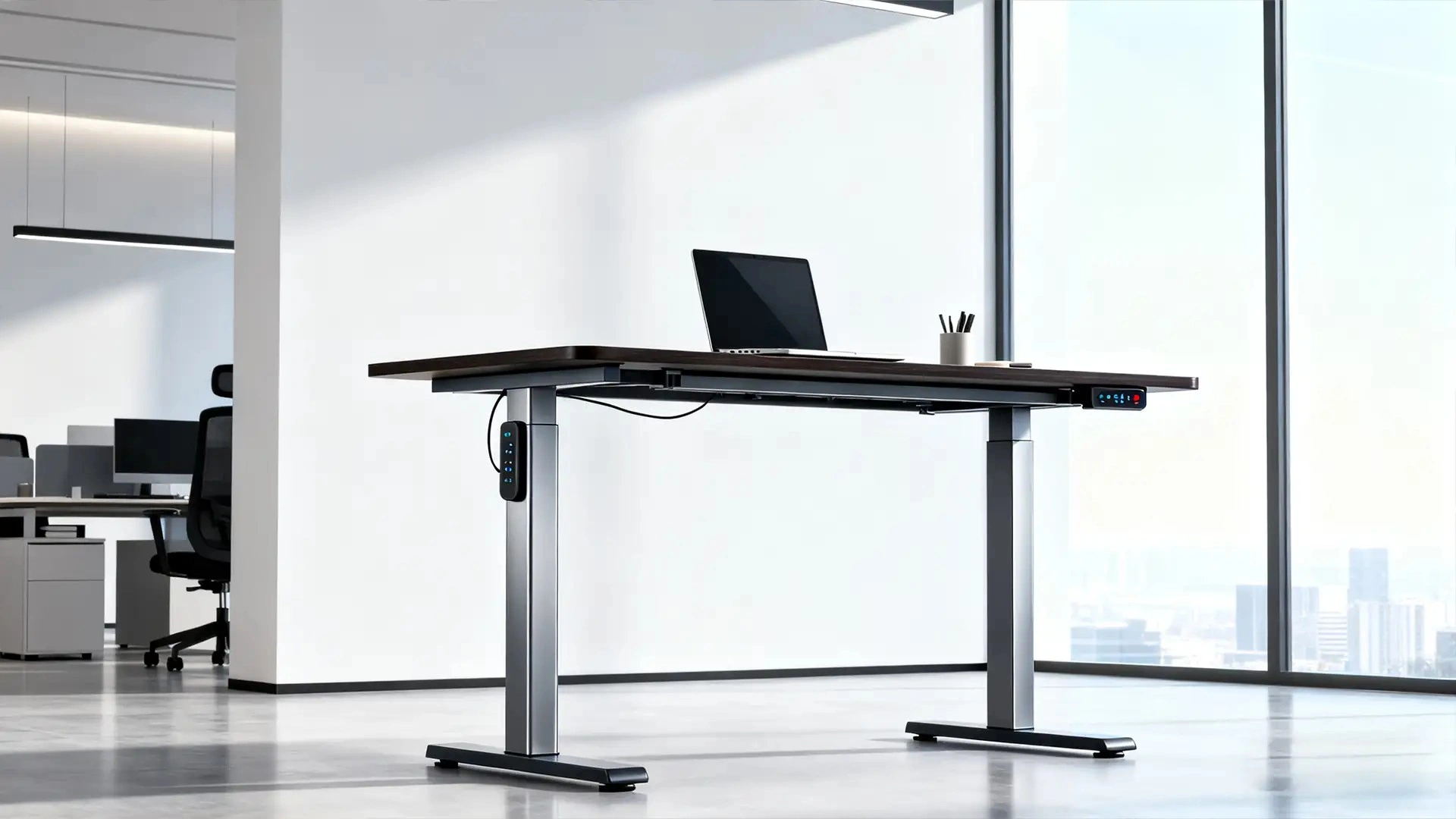
The first response, often called “pause mode,” temporarily halts desk movement when an obstacle is detected. The desk stops in position, allowing the user to identify and remove the obstruction. Once cleared, normal operation can resume. This mode provides straightforward protection against minor collisions that might otherwise cause frustration or minor damage.
The second response, known as “rebound mode,” takes protection a step further. When the system detects significant resistance, it automatically reverses direction, backing away from the obstacle. This proactive response proves particularly valuable in preventing situations where the desk might continue pressing against an object or person, potentially causing injury or damage. The rebound action is typically brief—just enough to clear the obstruction—but provides an essential additional layer of safety.
The importance of anti-collision technology extends beyond individual user safety. In commercial office environments, standing desks often operate in proximity to other furniture, partitions, and equipment. Without robust collision detection, the cumulative risk of accidents increases substantially. Anti-collision systems provide peace of mind for facility managers, office administrators, and end users alike, knowing that their motorized workstations actively work to prevent unintended contact.
Actulift’s IPC1 and IPC2 controllers represent the company’s flagship solutions for managing standing desk safety. These advanced control systems integrate ระบบป้องกันการชนของโต๊ะยืน functionality with intelligent motion management, creating a comprehensive safety ecosystem that protects users across a wide range of scenarios.
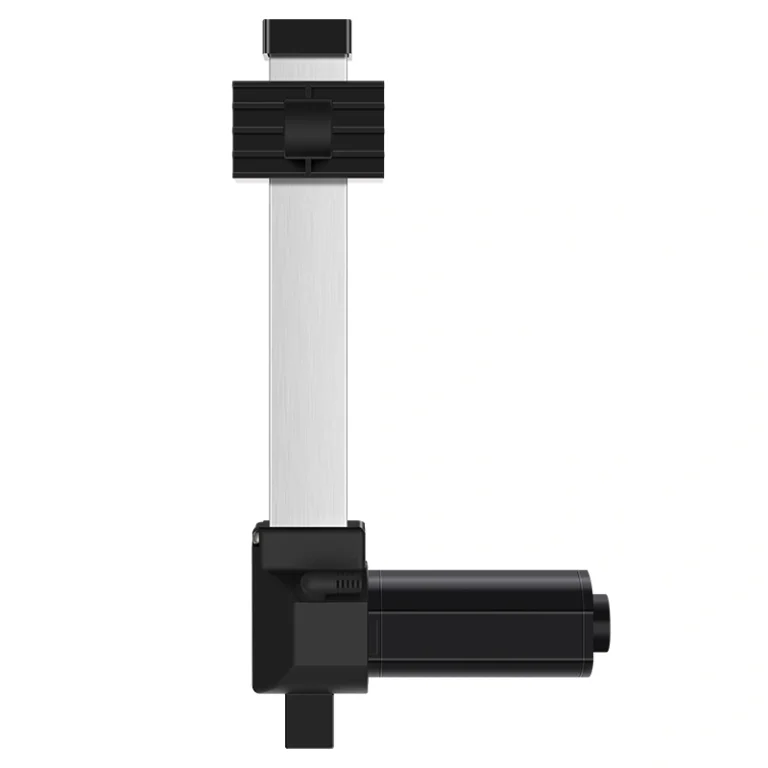
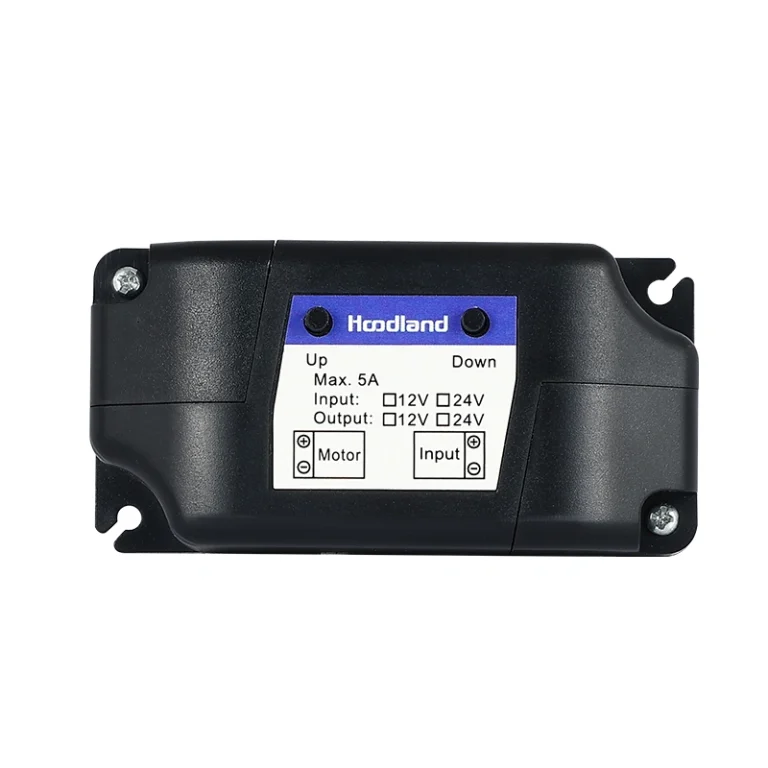
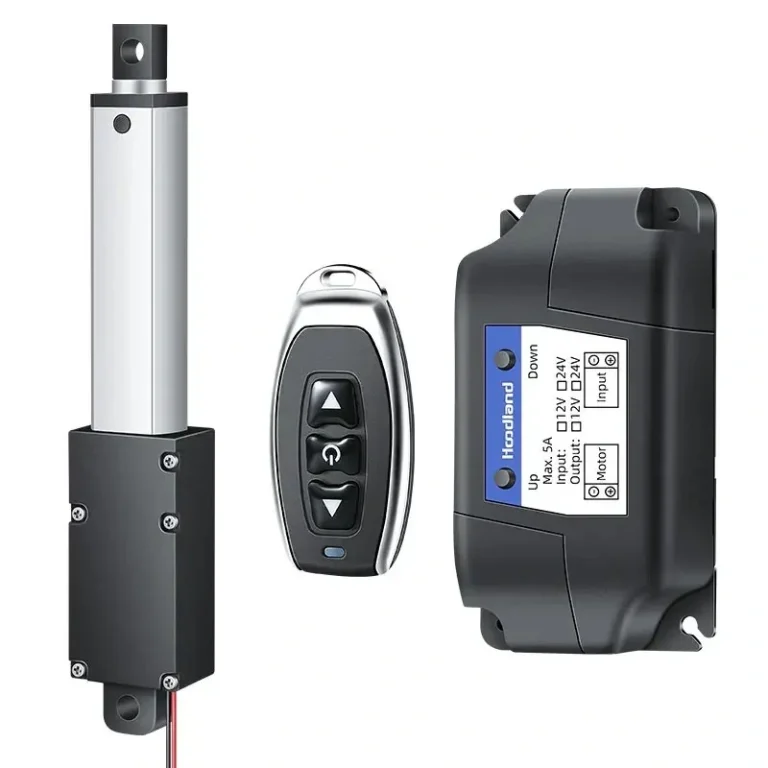
ขาตั้งตัวกระตุ้นแบบแบน IPC1 linear actuator controller serves as the foundational safety system for single-column standing desk applications. This controller incorporates sophisticated obstacle detection algorithms that monitor motor performance in real-time.
When the IPC1 detects resistance during desk movement, its safety logic immediately evaluates the severity of the obstruction. For minor resistance events, the system enters pause mode, halting movement until the obstacle is removed. The controller continuously monitors the motor, ready to resume normal operation once clear.
For more significant resistance events—indicating a substantial obstruction—the IPC1 activates rebound mode. The controller reverses motor direction, moving the desk away from the obstacle. This automatic reversal occurs within milliseconds of detection, providing rapid protection against potential impacts. The rebound distance is calibrated to clear typical obstacles while minimizing disruption to the user’s workflow.
The IPC1’s safety logic also addresses scenarios where the desk reaches its physical limits. Both the upper and lower travel boundaries are monitored, ensuring the desk stops safely at the full extent of its travel without overloading the motor or mechanical components.
ขาตั้งตัวกระตุ้นแบบแบน โซลูชัน เพื่อให้การตั้งค่าของคุณง่ายขึ้นเรามีอุปกรณ์เสริม extends safety protection to dual-column standing desk configurations. These larger workstations utilize two linear actuators working in synchronization—one on each side of the desk—requiring more complex control logic to maintain safe operation.
The IPC2 controller manages both actuators simultaneously, ensuring they move in perfect coordination. This synchronization is critical for desk stability; if one column moves faster than the other, the desk can become unstable, creating a safety hazard regardless of anti-collision detection.
When an obstacle is detected, the IPC2 must evaluate which actuator or actuators are affected and coordinate the appropriate response. If only one side encounters resistance, the controller can selectively stop or reverse that side while maintaining movement on the other side until both sides respond appropriately. This differential response capability allows the system to handle complex obstruction scenarios that single-column systems cannot address.
The IPC2 also incorporates advanced load balancing algorithms that continuously distribute movement demands across both actuators. If one actuator begins experiencing increased resistance—potentially indicating the early stages of an obstruction—the system can proactively adjust power distribution to prevent escalation.
สถานการณ์ความปลอดภัยในโลกจริง
Understanding how these safety systems perform in practice illustrates their critical importance. Consider a scenario where a user lowers their standing desk while a charging cable remains draped over the edge. Without anti-collision technology, the descending desk would pinch or trap the cable, potentially damaging both the cable and the desk’s motor.
With IPC1 or IPC2 controller safety logic engaged, the system detects the resistance as the desk contacts the cable. The controller immediately pauses or reverses movement, preventing damage and alerting the user to the obstruction. The response occurs in milliseconds—far faster than a human could react—effectively eliminating the risk.
Another common scenario involves office environments where desks operate near walkways. An employee walking behind a standing desk during height adjustment could inadvertently contact the descending frame. Anti-collision detection recognizes the unexpected resistance and activates protective response, preventing potential injury.
These real-world examples demonstrate why กล่องควบคุมและตัวควบคุม with integrated safety logic have become essential components in professional-grade standing desk systems. The technology provides invisible protection that activates only when needed, seamlessly integrating safety into the user experience.
While anti-collision technology addresses horizontal obstructions, เทคโนโลยีโต๊ะยืนจานหมุน sensors provide an equally important function: detecting instability and preventing dangerous tipping events. These sophisticated sensors monitor the desk’s orientation in three-dimensional space, providing protection against a category of hazards that obstacle detection alone cannot address.
Gyroscope sensors measure angular velocity and orientation, detecting even subtle changes in the desk’s tilt angle. This capability proves essential for standing desks, particularly those in high-traffic areas or environments where accidental bumps might occur. A desk that begins to tilt—whether from an uneven floor, an accidental kick, or structural stress—poses a serious risk to users and equipment.
When the gyroscope sensor detects concerning movement patterns, it can trigger protective responses that prevent escalation. In some configurations, the system alerts users to the instability, allowing corrective action before a more serious event occurs. In more advanced implementations, the controller can automatically lower the desk to a more stable height or engage other protective measures.
The integration of gyroscope sensors also contributes to ระบบป้องกันการชนของโต๊ะยืน effectiveness. By monitoring desk stability, the system can distinguish between resistance caused by external obstacles and resistance caused by desk instability. This differentiation allows more accurate safety responses, preventing false triggers while maintaining rapid response to genuine hazards.
For commercial applications, gyroscope stability monitoring provides particular value. Standing desk frames in office environments face constant potential for accidental impacts—from cleaning staff, moving furniture, or distracted employees. Gyroscope sensors detect these events and enable appropriate responses, protecting both the equipment and the people in the vicinity.
The evolution of smart office furniture safety continues to accelerate, driven by advances in sensor technology, artificial intelligence, and connectivity. Looking ahead, several emerging trends promise to further enhance workplace safety in motorized desk applications.
Machine learning algorithms are beginning to transform how safety systems operate. By analyzing patterns in motor performance data, these systems can predict potential issues before they manifest as obstacles or instability events. A desk that shows subtle changes in motor characteristics—perhaps indicating developing mechanical stress—could be flagged for preventive maintenance, addressing potential safety concerns proactively.
Enhanced connectivity is another significant trend. Modern การออกแบบตามหลักสรีรศาสตร์และโซลูชันสำนักงานอัจฉริยะ increasingly integrate with building management systems and IoT platforms. Future safety systems may communicate with other smart devices, coordinating responses across the workspace. For example, a desk’s anti-collision system might communicate with occupancy sensors to prevent height adjustments when someone is walking through the adjustment zone.
Gesture recognition and proximity detection represent additional frontiers in safety innovation. Advanced systems may incorporate radar or ultrasonic sensors that detect obstacles before physical contact occurs, providing even earlier warning and more graceful response options.
Actulift remains committed to staying at the forefront of these developments. The company’s investment in research and development ensures that customers benefit from the latest safety innovations as they mature from concept to commercial application.
ระบบป้องกันการชนมักจะตรวจสอบกระแสโมเตอร์เพื่อตรวจจับการต้านทานจากอุปสรรคทางกายภาพ (เช่น เก้าอี้) เซ็นเซอร์จานหมุน measures the desk’s tilt and angular velocity to prevent tipping caused by uneven loads or instability.
The integration of ระบบป้องกันการชนของโต๊ะยืน technology and เทคโนโลยีโต๊ะยืนจานหมุน sensors represents a fundamental advancement in workplace safety. These systems transform motorized furniture from passive equipment into active protective partners, safeguarding users throughout their workday.
The IPC1 and IPC2 controllers exemplify how sophisticated safety logic can be integrated seamlessly into user-friendly systems. By combining rapid obstacle detection with intelligent response protocols, these controllers address real-world safety concerns without creating friction in the user experience. The result is a workspace environment where employees can focus on their work with confidence, knowing their equipment is working to protect them.
As the smart office continues to evolve, safety innovation will remain central to design philosophy. The combination of anti-collision detection, gyroscope stability monitoring, and emerging technologies promises a future where workplace injuries from motorized furniture become increasingly rare. Actulift’s commitment to these safety principles ensures that customers receive not only advanced (รวมถึงรุ่น L-shaped และ executive) และจำเป็น and control systems but also the peace of mind that comes from knowing their workspace is designed with their protection as a primary focus.