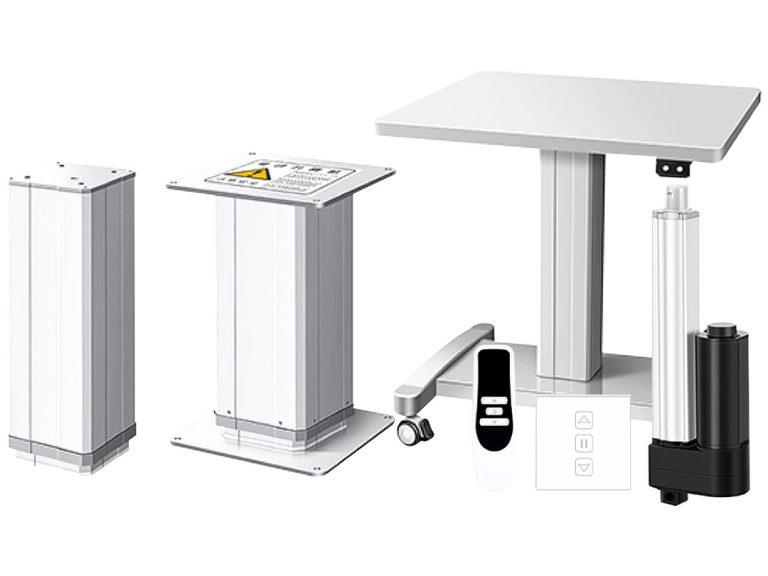
Tại sao bộ thực hiện tuyến tính 24V thường tốt hơn cho thiết bị OEM công nghiệp
Tìm hiểu tại sao bộ thực hiện tuyến tính 24V là lý tưởng cho các OEM công nghiệp, cung cấp mức tiêu thụ dòng điện thấp hơn, dễ dàng kết nối và tích hợp hệ thống ưu việt.
Nhiều dự án bộ thực hiện bắt đầu với một câu hỏi về điện áp đơn giản:
“Chúng ta nên sử dụng bộ thực hiện tuyến tính 12V hay 24V?”
Đối với một thiết bị nhỏ, chạy bằng pin, 12V có thể là câu trả lời rõ ràng nhất. Nếu thiết bị đã có pin 12V, dây ngắn, một bộ thực hiện và tải vừa phải, có thể không cần phải phức tạp hóa thiết kế.
Thiết bị OEM công nghiệp thì khác.
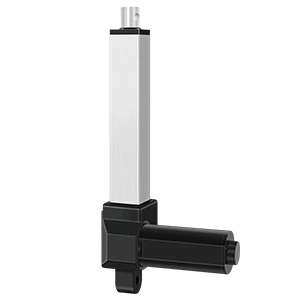
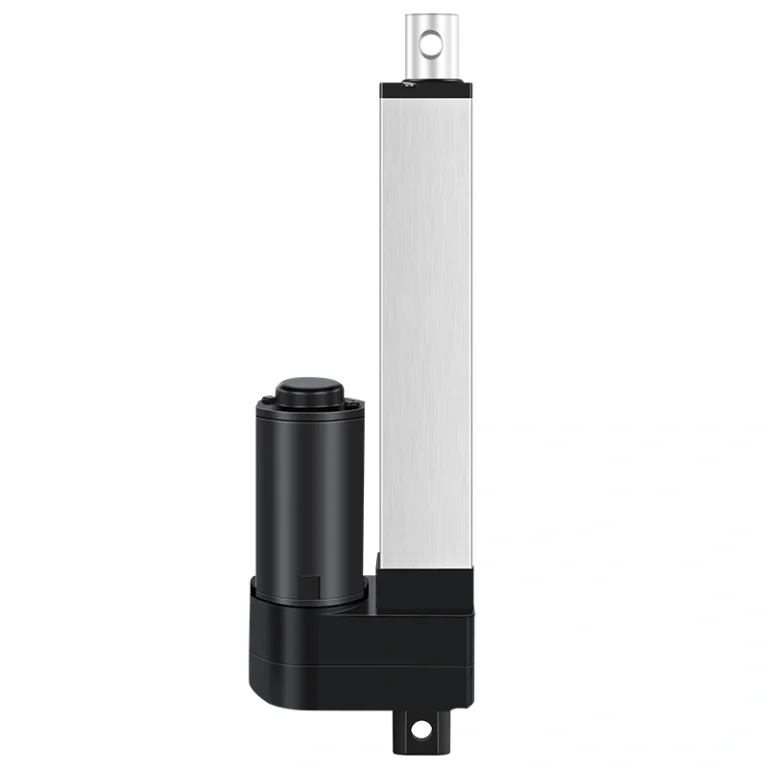
Trong các máy móc nhà máy, thiết bị y tế, thiết bị nông nghiệp, bảng truy cập, cơ chế nâng, đồ nội thất thông minh, và các mô-đun tự động hóa, bộ thực hiện hiếm khi là một phần độc lập. Nó phải hoạt động với nguồn điện, bộ điều khiển, bộ dây, giá đỡ, tín hiệu phản hồi, giới hạn chu kỳ làm việc, thiết kế vỏ bọc, và kỳ vọng dịch vụ. Trong loại hệ thống đó, thiết bị truyền động tuyến tính 24V thường dễ tích hợp hơn và ổn định hơn để mở rộng.
Từ khóa là thường. A 24V actuator is not automatically stronger than a 12V actuator. Force depends on the motor, gearbox, screw design, load rating, speed configuration, and mechanical structure. But for many industrial OEM projects, 24V gives engineers a better electrical starting point.
Mục lục
Lý do điện: 24V có thể giảm nhu cầu dòng điện
The practical advantage of 24V starts with a basic relationship:
Power = Voltage x Current
If two actuator systems need a similar amount of power, the higher-voltage system can usually operate with lower current. In a simplified calculation, a 120W actuator load draws about 10A at 12V, but about 5A at 24V.
That current reduction matters because cable and copper heating follow Joule’s law:
P_loss = I^2 x R
In this formula, P_loss is the heat loss in the conductor or component, I is current, and R is electrical resistance. If the current is cut in half while resistance stays the same, the I^2 term becomes one quarter of the original value. In other words, for the same conductor resistance, theoretical copper loss can drop by about 75%.
This is the engineering reason behind the common statement that 24V is easier on wiring and control components. The benefit is not just “less current” as a vague idea. It is lower squared-current heating in cables, connectors, relay contacts, PCB traces, and other current-carrying paths.
In a real actuator design, the exact current depends on motor design, load, speed, startup conditions, mechanical resistance, ambient temperature, and controller behavior. Still, the general direction matters: compared with a 12V system at similar power, a 24V system can reduce the current that must move through cables, connectors, switches, relays, and controller components.
That lower current profile is one reason 24V is common in professional motion systems.
For OEM equipment builders, current is not just an electrical number on a datasheet. It affects:
Wire gauge and harness cost.
Voltage drop over longer cable runs.
Connector and terminal rating.
Heat buildup in control components.
Power supply and controller margin.
Reliability during startup or high-load movement.
Troubleshooting when the actuator is installed far from the control box.
This is why 24V is often easier to work with in larger equipment. The actuator may be only one line item in the bill of materials, but the voltage decision influences the whole motion-control architecture.
Engineer’s Takeaway: If the power requirement is similar, moving from 12V to 24V can roughly halve current. Because copper loss follows I^2R, the wiring and control path can see much lower heat stress when the rest of the system is designed correctly.
Tại sao thiết bị OEM công nghiệp thường ưa chuộng 24V
Industrial OEM projects usually have more integration pressure than small consumer products. They often involve longer wiring, enclosed control areas, repeatable production builds, multiple moving parts, and stricter service expectations.
Here are the main reasons 24V linear actuators are often the better starting point.
1. 24V dễ quản lý hơn trên các chạy cáp dài
Longer cables create resistance. Resistance creates voltage drop. Voltage drop can cause slower movement, inconsistent behavior, controller faults, or failure to move under load.
This matters more in 12V systems because the same voltage loss represents a larger percentage of the supply voltage. A 1V drop is a much bigger problem in a 12V circuit than in a 24V circuit.
In compact furniture or a small mechanism where the actuator sits close to the controller, this may not matter much. In industrial equipment, the actuator may be mounted several meters away from the control cabinet. The cable may pass through a frame, enclosure, hinge area, guide rail, or service-access zone. When the harness gets longer, 24V becomes more attractive.
For OEM buyers, this does not remove the need for proper cable sizing. It simply gives the engineering team more room to design a stable low-voltage system.
Here is a simplified cable-sizing example for engineering discussion.
Assume:
Actuator electrical power: 120W.
Distance from control box to actuator: 5m.
Round-trip copper length: 10m.
Target voltage drop: no more than 5%.
Copper resistivity used for the simplified calculation: about 0.0175 ohm mm2/m at 20 deg C.
System
Working current
5% voltage-drop limit
Max round-trip resistance
Simplified copper area result
12V / 120W
10A
0.6V
0.06 ohm
About 2.9 mm2 minimum, often rounded up in practice
24V / 120W
5A
1.2V
0.24 ohm
About 0.73 mm2 minimum, often near a 1 mm2 class conductor
This example is intentionally simplified. Real wire selection also depends on local standards, allowable temperature rise, insulation rating, bundling, connector resistance, duty cycle, peak current, vibration, and safety margin. But the direction is useful: for the same 120W load and the same 5m distance, the 24V design can often use a smaller, easier-to-route harness than the 12V design.
For layout engineers, that can affect more than voltage drop. It can reduce copper cost, improve bend radius, save enclosure space, simplify cable routing through moving frames, and make service replacement easier.
Design Tip: For long harnesses, ask the actuator supplier to review voltage, peak current, cable length, connector type, and duty cycle together. Wire gauge is not only an electrical detail. It affects layout, heat, cost, and serviceability.
2. 24V giảm căng thẳng cho các bộ điều khiển và thành phần chuyển mạch
The actuator controller must be selected for the correct voltage and current. This is where many projects get into trouble.
A buyer may confirm the actuator voltage but forget to check:
Maximum current under load.
Startup or stall current.
Relay or MOSFET rating.
Control box output capacity.
Connector rating.
Thermal performance inside the enclosure.
Whether the controller supports one actuator or multiple actuators.
With 12V systems, the current requirement can be higher for similar power demand. That means the controller, switches, PCB traces, connectors, and wiring may all need more current capacity. In a small device, this can still be manageable. In a larger OEM build, it can become a weak point.
24V does not make controller matching optional. The controller must still be rated for the actuator and application. But 24V often makes the control design easier because the same motion task may require less current through the control path.
ActuLift’s local product data includes control boxes and controllers that relate directly to this decision. IPC3 is described as a DC actuator controller supporting 12V/24V input and output, while IPC4 is positioned as a 24V actuator control box for compatible motion systems. Those examples show why voltage, controller, and actuator should be selected together rather than as separate purchases.
Engineer’s Takeaway: Do not approve an actuator only by voltage. Approve the actuator, controller, peak current, cable harness, connector, and control mode as one electrical package.
3. 24V phù hợp với kiến trúc điều khiển chuyên nghiệp
Many industrial and commercial motion systems are already built around 24V DC control logic. That does not mean every actuator must be 24V, but it does mean 24V often fits the surrounding electrical environment more naturally.
This is especially relevant when the equipment includes:
A central control box.
A low-voltage control cabinet.
Multiple actuators or lifting columns.
Hall sensor feedback.
Synchronized movement.
Handsets, remote controls, or user interfaces.
Limit switches or current sensing.
Safety interlocks or controlled operating modes.
In these applications, the actuator is part of a complete motion system. If the rest of the equipment already uses 24V DC output, choosing a 24V actuator can simplify sourcing, wiring, testing, and service documentation.
4. 24V thích hợp hơn cho các hệ thống đa bộ thực hiện
Single-actuator projects are simpler. The actuator extends, retracts, and stops. The control logic may be basic.
Multi-actuator systems are less forgiving.
When two or more actuators need to move together, the system has to manage power distribution, load differences, travel position, feedback, controller timing, and mechanical alignment. If one actuator sees more friction or load than another, movement can become uneven. If wiring resistance differs between branches, performance can drift.
24V helps because lower current can make power distribution more manageable. It does not solve synchronization by itself. For synchronized movement, the system may still need Hall sensor feedback, encoder feedback, a suitable control box, and correct mechanical guidance. But in many OEM designs, 24V gives the power side a cleaner foundation.
This is one reason 24V is common in lifting systems, positioning modules, adjustable workstations, medical equipment, and industrial fixtures where stable repeated motion matters.
Design Tip: Multi-actuator synchronization needs more than a 24V supply. For dual-column lifts, paired actuators, or position-sensitive mechanisms, confirm Hall feedback, controller logic, load balance, stroke matching, and mechanical guidance before sample approval. Actuator projects that need closed-loop positioning should also review các bộ chuyển động có phản hồi/điều khiển before choosing the sample set.
Cách mà việc khớp Controller ActuLift biến điện áp thành một hệ thống hoàn chỉnh
For OEM buyers, the commercial value of 24V is strongest when it leads to a cleaner system package. The actuator, controller, harness, feedback method, and test plan should be matched before tooling or batch production.
ActuLift’s controller family can be framed around common engineering pain points:
Engineering need
Controller direction to review
Why it matters in the article’s problem
Multi-platform OEM products using different DC buses
Bảng điều khiển Động cơ Tuyến tính IPC1 với ngữ cảnh đầu vào DC 12V/24V/48V và nhiều tùy chọn điều khiển tín hiệu
Giúp những người mua cần một dòng điều khiển cho nhiều nền tảng thiết bị khác nhau, bao gồm các dự án có thể sử dụng PWM, RS485, CAN, 0-10V hoặc thiết bị phản hồi.
Chuyển động đồng bộ của hai bộ truyền động
Bộ điều khiển Bộ truyền động IPC2 / Bộ điều khiển Hall cho tối đa hai bộ truyền động và ngữ cảnh đồng bộ phản hồi Hall
Kết nối trực tiếp với hệ thống bộ truyền động đôi, cơ chế nâng, chuyển động phối hợp và các cấu hình OEM nhạy cảm với vị trí.
Kiểm soát áp suất kín hoặc yên tĩnh với điện áp thấp
Điều khiển bộ kích DC IPC3 với ngữ cảnh đầu vào 12V/24V, tiêu chuẩn bảo vệ IP66/IP67 và định vị ít tiếng ồn từ tóm tắt địa phương
Phù hợp với các dự án y tế, văn phòng, thiết bị kín và tiếp xúc với độ ẩm nơi mà bộ điều khiển có thể trở thành điểm thất bại.
Kiến trúc chuyển động đa kênh 24V
Hộp điều khiển Chất tạo động lực IPC4 24V được định vị như một bộ điều khiển 4 kênh 24V với tiêu chuẩn IP54 và kế hoạch IP66 tùy chọn
Hỗ trợ các hệ thống chuyển động 24V lớn hơn nơi mà một hộp điều khiển phải tổ chức nhiều đầu ra bộ truyền động, chuyến đi, hoặc chuyển động thiết bị.
Ma trận này không phải là một sự thay thế cho xác nhận kỹ thuật ở cấp độ mô hình. Đây là một cách nhanh hơn cho các đội mua sắm và R&D để đặt câu hỏi đúng:
“Chúng ta nên thử nghiệm gói bộ truyền động và bộ điều khiển nào cùng nhau cho máy này?”
Câu hỏi đó hữu ích hơn nhiều so với việc yêu cầu báo giá bộ truyền động 24V đơn lẻ mà không có bộ điều khiển, cáp, phản hồi hoặc chi tiết môi trường.
5. 24V có thể hỗ trợ quy hoạch nhiệt sạch hơn
Nhiệt là một trong những kẻ thù ẩn trong các hệ thống bộ truyền động.
Nhiệt có thể đến từ động cơ, bộ điều khiển, dây dẫn, kết nối, nguồn điện và tải cơ học. Nếu bộ truyền động bị nhỏ, quá tải, hoạt động quá nhiều lần, hoặc được ghép nối với bộ điều khiển sai, hệ thống có thể qua kiểm tra ngắn nhưng thất bại trong quá trình hoạt động lặp lại.
Bởi vì 24V có thể giảm dòng điện cho công suất tương tự, nó có thể giúp giảm áp lực điện trong các dây dẫn và thành phần điều khiển. Điều này hữu ích khi bộ truyền động được lắp đặt bên trong một vỏ hoặc khung thiết bị nơi mà luồng không khí bị hạn chế.
Điều này không thay thế cho kế hoạch chu kỳ làm việc. Nhiều bộ truyền động tuyến tính tinh gọn được thiết kế cho hoạt động gián đoạn. Nội dung bộ truyền động địa phương của ActuLift liên tục coi chu kỳ làm việc như một yếu tố lựa chọn chính, bao gồm cả mẫu chu kỳ làm việc 10% phổ biến được sử dụng trong nhiều ngữ cảnh bộ truyền động tinh gọn. Nếu ứng dụng cần chuyển động thường xuyên, người mua nên xác nhận thời gian hoạt động, thời gian nghỉ, tải trọng, nhiệt độ môi trường, và biên độ bộ điều khiển trước khi phê duyệt mẫu.
Điện áp giúp, nhưng chu kỳ làm việc vẫn là điều quyết định trong cuộc trò chuyện nhiệt.
6. 24V thường tốt hơn cho tài liệu công nghiệp và sản xuất lặp lại
Thiết bị OEM không chỉ được thiết kế một lần. Nó cần phải được chế tạo, thử nghiệm, vận chuyển, bảo trì và lặp lại.
Lựa chọn điện áp ảnh hưởng đến:
Sơ đồ dây dẫn.
Nhãn bộ điều khiển.
Danh sách phụ tùng.
Hướng dẫn lắp ráp.
Bản vẽ nhà cung cấp.
Điểm kiểm tra QC.
Hướng dẫn bảo trì.
Tài liệu tuân thủ.
Nếu một dòng sản phẩm sử dụng một kiến trúc chuyển động 24V nhất quán, thì việc tiêu chuẩn hóa các bộ điều khiển, dây dẫn, nhãn, thiết bị thử nghiệm, và phụ tùng thay thế có thể dễ hơn. Điều này quan trọng khi hệ thống bộ truyền động giống nhau sẽ được sản xuất theo lô thay vì chỉ lắp đặt một lần.
Đối với các đội mua sắm, đây cũng là nơi mà 24V có thể đơn giản hóa giao tiếp với nhà cung cấp. Thay vì chỉ yêu cầu “một bộ truyền động mạnh”, người mua có thể chỉ định một gói chuyển động hoàn chỉnh:
Bộ truyền động DC 24V.
Tải trọng và hành trình cần thiết.
Tốc độ mục tiêu.
Chu kỳ làm việc.
Loại bộ điều khiển.
Chiều dài cáp.
Yêu cầu phản hồi.
Đánh giá IP.
Giá đỡ lắp đặt.
Điều kiện thử nghiệm mẫu.
Điều này biến một yêu cầu mơ hồ thành một thông số kỹ thuật có thể xây dựng.
Engineer’s Takeaway: Trong mua sắm OEM, bộ truyền động 24V không phải là câu trả lời cuối cùng. Câu trả lời cuối cùng là một tập hợp chuyển động đã được xác nhận: bộ truyền động, bộ điều khiển, dây dẫn, phần cứng lắp đặt, phản hồi, chu kỳ làm việc, và điều kiện thử nghiệm.
Nơi mà 24V hỗ trợ những người xây dựng thiết bị OEM nhiều nhất
24V thường là lựa chọn mạnh hơn khi dự án bao gồm một hoặc nhiều điều kiện sau đây:
Điều kiện dự án
Tại sao 24V thường hữu ích
Các dây cáp dài hơn
Dòng điện thấp hơn có thể giảm áp lực giảm điện áp và căng thẳng dây dẫn.
Bộ điều khiển tập trung
24V thường phù hợp với các hộp điều khiển chuyên nghiệp và các hệ thống chuyển động.
Nhiều bộ truyền động
Phân phối điện dễ quản lý hơn trong các lắp ráp chuyển động lớn hơn.
Tải trọng cao hơn hoặc chuyển động lặp lại
Dòng điện thấp hơn có thể hỗ trợ lập kế hoạch nhiệt và điều khiển sạch hơn.
Phản hồi Hall hoặc chuyển động đồng bộ
24V thường phù hợp hơn cho các kiến trúc điều khiển hoàn chỉnh.
Thiết bị công nghiệp hoặc y tế
Chuyển động ổn định, có tài liệu, lặp lại quan trọng hơn sự tiện lợi đơn giản của pin.
Sản xuất hàng loạt
Điện áp tiêu chuẩn có thể đơn giản hóa các dây dẫn, kiểm tra và các bộ phận dịch vụ.
Mẫu hình rõ ràng: 24V trở nên giá trị hơn khi dự án chuyển từ một lắp đặt bộ truyền động đơn giản sang một hệ thống chuyển động OEM hoàn chỉnh.
Sản phẩm cần tương thích với phương tiện, RV, hệ thống thấp áp di động hoặc nhỏ gọn.
Đối với các dự án này, chuyển sang 24V có thể thêm một bộ chuyển đổi, kiến trúc pin mới, bộ điều khiển mới, hoặc thiết kế lại không cần thiết. Điện áp tốt nhất là cái phù hợp với toàn bộ nền tảng thiết bị.
Đừng nhầm lẫn 24V với "mạnh hơn"
Một sai lầm phổ biến là giả định rằng 24V tự động có nghĩa là nhiều lực hơn.
Điều đó không đúng.
Một bộ truyền động 24V có thể nhỏ gọn và nhẹ. Một bộ truyền động 12V có thể được chế tạo cho tải trọng cao hơn nếu động cơ, hộp số, ốc vít và cấu trúc của nó được thiết kế cho công việc đó. Đánh giá lực của bộ truyền động phụ thuộc vào thiết kế cơ khí, không chỉ có điện áp.
Ví dụ, dòng sản phẩm của ActuLift bao gồm các bộ truyền động nhỏ gọn, các bộ truyền động tuyến tính siêu nặng, các mẫu có thể chọn 12V/24V, các mẫu tập trung vào 24V, bộ điều khiển, cột nâng và phụ kiện. Một số bộ truyền động 24V được chế tạo cho chuyển động nhỏ gọn, trong khi những cái khác hỗ trợ lực cao hơn hoặc hành trình dài hơn. Việc chọn mẫu vẫn phải bắt đầu với các yêu cầu cơ khí thực tế:
Tải trọng đẩy hoặc kéo yêu cầu.
Chiều dài hành trình.
Tốc độ dưới tải.
Hình học lắp đặt.
Kiểm soát tải bên.
Chu kỳ làm việc.
Yêu cầu tiếng ồn.
Mức độ bảo vệ IP.
Nhu cầu phản hồi và bộ điều khiển.
Điện áp quan trọng, nhưng nó không phải là toàn bộ thông số kỹ thuật.
Một khung quyết định OEM thực tế
Trước khi chọn một bộ truyền động tuyến tính 24V, hãy trả lời những câu hỏi này.
1. Tải thực tế của bộ thực hiện là gì?
Đừng chỉ ước lượng trọng lượng vật thể. Hãy xem xét hình học pivot, ma sát, góc, đường ray dẫn hướng, gia tốc, biên độ an toàn, và liệu tải có thay đổi trong quá trình chuyển động.
2. Bộ thực hiện cách nguồn điện hoặc bộ điều khiển bao xa?
Nếu chiều dài cáp dài, sự giảm điện áp trở nên quan trọng hơn. 24V có thể làm kế hoạch dây điện dễ hơn, nhưng dây dẫn vẫn cần kích thước phù hợp.
3. Có bao nhiêu bộ thực hiện sẽ di chuyển cùng nhau?
Đối với các hệ thống nhiều bộ truyền động, xác nhận xem bạn cần phản hồi, điều khiển đồng bộ, cảm biến Hall, hoặc một hộp điều khiển đặc biệt.
4. Thiết bị cần chu kỳ làm việc nào?
Một bộ truyền động nhanh mà quá nhiệt khi sử dụng thực tế không phải là một bộ truyền động tốt. Xác nhận thời gian hoạt động, thời gian nghỉ, tần suất chu kỳ, tải trọng và nhiệt độ môi trường.
5. Bộ điều khiển nào sẽ được sử dụng?
Hãy đảm bảo điện áp và dòng điện khớp với nhau. Cũng xác nhận các kênh đầu ra, hỗ trợ phản hồi, chế độ điều khiển, bảo vệ vỏ, và kết nối dây.
6. Môi trường mà bộ thực hiện sẽ phải đối mặt là gì?
Thiết bị văn phòng trong nhà, thiết bị y tế, máy móc ngoài trời, hệ thống nông nghiệp, và thiết bị gần nơi rửa có nhu cầu niêm phòng và bảo vệ khác nhau. Đừng coi điện áp là một sự thay thế cho chỉ số IP, niêm phong cáp, lựa chọn kết nối, hoặc xác minh thiết bị cuối.
7. Những gì cần phải được tài liệu cho sản xuất?
Yêu cầu các bảng dữ liệu, bản vẽ, sơ đồ dây, điều kiện thử nghiệm, tài liệu tuân thủ, hồ sơ phê duyệt mẫu, và tiêu chí kiểm tra lô hàng trước khi mở rộng đơn hàng.
Ví dụ: tại sao một OEM có thể chọn 24V
Hãy tưởng tượng một nhà sản xuất thiết bị công nghiệp thiết kế một panel truy cập có động cơ. Bộ truyền động được gắn bên trong khung máy, cách vài mét so với tủ điều khiển. Panel phải mở một cách đáng tin cậy trong quá trình phục vụ, máy đã sử dụng điều khiển 24V DC, và người mua muốn một hệ thống dây điện sản xuất nhất quán giữa nhiều mẫu.
Trong trường hợp này, một bộ truyền động 24V thường là lựa chọn sạch hơn.
Các lý do không phải là trừu tượng:
Kiến trúc điện đã hỗ trợ 24V DC.
Chiều dài cáp làm cho việc giảm điện áp đáng xem xét.
Dòng điện thấp hơn có thể giảm áp lực lên dây điện và các thành phần của bộ điều khiển.
Bộ truyền động có thể được chọn với một hộp điều khiển phù hợp.
Documentation is easier to standardize for production and service.
Now imagine a small mobile product powered by a 12V battery, with one actuator mounted close to the battery and controller. In that case, 12V may be more practical.
The better voltage depends on the equipment, not the label.
Cách ActuLift tiếp cận lựa chọn bộ thực hiện 24V
ActuLift manufactures electric linear actuators, lifting columns, control boxes, controllers, brackets, and related linear motion components for B2B equipment integration. The local product catalog includes multiple actuator families with 12V and/or 24V configurations, along with recurring selection factors such as load, stroke, speed, duty cycle, noise, IP rating, feedback, controller compatibility, mounting, and cable planning.
For industrial OEM buyers, the safest approach is to select and test the actuator and control system together. A 24V actuator should be checked with:
Sample test conditions for the finished equipment.
That is where 24V often earns its place. It is not just a voltage choice. It is a system-design choice.
Điều cần lưu ý cuối cùng
24V linear actuators are often better for industrial OEM equipment because they make the electrical side of the system easier to scale. Lower current demand can reduce wiring stress, improve voltage-drop tolerance, simplify controller planning, and support cleaner multi-actuator system design.
But 24V is not magic. It does not automatically increase force, replace duty cycle planning, or solve poor mechanical design.
For OEM projects, choose 24V when the equipment needs a professional motion architecture: longer cables, central control, multiple actuators, feedback, repeatable production, and stable service documentation.
Choose 12V when the system is compact, battery-based, close-wired, and already built around 12V DC.
The best actuator voltage is the one that fits the whole machine.
For a new industrial equipment project, prepare the load, stroke, speed, duty cycle, controller, cable length, feedback, and environment requirements before requesting a quote. Then ask for a system-level matching review, not only a unit price.
For OEM development, ActuLift can help buyers evaluate the actuator, matching controller, cable harness, feedback method, and mounting plan as one sample package. Testing the actuator with the intended IPC-series controller and wiring layout helps the R&D team check electrical compatibility, mechanical fit, overload behavior, noise, sealing, and control response before moving into batch production.
Câu hỏi thường gặp
Liệu bộ thực hiện tuyến tính 24V có mạnh hơn bộ thực hiện tuyến tính 12V không?
Not automatically. Strength depends on the actuator’s motor, gearbox, screw design, load rating, and mechanical structure. A 24V system may reduce current demand for similar power, but voltage alone does not define force.
Tại sao bộ thực hiện 24V lại phổ biến trong thiết bị công nghiệp?
24V actuators are common in industrial equipment because 24V DC fits many professional control architectures and can make wiring, controller matching, voltage-drop management, and multi-actuator power distribution easier.
Liệu 24V có luôn tốt hơn 12V cho bộ thực hiện tuyến tính không?
No. 12V is often better for compact, battery-powered, vehicle-based, or short-wire systems that already use 12V DC. 24V is often better for larger OEM equipment with longer cables, centralized controllers, or multiple actuators.
Tôi có thể thay thế một bộ thực hiện 12V bằng một bộ thực hiện 24V không?
Only if the power supply, controller, wiring, connectors, and mechanical requirements are changed or confirmed for 24V operation. Do not connect a 24V actuator to a 12V-only control system without engineering review.
Tôi có thể vận hành một bộ thực hiện 12V trên 24V không?
No, unless the actuator is specifically rated for 24V operation. Applying 24V to a 12V actuator can damage the motor, controller, limit components, or wiring.
Những gì mà người mua OEM cần xác nhận trước khi chọn bộ thực hiện 24V?
Confirm load, stroke, speed, duty cycle, controller rating, cable length, current draw, feedback needs, IP rating, mounting geometry, side-load control, and sample test conditions.
Liệu 24V có giải quyết vấn đề quá nhiệt cho bộ thực hiện không?
No. 24V can help reduce current stress in some parts of the electrical system, but actuator heat still depends on load, run time, duty cycle, ambient temperature, speed, and mechanical resistance.
Liệu 24V có tốt hơn cho các bộ thực hiện đồng bộ không?
Often, yes, because 24V can make power distribution easier in multi-actuator systems. However, synchronization also requires the right controller, feedback method, mechanical design, and testing.
Tại sao 24V lại giảm thiệt hại cáp?
For similar power demand, a 24V system can operate at lower current than a 12V system. Since conductor heat loss follows P_loss = I^2 x R, cutting current can sharply reduce copper loss in the cable and control path.
Người mua OEM có nên thử nghiệm bộ thực hiện và bộ điều khiển cùng nhau không?
Yes. For production equipment, the actuator, controller, cable harness, connector, feedback method, mounting geometry, duty cycle, and final load should be tested as one motion system before batch approval.
Nhận Thông tin Chuyên gia về Kiểm soát Chuyển động Công nghiệp
ActuLift hỗ trợ tùy chỉnh từ đầu đến cuối, từ thiết kế cấu trúc và tham số hành trình đến thương hiệu và hoàn thiện vỏ, giúp bạn xây dựng bản sắc thương hiệu mạnh mẽ.
Phản hồi nhanh & Tạo mẫu
Chúng tôi hiểu tầm quan trọng của tốc độ trong việc mua sắm B2B, sử dụng quy trình sản xuất được tối ưu hóa để đảm bảo phản hồi hiệu quả từ phát triển mẫu đến giao hàng số lượng lớn.
Chất lượng ổn định & Theo dõi
Với chứng nhận chất lượng ISO9001, mỗi sản phẩm - từ khâu nhập liệu đến kiểm tra cuối cùng tại nhà máy - được ghi lại trong các nhật ký điện tử của chúng tôi, đảm bảo tính nhất quán cao trong các hàng hóa được giao.