Linear Actuators for Solar Trackers: Wind Load & Holding Validation
Aprende cómo la alta fuerza de sujeción estática en los actuadores lineales, específicamente la serie IP1200, protege los sistemas de seguimiento solar de daños estructurales causados por cargas de viento altos. Descubre los requisitos técnicos para asegurar confiabilidad y maximizar el retorno de inversión en granjas solares a gran escala.
Evaluate linear actuators for solar trackers by moving load, static holding, back-driving, wind/stow conditions, feedback, environment and configuration-specific evidence.
Tabla de Contenidos
Por qué el seguimiento solar es importante en la energía renovable moderna
Solar energy has become one of the most viable alternatives to fossil fuels, and solar power plants are being deployed on a large scale worldwide. Solar tracking can change energy capture relative to a fixed-tilt design, but the actual yield difference depends on site latitude, tracker geometry, controls, stow strategy, irradiance, shading, availability and the project baseline. Do not assign a universal percentage gain to the actuator itself.
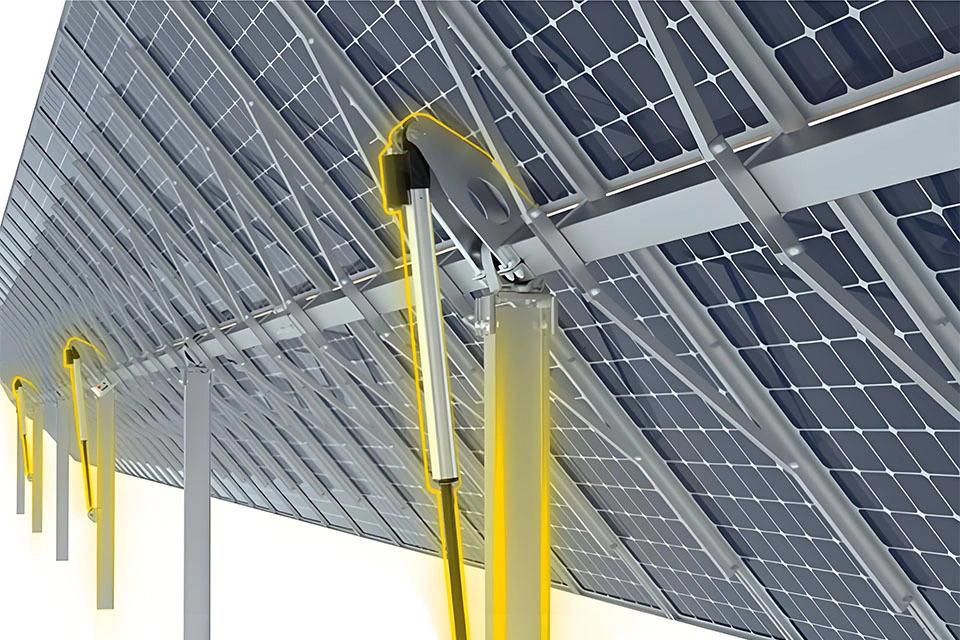
En el corazón de cada sistema de seguimiento solar fiable se encuentra el actuador lineal: el dispositivo electromecánico que convierte el movimiento rotacional en movimiento lineal para ajustar el ángulo de los paneles solares a lo largo del día. Elegir el actuador lineal adecuado para aplicaciones de seguidores solares es crítico, particularmente cuando estos sistemas deben soportar entornos exteriores desafiantes.
El desafío crítico: Cargas de viento y demandas estructurales
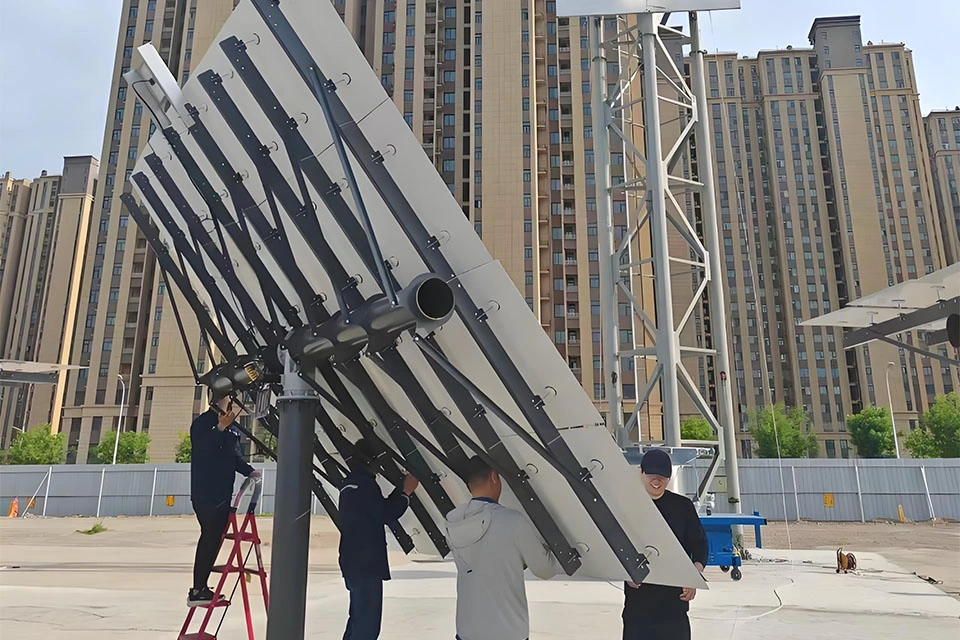
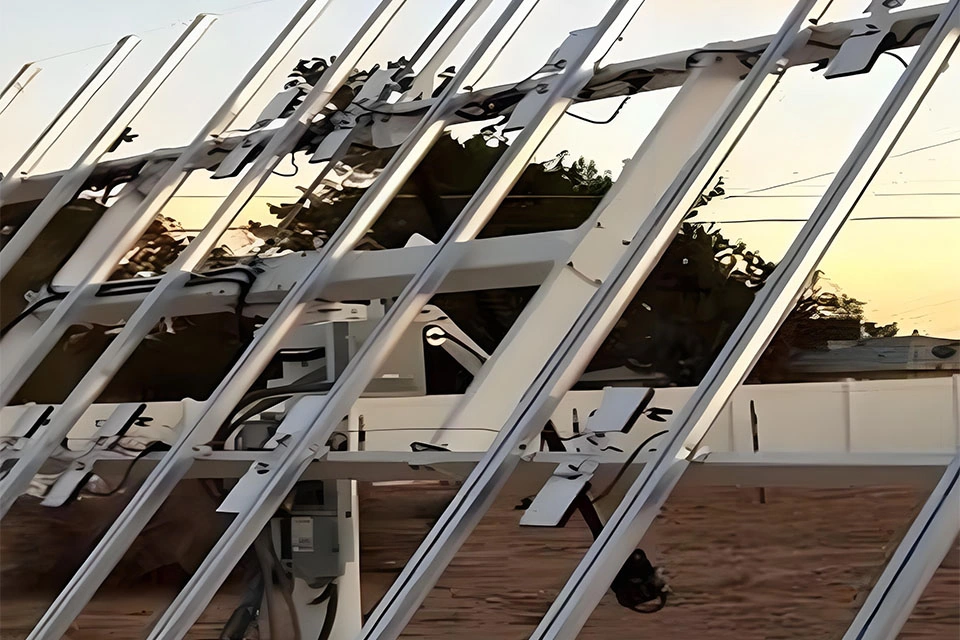
Los sistemas de seguimiento solar operan en algunas de las condiciones ambientales más exigentes. A diferencia de las instalaciones solares fijas, los sistemas de seguimiento tienen partes móviles que deben mantener una posicionamiento preciso mientras soportan constante exposición a los elementos. Entre estos desafíos, la carga de viento representa la amenaza estructural más significativa para el rendimiento y la longevidad de los seguidores solares.
When strong winds strike a solar array, they create substantial forces that push against the panel surface. Wind load on a tracker must be calculated from the site wind conditions, array geometry, structural coefficients, stow position and load path; a generic force figure should not be used for actuator selection. Without adequate holding capacity, the tracking system may experience:
Movimiento no intencionado de los paneles que reduce la producción de energía
Desgaste mecánico por oscilación constante bajo estrés del viento
Fallo prematuro de componentes que conduce a un costoso tiempo de inactividad
Peligros de seguridad por inestabilidad estructural
Static holding or back-driving behavior is one important actuator requirement, but it must be reviewed together with moving load, linkage geometry, structural deflection, stow strategy, brake/holding architecture and the allowable load cases of the complete tracker.
La solución: Actuadores lineales de alta fuerza de sujeción estática
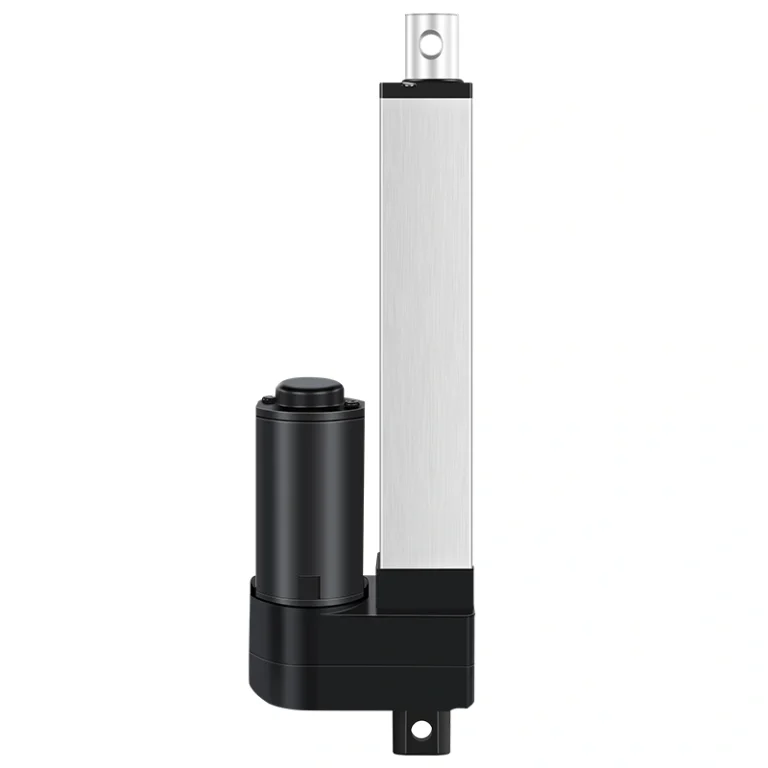
For solar-tracker projects, IP1200 can be evaluated as a configurable higher-load OEM actuator candidate. Final suitability depends on the selected build, tracker geometry, wind/stow load cases, holding behavior, controls, environment and supporting test documentation.
Por qué importa la alta fuerza de sujeción estática
For an IP1200 solar-tracker project, define the required moving load, static holding/back-driving condition, stroke, speed, duty cycle, mounting geometry, controller and wind/stow load cases first. Then confirm the selected actuator configuration against those requirements.
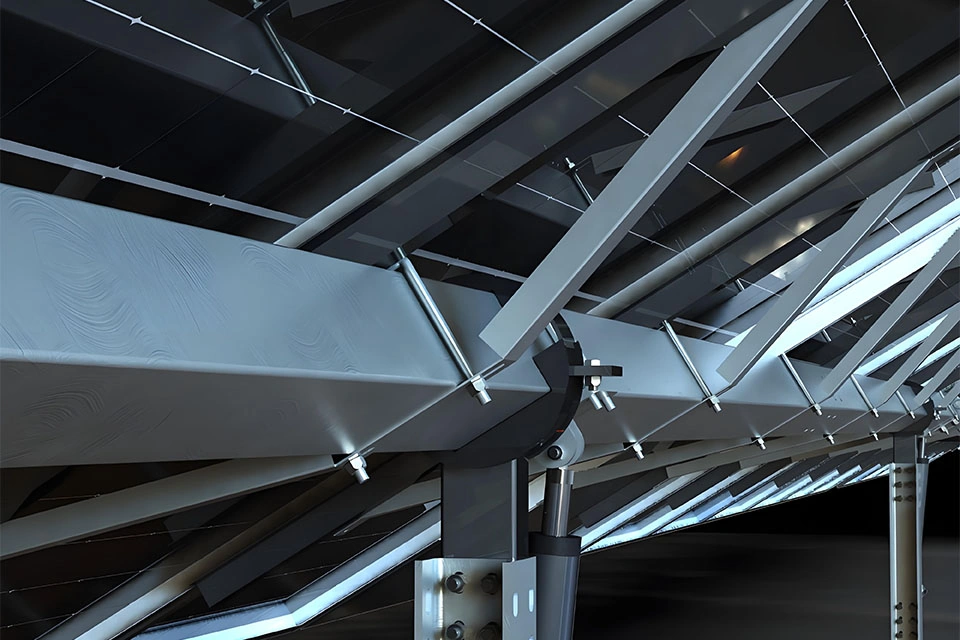
When wind acts on the array, the actuator and linkage become part of the structural load path. Validate the selected IP1200 configuration for the actual mechanism rather than assuming a generic wind-speed capability:
Wind load: convert the project wind case into actuator force and structural reactions for the actual tracker geometry
Positioning: measure panel-angle error on the complete tracker under representative load, temperature and wind conditions
Lifecycle: define cycle, load, stow events, environment and acceptance criteria before evaluating durability
Maintenance: model inspection, access, spares, replacement time and field conditions instead of assuming lower cost from the actuator family alone
Ventajas técnicas para aplicaciones solares en exteriores
Más allá de la fuerza de sujeción estática, el actuador lineal IP1200 pesado ofrece especificaciones adicionales críticas para implementaciones de seguimiento solar:
Environmental Protection: Define the site’s dust, rain, condensation, temperature, UV, corrosion, cable and connector exposure. Request current configuration-specific ingress-protection evidence; do not assume IP66 or a higher rating applies to every IP1200 or IP800 build.
Durability: Para IP800, IP1200 or any other candidate, define the required lifecycle, load, stroke, speed, duty cycle and environment, then request applicable test evidence. Do not infer a fixed lifecycle figure or lower maintenance cost without a configuration-specific validation record.
Positioning and Feedback: Tracker accuracy is a system result. Confirm actuator feedback, controller resolution, linkage geometry, backlash, calibration and structural deflection, then measure the actual panel angle under representative conditions. Do not treat an actuator-family description as a universal 0.1° tracker-accuracy specification.
Consideraciones de aplicación para la integración de seguidores solares
Al seleccionar actuadores lineales para sistemas de seguimiento solar, los equipos de ingeniería deben evaluar varios factores clave más allá de las especificaciones básicas de fuerza:
Arquitectura del sistema
Rastreo de un solo eje vs. rastreo de doble eje: Los sistemas de doble eje requieren más actuadores pero ofrecen un mayor rendimiento energético
Tamaño de la matriz: Las instalaciones más grandes se benefician de actuadores con clasificaciones de fuerza de sujeción más altas
Orientación de montaje: Configuraciones en paisaje y retrato crean diferentes perfiles de carga
Factores ambientales
Clasificación de zonas de viento: Determinar las velocidades máximas de viento esperadas para el sitio de instalación
Rango de temperatura: Asegurar el rendimiento del actuador en extremos de temperatura estacionales
Exposición a UV: Seleccionar actuadores con materiales resistentes a los UV para un uso exterior a largo plazo
Requisitos de integración
Compatibilidad de suministro eléctrico: Verificar que los requisitos de voltaje coincidan con la infraestructura disponible
Interfaz de control: Asegurar la integración con sistemas SCADA o controladores de seguimiento inteligentes
Provisiones de montaje: Confirmar la compatibilidad mecánica con los diseños de marco de rastreador
Para los fabricantes que desarrollan soluciones de seguimiento solar, asociarse con un proveedor de actuadores experimentado temprano en el proceso de diseño puede agilizar la integración y optimizar el rendimiento del sistema.
¿Cuál es la diferencia entre la carga dinámica y la fuerza de sujeción estática en los seguidores solares?
Dynamic load describes the force required while the mechanism is moving. Static holding or back-driving behavior describes the stationary condition. Both must be confirmed for the selected actuator and actual tracker geometry, orientation, duty cycle and safety factor.
How should ingress protection be selected for a solar-tracker actuator?
Start from the site exposure, mounting orientation, cable and connector arrangement, cleaning method and enclosure interfaces. Then request configuration-specific IP evidence. There is no universal rule that every solar-tracker actuator must be IP66.
How can an actuator affect solar-tracker project economics?
An actuator can influence tracking availability, maintenance, stow behavior and positioning, but energy yield and ROI are system-level outcomes. Compare a defined baseline using the same site, controls, weather period and availability assumptions rather than assigning a fixed percentage gain to the actuator.
Conclusión: Invirtiendo en fiabilidad
A medida que la energía solar continúa expandiéndose globalmente, la demanda de sistemas de seguimiento confiables y de alto rendimiento solo aumentará. La elección de actuador lineal para aplicaciones de rastreadores solares impacta directamente en la fiabilidad del sistema, el rendimiento energético y la rentabilidad a largo plazo.
For wind-loaded solar-tracker applications, compare candidate actuadores de alta resistencia using the project’s moving load, static holding/back-driving requirement, stroke, speed, duty cycle, controls, environmental exposure, stow strategy and configuration-specific evidence. IP1200 is one candidate to validate, not a universal solution.
Obtenga Perspectivas Expertas sobre Control del Movimiento Industrial
Seleccionar el actuador lineal eléctrico o columna de elevación es crítico para el rendimiento de su proyecto. Como fabricante profesional de Control de Movimiento y Automatización, nuestros ingenieros le ayudan a personalizar la capacidad de carga, la longitud de la carrera y las clasificaciones IP según su aplicación específica. Comparta sus requisitos técnicos para una solución a medida.
ActuLift apoya la personalización de extremo a extremo, desde el diseño estructural y los parámetros de recorrido hasta la marca y los acabados de la carcasa, ayudándote a construir una potente identidad de marca.
Respuesta rápida y prototipado
Entendemos la importancia de la rapidez en la adquisición B2B, utilizando flujos de trabajo de producción optimizados para asegurar respuestas eficientes desde el desarrollo de muestras hasta la entrega a granel.
Quality Documentation & Traceability
Quality and traceability requirements vary by project. Ask ActuLift for the applicable inspection records, product specifications, drawings and available compliance documentation for the selected model and order.