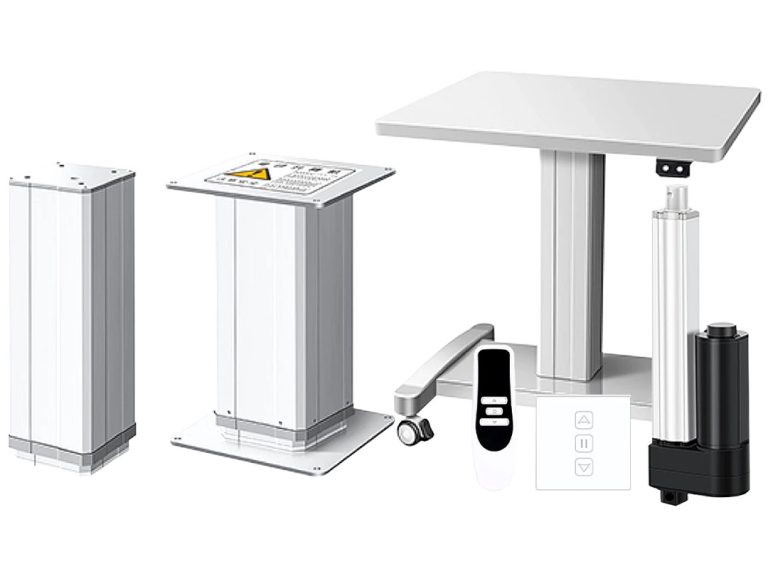
Cách các cảm biến Hall cho phép chuyển động tuyến tính đồng bộ
Khám phá cách công nghệ cảm biến Hall giải quyết thách thức đồng bộ hóa trong các hệ thống đa bộ truyền động. Tìm hiểu cách bộ truyền động tuyến tính công nghiệp IP3000H và bộ điều khiển IPC2 cung cấp phản hồi vị trí theo thời gian thực để đảm bảo chuyển động tuyến tính hoàn hảo và chính xác cho bàn đứng, thiết bị y tế và thiết bị công nghiệp.
Hãy tưởng tượng một chiếc bàn đứng có thể điều chỉnh chiều cao nhưng nghiêng không đều. Hoặc một nền tảng nâng công nghiệp phát ra tiếng kêu dưới tải trọng không đều. Những kịch bản gây bực bội này xảy ra vì một thách thức cơ bản trong các hệ thống đa bộ truyền động: ngay cả những bộ truyền động giống hệt nhau cũng không di chuyển với tốc độ hoàn toàn giống nhau.
Khi nhiều bộ truyền động tuyến tính với cảm biến hall units operate simultaneously, manufacturing tolerances, internal friction variations, and load differences cause them to drift out of alignment. If the mechanism is not designed and controlled for differential motion, drift can contribute to racking, uneven loading, binding or other system-level problems.
This is where Hall sensor technology transforms the game. Hall pulse feedback can give a compatible controller information about relative actuator movement. In a matched, commissioned system, that feedback can support closed-loop synchronization, but the achieved position error depends on the actuator, sensor resolution, controller, wiring, calibration, load and mechanism. For conductor identification and controller connections, use our linear actuator wiring guide before commissioning.
Mục lục
Cảm biến Hall hoạt động như thế nào trong các bộ truyền động tuyến tính
Hall effect sensors operate on a elegant principle of physics: they detect changes in magnetic fields and convert these changes into electrical signals. One common actuator architecture uses magnetic sensing on the motor or drivetrain to generate digital pulses as the actuator moves. The exact sensor placement, pulse relationship and electrical interface are product- and configuration-specific.
A controller can count feedback pulses to estimate relative movement and compare channels. Pulse density, effective travel resolution and accumulated position error depend on the sensor, motor, gearing, screw lead, decoding method and calibration; do not infer an absolute position or a universal pulses-per-travel value from the presence of a Hall sensor alone.
Hall and potentiometer feedback have different characteristics. Selection should be based on the required signal type, absolute/relative position behavior, resolution, controller compatibility, environment and failure handling:
Sensor interface: Hall sensing can be non-contact at the sensing element, while overall actuator lifecycle still depends on the complete mechanical and electrical design
Resolution: effective travel resolution depends on pulse density, gearing, screw lead, decoding and controller implementation
Digital pulse signal: requires a compatible controller and suitable wiring; noise performance depends on the complete electrical design
Synchronization input: pulse feedback can support channel comparison and correction when the complete closed-loop system is matched and commissioned
IP3000H: Confirm the Selected Feedback Configuration
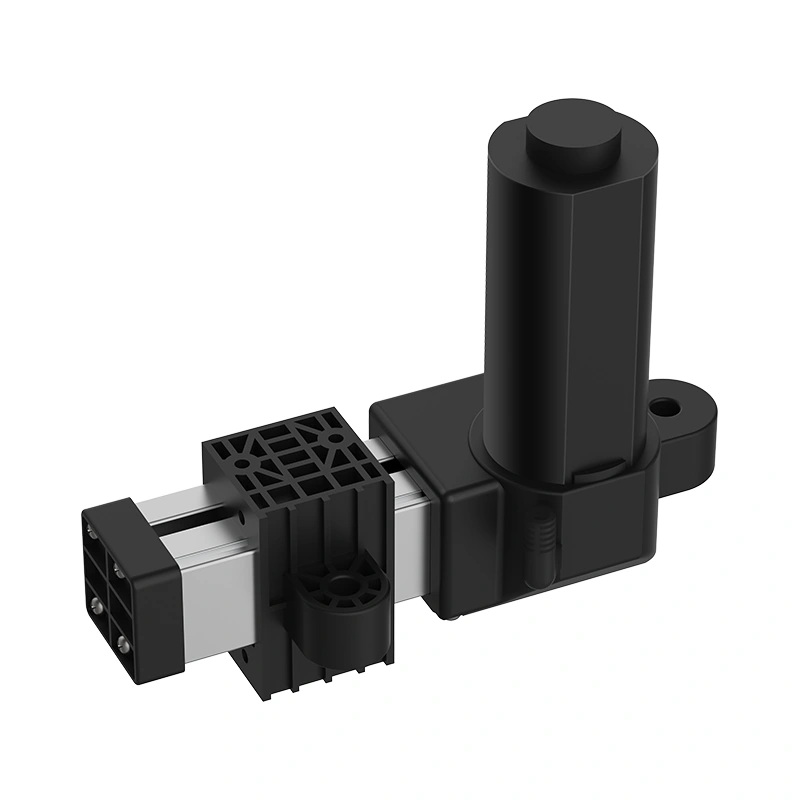
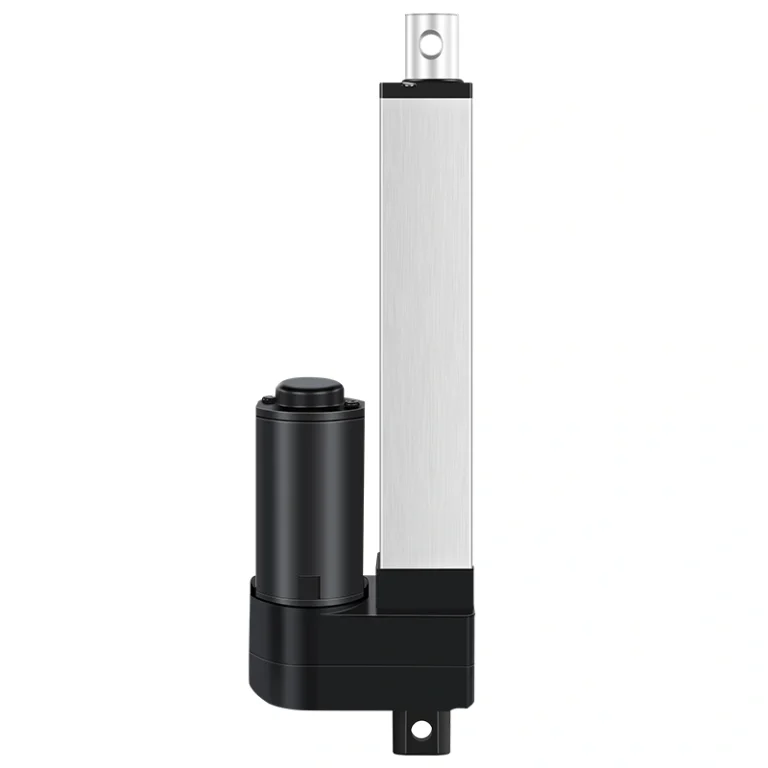
Giá đỡ máy dẫn động phẳng Bộ truyền động tuyến tính công nghiệp IP3000H is a configurable OEM actuator platform. Its current product evidence states that feedback, controller, wiring and environmental-protection requirements are configuration dependent, so this article should not be used to assume Hall feedback or a particular protection rating for every IP3000H build.
Configuration items to confirm for IP3000H include:
Feedback method: confirm Hall, potentiometer, limit switching or other feedback/control requirements for the selected build
Tải: confirm required push/pull load and the rated working point for the selected configuration
Environmental protection: confirm the required exposure and configuration-specific IP or other test/documentation evidence
Stroke and installation geometry: confirm travel, retracted/extended dimensions and mounting for the selected build
Motor / controller integration: confirm voltage, current, speed under load, wiring and controller compatibility
If a feedback-equipped IP3000H configuration is proposed, verify the feedback signal, resolution, wiring, controller compatibility, calibration and synchronization performance on the actual mechanism. Do not assume calibration-free or position-control performance from the model name alone.
IPC2: Dual-Actuator Controller Integration
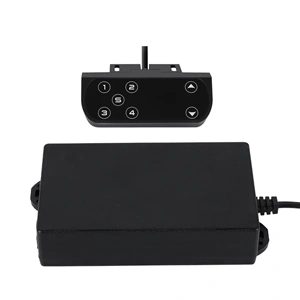
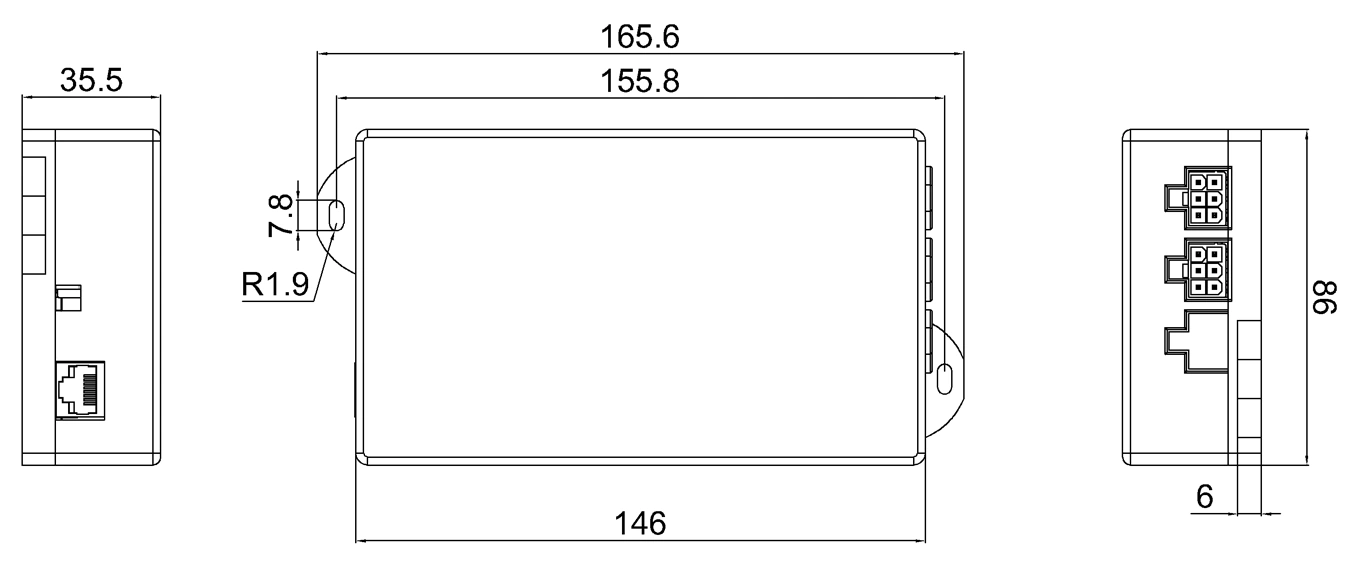
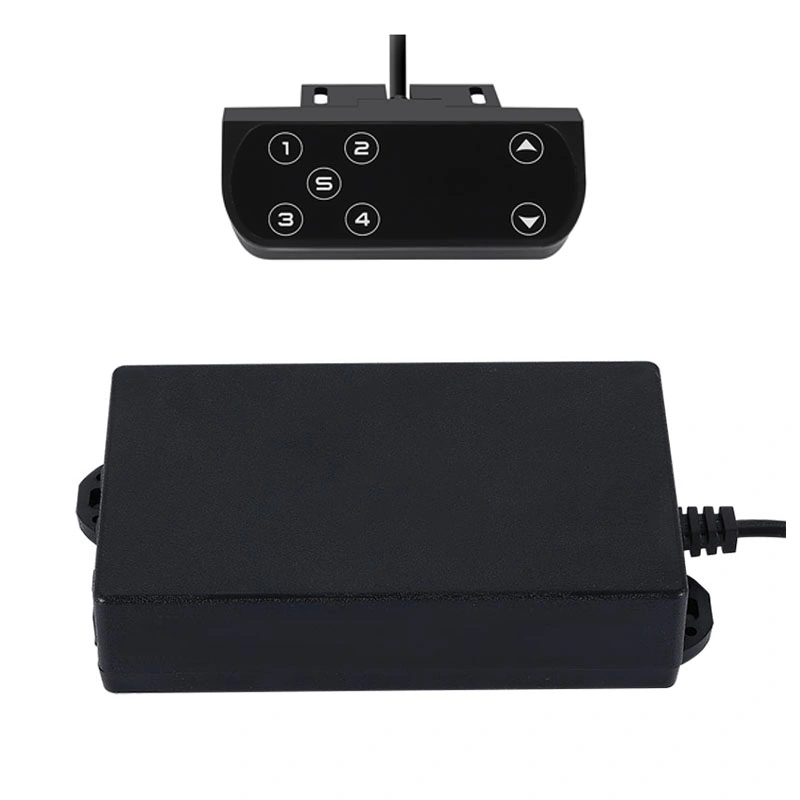
Giá đỡ máy dẫn động phẳng IPC2 is currently positioned as a dual-actuator controller for OEM motion systems. Final synchronization performance depends on actuator and feedback compatibility, electrical limits, wiring, commissioning and the mechanical system; confirm the selected feedback method rather than assuming Hall input from this article.
Synchronization items to validate with IPC2:
Feedback acquisition: confirm the supported signal type and how each actuator channel is measured
Channel comparison: confirm the controller algorithm, update behavior and permitted position error
Correction behavior: validate how the controller responds to channel mismatch, load difference, current limit and faults
End / hold behavior: define end-of-travel, stopping, holding and fault-state requirements for the complete system
The current IPC2 product page identifies a dual-actuator controller architecture. Confirm the exact actuator pair, feedback compatibility, channel behavior and achievable synchronization error during sample validation; do not infer support for three or four actuators from IPC2.
Different loads can create channel mismatch, but the controller’s response must be validated for the selected actuators, feedback, current limits and mechanism. Do not assume automatic load balancing, equipment protection or a guaranteed synchronization error without configuration-specific evidence.
Các tình huống ứng dụng
A compatible feedback-equipped actuator and dual-actuator controller can be evaluated in applications where coordinated motion is required. The following are requirement examples, not automatic suitability claims:
Bàn đứng và vị trí làm việc
For height-adjustable desks or workstations, define the permitted level difference, load distribution, controller behavior and anti-collision/fault requirements, then validate the matched actuator pair under representative loading.
Thiết bị công nghiệp
For industrial equipment, calculate the load path and define the permitted channel mismatch, mechanical guidance, guarding, fault response and lifecycle requirements. A controller cannot by itself guarantee even load distribution or equipment life.
Thiết bị y tế
For care-related or medical equipment, coordinated motion is only one finished-device requirement. Define load, position error, controls, emergency/fault behavior, acoustic targets, mechanical protection and regulatory validation; actuator/controller synchronization alone does not establish patient safety or medical suitability.
Hệ thống theo dõi năng lượng mặt trời
For solar or tracking mechanisms, define the required angular/linear position tolerance, wind and structural load cases, stow/fault behavior, feedback architecture and commissioning method before selecting a synchronized actuator system.
Kiểm soát truy cập
For doors, gates or hatches using two actuators, define the permitted skew, obstruction behavior, mechanical guidance, safety devices and fault response, then validate the complete mechanism.
For industrial projects, use the tự động hóa công nghiệp category to identify candidate platforms, then confirm actuator, feedback, controller, wiring and validation requirements for the selected system.
Why are feedback signals used for actuator synchronization?
Nominally identical actuators can move differently because of load, friction, tolerances and electrical conditions. A compatible feedback signal such as Hall pulses can let a controller compare relative movement and apply corrections, but synchronization accuracy depends on the complete actuator-controller-mechanism system.
Can I synchronize more than two actuators using Hall feedback?
That depends on the controller architecture. IPC2 is currently described as a dual-actuator controller, so do not infer three- or four-actuator capability from IPC2. For more channels, confirm the specific controller, channel count, compatible feedback, current limits, wiring and synchronization method.
Does Hall feedback retain absolute position after power loss?
Hall pulse feedback is commonly incremental, so absolute position retention depends on the controller, stored state, reference switches, homing strategy and power-loss behavior. Confirm the selected system rather than assuming memory or a required homing cycle.
Is Hall feedback better than a potentiometer?
Neither is universally better. Hall feedback can provide digital pulse information and a non-contact sensing principle, while a potentiometer can provide an absolute analog position signal. Choose based on required position behavior, resolution, controller inputs, wiring, environment, lifecycle and failure handling.
Kết luận: Tại sao đồng bộ hóa quan trọng
In multi-actuator mechanisms, uncontrolled differential motion can create alignment and load-sharing problems. Feedback-assisted control is one way to manage that risk, but the appropriate sensor and controller architecture depends on the application.
A feedback-equipped actuator paired with a compatible synchronization controller can support the following engineering objectives when the complete system is matched and validated:
Defined alignment error: specify and validate the permitted channel mismatch through the required travel and load range
Controlled load sharing: use mechanical guidance and control strategy to reduce unintended differential loading; lifecycle still requires validation
Defined fault behavior: integrate synchronization with the equipment’s independent safety and risk-control architecture
Controlled motion quality: validate speed, acceleration, noise, skew and stopping behavior on the finished mechanism
For any target application, confirm whether the selected IP3000H configuration actually provides the required feedback and whether IPC2 is electrically and functionally compatible. Approve the system only after representative load, synchronization-error, fault and lifecycle validation.
Sẵn sàng triển khai chuyển động tuyến tính đồng bộ trong dự án tiếp theo của bạn? Khám phá các loại của chúng tôi control boxes and controllers hoặc liên hệ với đội ngũ kỹ thuật của chúng tôi để được tư vấn cá nhân hóa.
Nguồn
IP3000H current product page — confirm feedback, load, stroke, speed, protection and documentation by configuration
IPC2 current product page — dual-actuator controller; confirm actuator/feedback compatibility, wiring, current and commissioning
Nhận Thông tin Chuyên gia về Kiểm soát Chuyển động Công nghiệp
ActuLift hỗ trợ tùy chỉnh từ đầu đến cuối, từ thiết kế cấu trúc và tham số hành trình đến thương hiệu và hoàn thiện vỏ, giúp bạn xây dựng bản sắc thương hiệu mạnh mẽ.
Phản hồi nhanh & Tạo mẫu
Chúng tôi hiểu tầm quan trọng của tốc độ trong việc mua sắm B2B, sử dụng quy trình sản xuất được tối ưu hóa để đảm bảo phản hồi hiệu quả từ phát triển mẫu đến giao hàng số lượng lớn.
Quality Documentation & Traceability
Quality and traceability requirements vary by project. Ask ActuLift for the applicable inspection records, product specifications, drawings and available compliance documentation for the selected model and order.