Hospital-bed actuator noise can affect patient comfort, caregiver experience, and equipment usability, but a single component noise figure does not establish suitability for a finished medical bed. OEM engineers should define an acoustic target at the system level and validate it under the intended load, speed, mounting geometry, enclosure, ambient noise, measurement distance, and test method.
Scope: This page is the IP6000-specific hospital-bed validation guide, focusing on acoustic targets, load, holding behavior, duty cycle, protection, controls, documentation, and sample validation. For the broader engineering and documentation checklist that applies before selecting any hospital-bed actuator, see 5 Engineering Requirements for Linear Actuators in Hospital Bed Systems.
Defining an Acoustic Target for Hospital-Bed Motion
Medical electrical-equipment standards, medical-bed requirements, workplace or environmental noise guidance, and project-specific acoustic targets address different scopes. Do not infer a universal actuator noise threshold from a system-level standard. The finished-device manufacturer should identify the standards and acceptance criteria that apply to the complete bed system and its intended market.
Clinical literature has examined the relationship between healthcare-environment noise, sleep, stress, and patient experience. Those findings can inform a project brief, but they should not be converted directly into an actuator pass/fail number without checking the source, measurement context, and the finished system. Use current external evidence to define the design objective, then validate the actual bed mechanism under representative conditions.
Instead of relying on a generic “low-noise” label, define the maximum acceptable sound level for the complete motion system together with the measurement method. For care-related or regulated equipment, the acoustic requirement should be reviewed alongside load, duty cycle, controls, safety functions, environmental conditions, cleaning requirements, and documentation for the finished device.
IP6000 Configuration Data to Confirm
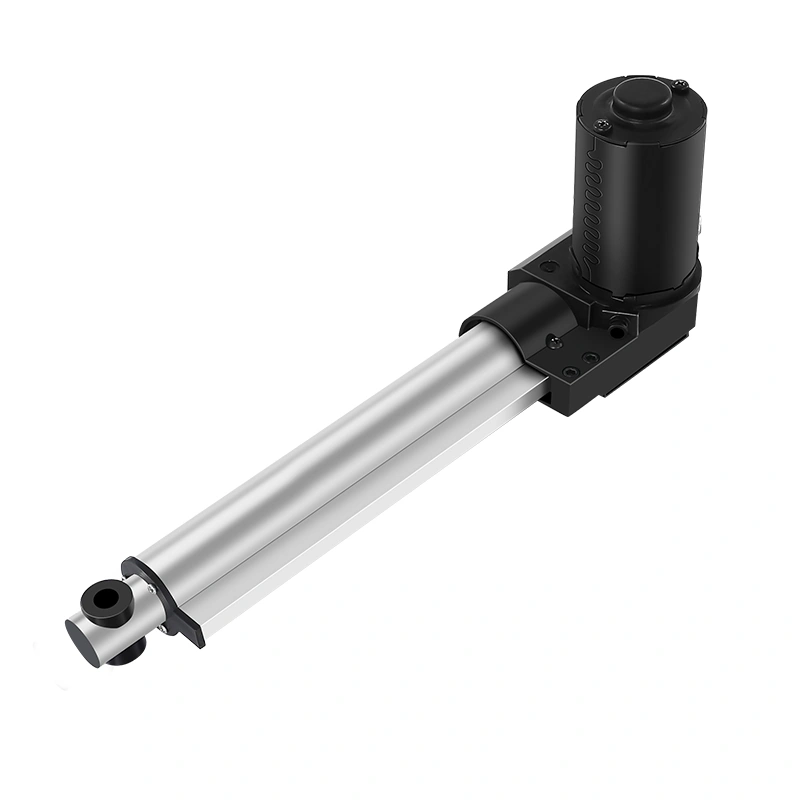
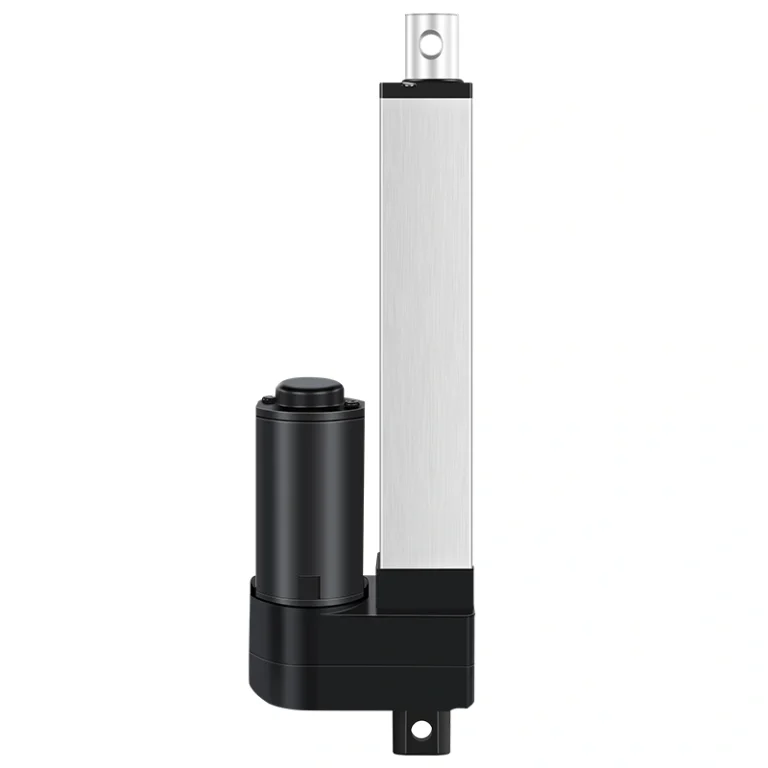
IP6000 is a configurable OEM linear-actuator platform that can be evaluated for projects requiring higher load capacity, controlled motion, and defined acoustic targets. Final suitability depends on the selected build and finished-system validation.
Spesifikasi kinerja utama:
Noise: If a project brief references ≤48 dB, request configuration-specific acoustic test evidence and confirm load, speed, mounting, ambient noise, measurement distance, and test method.
Push/pull force: If a legacy brief references 6,000 N, confirm the exact rated load for the selected build and validate it against the complete mechanism and safety margin.
Speed: Confirm the available speed range for the selected gearing and the expected speed under the project load.
Stroke: Confirm available stroke, installation length, end dimensions, and mounting geometry for the selected configuration.
Tegangan: Confirm the supported supply voltage, controller, current demand, wiring, connector, and protection requirements for the selected build.
Ingress protection: Request current configuration-specific IP documentation and confirm the complete installed system, cable, connector, and mounting conditions.
Siklus tugas: Confirm the rated duty cycle and test conditions for the selected configuration, then compare them with the actual usage profile.
Lead screw / holding: Confirm screw type, back-driving behavior, static holding requirement, brake strategy, orientation, and load for the selected build.
Compliance documentation: Request current model- or configuration-specific CE/RoHS or other applicable declarations and confirm their scope.
Operating environment: Confirm the supported temperature range and any humidity, cleaning, contamination, or storage limits for the selected configuration.
How to Evaluate IP6000 Noise Sources
Actuator noise can come from the motor, gearing, screw system, brake or holding mechanism, bearings, side load, mounting structure, control profile, and the surrounding frame. Review these sources together rather than attributing the complete acoustic result to one component.
Legacy engineering descriptions for IP6000 reference a T-type trapezoidal screw and holding behavior, but those descriptions should not be treated as proof of a universal lead angle, absolute self-locking condition, brake-free architecture, or holding load. Confirm the selected configuration, orientation, back-driving behavior, static holding requirement, and power-off behavior with current drawings and test evidence.
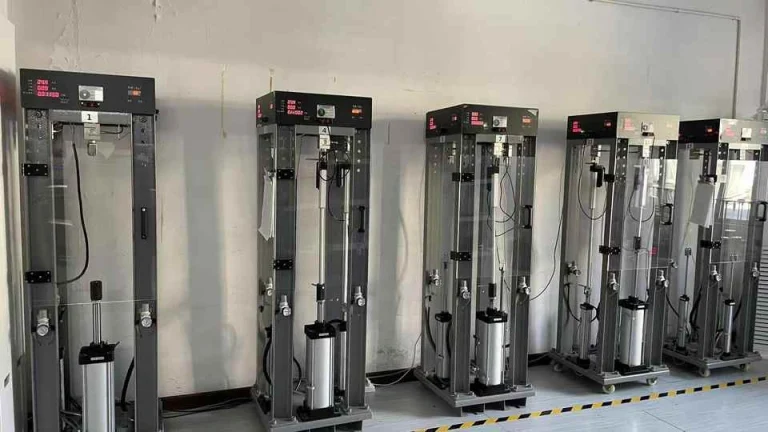
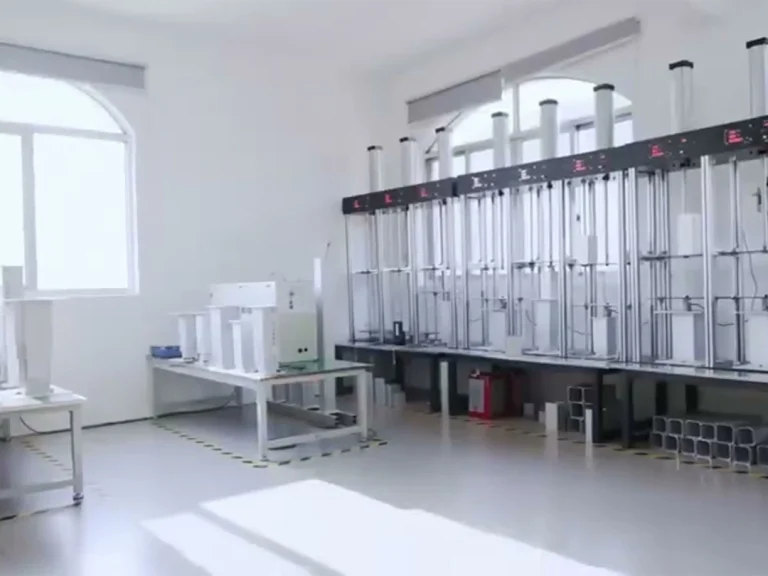
During sampling, evaluate side loading, overload margin, mounting alignment, controller ramping, lubrication state, frame resonance, cable routing, and wear over the required lifecycle. These system-level factors can materially change the measured sound level even when the actuator itself is unchanged.
Hospital-Bed Applications: Define System Requirements First
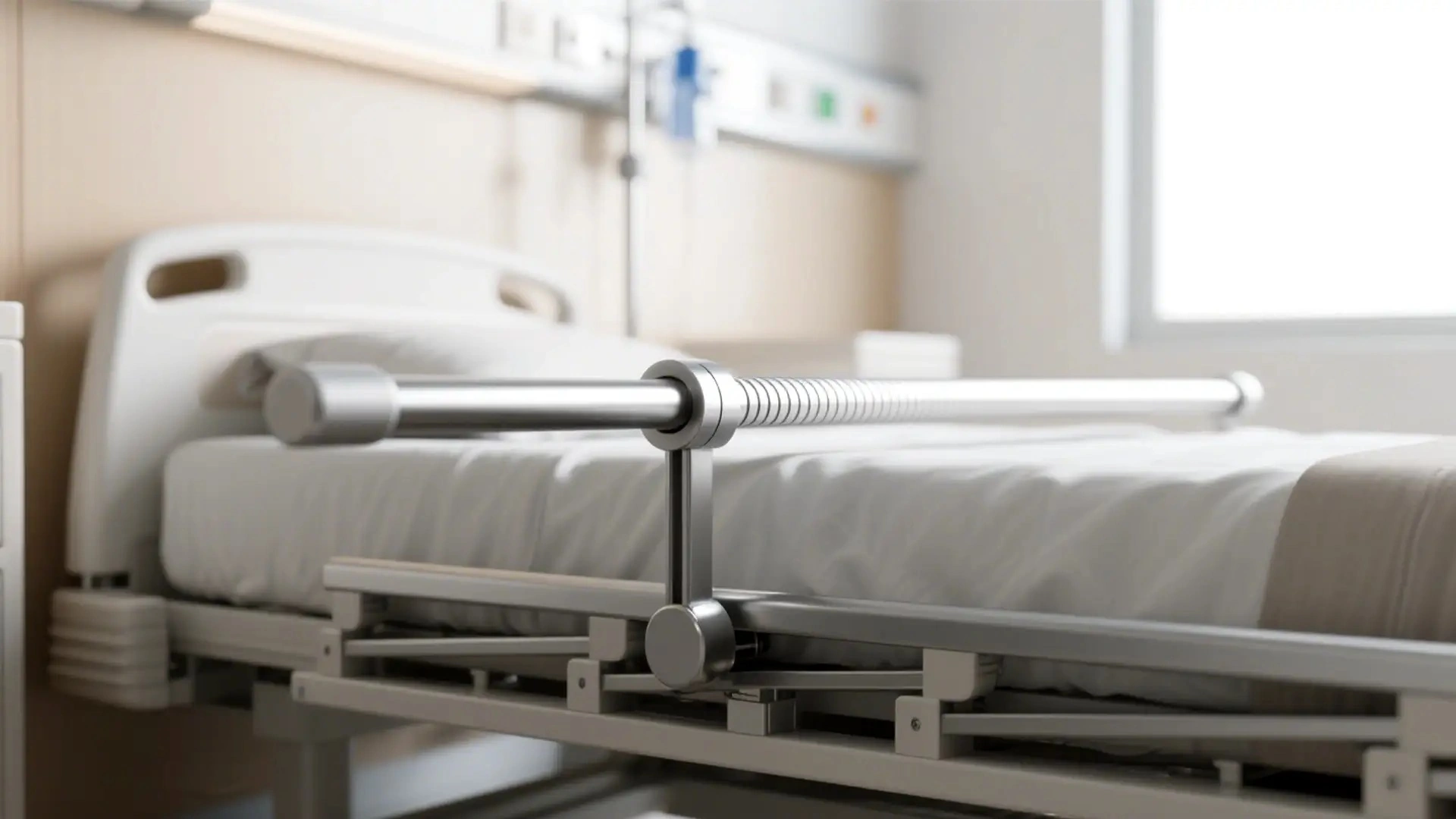
Hospital beds can be multi-axis motion systems with different load paths, linkages, controls, holding requirements, and safety functions. Our related guide on engineering requirements for hospital-bed actuator projects explains why load, speed, control, acoustic targets, documentation, and finished-system validation must be reviewed together.
Load and holding requirement: Calculate each axis from the actual patient/support load, linkage geometry, friction, orientation, simultaneous-axis conditions, and required safety margin; then select and validate the actuator configuration.
Speed and motion profile: Define acceptable speed, acceleration, deceleration, stopping behavior, synchronization, and control response for the complete bed system; do not infer clinical suitability from a catalog speed range alone.
Safety functions: The finished-device manufacturer should define the required safety factors, emergency functions, release mechanisms, fault behavior, entrapment controls, and validation plan. Confirm whether the selected actuator and linkage architecture can support those requirements.
Siklus tugas: Model the expected movement frequency and duration, thermal conditions, load profile, and recovery time. Confirm the actuator’s rated duty cycle for the selected build rather than assuming a generic clinical usage pattern.
Electrical / EMC integration: Define the finished-system EMC and electrical-safety requirements, then request the applicable component evidence. Do not infer MRI, defibrillator, ESD, or medical-system immunity from generic actuator wording.
Selecting an Actuator: Compare Verified Configurations
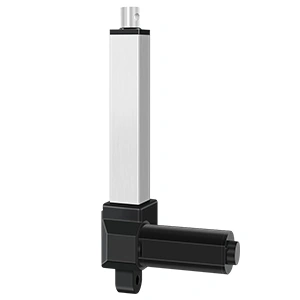
ActuLift offers multiple linear-actuator families with different size, load, speed, control, feedback, environmental, and mounting options. For care-related or regulated equipment, compare only configuration-specific data that can be tied to the selected model and supporting documentation.
Comparison item
What to confirm before selection
Load / holding
Rated push and pull load, static holding, orientation, linkage geometry and safety margin for the selected build.
Speed / stroke
Available speed under load, stroke, installation length and end dimensions for the required mechanism.
Controls / feedback
Controller compatibility, feedback method, synchronization requirements, wiring and fault behavior.
Lingkungan
Configuration-specific ingress protection, temperature, cleaning, cable and connector requirements.
Evidence
Current drawings, specifications, test records and applicable compliance documentation tied to the ordered configuration.
Do not select a primary load-bearing actuator from a headline force number or a generic “medical” label. Calculate the required working point for each axis and compare candidate models using configuration-specific load, holding, speed, stroke, acoustic, duty-cycle, environmental, control, and documentation evidence.
Panduan Implementasi OEM
Hospital-bed OEM projects often require configuration review beyond a generic catalog selection. Through ActuLift’s OEM/ODM process, buyers can define stroke, load, speed, controls, mounting, environmental protection, acoustic targets, documentation, and sample-validation requirements for the project.
Customer-case, procurement-win, acoustic-test, lifecycle, certification, or compliance claims should only be published when the corresponding project records can be reviewed and tied to the stated configuration and test method. For an IP6000 hospital-bed project, request the current drawing, approved specification, sample report, acoustic test method, lifecycle target, applicable declarations, and finished-system validation responsibilities before using such claims in procurement or marketing.
Pertanyaan yang Sering Diajukan
Does the IP6000 meet IEC 80601-2-52:2026 requirements for medical beds?
IEC 80601-2-52:2026 applies to the basic safety and essential performance of medical beds for adults, including electrical and non-electrical (manual) medical beds within its stated scope. It is a finished-medical-bed standard, not a standalone actuator approval. The responsible finished-device manufacturer should determine applicability, complete the required system testing, and maintain the corresponding technical documentation. Do not treat an IP6000 component description, acoustic target, or generic EMC statement as proof of IEC 80601-2-52:2026 compliance.
Berapa siklus kerja IP6000, dan apakah cukup untuk penggunaan di rumah sakit?
Confirm the rated duty cycle and test conditions for the selected IP6000 configuration. Then compare that rating with the actual movement frequency, run duration, load, ambient temperature, rest time, controller behavior, and worst-case use profile of the finished bed. Do not infer hospital-use suitability from a generic duty-cycle statement alone.
Apakah IP6000 bisa dikustomisasi sesuai kebutuhan OEM tempat tidur rumah sakit tertentu?
IP6000 can be reviewed for project-specific configuration. Confirm the available stroke, installation dimensions, load, speed, voltage, controls, feedback, ingress protection, connector, mounting interface, duty cycle, documentation, and sample-validation requirements for the selected build rather than assuming a fixed customization range from this article.
How can a T-type lead screw affect actuator noise?
A trapezoidal screw can influence efficiency, holding behavior, back-driving tendency, and acoustic characteristics, but the result depends on screw geometry, friction, load, orientation, wear, lubrication, gearing, motor, and the complete mechanism. Confirm the selected IP6000 screw design, holding requirement, brake strategy, and power-off behavior with current engineering evidence.
Apa perbedaan antara peringkat IP43 dan IPX6/IPX7, dan apakah ini penting untuk tempat tidur rumah sakit?
Ingress-protection needs depend on the cleaning method, contamination exposure, installation orientation, cable and connector design, enclosure interfaces, and the finished equipment’s risk assessment. Request current configuration-specific IP evidence and do not assume that IP43, IPX6, IPX7, washdown suitability, or a particular care setting applies without matching test documentation.
Kesimpulan
For hospital-bed projects, actuator noise should be treated as one engineering requirement within a larger system that also includes load, holding, motion profile, controls, safety functions, environment, cleaning, duty cycle, EMC, and compliance responsibilities. IP6000 can be evaluated as a configurable candidate, but any force, acoustic, screw, holding, protection, or compliance claim should be confirmed for the selected build and validated in the finished mechanism.
OEM engineers evaluating hospital-bed motion can contact ActuLift to review IP6000 configuration options, drawings, available test evidence, and sample-validation requirements. Define the target load, stroke, speed, controls, mounting, acoustic conditions, duty cycle, environment, documentation, and finished-system acceptance criteria before approval.
Sumber & Referensi
Organisasi Kesehatan Dunia (WHO) — Pedoman Kebisingan Lingkungan (Berglund et al., 1999) — https://www.who.int/docstore/peh/noise/guidelines2.html
Elbaz et al. (2017) — "Tingkat kebisingan di unit perawatan intensif dan dampaknya terhadap tidur," Annals of Intensive Care — https://annalsofintensivecare.springeropen.com/counter/pdf/10.1186/s13613-017-0248-7.pdf
Darbyshire JL, Young JD (2013) — "Investigasi tingkat kebisingan di unit perawatan intensif terkait pedoman WHO," Perawatan Intensif (PMC) — https://ncbi.nlm.nih.gov/pmc/articles/PMC4056361/
IEC 80601-2-52:2026 — Particular requirements for the basic safety and essential performance of medical beds for adults
ActuLift — current IP6000 product page, approved drawing, configuration-specific specification, and available test documentation; request the current applicable version before use.
Project-specific engineering, acoustic, lifecycle, quality, and compliance records where available; verify the configuration, revision, test method, and scope before citing them.
Dapatkan Pandangan Para Ahli tentang Kontrol Gerakan Industri
Memilih yang tepat aktuator linier listrik atau kolom pengangkat sangat penting untuk kinerja proyek Anda. Sebagai seorang profesional Produsen Kontrol Gerakan & Otomatisasi, insinyur kami membantu Anda menyesuaikan kapasitas beban, panjang langkah, dan rating IP berdasarkan aplikasi spesifik Anda. Bagikan persyaratan teknis Anda untuk solusi yang disesuaikan.
ActuLift mendukung kustomisasi dari awal hingga akhir, mulai dari desain struktural dan parameter jalur hingga branding dan penyelesaian casing, membantu Anda membangun identitas merek yang kuat.
Respons Cepat & Prototyping
Kami memahami pentingnya kecepatan dalam pengadaan B2B, memanfaatkan alur kerja produksi yang dioptimalkan untuk memastikan respons efisien dari pengembangan sampel hingga pengiriman massal.
Quality Documentation & Traceability
Quality and traceability requirements vary by project. Ask ActuLift for the applicable inspection records, product specifications, drawings and available compliance documentation for the selected model and order.