Your hospital bed actuator is waking patients up — and your purchasing team may not know it yet. When a nurse adjusts a bed during a night shift, standard linear actuators routinely exceed 55 dB(A), compounding across dozens of adjustments into a sustained acoustic assault on patients who desperately need restorative sleep. The World Health Organization (WHO) Guidelines for Community Noise set hospital ward levels at ≤30 dB(A) continuously and ≤40 dB(A) at night — yet real-world ICU environments average ~60 dB(A). Bridging that gap requires OEM engineers to rethink the motion control systems at the core of hospital furniture.
Why <48 dB Matters: The Clinical Case for Quiet Actuators
Many equipment manufacturers believe they are compliant because they satisfy IEC 60601-1. They are not wrong — but they are solving the wrong problem. IEC 60601-1 sets an absolute maximum of 80 dB(A) over 24 hours, a threshold designed strictly to prevent long-term hearing damage. It does nothing to protect patient sleep.
Market benchmarks for “low noise” medical actuators typically hover around 50–54 dB(A). That is not quiet enough. To genuinely support patient recovery and align with ActuLift’s healthcare and medical equipment solutions, forward-thinking OEM engineers must target the premium acoustic segment: <45–48 dB(A) for all motorized bed components.
IP6000 Technical Specifications at a Glance
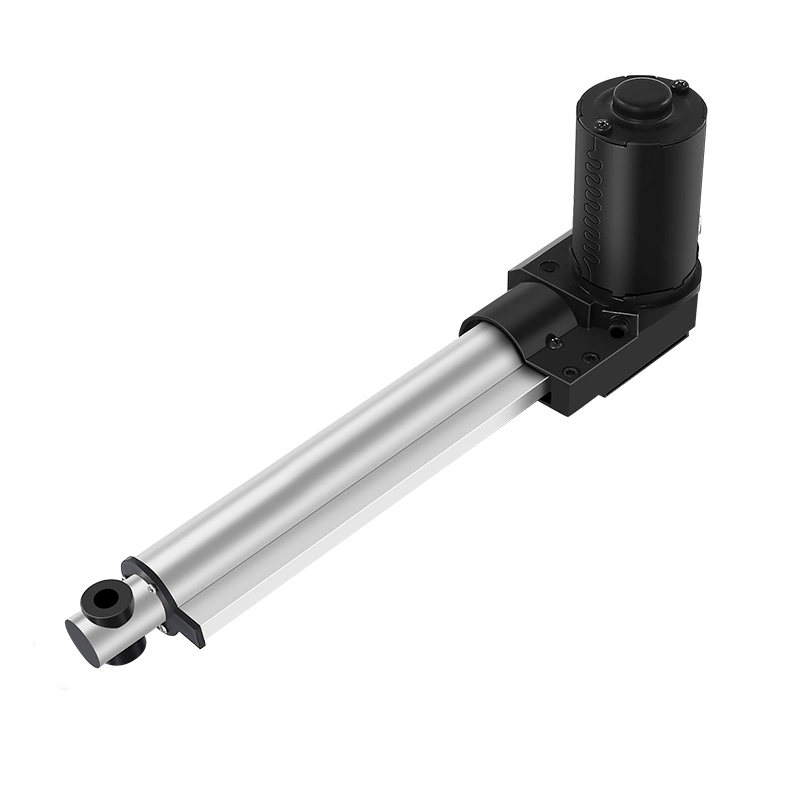
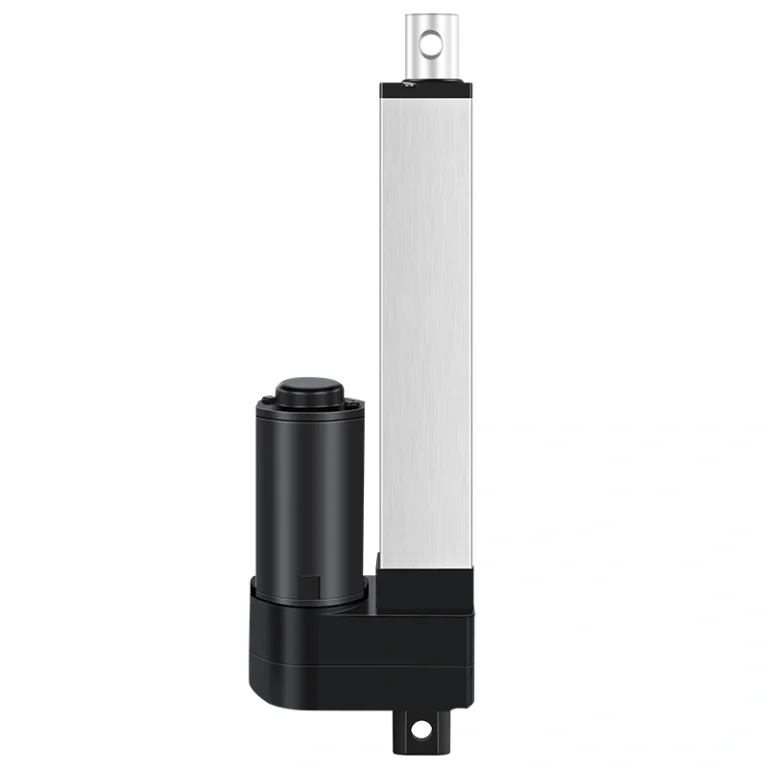
To bridge the engineering gap between high load capacity and strict acoustic demands, the IP6000 high-force linear actuator was engineered specifically for heavy-duty, low-noise medical applications.
Key performance specifications:
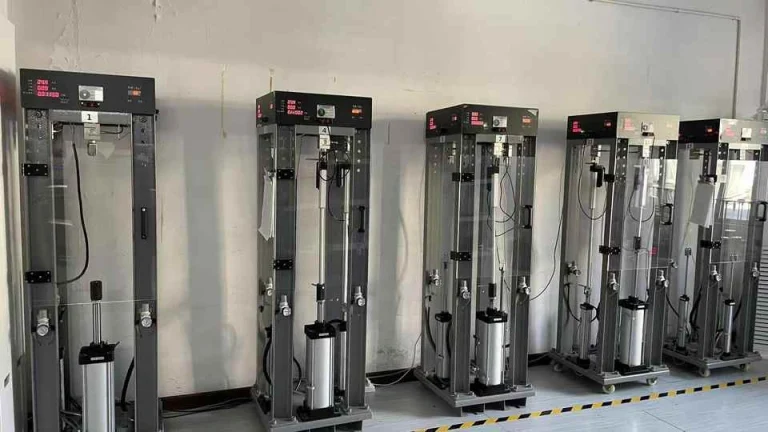
Noise level: ≤48 dB (verified under controlled conditions; ambient noise must be ≤38 dB(A) during measurement)
Max push/pull force: 6,000 N (capable of lifting heavy bariatric frames)
Stroke length: 50–800 mm (fully customizable for bed articulation requirements)
Voltage: 12V DC or 24V DC
IP rating: IP43 (standard baseline)
Duty cycle: 10% (S2-18 min continuous operation)
Lead screw: T-type trapezoidal (mechanically self-locking)
Certifications: CE + RoHS compliant
Operating temperature: −20°C to +60°C
How the IP6000 Achieves Silent Operation
A standard actuator’s noise profile is driven by its braking mechanism, motor hum, gear meshing, and screw friction. Engineers investigating why linear actuators make noise and how to fix it consistently find that external mechanical brakes are the worst offenders — producing loud clacking when engaging and disengaging under load.
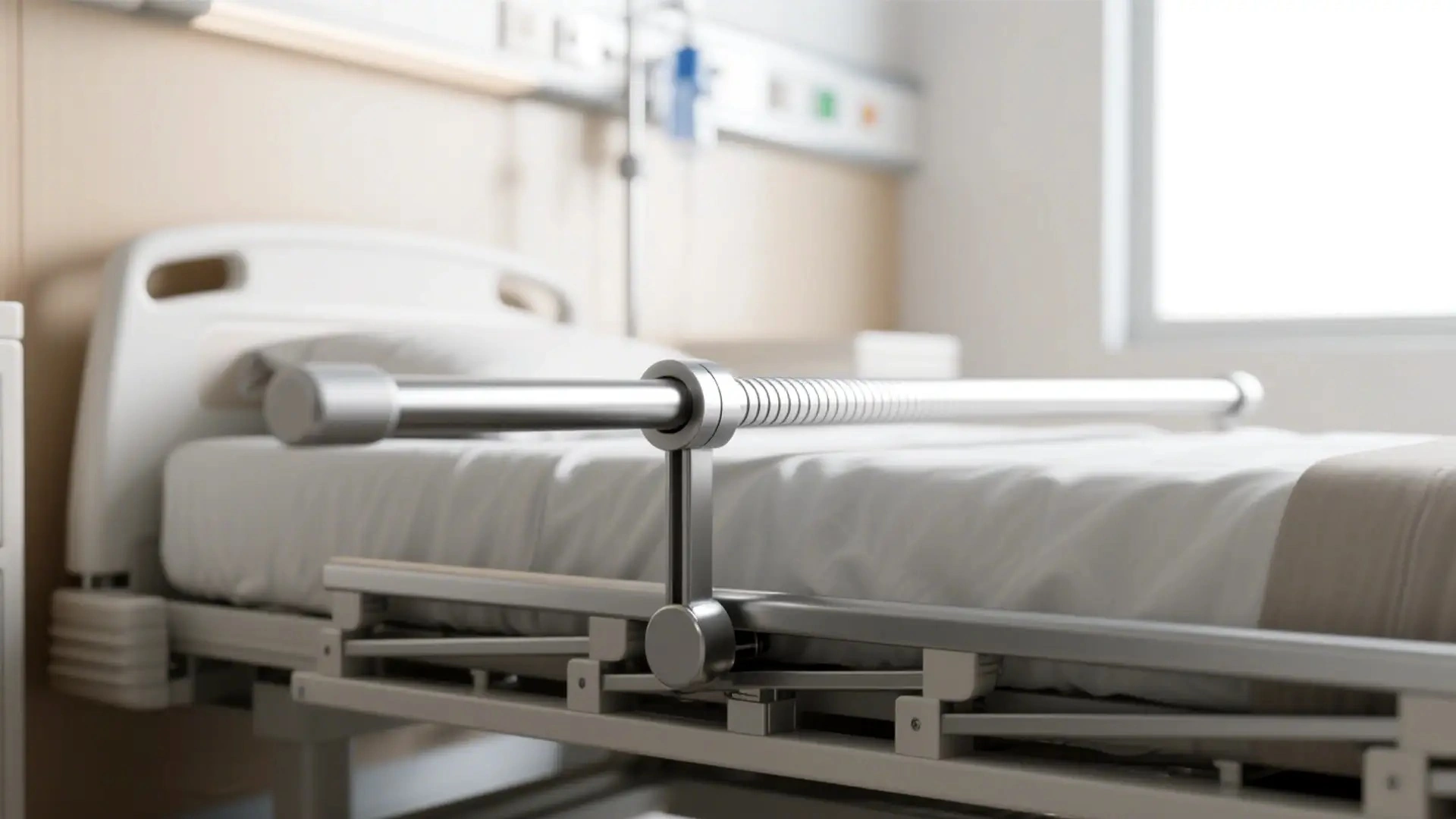
The IP6000 eliminates the need for an external brake entirely through its T-type trapezoidal lead screw, precision-machined with a lead angle of less than 4.5°. This geometry uses sliding friction rather than the rolling friction of ball screws, achieving absolute mechanical self-locking: when power is cut, the actuator holds its position securely under the full 6,000 N load without any brake engagement. Removing the external brake removes the primary acoustic source.
Beyond the screw design, actuator noise stems from four root causes: side loading, overloading, improper mounting, and mechanical wear. The IP6000 addresses all four through ultra-precise manufacturing tolerances, a rigid internal housing that resists side-load vibration, and lifetime synthetic lubrication.
Hospital Bed Applications: Where the IP6000 Delivers
Modern hospital beds are complex, multi-axis motion systems. Full-body repositioning — particularly for bariatric patients or ICU setups with extensive monitoring equipment — demands immense dynamic force. Understanding the essential requirements for medical-grade hospital bed actuators means balancing power, speed, and emergency safety across every axis.
High force for multi-axis movement: The 6,000 N capacity handles backrest elevation, leg lift, hi-lo height adjustment, and demanding combined positions including Trendelenburg and Reverse Trendelenburg.
Controlled, safe speeds: The 3.5–22 mm/s range is clinically appropriate. Slower speeds (3.5–4.5 mm/s under full load) reduce patient anxiety, minimize the risk of dislodging IV lines, and produce less acoustic output.
Safety factors and CPR release: Medical beds require a safety factor of 2.0–2.5× rated load. The IP6000 is engineered to integrate with external CPR quick-release linkages for instant backrest drop during cardiac emergencies.
Optimized duty cycle: The 10% duty cycle (2 minutes on, 18 minutes rest) precisely matches clinical usage patterns — typically 6 to 12 brief postural adjustments per hour.
EMC reliability: Tested to withstand 8 kV electrostatic discharge, ensuring the actuator will not fail or spontaneously actuate near MRI machines or defibrillation equipment.
Selecting the Right Actuator: IP6000 vs. the ActuLift Range
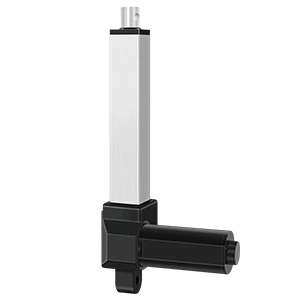
ActuLift provides a full spectrum of linear actuators scaled for different medical devices, from lightweight procedural chairs to heavy-duty patient lifts.
Model
Max Force
Speed Range
IP Rating
IP60
150 N
4–150 mm/s
IP42/IP65
IP600
600 N
15–60 mm/s
IP43
IP800
1,200 N
5–88 mm/s
IP43
IP1200
2,500 N
5–88 mm/s
IP54
IP3000L
3,000 N
5–88 mm/s
IP43
IP6000
6,000 N
3.5–22 mm/s
IP43
For primary load-bearing bed movements, the 6,000 N capacity is non-negotiable. Lower-force models such as the IP600 or IP1200 are well-suited for auxiliary medical carts, overbed tables, and lighter adjustable furniture. The IP6000 is the only unit in this class optimized to handle the structural loads of adult patient support surfaces while simultaneously suppressing noise below 48 dB.
OEM Implementation Guidance
Off-the-shelf catalog actuators rarely satisfy the structural, acoustic, and regulatory demands of advanced medical equipment. Engaging directly with ActuLift’s custom OEM/ODM program allows medical bed manufacturers to configure stroke lengths, force profiles, IP ratings, and acoustic performance without the cost overhead of ground-up bespoke engineering.
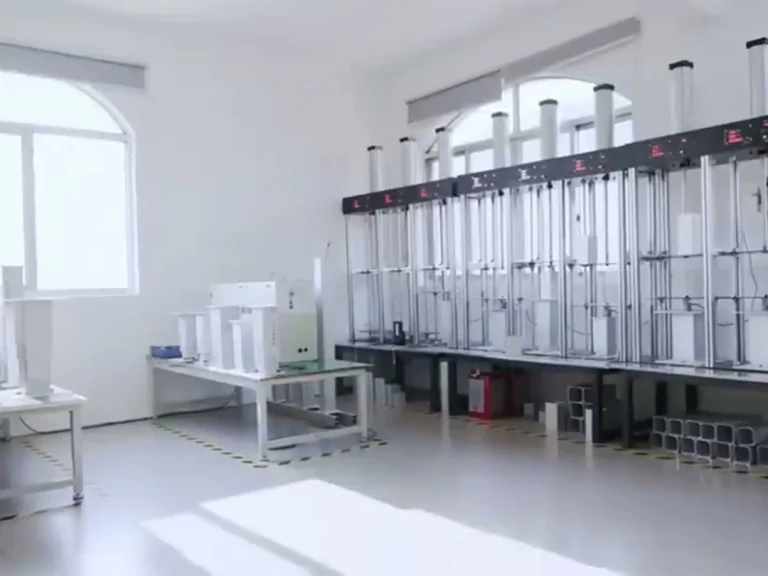
A prominent European medical bed OEM partnered with ActuLift to configure the IP6000 for their next-generation ICU beds. Requirements included a precise 300 mm stroke, a 10% duty cycle, and verified <48 dB operation — all necessary to win a major hospital procurement contract. By leveraging the IP6000’s standardized internal architecture, the OEM achieved full CE and RoHS compliance on schedule, avoided custom tooling costs, and delivered a demonstrably quieter patient environment — a distinct competitive advantage in the medical bid process. Under strict acoustic testing protocols, the IP6000 consistently registered below 48 dB and passed 10,000+ simulated power-cut cycles under full load without acoustic or mechanical degradation.
Frequently Asked Questions
Does the IP6000 meet IEC 60601-2-52 requirements for hospital beds?
IEC 60601-2-52 governs the complete hospital bed system — covering patient entrapment, electrical isolation, and mechanical load — not individual components. The actuator itself is not independently certified to IEC 60601-2-52; rather, it is engineered to support system-level compliance. OEMs must conduct full bed-system testing and obtain certification for the finished device. Critically, IEC 60601-2-52 contains no acoustic comfort limits — the IP6000’s <48 dB performance addresses patient sleep protection that the standard does not. The actuator also undergoes rigorous EMC testing (up to 8 kV electrostatic discharge) to ensure reliability in electromagnetically dense clinical environments.
What is the IP6000’s duty cycle, and is it sufficient for hospital use?
The IP6000 operates at a 10% duty cycle (S2-18 min): up to 2 minutes of continuous operation under full load, followed by an 18-minute rest period. In practice, a single repositioning movement — raising the backrest, elevating a leg section — takes only a few seconds of motor run time. A 10% duty cycle comfortably accommodates 6 to 12 routine adjustments per hour, aligning with heavy-use ICU and ward nursing protocols without thermal stress on the motor.
Can the IP6000 be customized for specific hospital bed OEM requirements?
Yes. Stroke length is precision-configurable from 50 mm to 800 mm to match any bed articulation geometry. Engineers can select 12V DC or 24V DC power, and tune internal gearing to prioritize speed (up to 22 mm/s) or maximize structural load capacity (6,000 N at 3.5 mm/s). IP sealing, connector type, and mounting interface can also be specified through the OEM/ODM program.
How does the T-type lead screw contribute to silent operation?
The T-type trapezoidal lead screw uses sliding friction and is machined with a lead angle of less than 4.5°. This geometry makes the screw mechanically self-locking: the actuator holds its position under a 6,000 N load without back-driving, eliminating the need for an external mechanical brake. External brakes are the primary source of actuator noise — their engaging and disengaging clacking is audible even through bed frames. Removing them produces smooth, near-silent movement across the full stroke.
What is the difference between IP43 and IPX6/IPX7 ratings, and does it matter for hospital beds?
The standard IP6000 carries an IP43 rating: protection against solid objects >1 mm and water spray up to 60° from vertical. This is sufficient for dry residential care environments. Hospital infection control, however, demands more. Clinical environments typically require a minimum of IPX6 (high-pressure disinfectant spray resistance), while ICU and operating room equipment often requires IPX7 (temporary immersion) to withstand full wash-down cycles. OEMs targeting acute care settings must specify upgraded IP sealing during the customization phase.
Conclusion
Mitigating clinical noise is no longer a hospitality consideration — it is a medically necessary intervention to prevent delayed recovery, elevated stress hormones, and ICU delirium. Basic regulatory standards like IEC 60601-1 protect against hearing damage; they do not protect patient sleep. The IP6000 linear actuator delivers 6,000 N of structural force at <48 dB by eliminating the mechanical brake and leveraging a self-locking T-type trapezoidal screw — a combination that no standard actuator achieves at this force class.
OEM engineers specifying the next generation of hospital beds: contact ActuLift’s engineering team to request IP6000 sample units, acoustic test data, and OEM/ODM configuration support. The acoustic performance gap between your current actuator and the IP6000 may be the deciding factor in your next hospital procurement bid.
Sources & References
World Health Organization (WHO) — Guidelines for Community Noise (Berglund et al., 1999) — https://www.who.int/docstore/peh/noise/guidelines2.html
Elbaz et al. (2017) — “Sound level in intensive care units and its impact on sleep,” Annals of Intensive Care — https://annalsofintensivecare.springeropen.com/counter/pdf/10.1186/s13613-017-0248-7.pdf
Darbyshire JL, Young JD (2013) — “An investigation of sound levels on intensive care units with reference to the WHO guidelines,” Critical Care (PMC) — https://ncbi.nlm.nih.gov/pmc/articles/PMC4056361/
International Electrotechnical Commission — IEC 60601-1 (Medical electrical equipment — Part 1: General requirements for basic safety and essential performance)
International Electrotechnical Commission — IEC 60601-2-52 (Particular requirements for the basic safety and essential performance of medical beds)
ActuLift Knowledge Base — Internal noise engineering and OEM case study files (03-OUTPUT/actulift/, 03-OUTPUT/medium/, 03-OUTPUT/substack/)
Get Expert Insights on Industrial Motion Control
Selecting the right electric linear actuator or lifting column is critical for your project's performance. As a professional Motion Control & Automation Manufacturer, our engineers help you customize load capacity, stroke length, and IP ratings based on your specific application. Share your technical requirements for a tailored solution.
ActuLift supports end-to-end customization, from structural design and stroke parameters to branding and casing finishes, helping you build a powerful brand identity.
Rapid Response & Prototyping
We understand the importance of speed in B2B procurement, utilizing optimized production workflows to ensure efficient responses from sample development to bulk delivery.
Stable Quality & Traceability
With ISO9001 quality assurance, every product—from material entry to final factory testing—is recorded in our electronic logs, ensuring high consistency in delivered goods.