The modern workplace is undergoing a fundamental transformation. As organizations recognize the connection between employee wellness and productivity, smart office ergonomics has moved from a nice-to-have perk to a strategic investment. At the center of this evolution are height-adjustable desks powered by electric lifting columns—sophisticated mechanical systems that enable seamless transitions between sitting and standing throughout the workday.
For B2B procurement managers, furniture manufacturers, and office fit-out specialists, understanding the technical nuances of these systems is essential for making informed purchasing decisions. This comprehensive guide walks you through everything you need to know about selecting the right lifting columns, standing desk frames, controllers, and accessories for your smart office projects.
Table of Contents
Understanding Electric Lifting Columns: The Heart of Height-Adjustable Desks
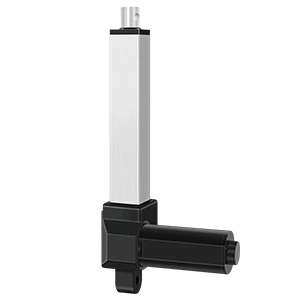
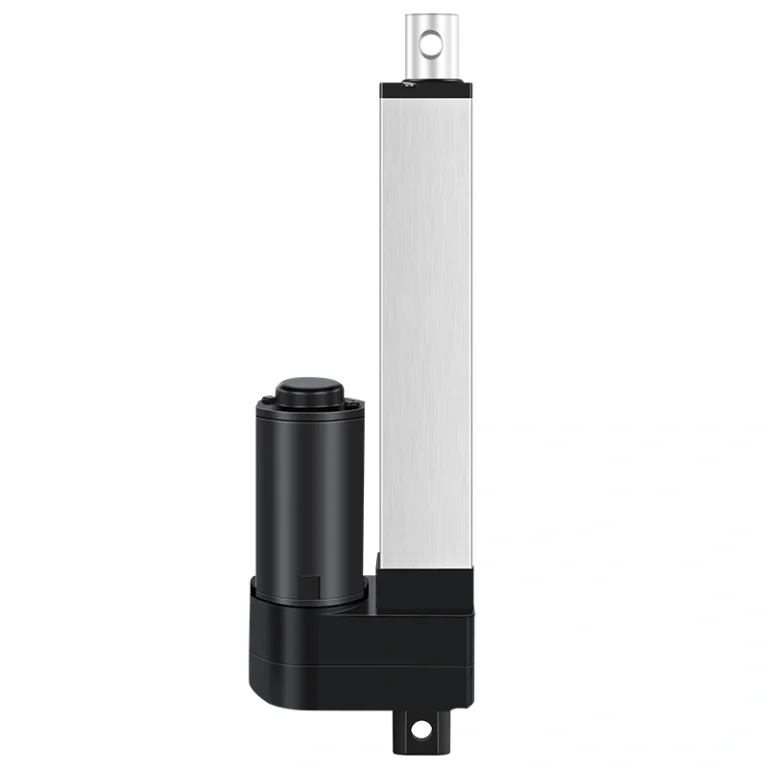
Electric lifting columns are the core components that enable the smooth, powered height adjustment that users expect from modern standing desks. Unlike manual crank systems or gas-spring mechanisms, electric lifting columns use linear actuators to deliver precise, reliable, and programmable height transitions.
2-Stage vs 3-Stage Lifting Columns
One of the first technical decisions you’ll encounter is choosing between 2-stage and 3-stage column configurations.
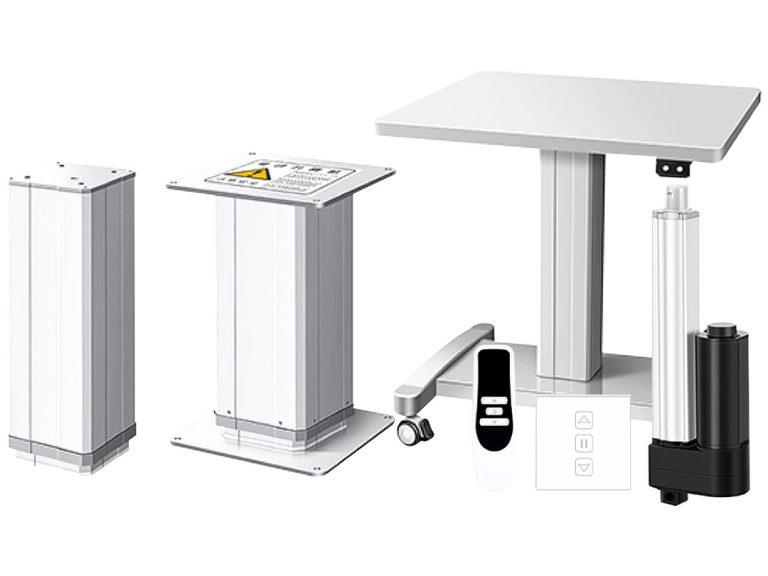
2-Stage Lifting Columns consist of two telescoping sections that extend and retract. These are the industry standard for standard-height applications and offer a proven balance of reliability, cost-effectiveness, and smooth operation. They’re ideal for office environments where users primarily transition between standard sitting and standing heights without requiring extreme low positions.
3-Stage Lifting Columns feature three telescoping sections, enabling a greater range of motion from a more compact retracted height. The key advantage is better accessibility—a 3-stage column can achieve a lower minimum height, making it easier for users in wheelchairs or those who prefer very low desk positions. If accessibility is a priority in your project specifications, 3-stage columns are the clear choice.
For most commercial office applications, 2-stage columns like the IPY75 provide excellent performance at a more accessible price point. However, for projects requiring ADA compliance or maximum flexibility, consider 3-stage options.
IP Ratings: Protecting Against Dust and Moisture
The Ingress Protection (IP) rating system indicates how well a lifting column resists intrusion from solid objects and liquids. This is particularly relevant for cleaning operations and environments with elevated dust levels.
IP43: Protected against solid objects larger than 1mm and water spray from any direction. Suitable for typical office environments.
IP54: Offers enhanced protection against dust accumulation and splash resistance. Ideal for spaces requiring frequent cleaning or with higher contamination risk.
IP65: Complete dust protection and protection against water jets. Required for healthcare settings or industrial applications where rigorous cleaning protocols exist.
For standard office furniture applications, IP43 or IP54 ratings are typically sufficient. However, if your project involves healthcare facilities or environments requiring washdown procedures, select columns with IP65 ratings like those in the IP60H custom waterproof linear actuator range.
12V vs 24V Systems: Technical Considerations
The voltage of your lifting column system affects several performance characteristics:
12V Systems operate at lower voltage and are commonly found in entry-level and mid-range standing desks. They offer adequate performance for single-user applications and are often paired with simpler controllers.
24V Systems provide higher efficiency, greater thrust capacity, and faster lifting speeds. The higher voltage means less current draw for equivalent power output, resulting in more efficient operation and less heat generation. For commercial applications where multiple desks may be used simultaneously, or where faster adjustment speeds are desired, 24V systems are the preferred choice.
The IP3000X 24V DC linear actuator exemplifies the capabilities of 24V systems, offering robust performance for demanding commercial applications.
Understanding Duty Cycle
Duty cycle defines the acceptable operating ratio of the actuator—typically expressed as a percentage indicating how long the motor can run within a defined period. A common specification is 10% duty cycle, meaning the actuator can operate for 2 minutes within an 18-minute cycle.
For office ergonomics applications, this is generally adequate since typical desk adjustments are brief and infrequent throughout the day. However, understanding duty cycle becomes critical when specifying systems for high-use environments or applications requiring extended continuous operation.
Beyond the lifting columns themselves, B2B buyers must consider the complete desk frame systems that integrate columns, crossbars, and desktop mounting provisions.
Desk Frame Types
Standard Rectangular Frames form the backbone of most office installations. These systems typically use two lifting columns (one on each side) connected by sturdy crossbars that accept desktop mounting. The IPD22 standing desk frame represents a robust solution for commercial installations requiring reliable daily operation.
L-Shaped and Corner Desk Frames accommodate the growing demand for corner workstations and executive configurations. These require careful consideration of column placement to ensure balanced weight distribution and smooth operation across the entire range of motion. The L-Shaped & Corner Desk Frames category offers specialized solutions for these configurations.
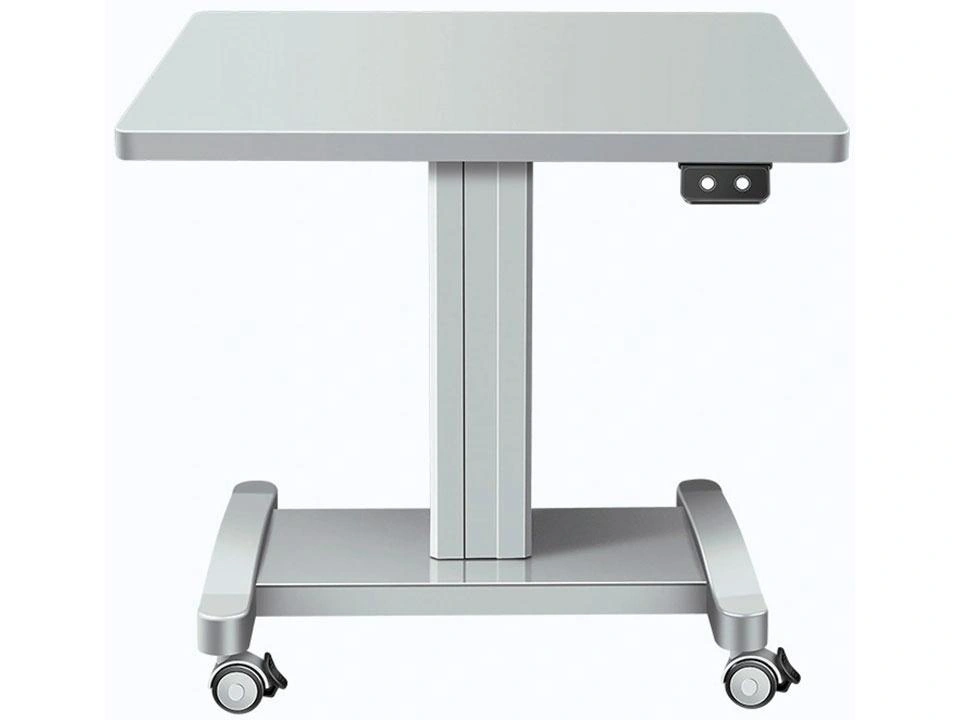
Single-Leg Desk Systems represent an innovative approach to modern office design. Using a single central column rather than dual legs, these systems offer a cleaner aesthetic and greater mobility. The IPY70 mobile stand-up desk demonstrates this approach, enabling flexible workspace reconfiguration without the constraints of traditional four-leg designs.
Executive and Premium Configurations
For executive offices and premium installations, wood-standing desks and high-end finishes require frames capable of supporting greater weight while maintaining smooth operation. The Executive & Wood Standing Desks category includes solutions engineered for these demanding specifications.
Single-Leg Desk Solutions: The Mobile Office Revolution
Single-leg standing desks have emerged as one of the most significant trends in modern office furniture. These systems use a single, central lifting column—typically featuring a wide foot or base for stability—to support the entire desk surface.
Advantages of Single-Leg Designs
Aesthetic Appeal: The minimalist single-column design creates a cleaner, more contemporary appearance that appeals to modern office aesthetics.
Floor Space Efficiency: Without dual-leg obstructions, cleaning underneath and around the desk is simplified. Cable management is more straightforward.
Mobility: Many single-leg systems incorporate casters, enabling easy reconfiguration of office layouts. This is particularly valuable in agile working environments.
Simplified Installation: Fewer components mean faster assembly and reduced maintenance requirements.
The controller is the brain of the height-adjustable desk system, managing motor operation, storing height presets, and integrating safety features. Selecting the appropriate controller is crucial for achieving the desired user experience.
Controller Series Overview
ActuLift offers several controller series, each designed for different application requirements:
Controller
Features
Typical Application
IPC1
Basic up/down control, memory presets
Entry-level desks
IPC2
Enhanced memory functions, LED display
Mid-range commercial
IPC3
Advanced programming, multiple presets
Premium installations
IPC4
Full smart features, connectivity options
High-end smart offices
The IPC4 24V actuator control box represents the current state-of-the-art, offering sophisticated control capabilities for demanding applications.
Modern controllers increasingly offer connectivity features for integration with building management systems, booking platforms, and IoT infrastructure. The Controls & Digital Solutions category includes advanced options for digitally connected workplaces.
Safety Features: Anti-Collision and Gyroscope Sensors
User safety is paramount in height-adjustable desk systems. Two critical safety technologies are anti-collision systems and gyroscope sensors.
Anti-Collision Technology
Anti-collision systems detect when the desk encounters an obstruction during movement and immediately reverse direction to prevent damage or injury. This is typically achieved through current-sensing technology that detects increased motor load when resistance is encountered.
Gyroscope Sensors
Advanced systems incorporate gyroscope sensors that detect tilting or instability. If the desk begins to tip or experience unbalanced loading, the system can halt operation or alert users. This is particularly important for single-leg configurations where stability is concentrated on a smaller footprint.
Successful implementation of height-adjustable desk systems requires attention to several installation factors:
Electrical Requirements
Ensure adequate electrical supply for the controller specifications
Consider dedicated circuits for large installations
Plan for cable management and routing
Structural Considerations
Verify floor stability for caster-based systems
Ensure wall anchoring where required
Consider weight capacity for the intended desktop materials
Integration with Desktop Systems
Verify desktop mounting provisions match frame specifications
Plan for monitor arms and accessories
Account for cable access provisions
Environmental Factors
Assess humidity and temperature variations
Consider cleaning protocols and their impact on IP rating requirements
Plan for accessibility compliance where applicable
Frequently Asked Questions
How long do electric lifting columns typically last?
With proper installation and normal use, quality electric lifting columns are designed to provide 10,000+ cycles or approximately 5-10 years of reliable service. Regular maintenance and adherence to duty cycle specifications significantly impact longevity.
Can lifting columns be retrofitted to existing desks?
Yes, many standing desk frame systems are designed for retrofit installation. However, this requires careful verification of desktop dimensions, weight capacity, and mounting provisions. Consultation with the manufacturer is recommended before proceeding.
What is the difference between synchronized and independent column operation?
Synchronized columns operate together via a shared controller, ensuring both columns reach the desired height simultaneously. Independent operation allows columns to move separately—useful for uneven surfaces or specialized configurations. Most commercial applications use synchronized operation for consistent user experience.
How do I determine the appropriate weight capacity for my application?
Calculate the combined weight of the desktop, monitors, equipment, and intended items, then add a safety margin of 25-50%. Select a lifting column system with a rated capacity exceeding this figure. Consider dynamic loading (items moving on the desk) in your calculations.
What maintenance is required for height-adjustable desk systems?
Minimal routine maintenance is typically required. Periodic checks should include:
Verification of all mechanical connections Inspection of cables for damage Cleaning of column surfaces (according to IP rating) Testing of safety features
Conclusion: Building Smarter Workspaces
Smart office ergonomics represents a convergence of workplace health, technology integration, and furniture design. For B2B buyers, the complexity of selecting the right components—from lifting columns to controllers—requires attention to technical specifications, safety standards, and end-user experience.
The key to successful implementation lies in matching technical capabilities to application requirements. Whether you’re specifying standard commercial desks, accessible workstations, or premium executive configurations, the principles remain consistent: prioritize reliability, ensure safety compliance, and plan for integration.
Industry technical documentation on linear actuator specifications
Workplace ergonomics research on sit-stand desk health benefits
Get Expert Insights on Industrial Motion Control
Selecting the right electric linear actuator or lifting column is critical for your project's performance. As a professional Motion Control & Automation Manufacturer, our engineers help you customize load capacity, stroke length, and IP ratings based on your specific application. Share your technical requirements for a tailored solution.
ActuLift supports end-to-end customization, from structural design and stroke parameters to branding and casing finishes, helping you build a powerful brand identity.
Rapid Response & Prototyping
We understand the importance of speed in B2B procurement, utilizing optimized production workflows to ensure efficient responses from sample development to bulk delivery.
Stable Quality & Traceability
With ISO9001 quality assurance, every product—from material entry to final factory testing—is recorded in our electronic logs, ensuring high consistency in delivered goods.