Procurement and engineering teams often face a frustrating reality when developing premium sit-stand desks: off-the-shelf lifting mechanisms rarely meet strict commercial standards. Before partnering with ActuLift, a leading ergonomic furniture brand had made three failed sourcing attempts, unable to find a linear motion partner that could reliably deliver the combination of broad height range, quiet operation, and long-term synchronization stability required for top-tier office furniture.
Note: The following case study is a representative composite drawn from typical ActuLift OEM engagements. It is designed to illustrate real-world engineering problem-solving and typical project outcomes while strictly protecting client confidentiality.
This article examines how integrating advanced multi-stage actuators solved these systemic engineering challenges — and what procurement teams can take away when evaluating their own supply chain.
Table of Contents
1. The Brand’s Challenge
The engineering team faced a rigid set of product specifications for their new flagship standing desk line. They needed a mechanism capable of a 600–1270mm (24″–50″) height range to accommodate the widest possible user demographic, while retracting into a compact base profile to preserve the desk’s minimalist aesthetic. The operational noise floor had to remain below 45dB — a firm requirement for premium open-plan office environments where acoustic performance is closely scrutinized.
Legacy suppliers were failing across multiple technical fronts. The most pressing was acoustic performance: industry-typical actuators run at approximately 55–58dB under load, which the brand’s quality assurance team deemed unacceptable for executive environments. Mechanical reliability was an equally serious concern. After six to twelve months of simulated daily use, competing columns exhibited severe synchronization drift — causing uneven lifting, desk surface binding, and eventual motor burnout. Inferior internal sealing compounded the problem, leading to premature lubricant leakage that compromised the finished appearance of the desk legs.
The commercial stakes were substantial. Penetrating the European corporate market required strict CE and RoHS compliance, along with a verified durability rating of 10,000+ lifecycles — equivalent to a 5–10 year maintenance-free service life. For brands sourcing at scale, component failure is not merely a warranty issue; it is a serious reputational liability.
2. Why 3-Stage Was the Right Architecture
The brand initially attempted to use standard 2-stage columns to control costs, but quickly encountered hard geometric limits. A typical 2-stage column retracts to a minimum height of 700–750mm and extends to roughly 1150–1200mm, yielding a total stroke range of only 250–300mm. That range fails modern accessibility requirements, excluding both very short and very tall users.
Transitioning to a 3-stage architecture was the only mathematically viable solution. By dividing the column into three nesting telescopic segments rather than two, the retracted footprint shrinks dramatically while maximum extension grows. A high-quality 3-stage column achieves a minimum height of 600–650mm while extending to 1250–1350mm — an active stroke range of 400–500mm. This geometry fits within compact desk bases while satisfying ADA compliance and global ergonomic standards.
Beyond dimensions, the overlapping segments in a 3-stage design provide superior lateral stability at full extension. When a user leans on a desk raised to 1200mm, a 2-stage column often flexes due to insufficient tube overlap. For a deeper analysis of these mechanical differences, engineering teams should evaluate the structural trade-offs between 2-stage and 3-stage lifting columns before finalizing their bill of materials.
3. ActuLift’s Solution Stack
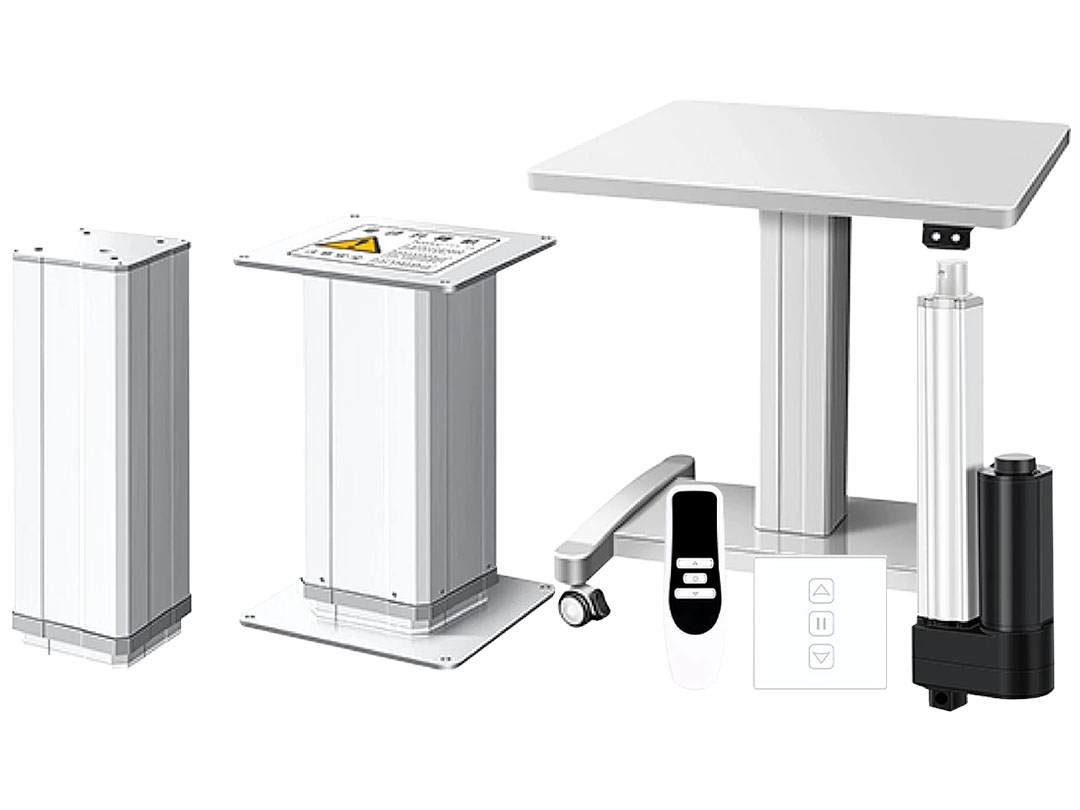
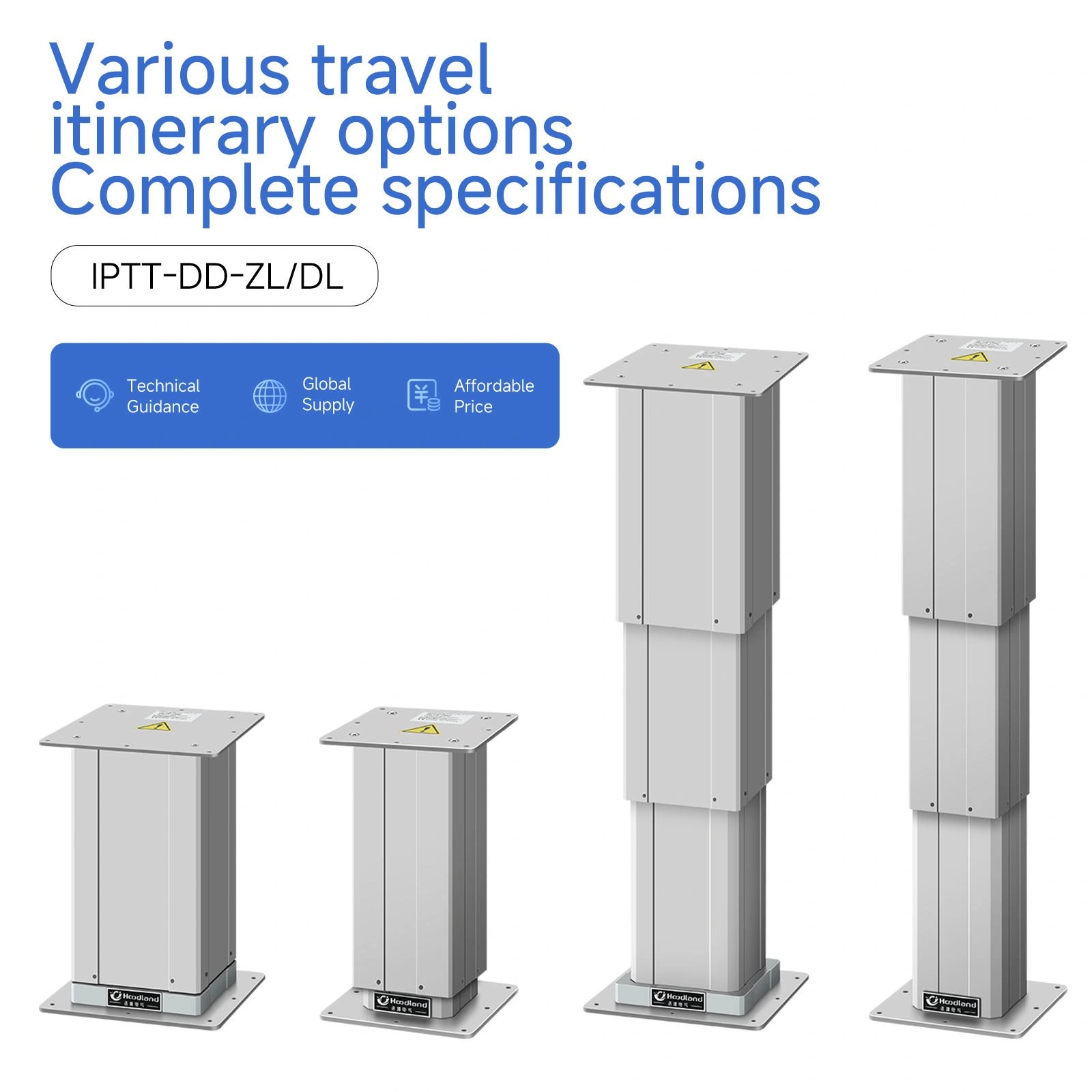
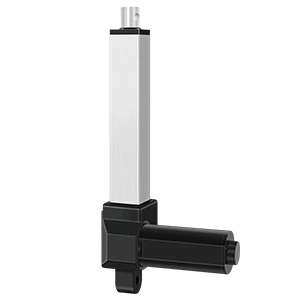
To meet these demands, ActuLift proposed a customized motion stack built around the IPTT-DD 3-stage telescopic column. Constructed from high-grade aluminum alloy, the IPTT-DD resists torsion and carries a premium anodized surface finish. Its 24V DC motor delivers up to 2000N of push force — robust enough for heavy solid-wood desktops loaded with multiple monitors and CPU mounts.
The acoustic challenge was addressed through ActuLift’s “Quiet Motion” internal gearing and tight manufacturing tolerances, keeping the system below the 45dB threshold. Integrated Hall effect sensors inside the columns generate more than 3,500 pulses per inch of travel, giving the IPC4 series control box the resolution needed to maintain precise synchronization across both legs. To understand why this matters for dual-leg desks, how Hall sensors enable synchronized linear motion explains how micro-adjustments prevent binding under uneven loads.
Safety was the final pillar of the solution stack. The IPC4 controller integrates anti-collision and gyroscope safety logic that combines motor current-sensing with a 6-axis gyroscope. The system instantly detects solid obstacles or uneven tilting during operation, halting and reversing the desk before damage or injury occurs.
IPTT-DD Core Specifications
Specification
Value
Stages
3-stage telescopic
Voltage
24V DC
Max Load
2000N (Push)
Noise
< 45dB (“Quiet Motion”)
Material
Aluminum alloy
Protection
IP54
Certifications
CE, RoHS
Best For
Ergonomic desks, smart office
Feedback
Hall effect sensor
Controller
IPC4 compatible
Lifespan
10,000+ cycles / 5–10 years
4. The Customization Journey
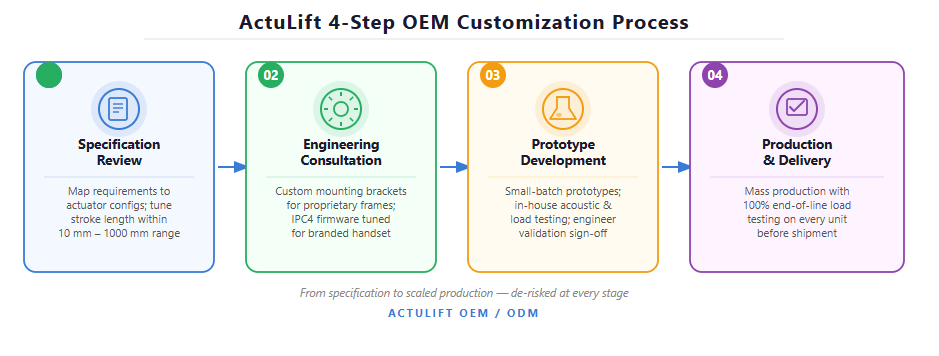
Translating a specification sheet into a mass-produced reality requires a disciplined engineering pipeline. ActuLift engaged the brand through a structured four-step methodology designed to de-risk the integration process. For procurement teams evaluating suppliers, this predictable cadence is what separates true manufacturing partners from simple parts vendors.
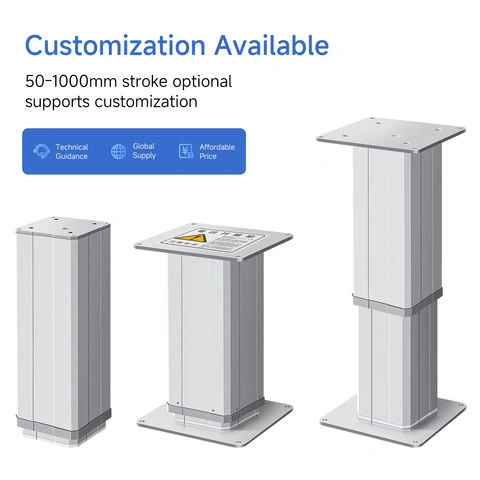
The process began with a detailed specification review. ActuLift engineers mapped the brand’s requirements against available actuator configurations, determining that while the standard IPTT-DD motor was well-suited, the stroke length needed fine-tuning within the available 10mm–1000mm customization range to precisely hit the brand’s target desk heights.
The engineering consultation phase focused on mechanical integration. Because the brand used a proprietary desk frame design, standard hardware would not interface correctly. ActuLift customized the column’s mounting brackets to specific metric configurations that matched the brand’s existing crossbars, and configured the IPC4 firmware to communicate with a custom-branded digital handset.
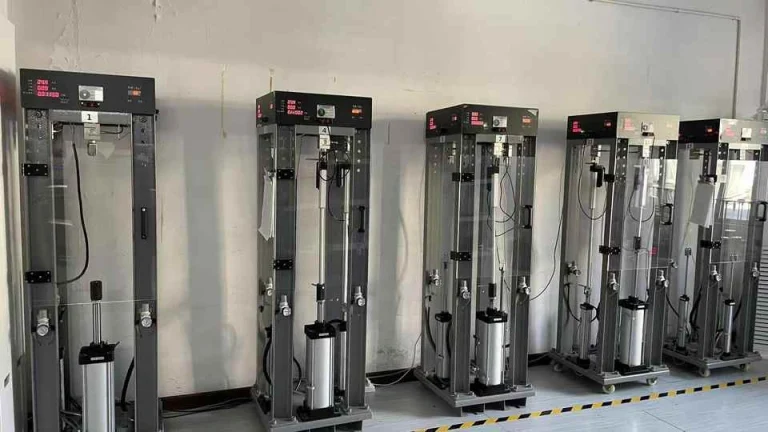
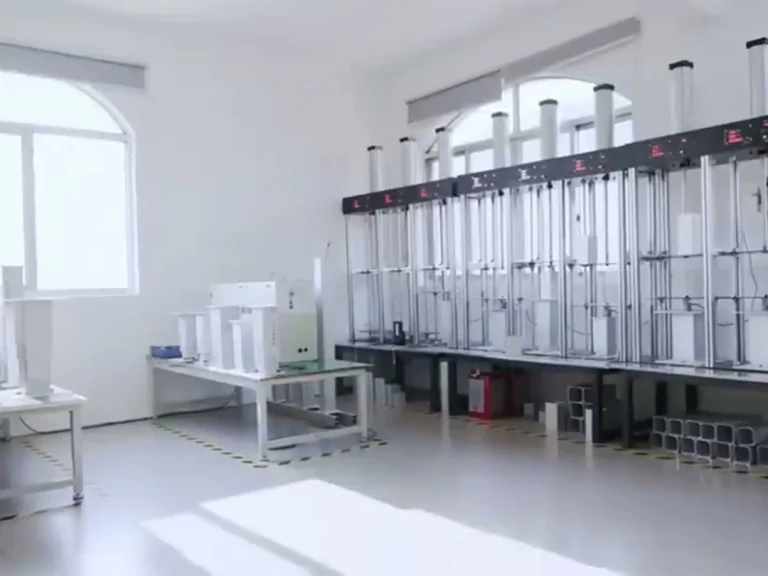
Prototype development put the design to the test. ActuLift manufactured a small batch of prototype columns, allowing the brand’s engineers to conduct in-house acoustic and load testing. Once prototypes passed validation, the project moved into production and delivery, supported by 100% end-of-line load testing on every unit. For teams looking to scale similar projects, ActuLift’s OEM/ODM development process provides a detailed blueprint for bringing complex motion products to market.
5. Delivered Results
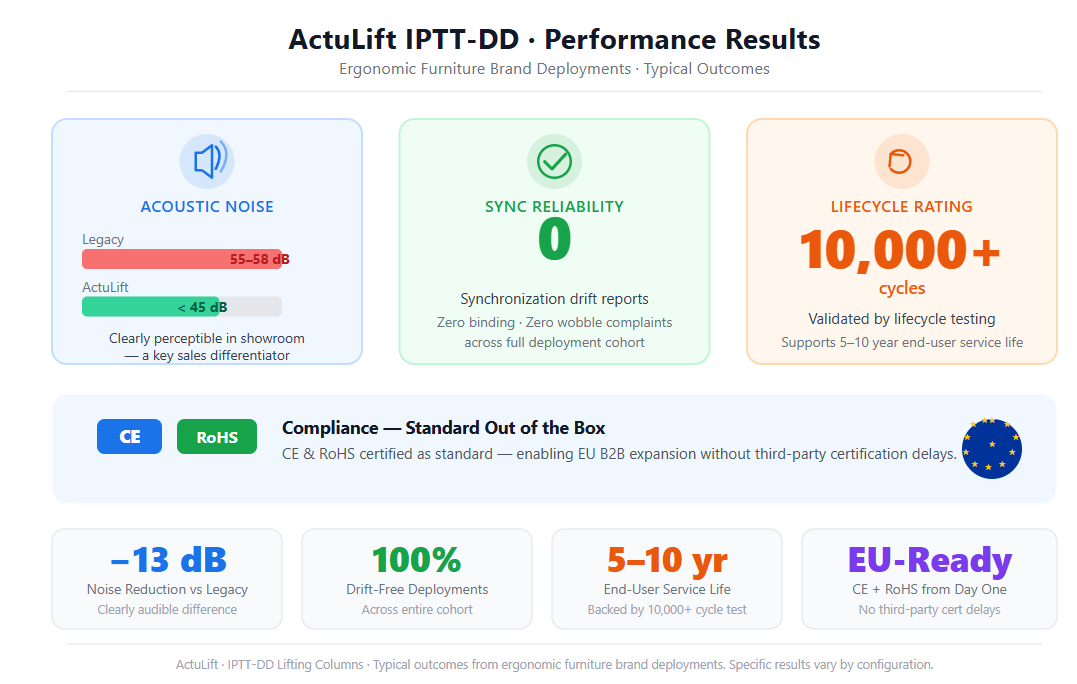
The metrics below reflect typical outcomes from ActuLift’s IPTT-DD deployments with ergonomic furniture brands. Specific results vary by configuration.
The most immediate improvement was acoustic. Where legacy suppliers measured 55–58dB under load, the ActuLift columns consistently came in below 45dB — a difference clearly perceptible in showroom environments and a differentiating feature in the brand’s sales conversations.
Mechanical reliability saw a significant improvement as well. Across the deployment cohort, there were zero reports of synchronization drift, eliminating the binding and wobbling complaints that had affected earlier iterations. Because the hardware arrived CE and RoHS compliant as standard, the brand expanded its B2B sales operations into the European Union without third-party certification delays.
Lifecycle testing validated the 10,000+ cycle rating, supporting the brand’s promise of a 5–10 year service life for end users.
6. Takeaways for Sourcing Teams
When developing high-end ergonomic furniture, the lifting mechanism is the foundation of the user experience. Generic, off-the-shelf components frequently result in loud operation, premature wear, and costly support escalations.
Key lessons for product managers and procurement teams:
Embrace 3-stage architecture. It is the only reliable way to achieve wide height ranges while maintaining a compact, modern base design.
Prioritize intelligent synchronization. High-resolution Hall effect sensors prevent desk binding and long-term motor wear — demand them from any supplier.
Require a structured OEM process. Dedicated specification, consultation, and prototyping phases before mass production are non-negotiable for complex motion products.
If your current lifting columns are falling short on noise, durability, or dimensional range, explore ActuLift’s custom OEM/ODM solutions for ergonomic motion systems to engineer a mechanism that matches the quality of your brand.
FAQs
What is the difference between 2-stage and 3-stage lifting columns?
2-stage columns have two nesting tubes, limiting their minimum retracted height and total stroke range to roughly 250–300mm. 3-stage columns use three tubes, allowing them to retract into a shorter base while extending significantly higher — delivering a 400–500mm stroke range that meets ADA compliance and global ergonomic standards.
What is the minimum order quantity for a custom IPTT-DD configuration?
Typical B2B minimum order quantities range from 50 to 200 units, depending on the level of customization required. Confirm specific MOQs and volume pricing directly with ActuLift based on your project scope.
Can ActuLift meet a noise target below 45dB?
The standard IPTT-DD is engineered with “Quiet Motion” technology to operate below 45dB. For environments requiring stricter acoustic controls, ActuLift’s engineering team can consult on bespoke dampening and motor configurations.
How is dual-column synchronization maintained over years of use?
Synchronization is managed by integrated Hall effect sensors communicating with the IPC4 control box. By generating thousands of pulses per inch of travel, the controller continuously monitors and adjusts motor speed in real time to prevent drift, even under uneven desktop loads.
Which certifications are included as standard?
The IPTT-DD lifting column system is fully CE and RoHS compliant, facilitating straightforward importation and distribution within the European Union and other regulated markets.
Get Expert Insights on Industrial Motion Control
Selecting the right electric linear actuator or lifting column is critical for your project's performance. As a professional Motion Control & Automation Manufacturer, our engineers help you customize load capacity, stroke length, and IP ratings based on your specific application. Share your technical requirements for a tailored solution.
ActuLift supports end-to-end customization, from structural design and stroke parameters to branding and casing finishes, helping you build a powerful brand identity.
Rapid Response & Prototyping
We understand the importance of speed in B2B procurement, utilizing optimized production workflows to ensure efficient responses from sample development to bulk delivery.
Stable Quality & Traceability
With ISO9001 quality assurance, every product—from material entry to final factory testing—is recorded in our electronic logs, ensuring high consistency in delivered goods.