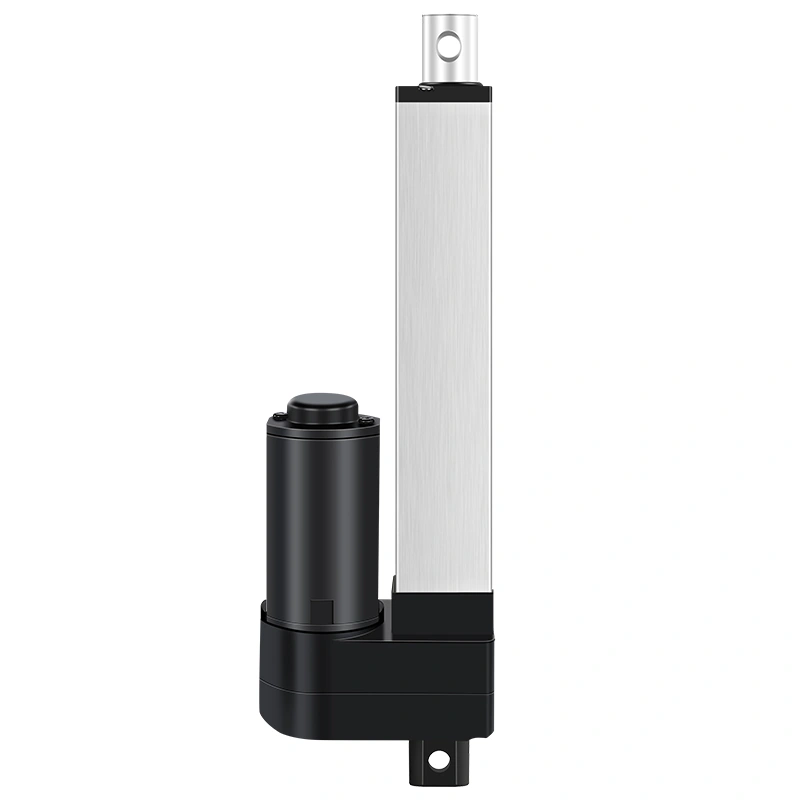
“We need a 24V linear actuator with higher speed for our equipment.”
Speed is easy to understand because it is visible. A faster actuator finishes the stroke sooner, looks more responsive in a sample test, and seems easier to compare across product pages.
But speed is not always the specification that decides whether the actuator will survive inside the final equipment. In many real applications, duty cycle matters more than speed.
Duty cycle tells you how often the actuator can work, how long it can run, and how much rest time it needs before the next movement. It connects the actuator’s motor, gearbox, screw, load, temperature, controller, enclosure, and working pattern into one practical reliability question:
Can this actuator repeat the required motion without overheating, wearing too quickly, or losing performance in the actual equipment?
For equipment manufacturers, engineering teams, and procurement buyers, this question is often more important than whether the actuator can move a few millimeters per second faster during a single unloaded test.
Table of Contents
What Duty Cycle Really Means
Duty cycle describes the relationship between operating time and rest time.
In actuator specifications, it is often shown as a percentage or an intermittent duty type. For example, several ActuLift compact actuator references use a 10% duty cycle, commonly expressed as 2 minutes of operation followed by 18 minutes of rest. Some product data also uses intermittent-duty wording such as S2 operating frequency.
The exact duty cycle must always be confirmed against the selected model and configuration. But the principle is simple:
Duty cycle = allowed operating time within a defined time period
A 10% duty cycle does not mean the actuator is weak. It means the actuator is designed for intermittent movement rather than continuous running. That is normal for many electric linear actuator applications, including adjustable furniture, medical positioning, access panels, hatches, industrial fixtures, and equipment setup functions.
The actuator may only need to move for a few seconds at a time. In that case, a 10% duty cycle can be completely suitable. The problem begins when the real equipment cycle is more demanding than the selected actuator can handle.
Why Speed Can Mislead Buyers
Speed looks like a performance upgrade. In some cases, it is.
A faster actuator may improve user experience, reduce setup time, or make a mechanism feel more responsive. But speed does not exist alone. It is connected to load, motor current, gear ratio, screw design, noise, control stability, and heat.
If two actuators have the same stroke but different speed ratings, the faster option is not automatically better. It may support a lower load, draw more current, generate more heat, or require a different controller. In repeated operation, the faster actuator can become the wrong choice if the duty cycle is not suitable.
This is especially important because many actuator samples are tested in an unrealistic way:
One movement on the bench
No real load
Short cable distance
Room temperature
No enclosure
No repeated cycling
No final bracket geometry
No user abuse pattern
Under those conditions, a fast actuator can look excellent. But once it is installed inside a machine, the real test begins. The actuator may now work under load, inside a covered space, with longer cables, repeated commands, and less cooling airflow.
That is why a single fast stroke does not prove equipment fit.
The Real Selection Question: Movement Rhythm
Speed answers:
How fast does the actuator move during one stroke?
Duty cycle answers:
How often can the actuator repeat that movement without thermal or mechanical stress exceeding the design limit?
For many OEM projects, the second question is more important.
Think about the working rhythm of the equipment:
How many cycles per hour?
How many cycles per day?
How long is each movement?
Does the actuator run under full load or partial load?
Does the user hold the button repeatedly?
Does the actuator stop and restart frequently?
Is the actuator enclosed inside a housing?
Does the equipment work in a warm environment?
Does the actuator need to hold position after movement?
These details decide whether the actuator’s duty cycle is realistic. A product that only moves twice per day has a very different requirement from a workstation, medical platform, industrial fixture, or automated device that may be adjusted repeatedly.
Why Duty Cycle Affects Reliability
An electric linear actuator converts electrical energy into mechanical motion. During operation, the motor and transmission system generate heat. The higher the load, the longer the run time, and the more frequent the cycles, the more important heat management becomes.
If the actuator is not allowed enough rest time, several problems can appear:
Motor temperature rises
Repeated operation can build heat faster than the motor can dissipate it. This may reduce performance and shorten service life.
Controller and wiring stress increase
Higher current under load can affect relays, switches, control boxes, connectors, and cable sizing. A controller that works for one short movement may not be suitable for repeated cycling.
Lubrication and screw wear become more important
The screw, nut, gearbox, and guide structure all work under mechanical stress. Frequent cycling can expose alignment problems, side-load issues, and insufficient mounting support.
Enclosed spaces reduce cooling
An actuator installed inside furniture, a medical device frame, a cabinet, or a machine housing may have less airflow than a bench test. The same duty cycle can feel more demanding in a warm or enclosed product.
End-user behavior changes the real cycle
Users may operate the actuator repeatedly during setup, testing, cleaning, service, or adjustment. The expected engineering cycle may be lighter than the actual use pattern.
This is why duty cycle should be treated as a design input, not a datasheet footnote.
When Speed Still Matters
This does not mean speed is unimportant. Speed matters when movement time affects safety, workflow, comfort, or product experience.
For example:
A standing desk should not feel painfully slow.
A medical bed should move in a controlled and comfortable way.
An access hatch may need to open within an acceptable service time.
An industrial adjustment mechanism may need to fit the production process.
A smart furniture product may need smooth and quiet movement rather than maximum speed.
The mistake is choosing speed first and then hoping the duty cycle works.
A better method is to define both:
Required movement time under real load
Expected run/rest pattern in real use
If the equipment needs 200mm of travel in about 15 seconds, say that directly. If the actuator will be used 20 times per hour during setup, say that too. The supplier can then recommend a force, speed, motor voltage, screw, controller, and duty cycle combination that fits the whole system.
Common Scenarios Where Duty Cycle Matters More Than Speed
1. Medical Beds and Rehabilitation Equipment
Medical and rehabilitation equipment may not move constantly, but reliability and controlled movement are critical. A bed lift, backrest adjustment, patient support system, or rehabilitation platform may be operated several times during care, setup, or patient transfer.
In this type of project, the buyer should not only ask for speed. The better brief includes load, movement angle, expected daily cycles, control method, noise requirement, safety logic, and rest time.
A slightly slower actuator with a better-suited duty cycle, controller, and mounting layout may be more appropriate than the fastest option in the catalog.
2. Smart Office Furniture
For height-adjustable desks, monitor lifts, and smart furniture, user experience matters. Speed and noise are visible to the end user.
But duty cycle still matters because users may press controls repeatedly, test different positions, or cycle the product during installation. If the actuator is hidden inside a column, frame, or compact housing, heat dissipation should be considered.
For OEM furniture projects, the selection should include travel length, load, synchronization requirements, control box compatibility, duty cycle, and expected user behavior.
3. Industrial Fixtures and Automation Equipment
Industrial equipment often exposes weak actuator selection faster than consumer products. A fixture, guide, clamp, adjustment platform, or access mechanism may repeat the same motion throughout the workday.
In this case, speed can be less important than repeatability and thermal stability. If the actuator cycles often, a high-speed intermittent actuator may not be the best fit. The project may need a different motor, gear ratio, screw type, controller, or even a different actuator class.
4. Outdoor and Agricultural Equipment
Outdoor equipment brings temperature, moisture, dust, load variation, and vibration into the selection. Duty cycle must be reviewed together with IP rating, mounting angle, cable protection, and operating temperature.
If the actuator works under higher load in a warm outdoor environment, repeated movement can be more demanding than the same cycle indoors. Speed alone will not answer that risk.
5. Access Panels, Hatches, and Covers
Access panels and hatches often seem simple because they only open and close. But load direction, pivot geometry, gas springs, side load, wind load, and end-user operation can change the real actuator stress.
If a technician opens and closes the hatch repeatedly during service, the duty cycle can become more important than the opening speed.
Duty Cycle vs Speed: A Practical Comparison
Selection Question
Speed Focus
Duty Cycle Focus
Main concern
How fast does one stroke finish?
Can the actuator repeat the motion reliably?
Typical buyer mistake
Choosing the fastest option
Ignoring real run/rest pattern
Hidden risk
Lower load capacity, higher current, more heat
Underspecified actuator for repeated use
Best use
User experience and process timing
Reliability, thermal control, service life
Must be checked with
Load, stroke, noise, controller
Load, environment, enclosure, cycles, controller
The best actuator selection uses both. But if the equipment will run repeatedly, duty cycle should be checked before speed is treated as the deciding factor.
A Better Specification Brief for Suppliers
Instead of asking only:
“What is the fastest actuator for 300mm stroke?”
Send a more complete brief:
Application:
The actuator will move [equipment part] in [equipment type].

Load:
Push force required: [N]
Pull force required: [N]
Holding force required: [N]
Load direction: [vertical / horizontal / angled / pivoting]

Motion:
Stroke length: [mm]
Target movement time: [seconds per full stroke]
Acceptable speed range: [mm/s if known]

Duty cycle:
Expected cycles per hour: [number]
Run time per cycle: [seconds]
Rest time between cycles: [seconds/minutes]
Maximum repeated operation scenario: [example]

Environment:
Indoor/outdoor: [answer]
Temperature range: [answer]
Dust/water exposure: [answer]
Actuator enclosed or open-air: [answer]

Control:
Voltage: [12V / 24V / other]
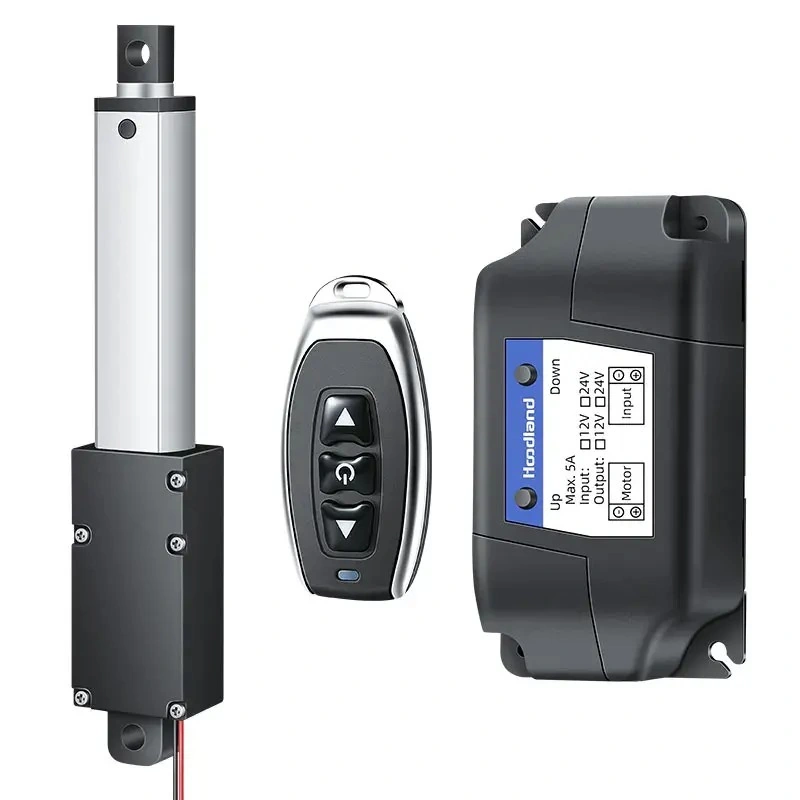
Controller type: [switch / control box / PLC / handset / remote]
Feedback or synchronization required: [yes / no]

Mechanical:
Mounting distance: [mm]
Bracket type: [if known]
Side-load risk: [yes / no / unknown]
This brief helps the supplier avoid recommending an actuator that looks fast but does not match the working pattern.
Selection Checklist
Before choosing the fastest actuator, check these points:
Define the real cycle
How many times will the actuator move in normal use, heavy use, installation, testing, and service?
Calculate movement time
If the actuator needs 20 seconds per stroke and will run several times in a short period, the duty cycle must support that pattern.
Check load under real geometry
The actuator may see more force than expected if the mechanism uses a short lever arm, poor mounting angle, or off-axis load.
Confirm enclosure and temperature
Warm environments and enclosed housings reduce cooling margin.
Match the controller
The controller, relay, switch, control box, wiring, and power supply must handle the voltage and current requirements under load and repeated cycling.
Ask about alternatives
If the required duty cycle is high, ask whether a different actuator series, motor option, gear ratio, screw configuration, or control strategy is more suitable.
Test the worst realistic cycle
Do not test only one movement. Test the repeated pattern the final user may actually create.
What ActuLift Checks Before Recommending an Actuator
ActuLift works with B2B equipment manufacturers on electric linear actuators, lifting columns, control boxes, handsets, brackets, and OEM/ODM motion solutions.
For actuator selection, the team usually needs more than stroke and speed. A reliable recommendation depends on:
Load and load direction
Stroke and installation distance
Required movement time
Duty cycle and repeated-use pattern
Working temperature and enclosure condition
IP rating and environmental exposure
Voltage and current requirements
Controller, switch, or control box matching
Feedback or synchronization requirements
Mounting brackets and side-load risk
Across the local ActuLift product data, many actuator and lifting-column families reference intermittent operation, 10% duty cycle examples, or S2 operating frequency. This does not mean every project has the same requirement. It means the operating rhythm must be reviewed early so the actuator is selected for the real application rather than only the fastest-looking parameter.
Final Recommendation
Do not choose a linear actuator by speed alone.
Speed tells you how quickly the actuator can move. Duty cycle tells you whether it can keep doing the required work inside the final equipment.
For simple, occasional movements, a standard intermittent-duty actuator may be the right choice. For repeated cycling, warm environments, enclosed installations, industrial equipment, medical systems, or heavy-load motion, duty cycle should be one of the first specifications discussed.
The best selection process is:
Define load and stroke.
Define required movement time.
Define real operating cycle.
Confirm duty cycle and cooling needs.
Match voltage, controller, and wiring.
Review mounting and environment.
Test the repeated-use pattern before production.
If your project needs help comparing speed, duty cycle, load, controller, and mounting requirements, visit ActuLift or contact the ActuLift team with your application brief.
FAQ
Is a faster linear actuator always better?
No. A faster actuator may improve movement time, but it must still match the required load, duty cycle, controller, voltage, wiring, and operating environment. In repeated-use equipment, a slightly slower actuator with the correct duty cycle may be more reliable.
What does 10% duty cycle mean for a linear actuator?
A 10% duty cycle means the actuator is intended to operate for a limited portion of a defined time period. In many actuator references, this is expressed as 2 minutes of operation followed by 18 minutes of rest. Always confirm the exact value for the selected model and application.
Can I exceed the actuator duty cycle for short periods?
Do not assume that exceeding duty cycle is safe. Short overload or repeated-use behavior should be reviewed with the supplier because heat buildup can affect the motor, controller, wiring, and service life.
Does actuator load affect duty cycle?
Yes. Higher load usually increases motor effort and heat generation. The real duty cycle should be checked under expected load, not only under no-load bench conditions.
How should I test duty cycle before production?
Test the actuator in the final or near-final installation with the expected load, bracket geometry, cable length, controller, enclosure, and repeated-use pattern. A single unloaded stroke is not enough to prove long-term fit.
Get Expert Insights on Industrial Motion Control
Selecting the right electric linear actuator or lifting column is critical for your project's performance. As a professional Motion Control & Automation Manufacturer, our engineers help you customize load capacity, stroke length, and IP ratings based on your specific application. Share your technical requirements for a tailored solution.
ActuLift supports end-to-end customization, from structural design and stroke parameters to branding and casing finishes, helping you build a powerful brand identity.
Rapid Response & Prototyping
We understand the importance of speed in B2B procurement, utilizing optimized production workflows to ensure efficient responses from sample development to bulk delivery.
Stable Quality & Traceability
With ISO9001 quality assurance, every product—from material entry to final factory testing—is recorded in our electronic logs, ensuring high consistency in delivered goods.