Why Waterproof Linear Actuators Fail in Outdoor Equipment
Learn why waterproof linear actuators fail in outdoor equipment, including IP rating limits, sealing design, condensation, side load, duty cycle, UV exposure, and poor installation.
Waterproof linear actuators do not usually fail because one drop of rain reaches the housing. They fail because the actuator is selected, installed, or used as if “waterproof” means “safe in every outdoor condition.”
That misunderstanding is expensive for OEM projects. A linear actuator may pass an IP test and still perform poorly in the field if the cable outlet faces standing water, the actuator is exposed to pressure washing, the duty cycle is too high, side load is ignored, or condensation forms inside the housing after temperature changes.
For outdoor equipment, the real question is not only “Is this actuator waterproof?” The better question is:
Will this actuator stay sealed, stable, and properly loaded in the actual environment where the equipment works?
This article explains why waterproof linear actuators fail outdoors and how OEM buyers can reduce that risk before production.
Table of Contents
1. “Waterproof” Is Often Treated as a Complete Specification
The first failure point is language. Buyers often ask for a waterproof actuator, but that word alone is too broad.
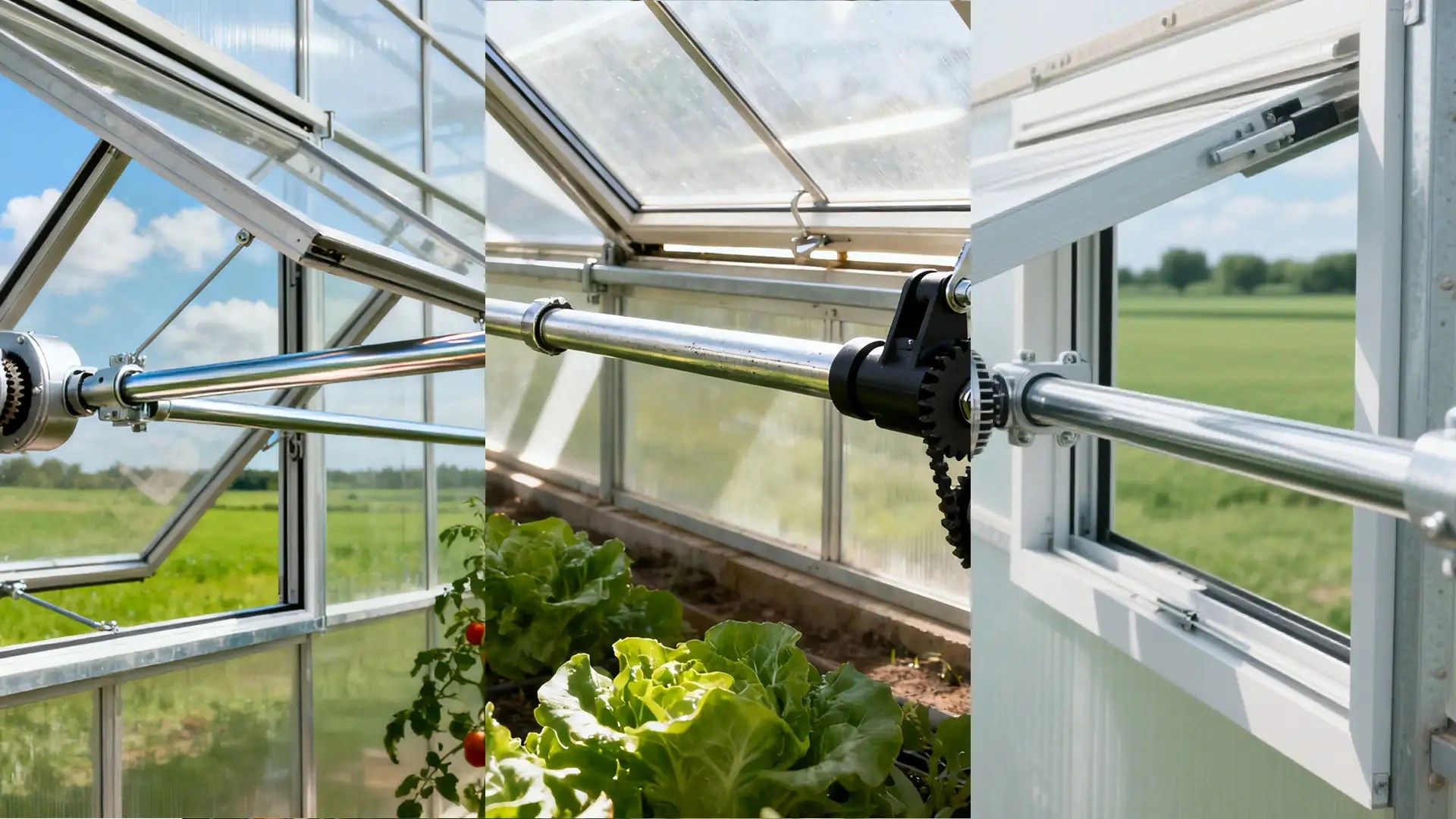
An actuator used under light rain on a solar tracker does not face the same conditions as an actuator on agricultural machinery, a vehicle-mounted lift, a marine-adjacent cover, or equipment cleaned with water spray. The same word, “waterproof,” can describe very different expectations.
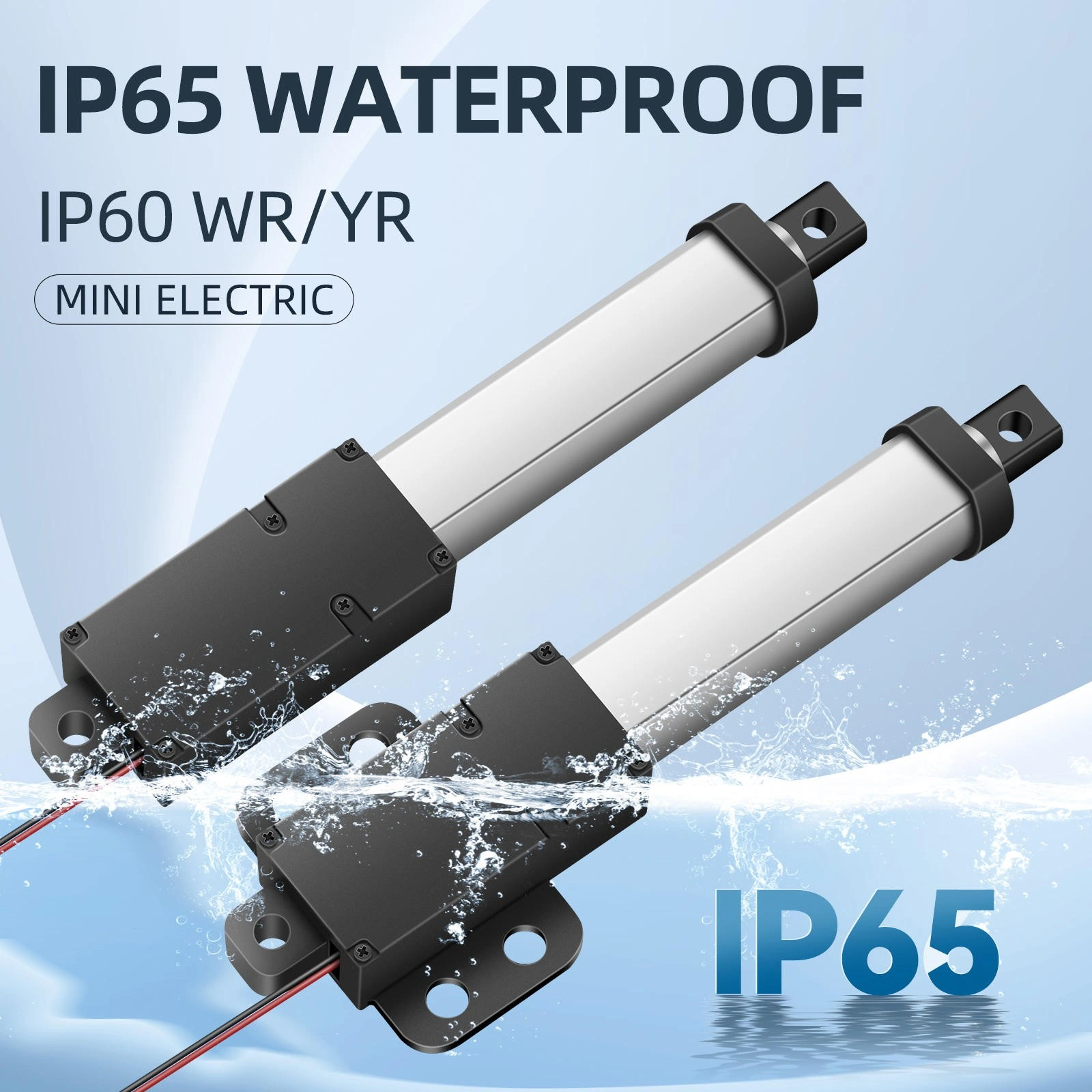
That is why the IP rating matters. The first digit generally relates to protection against solid objects such as dust, while the second digit relates to protection against water ingress under defined test conditions. However, an IP rating is not the same as permanent protection against every outdoor condition. It does not automatically cover salt mist, chemicals, mud, repeated vibration, pressure washing, incorrect mounting, damaged cables, or long-term seal aging.
For outdoor actuator selection, “waterproof” should be translated into specific requirements:
Requirement
What to Define
Water exposure
Rain, splash, washdown, temporary flooding, or continuous wet conditions
Dust exposure
Light dust, road dust, agricultural dust, or fine industrial particles
Mounting direction
Horizontal, vertical, inclined, or exposed cable-down installation
Cleaning method
Hand wipe, low-pressure rinse, water spray, or pressure wash
Environment
Outdoor, vehicle, agriculture, coastal, industrial, or high-humidity
Service life expectation
Occasional use, daily use, seasonal use, or continuous OEM duty
If these details are not defined before sourcing, the selected actuator may be “waterproof” in a catalog sense but under-specified for the actual equipment.
2. The Cable Outlet Becomes the Weak Point
Many outdoor actuator failures start at the cable outlet, not the main tube.
The actuator body may have a sealed housing, but the cable exit area still needs correct strain relief, routing, sealing, and installation direction. If the cable is pulled, bent sharply, routed upward into a water path, or installed where water collects around the outlet, moisture can gradually move toward the internal electrical components.
Common cable-related problems include:
Cable outlet facing upward or toward direct water spray
No drip loop in the cable routing
Connector exposed without proper protection
Cable jacket damaged during installation
Repeated vibration loosening the cable seal
Water traveling along the cable toward the housing
For outdoor equipment, cable routing should be treated as part of the actuator design, not as a final assembly detail. A well-sealed actuator can still fail if the cable path invites water into the system.
3. Condensation Can Damage an Actuator Even Without Direct Water Ingress
Outdoor actuators often face temperature swings. Equipment may sit in the sun during the day, cool down at night, and repeat that cycle for months. In humid conditions, this can create condensation risk.
Condensation is different from rain ingress. The actuator may not be leaking from the outside, but moisture can still form inside or around sensitive areas if the enclosure, cable route, or installation environment traps humidity.
This is one reason outdoor actuator reliability depends on more than the IP rating. The application should also consider:
Temperature range
Humidity
Daily heating and cooling cycles
Storage conditions before installation
Whether the actuator is installed inside a partially enclosed structure
Whether water can remain around mounting points or cable exits
If the equipment works in humid, agricultural, coastal, or washdown-prone environments, condensation management should be discussed during actuator selection.
4. Side Load Breaks Seals and Mechanical Alignment
A waterproof actuator still needs correct mechanical loading. If the actuator is forced to carry side load, bending force, or misaligned movement, the seals and internal components can wear unevenly. In applications with higher loads or harsh mechanical stress, buyers should also compare heavy duty linear actuators instead of choosing only by waterproof rating.
Outdoor equipment often creates this problem because the structure around the actuator may move, flex, vibrate, or collect debris. A panel, hatch, solar bracket, machinery guard, or agricultural mechanism may not travel in a perfectly straight path. If the actuator is used to correct poor linkage geometry, the tube and seals may carry stress they were not designed to handle.
Typical side-load risks include:
Mounting points not aligned with the actuator stroke path
Hinged covers creating changing force angles
Heavy panels moving under wind load
Vibration from vehicles or machinery
Dirt or debris blocking smooth movement
Brackets that are too weak for outdoor use
When side load is ignored, the actuator may not fail immediately. Instead, the seal wears faster, the tube may become misaligned, current draw can increase, and water resistance can decline over time.
5. Duty Cycle Is Ignored in Outdoor Applications
Waterproofing does not protect an actuator from overheating.
Many compact electric linear actuators are designed for intermittent operation. For example, some actuator configurations use a duty cycle such as 10%, often described as a limited operating time followed by a longer rest period. If an outdoor system repeatedly opens, closes, adjusts, or tracks position without enough rest time, the motor can heat up even when the housing is sealed correctly.
This matters because outdoor equipment may operate under higher real-world loads than expected:
Wind pressure on outdoor panels
Dust or mud increasing mechanical resistance
Low temperatures increasing friction
A heavy cover becoming harder to move over time
Users repeatedly operating the mechanism in short intervals
If the duty cycle is too low for the actual usage pattern, the actuator may fail even though water never enters the housing.
For OEM projects, duty cycle should be specified together with load, speed, stroke, and control logic. A waterproof actuator with the wrong duty cycle is still the wrong actuator, whether the power system uses 12V linear actuators or 24V linear actuators.
6. The IP Rating Does Not Cover Every Outdoor Threat
An IP rating is useful, but it has limits. Outdoor equipment may face conditions that are not fully represented by a simple IP label.
Examples include:
Outdoor Threat
Why It Matters
UV exposure
Can age plastics, cable jackets, and external materials
Salt air
Can accelerate corrosion in coastal or marine-adjacent environments
Mud and fertilizer
Can be more aggressive than clean water
Pressure washing
Can exceed the water exposure expected by some actuator designs
Ice and freezing
Can block movement or stress seals
Vibration
Can loosen mounting, cable routing, or connectors
Abrasive dust
Can wear moving interfaces and seals
This does not mean IP ratings are unimportant. It means the IP rating should be part of a broader outdoor specification, not the only requirement.
7. Connectors and Control Boxes Are Not Matched to the Same Environment
Another common failure pattern is system-level mismatch. The actuator may be selected for outdoor exposure, but the connector, control box, switch, remote receiver, or wiring harness may not have the same environmental protection.
In that case, the actuator gets blamed even when the failure starts elsewhere.
For outdoor systems, review the complete motion system:
Linear actuator
Cable and connector
Control box or controller
Handset, switch, sensor, or remote device
Power supply
Fuse or current protection
Mounting brackets
Cable routing and strain relief
If one component is not suitable for outdoor exposure, the whole system can become unreliable.
8. The Actuator Is Installed Where Water Can Pool
Even a good actuator can fail if the equipment design allows water to sit around seals, brackets, or cable exits.
Outdoor equipment should avoid creating water traps. A small recess, bracket pocket, or horizontal surface can hold water after rain. Over time, standing water increases the chance of seal aging, corrosion, dirt buildup, and freeze damage.
Better installation practices include:
Avoid cable exits facing upward
Add a drip loop where suitable
Keep connectors away from standing water
Avoid placing the actuator in a low point where water collects
Use brackets that allow drainage
Protect the actuator from direct debris impact where possible
Confirm the actuator does not scrape against surrounding structures
Installation quality is not a minor detail. It is part of waterproof performance.
9. The Selected Actuator Is Too Small for Real Outdoor Loads
Outdoor applications often look simple during design but become harder in the field.
A cover may be easy to lift in a clean workshop, but outdoors it may face wind, dirt, ice, misalignment, or user abuse. A solar tracker may move smoothly in testing, but dust and long-term exposure can increase resistance. Agricultural machinery may add vibration and debris. Mobile equipment may add shock loads.
If the actuator is selected too close to the minimum calculated load, any extra resistance can push it beyond the safe operating range.
For outdoor equipment, it is safer to define:
Normal operating load
Peak load
Static holding load
Wind or external force
Mounting angle
Safety margin
Expected usage frequency
Environmental resistance
The actuator should be selected for the real mechanism, not only for the clean theoretical load.
10. Maintenance Access Is Forgotten
Some outdoor actuator failures become expensive because the equipment was designed with no inspection or replacement access.
Even with a suitable actuator, outdoor systems may need periodic checks. Cable damage, connector looseness, bracket wear, dirt buildup, and mechanical obstruction are easier to manage when the actuator can be inspected.
For OEM equipment, maintenance access should be considered before production:
Can the actuator be reached without disassembling the whole machine?
Can the cable and connector be inspected?
Can water or dirt be cleaned from the surrounding area?
Can the actuator be replaced with a consistent mounting length?
Are spare parts and model numbers easy to identify?
The best outdoor actuator design is not only sealed. It is serviceable.
How to Reduce Waterproof Actuator Failure in Outdoor Equipment
Before choosing a waterproof linear actuator, define the application in engineering terms.
Use this checklist:
Selection Point
What to Confirm
IP rating
Required dust and water protection level
Voltage
12V, 24V, or other system voltage
Load
Push load, pull load, peak load, and holding force
Stroke
Required travel distance and installation length
Speed
Actual movement speed needed under load
Duty cycle
Operating time, rest time, and usage frequency
Mounting
Bracket type, alignment, and side-load avoidance
Cable routing
Direction, connector protection, and strain relief
Controller, switches, sensors, current protection, and wiring
Serviceability
Inspection, cleaning, and replacement access
This checklist helps prevent the common mistake of buying only by IP rating or load capacity.
When to Choose a Custom Waterproof Linear Actuator
A standard waterproof actuator may be enough for simple outdoor movement. But OEM projects often need custom design when the equipment has strict space, load, sealing, wiring, or control requirements.
If the actuator is part of a production machine, not a one-off repair, customization can reduce long-term field failure and after-sales cost.
Final Takeaway
Waterproof linear actuators fail outdoors when “waterproof” is treated as a complete answer. In real equipment, failure is usually caused by a combination of environment, sealing design, cable routing, side load, duty cycle, control system matching, and installation quality.
For OEM buyers, the better approach is to define the full outdoor working condition before choosing the actuator. That means specifying the IP rating, load, stroke, voltage, duty cycle, mounting direction, connector protection, and environmental exposure together.
ActuLift supports waterproof linear actuator selection and OEM/ODM customization for outdoor, industrial, agricultural, mobile, and equipment applications. Send your load, stroke, voltage, IP rating target, duty cycle, mounting drawing, and application notes, and our team can recommend a suitable actuator configuration.
FAQ
Are waterproof linear actuators suitable for all outdoor equipment?
No. A waterproof linear actuator may be suitable for many outdoor applications, but the correct choice depends on IP rating, installation direction, cable protection, load, duty cycle, vibration, temperature, and the type of water exposure.
Is an IP65 linear actuator fully waterproof?
IP65 generally indicates dust-tight protection and protection against water jets under defined test conditions. It should not be treated as a guarantee for immersion, pressure washing, saltwater, chemicals, or all long-term outdoor conditions.
Why do waterproof actuators fail even when the housing looks sealed?
Failures can start from cable outlets, connectors, condensation, side load, overheating, seal wear, or control system issues. The visible housing is only one part of the waterproof system.
Should I choose a 12V or 24V waterproof linear actuator?
12V actuators are common in battery-powered and mobile systems. 24V actuators are often used in industrial and OEM equipment where stable power and control are important. The best choice depends on load, speed, duty cycle, power supply, and controller design.
What information should I send before requesting a waterproof actuator quote?
Send the required load, stroke length, voltage, speed, duty cycle, IP rating target, mounting direction, cable or connector requirements, quantity, and application environment. A drawing or photo of the mechanism is also helpful.
Get Expert Insights on Industrial Motion Control
Selecting the right electric linear actuator or lifting column is critical for your project's performance. As a professional Motion Control & Automation Manufacturer, our engineers help you customize load capacity, stroke length, and IP ratings based on your specific application. Share your technical requirements for a tailored solution.
ActuLift supports end-to-end customization, from structural design and stroke parameters to branding and casing finishes, helping you build a powerful brand identity.
Rapid Response & Prototyping
We understand the importance of speed in B2B procurement, utilizing optimized production workflows to ensure efficient responses from sample development to bulk delivery.
Stable Quality & Traceability
With ISO9001 quality assurance, every product—from material entry to final factory testing—is recorded in our electronic logs, ensuring high consistency in delivered goods.