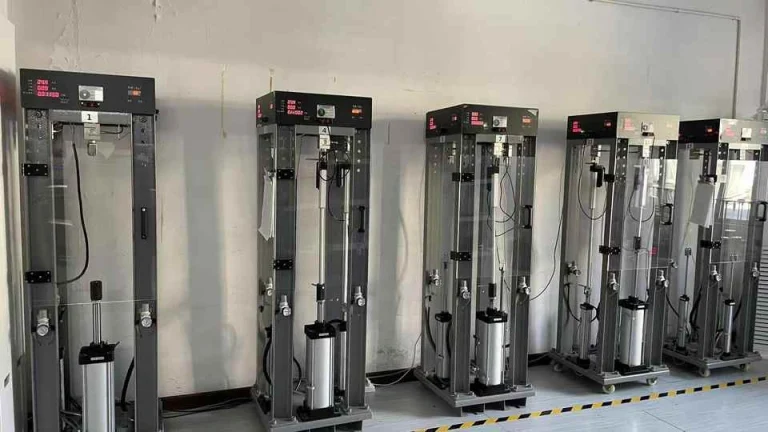
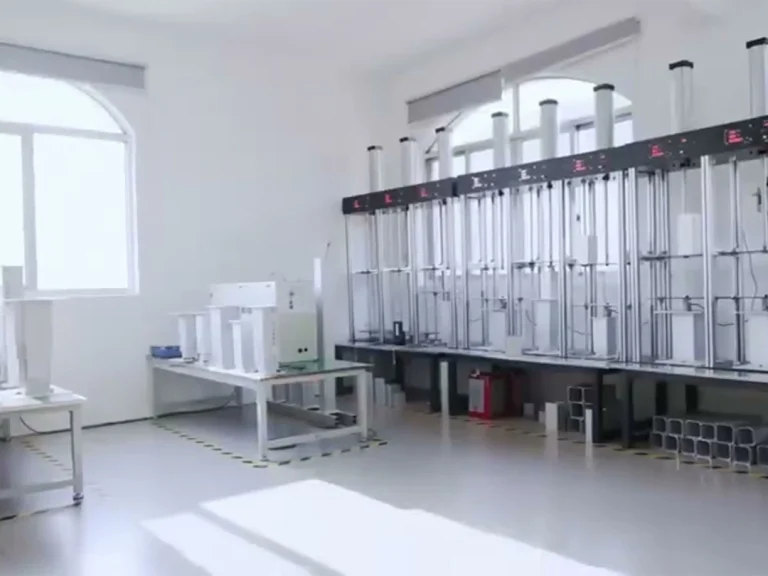
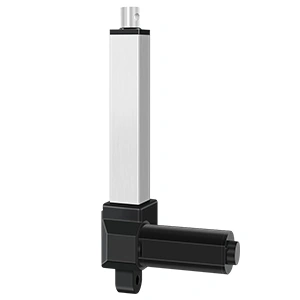
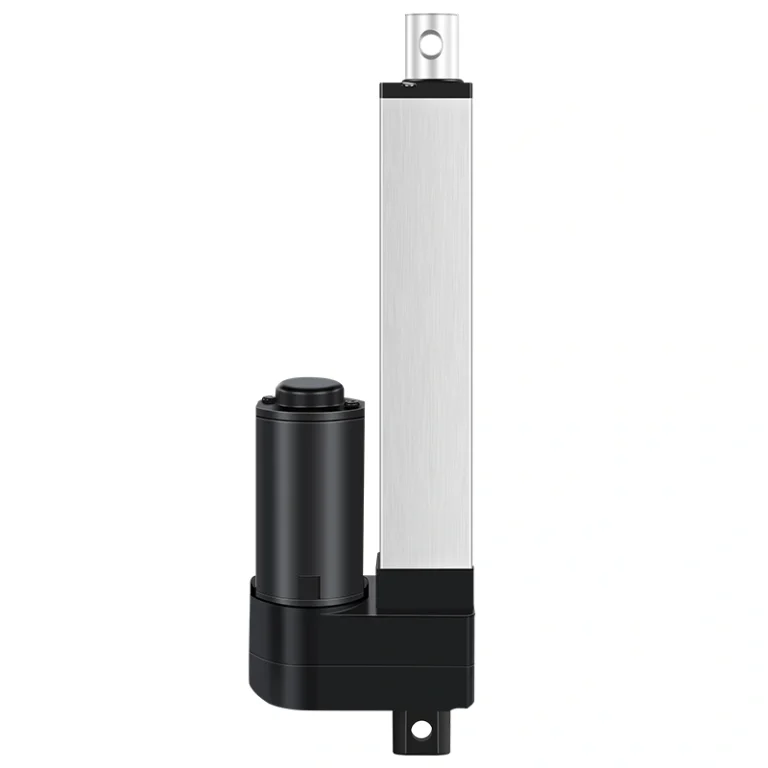
ActuLift maßgeschneiderte OEM/ODM: Von der Idee zu produktionsbereiten Aktuatoren
Entdecken Sie die umfassenden OEM/ODM-Fähigkeiten von ActuLift für individuelle Linearkolben. Von 10-1000mm präzisen Hüben bis hin zu maßgeschneiderten Montage- und Kabeloptionen, erfahren Sie, wie unser Ingenieurteam komplexe Bewegungskonzepte in produktionsbereite industrielle Lösungen umsetzt.
Use this guide to define an OEM/ODM linear-motion request around load, stroke, speed, duty cycle, mounting, cable routing, controls, environment and documentation before a configuration-specific review.
Inhalt
Einführung: Die OEM/ODM-Herausforderung in der linearen Aktuation
OEM projects can differ in load, travel, mounting geometry, controls, cable routing, environment and documentation. The useful starting point is to define those requirements, then compare them with the closest existing actuator or lifting-column platform.
ActuLift’s OEM/ODM project workflow starts with requirement review. Dimensions, interfaces, controls or other changes are evaluated against the selected product family; feasibility, performance, documentation, tooling, validation and commercial terms must be confirmed for the specific project before approval.
Warum individuelle Lösungen für Linearkolben wichtig sind
Standardaktuatoren kommen mit festen Hub-Längen, vorgegebenen Montagekonfigurationen und voreingestellten Kabellängen. Obwohl bequem, schaffen diese standardisierten Optionen häufig Herausforderungen während der Integration:
Hubbeschränkungen: Standardhübe erreichen möglicherweise nicht erforderliche Positionen, was zu operationellen Lücken führt.
Montageunverträglichkeiten: Vorhandene Lochmuster stimmen nicht mit den Aktuatoranschlüssen überein
Kabelverlegungsprobleme: Feste Kabellängen schaffen Installationsprobleme oder erfordern Verlängerungen
Der maßgeschneiderte Ansatz von ActuLift beseitigt diese Reibungspunkte, indem er Aktuatoren liefert, die von Anfang an speziell für Ihre Anwendung entwickelt wurden.
Stroke and Travel Requirements: Define Before Review
Die Hubhöhe bestimmt, wie weit Ihr Aktuator sich ausfahren und einziehen kann – und macht sie zu einer der kritischsten Spezifikationen für jede Anwendung.
Übersicht über den Hubbereich
Stroke availability is product-family and configuration dependent. Define the required travel, retracted and extended length, mounting geometry, load, speed and stability constraints, then confirm the feasible range for the selected platform.
Stroke / package input
What to define
Required travel
Minimum and maximum motion needed by the mechanism
Retracted / extended length
Available installation envelope and end-clearance limits
Load and speed
Required working point through the intended travel
Geometry / stability
Mounting points, side-load risk, critical-speed or column-stability constraints
Vorteile der individuellen Hubtechnik
Wenn Sie Ihre genauen Hubanforderungen festlegen, gewinnen Sie mehrere Vorteile:
Travel fit: define the motion range required by the actual mechanism rather than choosing travel from a generic application label
Packaging fit: confirm retracted length, extended length, end dimensions and clearance in the assembly
Commercial fit: compare standard-platform and project-specific changes using the current quotation, tooling and validation scope
Integration fit: validate the selected sample against mounting, load path, controls and surrounding structure before release
Do not assume a particular stroke or positioning capability from this article. Submit the required travel and package constraints, then confirm what the selected actuator family can support.
Mounting Interface Requirements: Drawings First
Die Montagekonfiguration bestimmt, wie der Aktuator mit Ihrer Ausrüstung verbunden wird. Nicht kompatible Montageanschlüsse schaffen Installationsherausforderungen, erfordern maßgeschneiderte Halterungen oder necessitieren Neugestaltungen – und erhöhen so Zeit und Kosten Ihres Projekts.
Standard- und individuelle Montageoptionen
For OEM review, define the mounting interface from the mechanism drawing, including thread or pin standard, interface dimensions, load direction, articulation and tolerance requirements:
Mounting inputs to define:
Threaded interfaces: specify thread standard, size, engagement, material and load direction
Assembly constraints: define access, fastener, rotation, alignment and service requirements
Individuelle Montage-Engineering
Project-specific mounting changes may be reviewed when the standard interface does not fit the mechanism. Treat the following as design inputs, not default available options:
Hole patterns: submit the required layout and tolerances for feasibility review
Flange interfaces: submit the mating geometry, load case and material/environment requirements
Pivot interfaces: define angular travel, pin loading, articulation and clearance
Rotating / trunnion-style interfaces: define the required motion and confirm whether the selected platform can support it
Submit a controlled interface drawing for engineering review. Any project-specific interface should be confirmed by drawing revision, sample fit check and the agreed acceptance criteria before production.
Cable, Connector and Routing Requirements
Die Kabel Länge mag gering erscheinen, aber falsche Größenwahl führt zu erheblichen Installationsproblemen. Zu kurze Kabel erfordern Verlängerungen oder Neuverdrahtung; übermäßig lange Kabel schaffen Routing-Unordnung, potenzielle Quetschpunkte und unprofessionelle Erscheinungen.
Kabellanpassungsoptionen
Cable and connector requirements should be defined as project inputs and confirmed for the selected actuator/controller configuration:
Length: specify required finished cable length, routing allowance and tolerance
Connector: specify mating connector, pinout, locking, sealing and service requirements
Conductor sizing: confirm current, voltage-drop, flexing, temperature and applicable wiring requirements
Cable construction: define flex, abrasion, chemical, temperature, shielding or environmental requirements as applicable
Installationsvorteile
A configuration-specific cable plan can improve integration when it is designed and validated with the finished equipment:
Routing fit: define bend radius, strain relief, pinch-point avoidance and service access
Connection strategy: minimize unnecessary joints while meeting service and replacement needs
Packaging: confirm where excess cable, connectors and protective sleeves can be accommodated
Assembly method: confirm cable length, connector orientation and test method on the production assembly
Submit the cable/connector requirement with the mechanism and controller information; availability, tooling, pinout, sealing and validation requirements must be confirmed before it becomes an approved configuration.
Umfassende Anpassungsmöglichkeiten: Über die Grundlagen hinaus
ActuLift’s kundenspezifische OEM/ODM-Lösungen gehen über Hub, Montage und Kabelkonfiguration hinaus. Zusätzliche Anpassungsoptionen umfassen:
Spannungsoptionen
12V requirement: confirm a compatible actuator, controller, current draw and wiring for the selected build
24V requirement: confirm a compatible actuator, controller, current draw and wiring for the selected build
Other supply requirements: submit the voltage and electrical architecture for feasibility review; do not assume availability
Kraftbewertungen
Define the complete moving and holding load case, linkage geometry, duty cycle, speed and safety margin, then confirm the rated working point of the selected product family. Do not infer a universal custom-force range from this article.
Umweltschutz
Umgebung: define dust, water, contamination, temperature, cleaning and storage exposure
Target ingress protection: state the required IP condition and request configuration-specific test/documentation evidence; a target is not an automatic available rating
Corrosion / chemical exposure: define materials, coatings, salt/chemical exposure and lifecycle expectations for feasibility review
Geschwindigkeitsvariationen
Define the required speed at the expected load together with stroke, duty cycle, controller behavior and stopping requirements. Confirm the achievable working point for the selected configuration rather than assuming a custom speed is always available.
Der Prozess für individuelle Aktuatoren: Von der Anfrage bis zur Lieferung
1. Spezifikationsprüfung
Reichen Sie Ihre Anforderungen ein – Hubhöhe, Montagekonfiguration, Kabellänge, Spannung, Kraft und Umweltbedingungen. Das Engineering-Team von ActuLift überprüft jeden Parameter auf Machbarkeit und Optimierungsmöglichkeiten.
2. Ingenieurdiskussion
Direkte Kommunikation mit den technischen Spezialisten von ActuLift stellt sicher, dass alle Überlegungen berücksichtigt werden. Empfehlungen zur Optimierung werden auf der Grundlage der Anwendungsanforderungen bereitgestellt.
3. Prototypenentwicklung
Where a sample or prototype stage is agreed, use it to verify fit, function and the defined performance criteria. Sampling supports validation but does not replace the buyer’s finished-system testing, qualification or regulatory responsibilities.
4. Produktion und Lieferung
After the selected configuration, drawing revision, quality requirements, documentation package and commercial terms are agreed, production can proceed under the approved order. The applicable inspections, records and supplied documentation must be defined for that project rather than assumed from this article.
Anwendungen in verschiedenen Branchen
OEM/ODM requests can come from different equipment sectors. The application label does not by itself establish actuator suitability; evaluate the selected Linearantrieb or lifting-column platform against the actual requirements:
Care-related / medical equipment: define finished-device load, controls, safety, cleaning, documentation and regulatory requirements; component customization does not establish medical suitability
Landmaschinen: define contamination, washdown, vibration, temperature, load and service conditions
Marine-adjacent / corrosive environments: define salt, moisture, materials, sealing and corrosion-test requirements; do not assume marine suitability
Vehicle / mobile equipment: define voltage, shock, vibration, temperature, mounting and applicable qualification requirements
Was ist der Unterschied zwischen OEM und ODM für Linearkolben?
For this sourcing workflow, OEM generally starts from buyer-defined drawings or specifications, while ODM may involve more supplier-side engineering input from functional requirements. In either case, freeze the selected platform, controlled drawing, configuration, validation plan and commercial/documentation scope before production.
Kann ich eine individuelle IP-Bewertung für raue Umgebungen anfordern?
You can submit a target ingress-protection requirement, but availability is product- and configuration-dependent. Define the actual dust/water exposure, mounting, cable/connector interfaces and cleaning conditions, then request configuration-specific test or declaration evidence before approval.
Wie lange dauert in der Regel die Entwicklungszeit für einen individuellen Aktuatorprototyp?
There is no universal prototype lead time. Timing depends on the selected base platform, engineering changes, drawings, tooling, components, sample quantity, test scope and documentation. Confirm the current project schedule in the quotation or project plan.
Unterstützen Sie individuelle Rückmelde-signale wie Hall-Sensoren?
Feedback or control requirements such as Hall sensing, potentiometer, limit switching or other interfaces can be submitted for review, but availability and electrical details are configuration-specific. Synchronization or position-control performance must be validated with the selected actuator, controller, wiring and mechanism.
Fazit: Arbeiten Sie mit ActuLift für Ihre individuellen Aktuatorenbedürfnisse zusammen
OEM/ODM review should begin with a complete requirement set and the closest existing product platform. Any requested change to stroke, mounting, cable, controls, environment or other interfaces should be confirmed through the project-specific engineering and validation process.
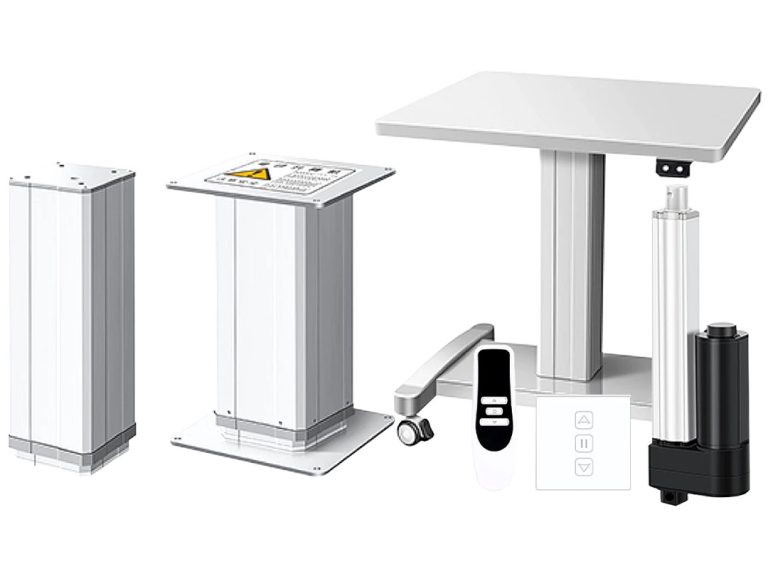
Start from the relevant Linearantrieb, lifting-column, control or mounting family, then document which dimensions, interfaces, controls or environmental requirements need configuration-specific review.
Ready to define an OEM/ODM request? Send the load, stroke, speed, duty cycle, voltage, controls/feedback, mounting drawing, cable/connector requirements, environment, documentation needs and target quantity for configuration review.
ActuLift Linear Actuator Families — start from the closest current platform, then use controlled drawings, approved specifications and configuration-specific test/documentation evidence for final decisions
Erhalten Sie Experteneinblicke in die industrielle Bewegungssteuerung
Die Auswahl des richtigen elektrischen linearen Aktuators oder Hebensäule ist entscheidend für die Leistung Ihres Projekts. Als professioneller Hersteller von Bewegungssteuerungen & Automatisierung, helfen unsere Ingenieure Ihnen, die Lastkapazität, den Hub, und die IP-Bewertungen basierend auf Ihrer spezifischen Anwendung anzupassen. Teilen Sie uns Ihre technischen Anforderungen für eine maßgeschneiderte Lösung mit.
ActuLift unterstützt End-to-End-Anpassungen, vom strukturellen Design und Hubparametern bis hin zu Branding und Gehäusefinishes, damit Sie eine starke Markenidentität aufbauen können.
Schnelle Reaktion & Prototyping
Wir verstehen die Bedeutung von Geschwindigkeit in der B2B-Beschaffung und nutzen optimierte Produktionsabläufe, um effiziente Antworten von der Mustentwicklung bis zur Serienlieferung sicherzustellen.
Quality Documentation & Traceability
Quality and traceability requirements vary by project. Ask ActuLift for the applicable inspection records, product specifications, drawings and available compliance documentation for the selected model and order.