Smart Furniture: Pop-Up TV Hebesysteme für Schränke Anleitung
Plan a concealed TV-lift installation by cabinet geometry, screen/bracket load, stroke, retracted and extended dimensions, clearances, controls, cable routing, power, noise target, protection and documentation. IPTV is used as a configuration example; confirm commercial specifications on the product page.
Pop-up TV lifts are one way to integrate a display into cabinets, media furniture or custom fixtures when the project needs powered vertical movement and concealed storage.
This guide reviews the ActuLift IPTV platform from an integration perspective: screen/bracket load, cabinet geometry, stroke, retracted/extended dimensions, speed, noise, power, controls, cable routing, environmental protection and documentation. It does not assign a universal screen-size range.
Scope: This is an integration and project-planning guide, not the commercial specification page for IPTV. Use the guide to define cabinet geometry, motion envelope, screen/bracket load, installation, cable routing and control requirements. For current IPTV configuration options, quotation, sample approval and OEM procurement, use the IPTV TV Lifting Column product page.
Use these checkpoints to define a production-intent TV-lift configuration and validate the complete furniture assembly before volume order or installation.
Inhalt
Verstehen von TV Lift Mechanismen: Die Grundlage der Smart Furniture
Was ist ein TV Lift Mechanismus?
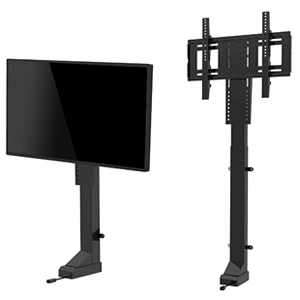
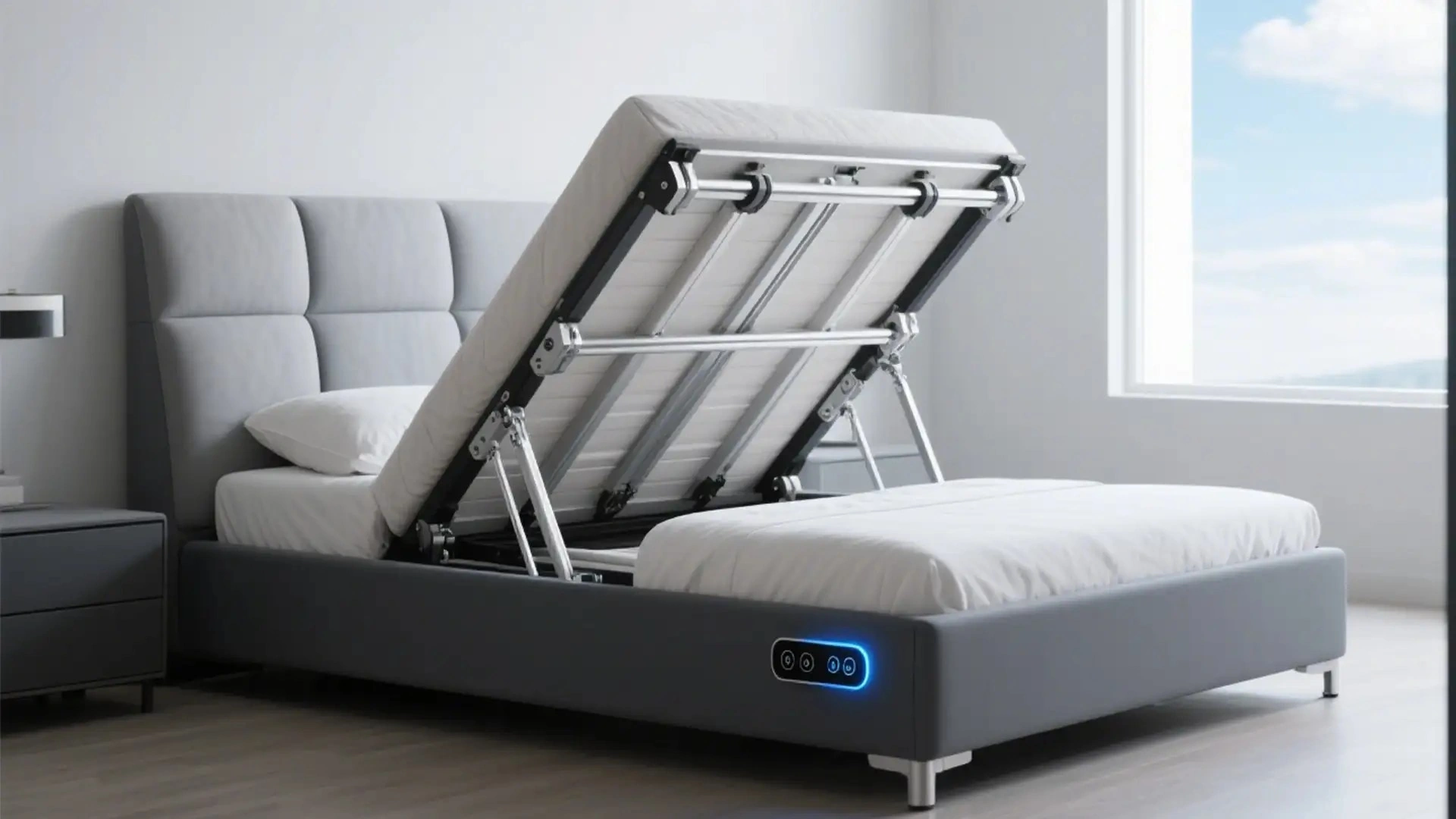
Ein TV-Hebemechanismus ist ein elektromechanisches System, das dazu entworfen wurde, Fernseher aus Möbelstücken wie Schränken, Anrichten, Betten und maßgefertigten Einbauten anzuheben und abzusenken. Diese Mechanismen nutzen elektrische lineare Aktuatoren, um eine sanfte, kontrollierte vertikale Bewegung zu erzielen, die verändert, wie Nutzer mit ihrem audiovisuellen Equipment interagieren.
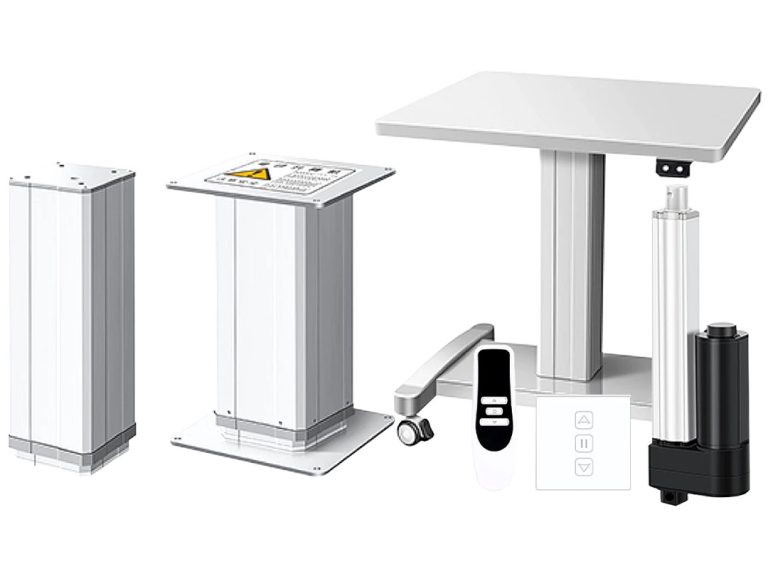
Die Kernkomponenten eines typischen TV-Hebemechanismus umfassen:
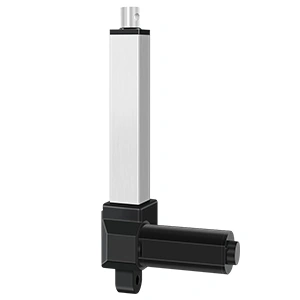
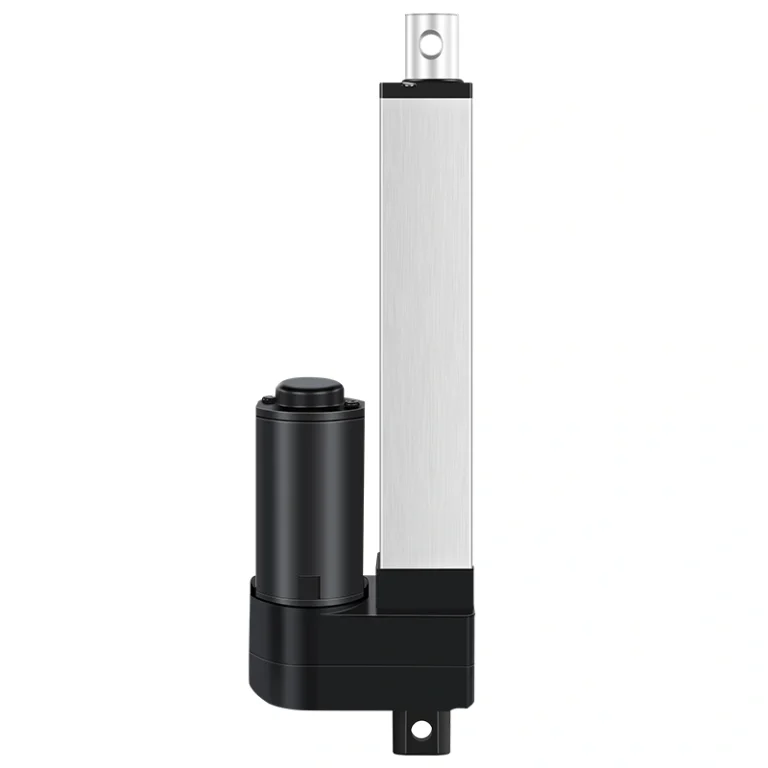
Elektrischer Linearaktuator: Die Motoreinheit, die elektrische Energie in lineare Bewegung umwandelt
Hebesäule: Das strukturelle Element, das sich ausdehnt und zurückzieht, um den Fernseher zu bewegen
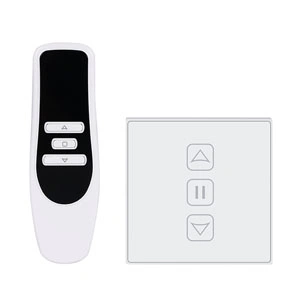
Steuerungssystem: Fernbedienungen, Wandschalter oder smarte Hausintegration zur Bedienung
Montagezubehör: Halterungen und Adapter, die den Fernseher am Hebemechanismus sichern
Warum eine verdeckte TV-Installation wählen?
Verdeckte TV-Installationen bieten überzeugende Vorteile, die ihre wachsende Beliebtheit im modernen Innendesign erklären:
Platzoptimierung: Durch die Montage von Fernsehern in Möbeln beseitigen Sie die Notwendigkeit für wandmontierte Displays oder sperrige TV-Ständer, wodurch wertvoller Platz auf dem Boden frei wird und ein saubereres visuelles Profil entsteht.
Ästhetische Anziehung: Wenn der Fernseher nicht in Gebrauch ist, verschwindet er vollständig und bewahrt das beabsichtigte Design des Möbels, sodass die Raumdekoration in den Mittelpunkt rückt.
Schutz: Versteckt in Schränken sind Fernseher vor Staub, versehentlichen Schäden und unbefugtem Zugriff geschützt – besonders wichtig in Haushalten mit Kindern.
Vielseitigkeit:Dasselbe Möbelstück kann mehrere Zwecke erfüllen, wobei der Fernseher nur dann erscheint, wenn dies gewünscht ist, und der Schrank ansonsten Stauraum oder Ausstellungsfläche bietet.
IPTV as a Configuration Example
The IPTV series is a configurable OEM TV-lift platform for furniture and AV integration. Current product evidence lists configuration-specific stroke, load, speed, noise, power, environmental-protection and control options that must be confirmed for the selected build and cabinet assembly.
Hauptmerkmale der IPTV-Hebesäulen
Laden: The current product brief lists 1500N as a static-load figure. Confirm working/dynamic load, screen and bracket weight, leverage, guide support, duty cycle, safety factor and test conditions; do not convert 1500N into a screen-size or working-load promise.
Speed / noise: The current brief lists 25mm/s no-load, 20mm/s full-load and a noise figure below 45 dB. Confirm the selected configuration, load, supply, controller settings, measurement method, distance and environment before using these figures in an OEM specification.
Column / stroke configuration: The current brief lists stroke choices from 300mm to 1200mm. Confirm the available selected build, retracted/extended dimensions, column/profile geometry and full-motion clearance before freezing the cabinet design.
Lifecycle: Do not assume a universal cycle-life value from this article. Request lifecycle or endurance evidence for the exact IPTV configuration if the project requires a cycle-life acceptance criterion.
Safety / fault functions: Confirm current-limit, overload, obstruction/anti-collision, soft-start/stop, limit and fault behavior for the selected controller/module. Finished-cabinet clearances and safety validation remain system-level requirements.
2-Sektionen vs. 3-Sektionen Hebesäulen: Die richtige Konfiguration wählen
For a concealed TV installation, compare the selected column/profile and drawing rather than assuming fixed 2-section versus 3-section performance. The required stroke, retracted height, extended height, cabinet opening, screen/bracket load and full-motion clearance should drive the configuration.
2-Sektionen Hebesäulen
Merkmale:
Confirm the selected two-section column/profile and approved drawing
Confirm mechanism, guide and service details for the selected build rather than assuming lower complexity
Verify the actual retracted length and cabinet envelope on the selected drawing
Confirm load-dependent speed for the selected motor/controller configuration
Evaluate against:
Cabinet height/depth and the selected column’s retracted dimensions
Required full-stroke time under the actual moving load
Current quotation, required functions and cabinet integration cost
Actual TV + bracket moving load, leverage, guide support and safety factor
Hub: Use the current available stroke list and selected-build drawing; do not assume a fixed 400–600mm range for every two-section configuration.
3-Sektionen Hebesäulen
Merkmale:
Confirm the selected three-section column/profile and approved drawing
Compare actual stroke-to-retracted-length geometry on the selected build
Confirm load-dependent speed and motion behavior for the selected motor/controller configuration
Confirm working/dynamic load and test conditions; stage count does not establish load capacity
Evaluate against:
Cabinet opening, depth, height and full-motion envelope
Actual screen/bracket weight and geometry rather than diagonal screen size alone
Required visible rise, bracket offset and top-opening clearance
Required retracted position and cabinet closure geometry
Hub: Use the current available stroke list and selected-build drawing; do not assume a fixed 600–800mm range for every three-section configuration.
Auswahlleitfaden
Review area
2-Segment
3-Segment
Selected drawing
Confirm retracted/extended dimensions and profile
Confirm retracted/extended dimensions and profile
Hub
Current IPTV brief lists 300–1200mm options; confirm availability for the selected build
Moving load
Calculate screen + bracket + mechanism load, leverage, guide support and safety factor; confirm working/dynamic rating
Cabinet clearance
Verify opening, full-motion envelope, bracket offset and cable path
Speed / noise
Confirm selected motor/controller, load and test conditions
Commercial fit
Use current quotation and required configuration; do not infer lower/premium cost from stage count
Technische Daten: Elektrische Linearantriebe für Smart Furniture
Das Verständnis der technischen Parameter elektrischer linearer Aktuatoren ist entscheidend für die ordnungsgemäße Systemgestaltung und -integration.
Stromanforderungen
The current IPTV brief lists a 24V DC configuration and optional wall-power adapter paths. Confirm the selected supply, adapter input/output, plug, current capacity, controller compatibility and destination-market requirements before production.
Leistungskennzahlen
Geschwindigkeit: Current brief lists 25mm/s no-load and 20mm/s full-load; confirm selected build and test conditions. Geräusch: Current brief lists <45 dB; confirm load, distance, measurement method, environment and selected configuration. Operating temperature: Current brief lists -20°C to +60°C; confirm selected motor, controller, cable, lubrication, enclosure and actual operating conditions.
Tragfähigkeit nach Modell
Current IPTV brief
Published reference
Engineering boundary
Static load
1500N
Confirm working/dynamic load, screen + bracket weight, leverage, guide support, duty cycle, safety factor and test conditions
Hub
300–1200mm options listed
Confirm exact available stroke, retracted/extended dimensions and drawing
Screen size
No universal mapping
Select from actual screen/bracket mass and cabinet geometry, not diagonal size alone
Integration mit Steuerungssystemen
The current IPTV brief lists several possible control paths. Availability and behavior depend on the selected controller/module, region, app or hub, wiring and ordered configuration:
RF remote: listed as a possible control path; confirm selected remote, range, pairing and controller compatibility
Wired control: confirm whether a wall switch/handset or other hardwired interface is included in the selected configuration
Zigbee / Tuya: listed as a possible path; confirm module, target hub, region, app flow, pairing and account requirements
Bluetooth BLE: listed as a possible path; confirm selected controller/module, app or protocol and expected range
Installationsleitfaden: Integration von Pop-Up TV Liften in Schränke
Concealed TV integration should follow the selected IPTV drawing, cabinet structure, screen/bracket load, full-motion clearance, power/control architecture and cable-routing requirements. The steps below are design-review checkpoints, not a universal installation procedure.
Vorbereitungsplanung
Anforderungen an das Kabinett-Design:
Die Innenmaße müssen die Hubkolonne in ihrer vollständig eingefahrenen Position aufnehmen.
Ausreichende Belüftung bereitstellen, um eine Überhitzung des Fernsehers zu verhindern.
Strukturelle Unterstützung für das Gewicht des Schranks gewährleisten, wenn dieser mit Fernseher und Mechanismus beladen ist.
Kabelmanagementwege für Stromversorgung, HDMI und andere Anschlüsse planen.
Freiraum-Berechnungen:
Messen Sie die Abmessungen des Fernsehers, einschließlich Blenden und Montageschiene.
Set clearance from the selected column/profile, TV/bracket envelope, cabinet opening and full-motion drawing rather than a universal 20–30mm rule
Calculate cabinet geometry from retracted/extended column dimensions, screen/bracket position, opening travel and required service/closure clearances
Installationsschritte
Bereiten Sie den Schrank vor: Schneiden Sie Montagelöcher und installieren Sie Kabelmanagementkanäle.
Mount the lifting column: use the approved bracket/fastener pattern, cabinet structure and torque/installation requirements for the selected build
Attach the TV bracket: verify VESA/interface compatibility, bracket rating, fasteners and the selected screen geometry; do not assume one universal bracket
Verbinden Sie den Fernseher mit dem Lift: Sichern Sie den Fernseher an der Montageplatte des Hebemechanismus.
Installieren Sie das Steuerungssystem: Schließen Sie die Stromversorgung, das Steuergehäuse und die Benutzersteuerungen an.
Betrieb testen: Überprüfen Sie die reibungslose Erweiterung und Rückführung vor der finalen Montage.
Commission the system: verify configured limits, control functions, cable travel, stopping/fault behavior and full-motion clearance according to the selected controller/module
Kabelmanagementlösungen
Cable routing should be engineered for the complete motion envelope and selected interface:
Use a cable chain or other guided routing method only when supported by the cabinet geometry and selected cable/column design
Define power/signal routing, bend radius, strain relief and EMC requirements for the actual wiring architecture
Provide controlled slack/service loops only where they remain clear of pinch points through full travel
If wireless control is used, confirm the selected module, power, app/hub dependencies and fail-safe behavior; the lift still requires its own power and motor wiring
Smart Home Integration: Confirm Module & Platform Compatibility
Smart-home functions are optional integration features, not inherent capabilities of the lifting column. Define the selected controller/module, command interface, app/hub, region, account/service dependencies, privacy/security requirements and safe behavior if the smart-home layer is unavailable.
Häufige Automatisierungsszenarien
Example scene: a home-automation system could coordinate TV-lift movement with lighting or AV equipment only when the selected gateway/controller and automation platform support the required commands and sequencing.
Scheduled routine example: automated lift movement should be implemented only with the required controller/module, safe clearances and platform logic for the finished furniture.
Away-mode example: automatic retraction can be considered if the selected control architecture supports it and the system verifies that movement is safe at the time of command.
Bedroom furniture: the same mechanical selection rules apply—screen/bracket load, cabinet geometry, cable routing, controls, noise target and clearances must be confirmed.
Kompatibilität mit Steuerungssystemen
Do not claim compatibility with a named smart-home platform unless the selected controller/gateway has been verified for it. The current IPTV brief supports these configuration paths:
RF remote: confirm selected remote and controller pairing
Zigbee / Tuya: confirm module, hub/app, region and pairing flow
Bluetooth BLE: confirm module, app/protocol and range
Alexa-related control: confirm gateway/controller, account, region/language and service dependencies
Other platforms / APIs: require interface documentation and project-specific integration validation before compatibility is claimed
Applications: Where a TV Lift May Be Evaluated
Wohnzimmer
Living-room cabinetry is one possible application when screen/bracket weight, cabinet geometry, clearances, controls, cable routing and noise requirements fit the selected IPTV configuration.
Heimkinos
Home-theater cabinetry can use a TV lift when the selected stroke, moving load, bracket geometry and cabinet opening support the intended display.
Schlafzimmer
Bedroom furniture can conceal a display without wall mounting, subject to the same load, clearance, noise, cable-routing and control requirements.
Küchen und Essbereiche
Kitchen or dining furniture requires additional review of heat, moisture, contamination, cleaning and electrical conditions before a TV-lift configuration is approved.
Kommerzielle Räume
Hospitality or commercial fixtures may use TV lifts, but duty cycle, service access, controls, safety/fault behavior and applicable equipment requirements should be defined for the actual installation.
Maritime und Wohnmobilanwendungen
Marine, RV or other mobile applications require separate vibration/shock, voltage, mounting, corrosion, environmental-protection and regulatory review; do not infer suitability from a two-section column or compact packaging.
Maintenance & Troubleshooting: Follow the Selected Configuration
Maintenance and troubleshooting requirements depend on the selected IPTV build, cabinet, bracket, cables, controller/module and operating environment. Use the current product/order documentation and observed field conditions rather than fixed generic intervals.
Routinewartung
Schmierung: follow the selected column’s current maintenance documentation; do not add lubricant or an annual interval unless specified
Inspektion: define fastener/bracket inspection from the finished furniture’s maintenance plan and actual service conditions
Reinigung: follow material/enclosure and electrical cleaning limits for the selected build
Cables / connectors: inspect routing, strain relief, pinch points and connections as required by the maintenance plan
Häufige Probleme und Lösungen
Beobachtetes Problem
Check first
Next action
Uneven / jerky motion
Load path, guide alignment, obstruction, cable routing, supply/controller state
Stop operation and diagnose against the selected drawing and service documentation; do not assume lubrication is the cause
No response
Supply, adapter, controller/module, handset/pairing, wiring and faults
Use the selected electrical diagram and fault procedure
Unexpected noise
Mounting, cabinet contact, guide/load alignment, cables and mechanism
Stop if abnormal and inspect before continued operation
Display not level
Bracket geometry, fasteners, guide support and load distribution
Correct the assembly according to the approved drawing; do not compensate by forcing the lift
Garantie und Unterstützung
Warranty and technical-support scope are order- and market-specific. Confirm warranty term, covered components, exclusions, replacement process, controller/module coverage and support path in the applicable quotation or agreement.
Das richtige TV Lift-System auswählen: Wichtige Überlegungen
Die Wahl des optimalen TV-Liftmechanismus erfordert die Bewertung mehrerer Faktoren:
Hauptauswahlkriterien
Fernsehgewicht: Überprüfen Sie, ob die Tragfähigkeit der Hebesäule das Gewicht Ihres Fernsehers mit einem Spielraum übersteigt
Fernsehgröße: Stellen Sie die Kompatibilität der Montageschiene mit Ihrer Bildschirmgröße sicher
Schrankmaße: Bestätigen Sie, dass der Mechanismus sowohl in ausgefahrener als auch in zurückgezogener Position in den verfügbaren Raum passt
Erwünschte Erweiterungshöhe: Bestimmen Sie, wie hoch der Fernseher über dem Schrank steigen soll
Steuerungseinstellungen: Wählen Sie geeignete Steuerungsoptionen für Ihren Anwendungsfall aus
Budgetüberlegungen: Abwägen von Funktionen gegenüber den Kosten des Projekts
Fragen an Anbieter
Was ist der Unterschied zwischen einem 2-Sektionen und einem 3-Sektionen TV Lift?
Stage count describes column geometry, not a guaranteed speed, load or screen-size class. Compare the selected 2-section or 3-section drawing for stroke, retracted/extended dimensions, moving load, speed, cabinet opening and full-motion clearance.
Kann ich den TV Lift mit Sprachassistenten wie Alexa oder Google Home integrieren?
The current IPTV brief lists Alexa-related integration as a configuration-dependent control path. Confirm the selected controller or gateway, account setup, region/language, app/service dependencies and destination-market requirements. Do not claim Google Home or any other named platform unless that exact integration has been verified.
What happens if an object blocks the TV lift while it is moving?
Do not assume built-in collision detection or a specific stop/reverse behavior. Confirm the selected controller/module’s obstruction, current-limit, overload, limit and fault functions, then validate the finished cabinet for clearances and representative obstruction cases.
How much load can the IPTV platform handle?
The current IPTV brief lists 1500N as a static-load figure. Confirm working/dynamic load, screen and bracket mass, leverage, guide support, duty cycle, safety factor and test conditions for the selected build. Do not map that number directly to a TV diagonal or an unverified IPTV-3S-Pro rating.
Possible Design Directions: Verify Before Specification
Additional sensing, connectivity or materials may be considered in future/custom furniture projects, but they should be treated as project requirements to validate rather than assumed IPTV capabilities.
Neue Technologien
Possible design directions: touchless sensing, predictive/automated control, alternative power/interface architectures or lighter structural materials may be evaluated when the project defines their interfaces, failure modes, privacy/security implications, load limits and validation criteria. None should be presented as a current default IPTV feature.
Project Drivers to Define
Required cabinet/display aesthetics and concealment behavior
Required control interface, hub/app/voice ecosystem and offline behavior
Target market, supply/plug requirements, documentation and commercial constraints
Current quotation, BOM, module availability and lifecycle/replacement plan
Actual residential, hospitality or commercial duty, service and safety requirements
Conclusion: Specify the Complete TV-Lift Assembly
The IPTV series is a configurable OEM platform for concealed-display furniture and AV integration. Final suitability depends on the selected stroke, retracted/extended dimensions, working load, speed, noise target, power supply, controller/module, enclosure protection, mounting geometry, cable routing and required documentation.
Choose a 2-section or 3-section configuration from the actual cabinet envelope and selected drawing, not from fixed speed/load/screen-size assumptions. If smart-home control is required, verify the exact controller/module, platform dependencies and safe system behavior separately.
For a project review, use the following current category/product pages as starting points and confirm the selected configuration before approval:
IPTV TV Lifting Column – configurable OEM platform; confirm load, stroke, speed, power, controls, enclosure and documents
Smart Home und Möbel – application category; confirm component and integration evidence by project
Hebesäulen – category for candidate columns; confirm available configurations and ratings
Sources & Evidence Boundary
Current IPTV product page — source for the current brief’s configuration-specific load, stroke, speed, noise, power, IP54 and control-path references.
VESA standards — verify the actual display/mount interface applicable to the selected screen and bracket.
Any named smart-home platform, wireless module or compliance claim requires current documentation for the selected controller/module, region and destination market.
Erhalten Sie Experteneinblicke in die industrielle Bewegungssteuerung
Die Auswahl des richtigen elektrischen linearen Aktuators oder Hebensäule ist entscheidend für die Leistung Ihres Projekts. Als professioneller Hersteller von Bewegungssteuerungen & Automatisierung, helfen unsere Ingenieure Ihnen, die Lastkapazität, den Hub, und die IP-Bewertungen basierend auf Ihrer spezifischen Anwendung anzupassen. Teilen Sie uns Ihre technischen Anforderungen für eine maßgeschneiderte Lösung mit.
ActuLift unterstützt End-to-End-Anpassungen, vom strukturellen Design und Hubparametern bis hin zu Branding und Gehäusefinishes, damit Sie eine starke Markenidentität aufbauen können.
Schnelle Reaktion & Prototyping
Wir verstehen die Bedeutung von Geschwindigkeit in der B2B-Beschaffung und nutzen optimierte Produktionsabläufe, um effiziente Antworten von der Mustentwicklung bis zur Serienlieferung sicherzustellen.
Quality Documentation & Traceability
Quality and traceability requirements vary by project. Ask ActuLift for the applicable inspection records, product specifications, drawings and available compliance documentation for the selected model and order.