Der ultimative Leitfaden zur Auswahl zwischen 12V und 24V Linearaktuatoren
Compare 12V and 24V linear actuator architectures using load, current, voltage drop, cable length, controller compatibility, duty cycle and selected-build evidence.
Voltage is one part of linear-actuator system selection. Choose it together with the selected actuator configuration, load, speed, duty cycle, current, cable length, power source, controller, feedback, mounting and environment rather than treating 12V or 24V as a shortcut to performance.
Dieser umfassende Leitfaden zerlegt alles, was Sie über die Spannungswahl wissen müssen, von den grundlegenden physikalischen Grundlagen bis hin zu praktischen Anwendungsüberlegungen, und hilft Ihnen, eine informierte Entscheidung für Ihren spezifischen Anwendungsfall zu treffen.
Inhalt
Verstehen von Spannung in linearen Aktuatoren
Linear actuators convert electrical energy into linear motion. Supply voltage defines part of the electrical operating point, but actuator thrust, speed, efficiency and thermal behavior also depend on the motor, gearing, screw, current limits, controller, load and selected configuration.
Im Kern folgt elektrische Energie einer einfachen Formel:
Leistung (W) = Spannung (V) × Strom (A)
For the same electrical power, an ideal 24V load would draw half the current of a 12V load. Real actuator current still depends on motor design, efficiency, load, speed and controller behavior, so compare the actual rated and peak current of the selected build.
Die Physik wird besonders wichtig, wenn man die Leitungsverluste berücksichtigt. Der elektrische Widerstand in der Verkabelung bewirkt, dass Leistung in Form von Wärme verloren geht, und folgt der Formel:
Verlorene Leistung = I²R
Because resistive wiring loss follows I²R, halving current would reduce I²R loss to one quarter when conductor resistance and operating conditions are otherwise the same. Use actual current, round-trip conductor resistance and allowable voltage drop to size the harness; do not apply a fixed savings percentage across unlike actuator designs. For conductor identification and feedback connections, see the linear actuator wiring guide.
Technischer Vergleich: 12V vs 24V lineare Aktuatoren
Schub- und Kraftausgabe
Higher nominal voltage does not by itself establish actuator thrust. Rated load depends on the complete motor, gearing, screw, current limit, efficiency, duty cycle and mechanical design. Even when a product family has 12V and 24V variants, compare the approved specification for each selected configuration rather than assuming identical force.
Lower current at a similar electrical power level can help some wiring and driver designs, but it does not prove a higher continuous load or duty cycle. Continuous-load capability and thermal limits must come from the selected actuator’s documented rating and test conditions.
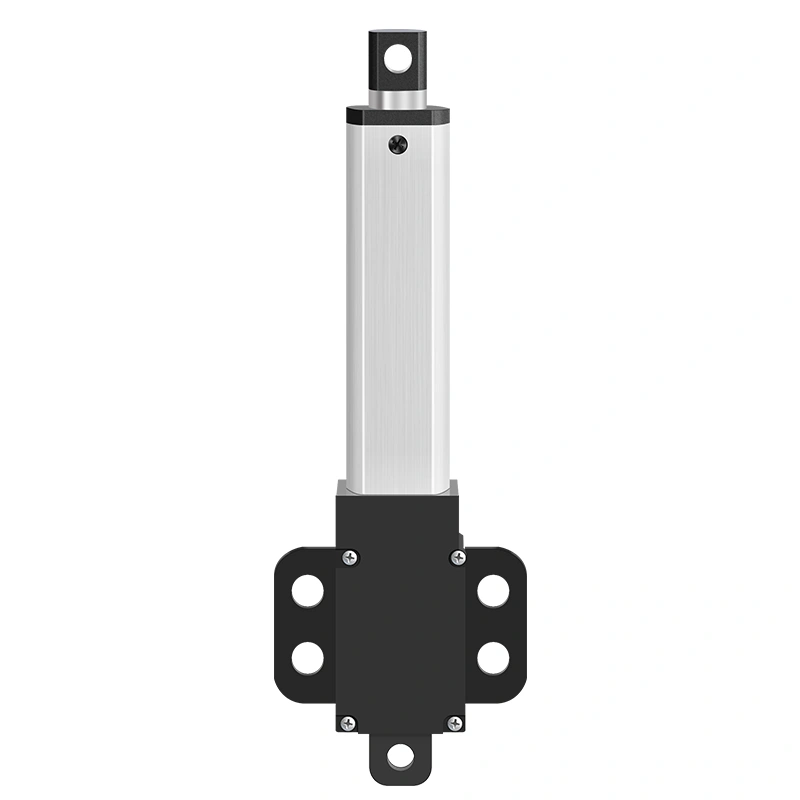
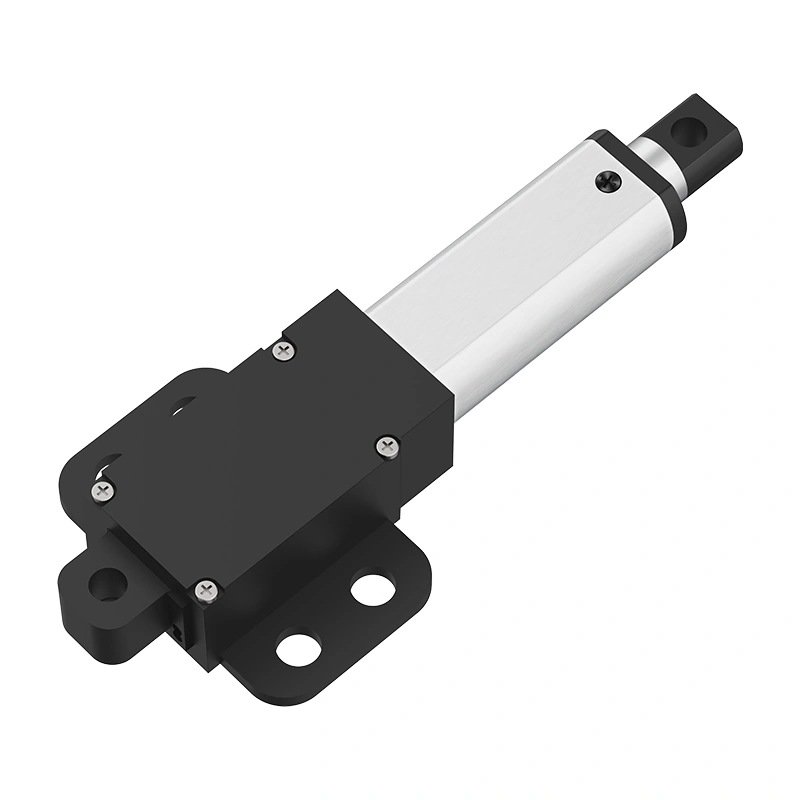
Current ActuLift product evidence treats the IP80 and relevant 12V actuator configurations as project-specific platforms. Use approved load, stroke, speed, duty-cycle and controller data rather than inferring “heavy duty” or “light duty” from voltage alone.
Geschwindigkeitsleistung
Actuator speed is configuration-specific. Two voltage variants may or may not use the same motor, gearing, screw or controller limits, so neither identical speed nor higher 24V speed should be assumed. Compare speed at the required load and supply conditions for the selected build.
If movement time matters, define the required stroke time and load, then compare candidate configurations. The HR61 likewise requires load, stroke, speed and duty cycle to be confirmed for the selected configuration; its compact size does not establish a generic speed class.
Kabellänge und Verkabelungsabstand
Vielleicht ist der praktischste Aspekt für viele Installationen, wie weit Sie die Verkabelung vom Stromversorgungsquelle zum Aktuator verlegen können. Hier wird die Physik, die wir zuvor besprochen haben, sofort relevant.
12V-Systeme can require higher current than a similar-power 24V architecture. There is no universal 15-foot cable limit: calculate actual round-trip conductor resistance, rated/peak current, allowable voltage drop, connector losses and thermal constraints.
24V-Systeme may provide more voltage-drop margin at similar power because the current can be lower, but cable length is still an engineering calculation. Conductor size, peak current, connectors, controller limits, allowable drop and installation temperature determine the acceptable run.
Anwendungseignung: Wann man jede Spannung wählen sollte
12V Systems: When a 12V Architecture Fits
A 12V actuator can be a candidate when the equipment already has a suitable 12V electrical architecture and the selected actuator/controller can meet the required load, speed, duty cycle, current and environmental conditions.
Evaluate when:
The equipment has an approved 12V supply or battery architecture
The selected actuator and electrical system are validated for the actual environment; 12V alone does not establish marine suitability
The power source can supply rated and peak actuator current across the intended operating range
The harness is sized from current, length, allowable voltage drop and installation conditions
The selected 12V configuration meets the required load, speed and duty cycle
The controller, feedback and wiring are electrically compatible with the selected actuator
Mounting, environmental protection, documentation and system validation requirements are confirmed
Use the 12V Linearantriebe category to discover candidate products, then confirm voltage range, current, load, stroke, speed, duty cycle, controller and environmental evidence for the selected build.
24V Systems: When a 24V Architecture Fits
A 24V actuator can be a candidate when the equipment already uses a compatible 24V power architecture or when a lower-current electrical design is useful. Industrial or PLC use does not by itself make a 24V actuator the correct choice.
Evaluate when:
The equipment has an approved 24V supply sized for the actuator’s rated and peak current
Lower current at similar electrical power materially helps harness or driver design
The selected actuator build is approved for the required voltage, load, speed and duty cycle
Any care-related or regulated use is validated at the finished-system level; voltage does not establish medical suitability
Any aerospace or other regulated application receives project-specific qualification and documentation review
The multi-actuator controller, feedback, wiring, calibration and permitted synchronization error are validated independently of voltage
Harness length and voltage drop are verified by calculation using actual current and conductor resistance
PLC/controller interfaces, motor driver, isolation, current capacity and control logic are explicitly compatible
Use the 24V Linearantriebe category to discover candidate products. A category label does not establish continuous-duty, industrial, synchronization or environmental performance; confirm the selected build.
Das Argument für die Synchronisation mehrerer Aktuatoren
Multi-actuator systems need a defined synchronization architecture, but voltage alone does not determine synchronization accuracy. Start with the required channel count, actuator matching, feedback method, controller, wiring, load balance, calibration and permitted position error.
At similar electrical power, a 24V architecture may reduce branch current and can help power-distribution planning. That benefit is separate from synchronization performance: a 24V controller or PLC does not inherently provide more precise actuator synchronization.
For synchronized platforms or lifting systems, select the voltage that matches the approved actuator/controller architecture, then validate synchronization and fault behavior on the complete mechanism.
PLC-Integration und industrielle Steuerung
Many industrial control systems use 24V DC for sensors, I/O or control power, but actuator motor supply and PLC signal voltage are separate design questions. Confirm the exact interfaces before integration:
Signal compatibility: verify controller/PLC input and output levels, interface type, grounding and isolation requirements
Power separation: do not assume an actuator motor can be powered directly from a PLC output; use the required driver or control box
Current and protection: size the power supply, driver, fusing and wiring for rated, peak and fault conditions
EMC / machine safety: address transients, shielding, grounding, protective functions and applicable equipment requirements at system level
Der IP80 is a 24V actuator platform, but PLC or controller compatibility still requires confirmation of motor-driver current, control interface, feedback, wiring and fault behavior for the selected configuration.
Kritische Warnungen: Spannungsanpassung
Überschreiten Sie niemals die Nennspannung
Eine Spannung anzuwenden, die höher als die Nennspannung des Aktuators ist, kann sofortige und schwerwiegende Schäden verursachen. Überspannung führt zu übermäßigem Strom, Überhitzung, Motorwicklungsversagen und vollständigem Aktuatorschaden – oft innerhalb von Sekunden. Schließen Sie niemals einen 24V-Aktuator an eine 24V-Stromversorgung an, die über die Nennspannung hinaus ansteigt, und verwenden Sie immer geeignete Spannungsregulierung.
Risiken bei Unterspannung
Obwohl weniger sofort zerstörerisch, kann Unterspannung ebenfalls Probleme verursachen. Wenn ein Aktuator unzureichende Spannung erhält, kann er:
unter Last stocken, übermäßigen Strom ziehen und überhitzen.
nicht zuverlässig Hübe abschließen.
vorgezogenen Verschleiß durch erhöhten mechanischen Stress erfahren.
inkonsistent arbeiten, was die Steuerung des Systems erschwert.
Polarität ist wichtig
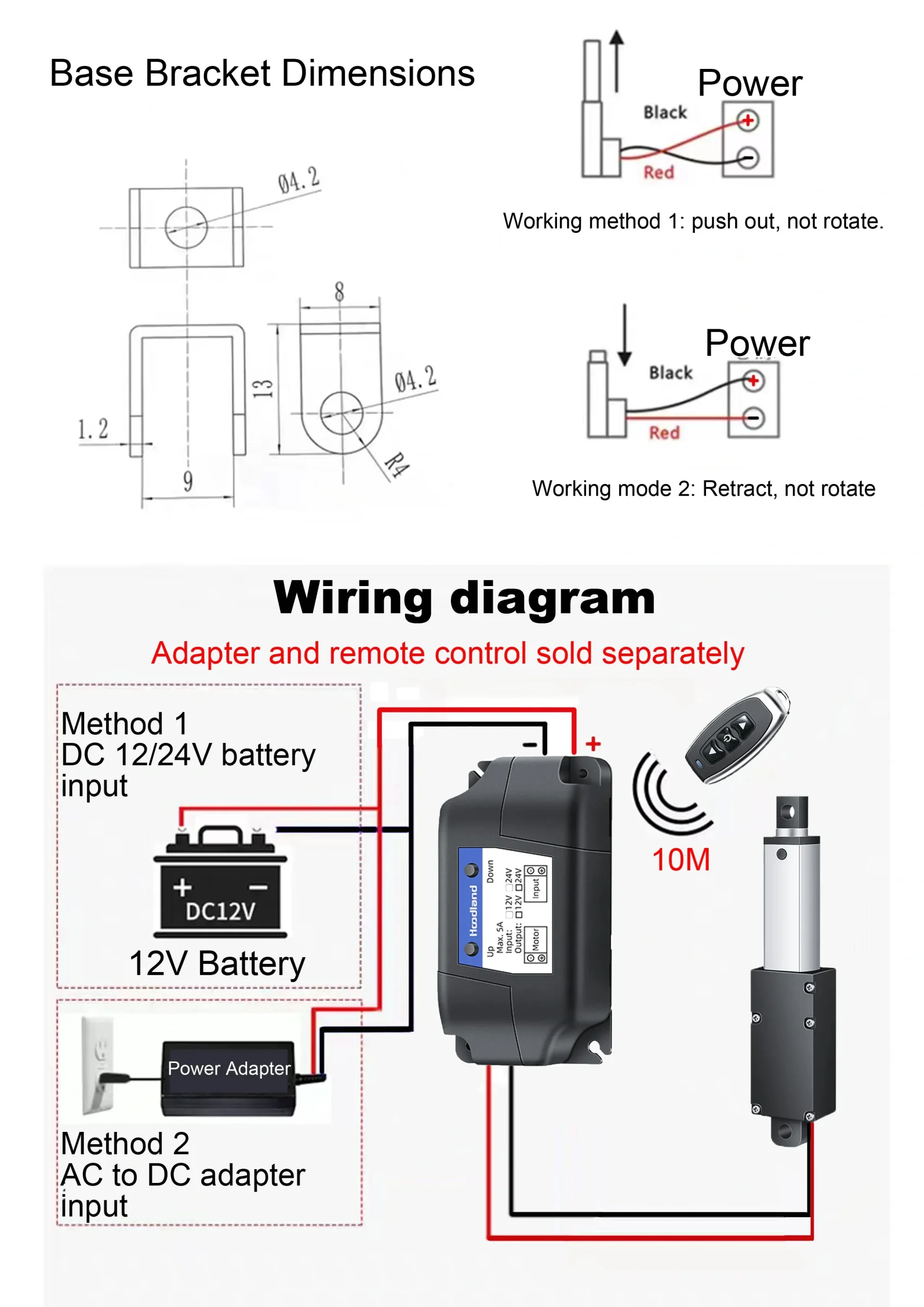
Für DC-Linearantriebe ist die richtige Polarität unerlässlich. Eine umgekehrte Polarität kann dazu führen, dass der Aktuator rückwärts läuft, was potenziell Sicherheitsrisiken in Ihrer Anwendung schafft. In einigen Fällen kann eine Polaritätsumkehr auch die Steuerungselektronik beschädigen.
Empfehlungen für sichere Bedienung
Überprüfen Sie immer die Spannungswerte vor dem Anschluss an das Stromnetz.
Verwenden Sie geeignete Stromversorgungen mit ordnungsgemäßer Spannungsregulierung.
Beinhaltet geeignete Sicherungen zum Schutz gegen Fehlerbedingungen.
Provide surge/transient protection where required by the power architecture and installation environment
Befolgen Sie die Installationsrichtlinien des Herstellers genau
Commission within the documented supply range and follow current-limit and test requirements for the selected product
Ihre Auswahl treffen: Ein praktischer Entscheidungsrahmen
Die Wahl zwischen 12V- und 24V-Linearantrieben muss nicht kompliziert sein. Berücksichtigen Sie dieses Entscheidungsrahmen:
Evaluate 12V when:
The equipment already provides a compatible, regulated 12V architecture
Calculated voltage drop and conductor heating are acceptable for the actual harness
The selected 12V configuration meets the required load and holding conditions
The selected 12V configuration meets the required speed under load
Power-supply, controller, wiring and lifecycle tradeoffs have been compared for the project
The controller and power source are sized for the actuator’s rated and peak current
Environmental, mounting and safety requirements remain within the selected product’s documented limits
Evaluate 24V when:
The equipment already provides a compatible 24V power architecture
Lower current at similar power helps the calculated harness/voltage-drop design
The selected 24V configuration—not the voltage label—meets the required load and duty cycle
The selected 24V configuration meets the required speed at the real load
The chosen multi-actuator controller/feedback architecture is compatible and validated
The motor driver and PLC/controller interfaces are explicitly compatible
The selected actuator has a documented duty/thermal rating that matches the operating cycle
Kann ich einen 12V linearen Aktuator an einem 24V-Netzteil betreiben?
Do not do so unless the actuator or its approved controller documentation explicitly allows that supply range. Use the rated supply and protection requirements for the selected configuration; overvoltage can damage the motor or integrated electronics.
Bietet ein 24V Aktuator mehr Schubkraft als eine 12V-Version?
Not inherently. Force depends on the complete actuator design and selected configuration, including motor, gearing, screw, current limits and duty cycle. Compare the approved load specification for the exact 12V or 24V build.
Does 24V always permit longer cable runs?
No fixed distance follows from voltage alone. At the same electrical power and conductor resistance, 24V can reduce current and I²R loss, but the allowable run must be calculated from actual rated/peak current, wire size, round-trip resistance, connectors and permitted voltage drop.
When does 12V make sense for battery-powered equipment?
12V can simplify integration when the equipment already has a compatible 12V battery or regulated supply and can provide the actuator’s rated/peak current. Confirm real battery voltage range, charging conditions, transients, controller compatibility and wiring rather than assuming every vehicle or battery system is equivalent.
Fazit
Choose 12V or 24V from the complete electrical and mechanical architecture. Voltage affects current and voltage-drop planning, but the selected actuator’s load, speed, duty cycle, controls, feedback, environment and mounting determine whether the configuration fits the application.
Use current 12V actuator product evidence when the equipment uses a compatible 12V architecture. Do not infer automotive, marine, battery or reliability suitability from voltage alone.
Use current 24V actuator product evidence when a 24V architecture fits the power and control design. Do not infer higher performance, longer cable capability, synchronization accuracy or PLC compatibility from the voltage label alone.
Keep the fundamental relationship: . Dieses Verhältnis zu verstehen hilft Ihnen zu begreifen, warum die Spannungswahl nicht nur die Leistung, sondern auch das Systemdesign, die Effizienz und die langfristige Zuverlässigkeit beeinflusst. Indem Sie Ihre Spannungswahl an die Anforderungen Ihrer Anwendung anpassen, erreichen Sie optimale Ergebnisse und vermeiden die häufigen Fallstricke, die sich aus nicht passenden Systemen ergeben.. Apply it with the actual actuator current, harness resistance, controller limits and working conditions. Final performance and reliability require configuration-specific validation.
For a project review, provide the required load, stroke, speed, duty cycle, available supply, cable length, controller/feedback, mounting and environment so suitable 12V or 24V candidate configurations can be compared.
Externe Quellen
(Blue Sea Systems) Grundlagen der Verdrahtung und Steuerung von Linearantrieben
Erhalten Sie Experteneinblicke in die industrielle Bewegungssteuerung
Die Auswahl des richtigen elektrischen linearen Aktuators oder Hebensäule ist entscheidend für die Leistung Ihres Projekts. Als professioneller Hersteller von Bewegungssteuerungen & Automatisierung, helfen unsere Ingenieure Ihnen, die Lastkapazität, den Hub, und die IP-Bewertungen basierend auf Ihrer spezifischen Anwendung anzupassen. Teilen Sie uns Ihre technischen Anforderungen für eine maßgeschneiderte Lösung mit.
ActuLift unterstützt End-to-End-Anpassungen, vom strukturellen Design und Hubparametern bis hin zu Branding und Gehäusefinishes, damit Sie eine starke Markenidentität aufbauen können.
Schnelle Reaktion & Prototyping
Wir verstehen die Bedeutung von Geschwindigkeit in der B2B-Beschaffung und nutzen optimierte Produktionsabläufe, um effiziente Antworten von der Mustentwicklung bis zur Serienlieferung sicherzustellen.
Quality Documentation & Traceability
Quality and traceability requirements vary by project. Ask ActuLift for the applicable inspection records, product specifications, drawings and available compliance documentation for the selected model and order.