Hướng dẫn Tối ưu để chọn giữa Bộ truyền động tuyến tính 12V và 24V
Compare 12V and 24V linear actuator architectures using load, current, voltage drop, cable length, controller compatibility, duty cycle and selected-build evidence.
Voltage is one part of linear-actuator system selection. Choose it together with the selected actuator configuration, load, speed, duty cycle, current, cable length, power source, controller, feedback, mounting and environment rather than treating 12V or 24V as a shortcut to performance.
Hướng dẫn toàn diện này phân tích mọi thứ bạn cần biết về việc chọn điện áp, từ vật lý cơ bản đến các cân nhắc ứng dụng thực tiễn, giúp bạn đưa ra quyết định thông minh cho trường hợp sử dụng cụ thể của bạn.
Mục lục
Hiểu biết về điện áp trong các bộ truyền động tuyến tính
Linear actuators convert electrical energy into linear motion. Supply voltage defines part of the electrical operating point, but actuator thrust, speed, efficiency and thermal behavior also depend on the motor, gearing, screw, current limits, controller, load and selected configuration.
Cốt lõi, công suất điện theo công thức đơn giản:
Công suất (W) = Điện áp (V) × Dòng điện (A)
For the same electrical power, an ideal 24V load would draw half the current of a 12V load. Real actuator current still depends on motor design, efficiency, load, speed and controller behavior, so compare the actual rated and peak current of the selected build.
Vật lý trở nên quan trọng hơn khi xem xét các tổn thất trong dây điện. Điện trở trong dây điện gây ra sự mất công suất dưới dạng nhiệt, theo công thức:
Công suất mất = I²R
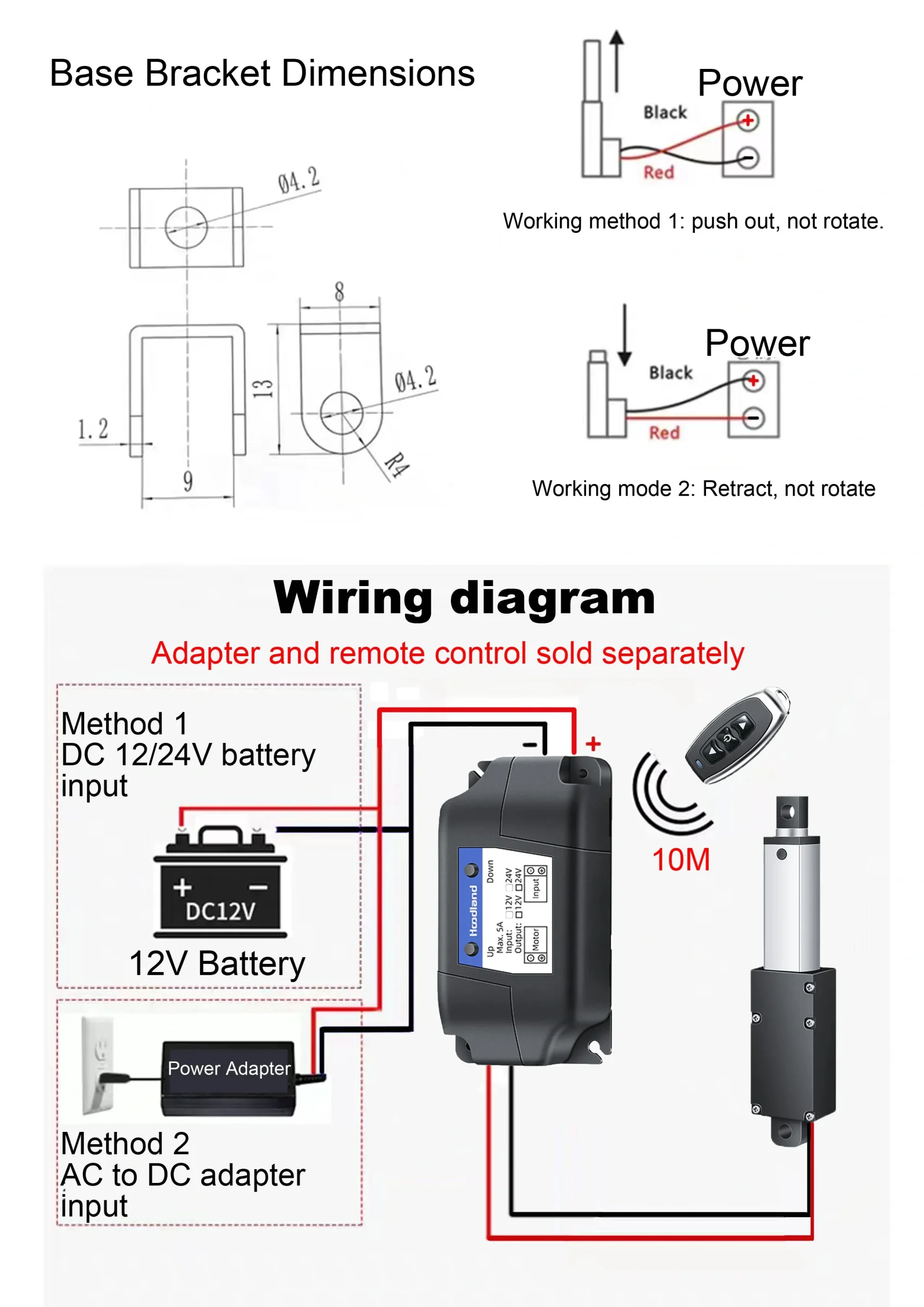
Because resistive wiring loss follows I²R, halving current would reduce I²R loss to one quarter when conductor resistance and operating conditions are otherwise the same. Use actual current, round-trip conductor resistance and allowable voltage drop to size the harness; do not apply a fixed savings percentage across unlike actuator designs. For conductor identification and feedback connections, see the linear actuator wiring guide.
So sánh kỹ thuật: Bộ truyền động tuyến tính 12V và 24V
Lực đẩy và công suất đầu ra
Higher nominal voltage does not by itself establish actuator thrust. Rated load depends on the complete motor, gearing, screw, current limit, efficiency, duty cycle and mechanical design. Even when a product family has 12V and 24V variants, compare the approved specification for each selected configuration rather than assuming identical force.
Lower current at a similar electrical power level can help some wiring and driver designs, but it does not prove a higher continuous load or duty cycle. Continuous-load capability and thermal limits must come from the selected actuator’s documented rating and test conditions.
Current ActuLift product evidence treats the IP80 and relevant 12V actuator configurations as project-specific platforms. Use approved load, stroke, speed, duty-cycle and controller data rather than inferring “heavy duty” or “light duty” from voltage alone.
Hiệu suất tốc độ
Actuator speed is configuration-specific. Two voltage variants may or may not use the same motor, gearing, screw or controller limits, so neither identical speed nor higher 24V speed should be assumed. Compare speed at the required load and supply conditions for the selected build.
If movement time matters, define the required stroke time and load, then compare candidate configurations. The HR61 likewise requires load, stroke, speed and duty cycle to be confirmed for the selected configuration; its compact size does not establish a generic speed class.
Độ dài cáp và khoảng cách dây điện
Có thể xem xét thực tiễn nhất cho nhiều lắp đặt là bạn có thể chạy dây điện từ nguồn điện đến bộ truyền động xa bao nhiêu. Đây là lúc mà vật lý mà chúng ta đã thảo luận trước đó trở nên liên quan ngay lập tức.
Hệ thống 12V can require higher current than a similar-power 24V architecture. There is no universal 15-foot cable limit: calculate actual round-trip conductor resistance, rated/peak current, allowable voltage drop, connector losses and thermal constraints.
Hệ thống 24V may provide more voltage-drop margin at similar power because the current can be lower, but cable length is still an engineering calculation. Conductor size, peak current, connectors, controller limits, allowable drop and installation temperature determine the acceptable run.
Sự phù hợp ứng dụng: Khi nào nên chọn mỗi điện áp
12V Systems: When a 12V Architecture Fits
A 12V actuator can be a candidate when the equipment already has a suitable 12V electrical architecture and the selected actuator/controller can meet the required load, speed, duty cycle, current and environmental conditions.
Evaluate when:
The equipment has an approved 12V supply or battery architecture
The selected actuator and electrical system are validated for the actual environment; 12V alone does not establish marine suitability
The power source can supply rated and peak actuator current across the intended operating range
The harness is sized from current, length, allowable voltage drop and installation conditions
The selected 12V configuration meets the required load, speed and duty cycle
The controller, feedback and wiring are electrically compatible with the selected actuator
Mounting, environmental protection, documentation and system validation requirements are confirmed
Use the Bộ truyền động tuyến tính 12V category to discover candidate products, then confirm voltage range, current, load, stroke, speed, duty cycle, controller and environmental evidence for the selected build.
24V Systems: When a 24V Architecture Fits
A 24V actuator can be a candidate when the equipment already uses a compatible 24V power architecture or when a lower-current electrical design is useful. Industrial or PLC use does not by itself make a 24V actuator the correct choice.
Evaluate when:
The equipment has an approved 24V supply sized for the actuator’s rated and peak current
Lower current at similar electrical power materially helps harness or driver design
The selected actuator build is approved for the required voltage, load, speed and duty cycle
Any care-related or regulated use is validated at the finished-system level; voltage does not establish medical suitability
Any aerospace or other regulated application receives project-specific qualification and documentation review
The multi-actuator controller, feedback, wiring, calibration and permitted synchronization error are validated independently of voltage
Harness length and voltage drop are verified by calculation using actual current and conductor resistance
PLC/controller interfaces, motor driver, isolation, current capacity and control logic are explicitly compatible
Use the Bộ truyền động tuyến tính 24V category to discover candidate products. A category label does not establish continuous-duty, industrial, synchronization or environmental performance; confirm the selected build.
Lý do cho việc đồng bộ nhiều bộ truyền động
Multi-actuator systems need a defined synchronization architecture, but voltage alone does not determine synchronization accuracy. Start with the required channel count, actuator matching, feedback method, controller, wiring, load balance, calibration and permitted position error.
At similar electrical power, a 24V architecture may reduce branch current and can help power-distribution planning. That benefit is separate from synchronization performance: a 24V controller or PLC does not inherently provide more precise actuator synchronization.
For synchronized platforms or lifting systems, select the voltage that matches the approved actuator/controller architecture, then validate synchronization and fault behavior on the complete mechanism.
Tích hợp PLC và điều khiển công nghiệp
Many industrial control systems use 24V DC for sensors, I/O or control power, but actuator motor supply and PLC signal voltage are separate design questions. Confirm the exact interfaces before integration:
Signal compatibility: verify controller/PLC input and output levels, interface type, grounding and isolation requirements
Power separation: do not assume an actuator motor can be powered directly from a PLC output; use the required driver or control box
Current and protection: size the power supply, driver, fusing and wiring for rated, peak and fault conditions
EMC / machine safety: address transients, shielding, grounding, protective functions and applicable equipment requirements at system level
Giá đỡ máy dẫn động phẳng IP80 is a 24V actuator platform, but PLC or controller compatibility still requires confirmation of motor-driver current, control interface, feedback, wiring and fault behavior for the selected configuration.
Cảnh báo quan trọng: Sự không khớp điện áp
Không bao giờ vượt quá điện áp định mức
Việc áp dụng điện áp cao hơn mức định mức của bộ truyền động có thể gây ra hư hỏng ngay lập tức và nghiêm trọng. Điện áp cao dẫn đến việc tiêu thụ dòng điện quá mức, quá nhiệt, hỏng cuộn dây động cơ, và hỏng hoàn toàn bộ truyền động - thường trong vòng vài giây. Không bao giờ kết nối bộ truyền động 24V với nguồn điện 24V có điện áp vượt quá mức quy định, và luôn sử dụng điều chỉnh điện áp thích hợp.
Rủi ro điện áp thấp
Mặc dù ít gây hủy hoại ngay lập tức hơn, điện áp thấp có thể gây ra vấn đề. Khi một bộ truyền động nhận được điện áp không đủ, nó có thể:
Dừng lại dưới tải, tiêu thụ dòng điện quá mức và quá nhiệt
Không hoàn thành hành trình một cách đáng tin cậy
Trải qua sự mài mòn sớm do căng thẳng cơ học tăng
Hoạt động không đồng nhất, làm cho việc điều khiển hệ thống trở nên khó khăn
Độ cực có ý nghĩa
Đối với bộ truyền động tuyến tính DC, cực tính đúng là cần thiết. Cực tính đảo ngược có thể gây ra bộ truyền động chạy ngược lại, có thể tạo ra rủi ro an toàn trong ứng dụng của bạn. Trong một số trường hợp, việc đảo ngược cực tính cũng có thể làm hỏng điện tử điều khiển.
Khuyến nghị cho vận hành an toàn
Luôn xác minh xếp hạng điện áp trước khi kết nối nguồn điện
Sử dụng các nguồn cung cấp điện thích hợp với điều chỉnh điện áp thích hợp
Bao gồm cầu chì phù hợp để bảo vệ chống lại các điều kiện lỗi
Provide surge/transient protection where required by the power architecture and installation environment
Tuân theo hướng dẫn cài đặt của nhà sản xuất một cách chính xác
Commission within the documented supply range and follow current-limit and test requirements for the selected product
Làm thế nào để chọn lựa: Một khung quyết định thực tiễn
Lựa chọn giữa các bộ truyền động tuyến tính 12V và 24V không phải là điều phức tạp. Xem xét khung quyết định này:
Evaluate 12V when:
The equipment already provides a compatible, regulated 12V architecture
Calculated voltage drop and conductor heating are acceptable for the actual harness
The selected 12V configuration meets the required load and holding conditions
The selected 12V configuration meets the required speed under load
Power-supply, controller, wiring and lifecycle tradeoffs have been compared for the project
The controller and power source are sized for the actuator’s rated and peak current
Environmental, mounting and safety requirements remain within the selected product’s documented limits
Evaluate 24V when:
The equipment already provides a compatible 24V power architecture
Lower current at similar power helps the calculated harness/voltage-drop design
The selected 24V configuration—not the voltage label—meets the required load and duty cycle
The selected 24V configuration meets the required speed at the real load
The chosen multi-actuator controller/feedback architecture is compatible and validated
The motor driver and PLC/controller interfaces are explicitly compatible
The selected actuator has a documented duty/thermal rating that matches the operating cycle
Tôi có thể vận hành một bộ truyền động tuyến tính 12V trên nguồn điện 24V không?
Do not do so unless the actuator or its approved controller documentation explicitly allows that supply range. Use the rated supply and protection requirements for the selected configuration; overvoltage can damage the motor or integrated electronics.
Liệu một bộ truyền động 24V có công suất đẩy cao hơn phiên bản 12V không?
Not inherently. Force depends on the complete actuator design and selected configuration, including motor, gearing, screw, current limits and duty cycle. Compare the approved load specification for the exact 12V or 24V build.
Does 24V always permit longer cable runs?
No fixed distance follows from voltage alone. At the same electrical power and conductor resistance, 24V can reduce current and I²R loss, but the allowable run must be calculated from actual rated/peak current, wire size, round-trip resistance, connectors and permitted voltage drop.
When does 12V make sense for battery-powered equipment?
12V can simplify integration when the equipment already has a compatible 12V battery or regulated supply and can provide the actuator’s rated/peak current. Confirm real battery voltage range, charging conditions, transients, controller compatibility and wiring rather than assuming every vehicle or battery system is equivalent.
Kết luận
Choose 12V or 24V from the complete electrical and mechanical architecture. Voltage affects current and voltage-drop planning, but the selected actuator’s load, speed, duty cycle, controls, feedback, environment and mounting determine whether the configuration fits the application.
Use current 12V actuator product evidence when the equipment uses a compatible 12V architecture. Do not infer automotive, marine, battery or reliability suitability from voltage alone.
Use current 24V actuator product evidence when a 24V architecture fits the power and control design. Do not infer higher performance, longer cable capability, synchronization accuracy or PLC compatibility from the voltage label alone.
Keep the fundamental relationship: Công suất = Điện áp × Dòng điện. Apply it with the actual actuator current, harness resistance, controller limits and working conditions. Final performance and reliability require configuration-specific validation.
For a project review, provide the required load, stroke, speed, duty cycle, available supply, cable length, controller/feedback, mounting and environment so suitable 12V or 24V candidate configurations can be compared.
ActuLift hỗ trợ tùy chỉnh từ đầu đến cuối, từ thiết kế cấu trúc và tham số hành trình đến thương hiệu và hoàn thiện vỏ, giúp bạn xây dựng bản sắc thương hiệu mạnh mẽ.
Phản hồi nhanh & Tạo mẫu
Chúng tôi hiểu tầm quan trọng của tốc độ trong việc mua sắm B2B, sử dụng quy trình sản xuất được tối ưu hóa để đảm bảo phản hồi hiệu quả từ phát triển mẫu đến giao hàng số lượng lớn.
Quality Documentation & Traceability
Quality and traceability requirements vary by project. Ask ActuLift for the applicable inspection records, product specifications, drawings and available compliance documentation for the selected model and order.