12V ve 24V Lineer Aktüatörler Arasında Seçim Yapma Rehberi
Compare 12V and 24V linear actuator architectures using load, current, voltage drop, cable length, controller compatibility, duty cycle and selected-build evidence.
Voltage is one part of linear-actuator system selection. Choose it together with the selected actuator configuration, load, speed, duty cycle, current, cable length, power source, controller, feedback, mounting and environment rather than treating 12V or 24V as a shortcut to performance.
This comprehensive guide breaks down everything you need to know about voltage selection, from the fundamental physics to practical application considerations, helping you make an informed decision for your specific use case.
İçindekiler
Understanding Voltage in Linear Actuators
Linear actuators convert electrical energy into linear motion. Supply voltage defines part of the electrical operating point, but actuator thrust, speed, efficiency and thermal behavior also depend on the motor, gearing, screw, current limits, controller, load and selected configuration.
At its core, electrical power follows a simple formula:
Power (W) = Voltage (V) × Current (A)
For the same electrical power, an ideal 24V load would draw half the current of a 12V load. Real actuator current still depends on motor design, efficiency, load, speed and controller behavior, so compare the actual rated and peak current of the selected build.
Kablo kayıplarını dikkate aldığımızda fizik daha da önem kazanır. Kablolardaki elektriksel direnç, aşağıdaki formüle göre enerjinin ısı olarak kaybolmasına neden olur:
Kaybedilen Güç = I²R
Because resistive wiring loss follows I²R, halving current would reduce I²R loss to one quarter when conductor resistance and operating conditions are otherwise the same. Use actual current, round-trip conductor resistance and allowable voltage drop to size the harness; do not apply a fixed savings percentage across unlike actuator designs. For conductor identification and feedback connections, see the linear actuator wiring guide.
Technical Comparison: 12V vs 24V Linear Actuators
Thrust and Force Output
Higher nominal voltage does not by itself establish actuator thrust. Rated load depends on the complete motor, gearing, screw, current limit, efficiency, duty cycle and mechanical design. Even when a product family has 12V and 24V variants, compare the approved specification for each selected configuration rather than assuming identical force.
Lower current at a similar electrical power level can help some wiring and driver designs, but it does not prove a higher continuous load or duty cycle. Continuous-load capability and thermal limits must come from the selected actuator’s documented rating and test conditions.
Current ActuLift product evidence treats the IP80 and relevant 12V actuator configurations as project-specific platforms. Use approved load, stroke, speed, duty-cycle and controller data rather than inferring “heavy duty” or “light duty” from voltage alone.
Speed Performance
Actuator speed is configuration-specific. Two voltage variants may or may not use the same motor, gearing, screw or controller limits, so neither identical speed nor higher 24V speed should be assumed. Compare speed at the required load and supply conditions for the selected build.
If movement time matters, define the required stroke time and load, then compare candidate configurations. The HR61 likewise requires load, stroke, speed and duty cycle to be confirmed for the selected configuration; its compact size does not establish a generic speed class.
Cable Length and Wiring Distance
Birçok kurulum için en pratik husus, güç kaynağından aktüatöre kadar ne kadar uzun kablolama yapabileceğinizdir. İşte burada daha önce tartıştığımız fizik hemen geçerli hale gelir.
12V sistemleri can require higher current than a similar-power 24V architecture. There is no universal 15-foot cable limit: calculate actual round-trip conductor resistance, rated/peak current, allowable voltage drop, connector losses and thermal constraints.
24V sistemleri may provide more voltage-drop margin at similar power because the current can be lower, but cable length is still an engineering calculation. Conductor size, peak current, connectors, controller limits, allowable drop and installation temperature determine the acceptable run.
Application Suitability: When to Choose Each Voltage
12V Systems: When a 12V Architecture Fits
A 12V actuator can be a candidate when the equipment already has a suitable 12V electrical architecture and the selected actuator/controller can meet the required load, speed, duty cycle, current and environmental conditions.
Evaluate when:
The equipment has an approved 12V supply or battery architecture
The selected actuator and electrical system are validated for the actual environment; 12V alone does not establish marine suitability
The power source can supply rated and peak actuator current across the intended operating range
The harness is sized from current, length, allowable voltage drop and installation conditions
The selected 12V configuration meets the required load, speed and duty cycle
The controller, feedback and wiring are electrically compatible with the selected actuator
Mounting, environmental protection, documentation and system validation requirements are confirmed
Use the 12V Lineer Aktüatörler category to discover candidate products, then confirm voltage range, current, load, stroke, speed, duty cycle, controller and environmental evidence for the selected build.
24V Systems: When a 24V Architecture Fits
A 24V actuator can be a candidate when the equipment already uses a compatible 24V power architecture or when a lower-current electrical design is useful. Industrial or PLC use does not by itself make a 24V actuator the correct choice.
Evaluate when:
The equipment has an approved 24V supply sized for the actuator’s rated and peak current
Lower current at similar electrical power materially helps harness or driver design
The selected actuator build is approved for the required voltage, load, speed and duty cycle
Any care-related or regulated use is validated at the finished-system level; voltage does not establish medical suitability
Any aerospace or other regulated application receives project-specific qualification and documentation review
The multi-actuator controller, feedback, wiring, calibration and permitted synchronization error are validated independently of voltage
Harness length and voltage drop are verified by calculation using actual current and conductor resistance
PLC/controller interfaces, motor driver, isolation, current capacity and control logic are explicitly compatible
Use the 24V Lineer Aktüatörler category to discover candidate products. A category label does not establish continuous-duty, industrial, synchronization or environmental performance; confirm the selected build.
The Case for Multi-Actuator Synchronization
Multi-actuator systems need a defined synchronization architecture, but voltage alone does not determine synchronization accuracy. Start with the required channel count, actuator matching, feedback method, controller, wiring, load balance, calibration and permitted position error.
At similar electrical power, a 24V architecture may reduce branch current and can help power-distribution planning. That benefit is separate from synchronization performance: a 24V controller or PLC does not inherently provide more precise actuator synchronization.
For synchronized platforms or lifting systems, select the voltage that matches the approved actuator/controller architecture, then validate synchronization and fault behavior on the complete mechanism.
PLC Integration and Industrial Control
Many industrial control systems use 24V DC for sensors, I/O or control power, but actuator motor supply and PLC signal voltage are separate design questions. Confirm the exact interfaces before integration:
Signal compatibility: verify controller/PLC input and output levels, interface type, grounding and isolation requirements
Power separation: do not assume an actuator motor can be powered directly from a PLC output; use the required driver or control box
Current and protection: size the power supply, driver, fusing and wiring for rated, peak and fault conditions
EMC / machine safety: address transients, shielding, grounding, protective functions and applicable equipment requirements at system level
Bu IP80 is a 24V actuator platform, but PLC or controller compatibility still requires confirmation of motor-driver current, control interface, feedback, wiring and fault behavior for the selected configuration.
Critical Warnings: Voltage Mismatch
Never Exceed Rated Voltage
Aktüatörün derecelendirmesinin üzerinde bir voltaj uygulamak, ani ve şiddetli hasara neden olabilir. Aşırı voltaj, aşırı akım çekişine, aşırı ısınmaya, motor sargı arızasına ve tam aktüatör arızasına yol açar — genellikle birkaç saniye içinde. Asla 24V aktüatörü, derecelendirilmiş voltajın üzerine fırlayan bir 24V güç kaynağına bağlamayın ve her zaman uygun voltaj düzenlemesi kullanın.
Undervoltage Risks
Daha az acil yıkıcı olmasına rağmen, düşük voltaj da sorunlara neden olabilir. Aktüatör yetersiz voltaj aldığında:
Yük altında duraklar, aşırı akım çekerek aşırı ısınır.
Vuruşları güvenilir bir şekilde tamamlayamaz.
Artan mekanik stres nedeniyle erken aşınma yaşar.
Tutarsız çalışır, bu da sistem kontrolünü zorlaştırır.
Polarity Matters
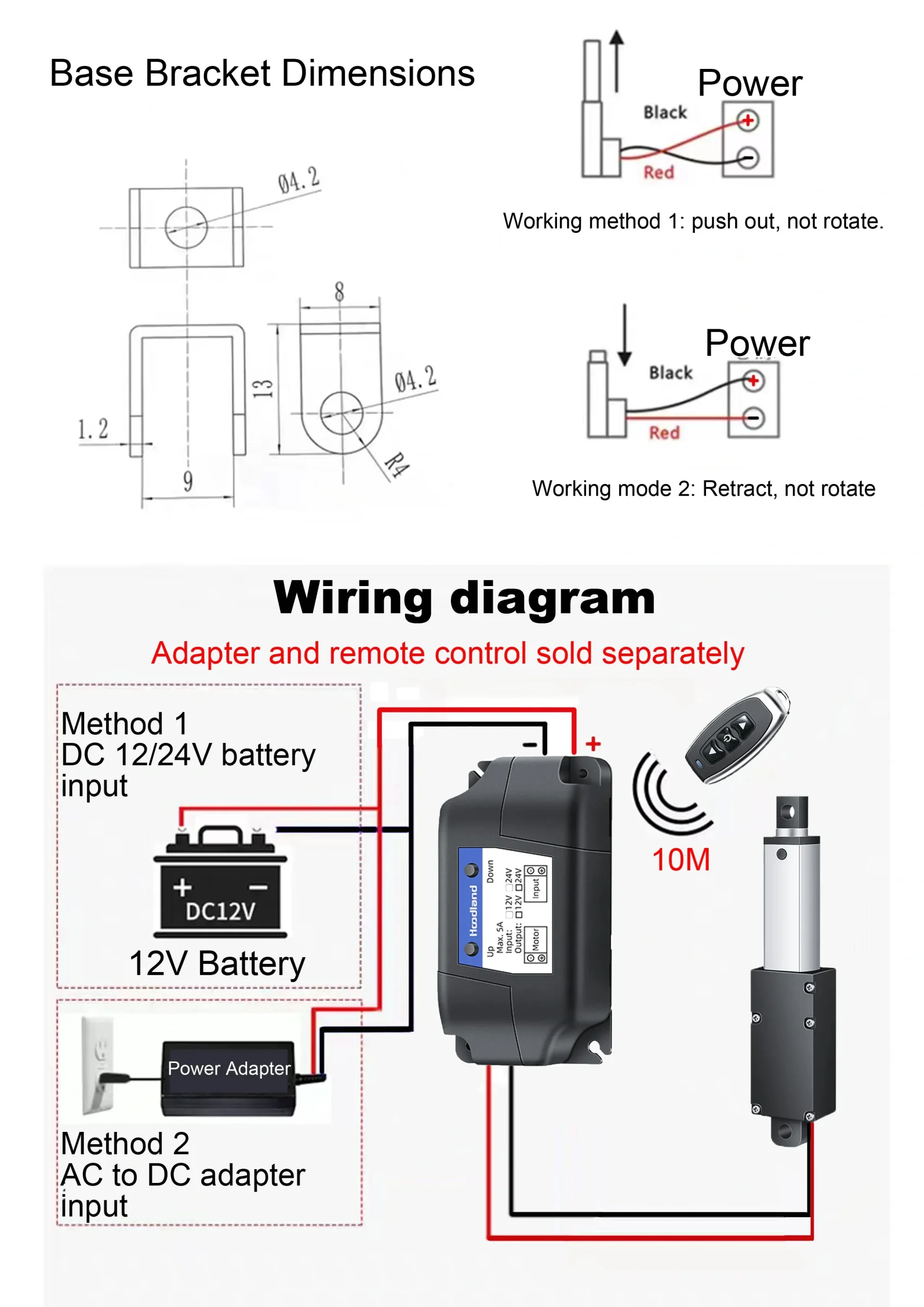
DC lineer aktüatörler için doğru polarite esastır. Ters polarite, aktüatörün ters yönde çalışmasına neden olabilir ve bu da uygulamanızda güvenlik tehlikeleri oluşturabilir. Bazı durumlarda, polarite tersliği kontrol elektroniğine de zarar verebilir.
Recommendations for Safe Operation
Her zaman voltaj derecelendirmelerini doğrulayın. güç bağlantısından önce
uygun güç kaynakları kullanın doğru voltaj düzenlemesi ile
uygun sigorta ekleyin hata koşullarına karşı korumak için
Provide surge/transient protection where required by the power architecture and installation environment
üretici kurulum kılavuzlarına uyun kesin olarak
Commission within the documented supply range and follow current-limit and test requirements for the selected product
Making Your Selection: A Practical Decision Framework
12V ve 24V lineer aktüatörler arasında seçim yapmak karmaşık olmamalıdır. Bu karar çerçevesini göz önünde bulundurun:
Evaluate 12V when:
The equipment already provides a compatible, regulated 12V architecture
Calculated voltage drop and conductor heating are acceptable for the actual harness
The selected 12V configuration meets the required load and holding conditions
The selected 12V configuration meets the required speed under load
Power-supply, controller, wiring and lifecycle tradeoffs have been compared for the project
The controller and power source are sized for the actuator’s rated and peak current
Environmental, mounting and safety requirements remain within the selected product’s documented limits
Evaluate 24V when:
The equipment already provides a compatible 24V power architecture
Lower current at similar power helps the calculated harness/voltage-drop design
The selected 24V configuration—not the voltage label—meets the required load and duty cycle
The selected 24V configuration meets the required speed at the real load
The chosen multi-actuator controller/feedback architecture is compatible and validated
The motor driver and PLC/controller interfaces are explicitly compatible
The selected actuator has a documented duty/thermal rating that matches the operating cycle
Can I run a 12V linear actuator on a 24V power supply?
Do not do so unless the actuator or its approved controller documentation explicitly allows that supply range. Use the rated supply and protection requirements for the selected configuration; overvoltage can damage the motor or integrated electronics.
Does a 24V actuator provide more pushing force than a 12V version?
Not inherently. Force depends on the complete actuator design and selected configuration, including motor, gearing, screw, current limits and duty cycle. Compare the approved load specification for the exact 12V or 24V build.
Does 24V always permit longer cable runs?
No fixed distance follows from voltage alone. At the same electrical power and conductor resistance, 24V can reduce current and I²R loss, but the allowable run must be calculated from actual rated/peak current, wire size, round-trip resistance, connectors and permitted voltage drop.
When does 12V make sense for battery-powered equipment?
12V can simplify integration when the equipment already has a compatible 12V battery or regulated supply and can provide the actuator’s rated/peak current. Confirm real battery voltage range, charging conditions, transients, controller compatibility and wiring rather than assuming every vehicle or battery system is equivalent.
Sonuç
Choose 12V or 24V from the complete electrical and mechanical architecture. Voltage affects current and voltage-drop planning, but the selected actuator’s load, speed, duty cycle, controls, feedback, environment and mounting determine whether the configuration fits the application.
Use current 12V actuator product evidence when the equipment uses a compatible 12V architecture. Do not infer automotive, marine, battery or reliability suitability from voltage alone.
Use current 24V actuator product evidence when a 24V architecture fits the power and control design. Do not infer higher performance, longer cable capability, synchronization accuracy or PLC compatibility from the voltage label alone.
Keep the fundamental relationship: Güç = Voltaj × Akım. Apply it with the actual actuator current, harness resistance, controller limits and working conditions. Final performance and reliability require configuration-specific validation.
For a project review, provide the required load, stroke, speed, duty cycle, available supply, cable length, controller/feedback, mounting and environment so suitable 12V or 24V candidate configurations can be compared.
Endüstriyel Hareket Kontrolü Üzerine Uzman Görüşleri Alın
Doğru elektrikli lineer aktüatörü veya yükseltme kolonunu seçmek projenizin performansı için kritik öneme sahiptir. Bir profesyonel olarak Hareket Kontrolü ve Otomasyon Üreticisi, mühendislerimiz özel uygulamanıza bağlı olarak yük kapasitesi, strok uzunluğu ve IP derecelendirmelerini özelleştirmenize yardımcı olur. Özelleştirilmiş bir çözüm için teknik gereksinimlerinizi paylaşın.
ActuLift, yapısal tasarım ve stro giriş parametrelerinden markalamaya ve kasa bitimlerine kadar uçtan uca özelleştirmeyi destekler, güçlü bir marka kimliği oluşturmanıza yardımcı olur.
Hızlı Yanıt & Prototipleme
B2B tedarikinde hızın önemini anlıyoruz, örnek geliştirmeden toptan teslimata kadar verimli yanıtlar sağlamak için optimize edilmiş üretim iş akışlarını kullanıyoruz.
Quality Documentation & Traceability
Quality and traceability requirements vary by project. Ask ActuLift for the applicable inspection records, product specifications, drawings and available compliance documentation for the selected model and order.