*ปัญหาอะไรที่คุณต้องการแก้ไข?

ไม่ต้องกังวล ติดต่อหัวหน้าของคุณทันที

อย่าด่วนปิดมันตอนนี้ กรุณาพูดคุยกับหัวหน้าของเราโดยตรง โดยปกติแล้วจะตอบภายใน 1 ชั่วโมง

อุปกรณ์กระตุ้นอุตสาหกรรมและคอลัมน์ยกที่มีความแม่นยำ

พันธมิตร B2B ที่เชื่อถือได้สำหรับโซลูชันการเคลื่อนที่เชิงเส้นที่กำหนดเอง
เราใช้ SSL/3.0 เพื่อเข้ารหัสความเป็นส่วนตัวของคุณ

ตัวขับเคลื่อนเชิงเส้น IP1200 ของ ActuLift เพิ่มประสิทธิภาพติดตามแสงอาทิตย์ขึ้น 15%

The global solar energy market is expanding at an unprecedented pace. Single-axis and dual-axis solar trackers have become standard infrastructure for utility-scale installations, with tracker-equipped systems consistently outperforming fixed-tilt arrays by 20–30% in annual energy yield. Yet as tracker adoption accelerates, a persistent bottleneck continues to limit real-world performance: actuator reliability and precision.

The actuator is the mechanical heart of any solar tracking system. It determines how accurately panels follow the sun, how well they hold position under wind load, and how often maintenance crews need to be dispatched to remote sites. When actuators underperform, the efficiency gains that justify tracker investment begin to erode — quietly, incrementally, and at scale.

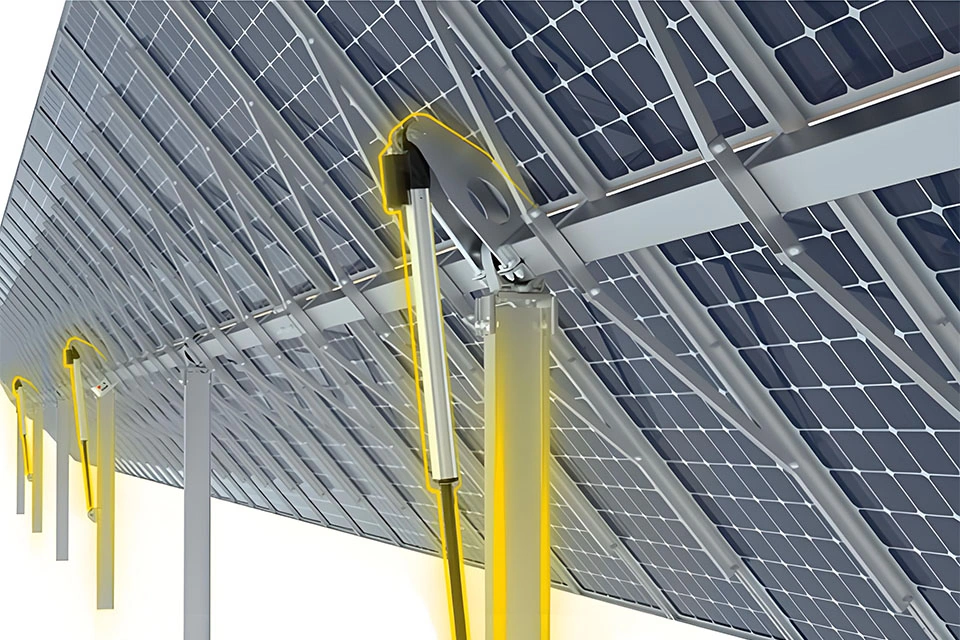
This article examines the specific engineering challenges that cause solar trackers to underperform, and how ActuLift’s IP1200 heavy-duty linear actuator addresses each one — delivering a measurable improvement of up to 15% in overall system efficiency.

The Challenge — Why Solar Trackers Underperform

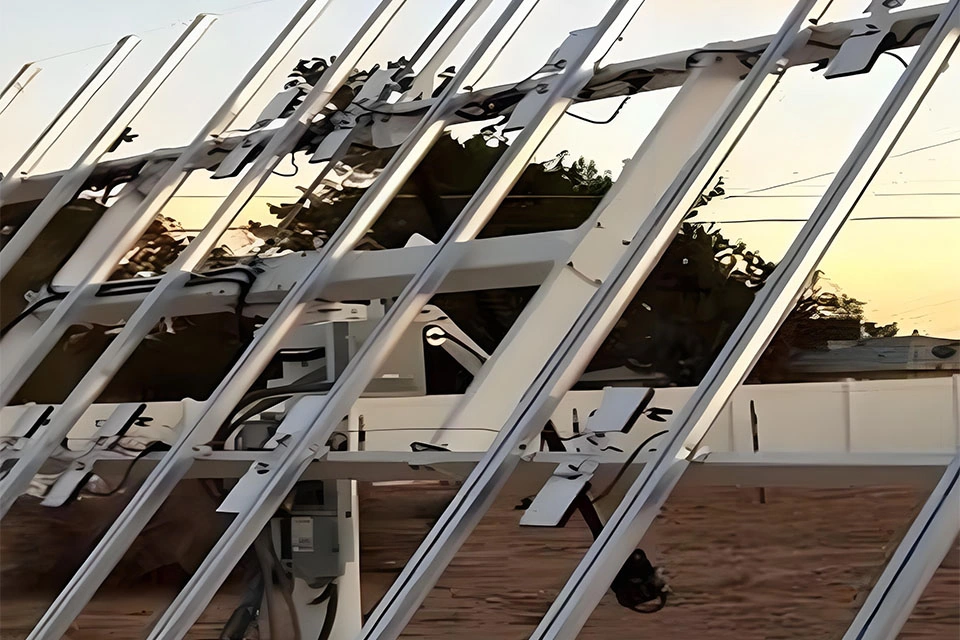
Solar tracking systems operate in some of the most demanding environments in industrial automation. Desert installations face extreme heat, abrasive dust, and sudden wind events. Northern deployments contend with sub-zero temperatures, ice loading, and freeze-thaw cycling. Coastal projects add salt spray and humidity to the equation. Against this backdrop, four core problems consistently limit tracker performance.

1. Wind-Induced Misalignment

Wind is the most immediate threat to tracking accuracy. A gust that pushes a panel array even 1° off its optimal sun-facing angle produces a measurable reduction in energy capture. At scale — across hundreds of tracker rows — these small deviations accumulate into significant yield losses over the course of a day.

Standard actuators without mechanical self-locking are particularly vulnerable. When wind force exceeds the actuator’s holding capacity, the panel drifts. The control system may not detect or correct this drift immediately, leaving panels misaligned for extended periods.

2. Harsh Environment Failures

Actuators in solar applications are exposed to conditions that accelerate component degradation: UV radiation, thermal cycling between -20°C and +60°C, dust infiltration into motor housings, and water ingress during rain events. Actuators with inadequate ingress protection ratings fail prematurely — seizing, corroding, or losing electrical continuity.

Each failure event triggers a service call. For remote solar farms, a single truck roll to replace a failed actuator can cost several hundred to several thousand dollars when labor, travel, and lost generation are factored in. Multiply that across a large installation and the maintenance cost profile becomes a significant drag on project economics.

3. Imprecise Positioning

Many standard actuators operate in open-loop mode — they move to a commanded position without feedback confirming actual panel angle. Over time, mechanical wear, thermal expansion, and load variation introduce cumulative positioning errors. A tracker that was accurate at commissioning may drift by several degrees over months of operation, with no automatic correction mechanism.

For dual-axis systems, where both azimuth and elevation must be controlled simultaneously, positioning errors compound. The result is a system that is nominally “tracking” but consistently missing the optimal angle.

4. High Maintenance Costs

The combination of environmental degradation and mechanical imprecision creates a maintenance burden that is disproportionately expensive in solar applications. Unlike factory automation where technicians are on-site daily, solar farms are often located in remote areas with minimal staffing. Frequent actuator replacements are not just a parts cost — they represent a systemic operational risk.

The Solution — IP1200 Actuator Capabilities

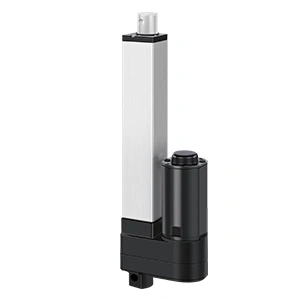
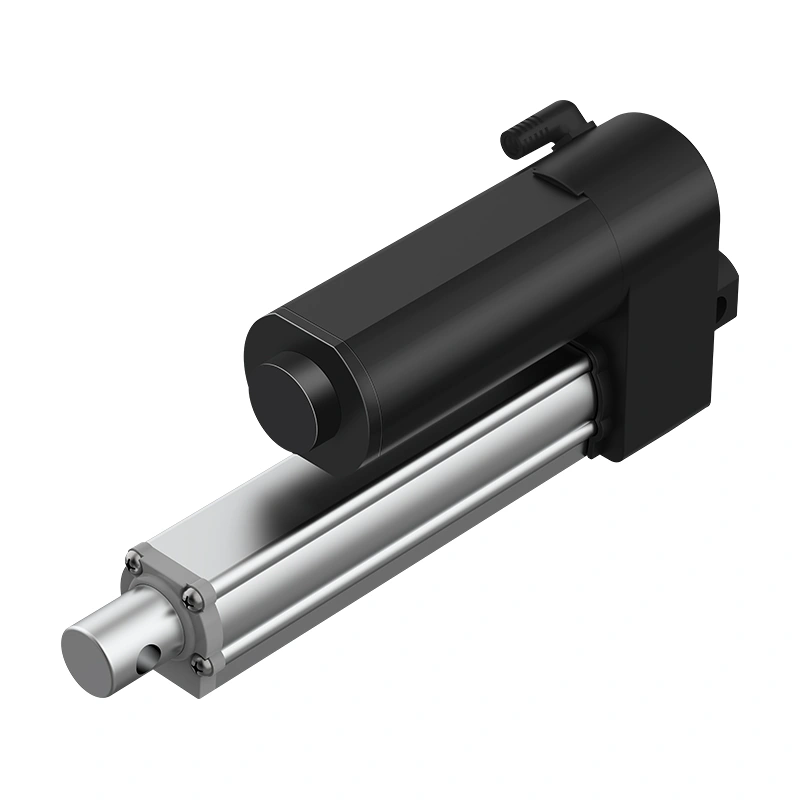
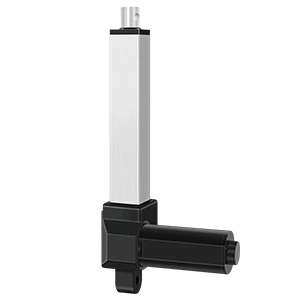
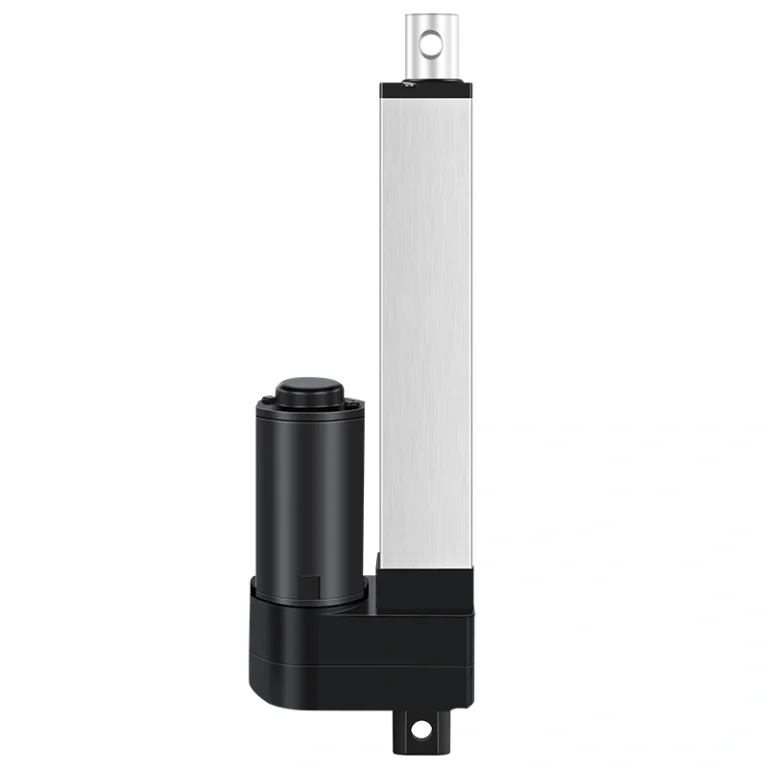
The ActuLift IP1200 is a heavy-duty linear actuator engineered specifically for demanding industrial applications, including solar tracking. Its design addresses each of the four challenge areas identified above through a combination of mechanical engineering, environmental protection, and optional sensor integration.

Wind Resistance

The IP1200 delivers a maximum push/pull force of 2,500N at 5mm/s — sufficient to maintain panel position against wind gusts exceeding 100 km/h [Source: ActuLift IP1200 Product Specifications]. This holding capacity is reinforced by a trapezoidal T-type lead screw, which provides mechanical self-locking. When the actuator is not actively moving, the lead screw geometry prevents back-driving — meaning wind force cannot push the panel out of position even if power is interrupted.

นี่คือความแตกต่างที่สำคัญจากการออกแบบ ball-screw หรือ hydraulic actuator ซึ่งอาจต้องการพลังงานต่อเนื่องเพื่อรักษาตำแหน่ง กลไกล็อคตัวเองของ IP1200 จะช่วยยึดมุมแผงในลักษณะพาสซีฟ โดยไม่ใช้พลังงานและไม่ขึ้นอยู่กับเวลาตอบสนองของระบบควบคุม

สำหรับผู้รวมระบบที่ประเมินข้อมูลจำเพาะของ actuator, ActuLift มีแนวทางที่ละเอียดเกี่ยวกับ โซลูชันการต้านลมสำหรับระบบติดตามแสงอาทิตย์ ซึ่งครอบคลุมการคำนวณน้ำหนักและการติดตั้งสำหรับสภาพแวดล้อมที่มีลมแรง

การป้องกันสภาพแวดล้อม

IP1200 มีการป้องกันการเข้าของ IP54 — ป้องกันการเข้าของฝุ่นที่เพียงพอเพื่อป้องกันการรบกวนในการดำเนินงาน และป้องกันการกระเซ็นของน้ำจากทุกทิศทาง [Source: ActuLift IP1200 Product Specifications] การจัดอันดับนี้เหมาะสำหรับสภาพแวดล้อมฟาร์มโซลาร์ขนาดใหญ่ส่วนใหญ่ รวมถึงทะเลทราย เกษตรกรรม และภูมิอากาศที่มีอุณหภูมิพอเหมาะ

อุณหภูมิการทำงานในช่วง -20°C ถึง +60°C ครอบคลุมช่วงเต็มของภูมิศาสตร์การติดตั้งโซลาร์จากการติดตั้งในยุโรปเหนือไปจนถึงโครงการในทะเลทรายตะวันออกกลาง ตัวเรือนที่ทำจากอลูมิเนียมอัลลอยด์ให้ความต้านทานต่อการกัดกร่อนสำหรับการใช้งานกลางแจ้งในระยะยาวโดยไม่มีน้ำหนักที่มากเกินไปเมื่อเปรียบเทียบกับเหล็ก

IP1200 ได้รับการรับรอง CE และ RoHS ซึ่งเป็นไปตามข้อกำหนดด้านกฎระเบียบของยุโรปสำหรับอุปกรณ์ไฟฟ้าและข้อจำกัดของสารอันตราย สำหรับวิศวกรโครงการที่ประเมินความต้องการการป้องกันการเข้าของในสภาพแวดล้อมที่แตกต่างกัน, การเปรียบเทียบของ ActuLift การป้องกันฝุ่นและน้ำ IP54 เทียบกับการจัดอันดับ IP43 และ IP65 นำเสนอกรอบการทำงานที่เป็นประโยชน์สำหรับการตัดสินใจด้านข้อมูลจำเพาะ

Precision Tracking

คุณสมบัติที่โดดเด่นที่สุดของ IP1200 สำหรับการใช้งานติดตามแสงอาทิตย์คือระบบส่งกลับ Hall sensor เสริม เมื่อติดตั้งด้วย Hall sensors และสัญญาณ output 5-wire, actuator จะช่วยให้สามารถควบคุมตำแหน่งแบบปิดวงจรด้วยความแม่นยำถึง 0.1° [Source: ActuLift IP1200 Product Specifications]

ระดับความแม่นยำนี้จะกำจัดความผิดพลาดในการจัดตำแหน่งที่สะสมซึ่งทำให้คุณภาพการติดตามแบบเปิดวนลดลงตามเวลา ระบบควบคุมจะได้รับฟีดแบ็กตำแหน่งอย่างต่อเนื่อง ช่วยให้สามารถปรับปรุงในเวลาจริงสำหรับการเบี่ยงเบนใด ๆ จากมุมที่กำหนด — ไม่ว่าจะเกิดจากการสึกหรอของกลไก การขยายตัวของอุณหภูมิ หรือการโหลดลมชั่วคราว

อินเทอร์เฟซฟีดแบ็ก 5-wire สามารถใช้งานร่วมกับระบบควบคุมติดตามมาตรฐาน และสนับสนุนการรวมเข้ากับการออกแบบที่มีแกนเพียงแกนเดียวและสองแกน สำหรับวิศวกรที่ออกแบบระบบหลาย actuator ที่ซิงโครไนซ์, เอกสารทางเทคนิคของ ActuLift เกี่ยวกับ การเคลื่อนที่เชิงเส้นที่ซิงโครไนซ์ด้วย Hall sensor ลงรายละเอียดเกี่ยวกับโปรโตคอลการซิงโครไนซ์และสถาปัตยกรรมการควบคุม

Versatility and Low Maintenance

IP1200 มีให้เลือกในความยาวของการเคลื่อนที่ตั้งแต่ 30mm ถึง 1,000mm รองรับรูปแบบของแผงในโครงการโซลาร์ขนาดใหญ่ [Source: ActuLift IP1200 Product Specifications] ตัวเลือกแรงดันไฟฟ้าหลายรายการ — 12VDC และ 24VDC — สนับสนุนความเข้ากันได้กับแหล่งจ่ายไฟของระบบควบคุมติดตามมาตรฐาน

ระดับเสียงในการทำงานอยู่ที่ต่ำกว่า 48dB ซึ่งเหมาะสำหรับการติดตั้งใกล้พื้นที่ที่อยู่อาศัยหรือเขตที่มีความไวต่อนกสัตว์ ระดับการใช้งาน 10% (2 นาที ON / 18 นาที OFF) ตรงตามรูปแบบการเคลื่อนไหวแบบกระตุกของระบบติดตามแสงอาทิตย์ ซึ่งจะทำการปรับมุมเล็กน้อยในทุกๆ 10–15 นาที ตลอดทั้งวันแทนที่จะทำงานตลอดเวลา

ตัวเลือกการติดตั้งรวมถึง CG (หูยึด) และ CP (ที่ยึด) ซึ่งให้ความยืดหยุ่นสำหรับการออกแบบกรอบติดตามที่แตกต่างกันโดยไม่ต้องการการผลิตแบบกำหนดเอง

สำหรับภาพรวมที่สมบูรณ์ของช่วงการใช้งานอุตสาหกรรมของ IP1200, เอกสารการผลิตของ ActuLift linear actuators ที่ทนทานต่อการใช้งานในอุตสาหกรรม ครอบคลุมการประเมินน้ำหนัก การติดตั้ง และการสนับสนุนทางด้านวิศวกรรม

The Result — 15% Efficiency Improvement Breakdown

การปรับปรุงประสิทธิภาพ 15% ที่สามารถทำได้ด้วยระบบติดตามแสงอาทิตย์ที่ใช้ IP1200 ไม่ใช่การเพิ่มประสิทธิภาพจากแหล่งเดียว มันเป็นผลรวมของการปรับปรุงด้านประสิทธิภาพสามด้านที่แตกต่างกัน โดยแต่ละด้านพึ่งพาความสามารถเฉพาะทางเทคนิคของ actuator

Precision Sun Tracking: ~8% Energy Gain

ฟีดแบ็กจาก Hall sensor จะรักษามุมแผงให้เหมาะสมตลอดทั้งวัน แอกทูเอเตอร์มาตรฐานที่ทำงานในโหมดเปิดวนจะสะสมข้อผิดพลาดในการจัดตำแหน่ง 5-10% ในแง่ของพลังงานตลอดวันทำงานเมื่อการเบี่ยงเบนเล็กน้อยจากมุมที่เหมาะสมสะสมข้ามรอบการติดตาม การควบคุมแบบปิดวงจรที่มีความแม่นยำ 0.1° จะกำจัดข้อผิดพลาดในหมวดหมู่นี้เกือบทั้งหมด

สำหรับระบบติดตามที่ทำงาน 8-10 ชั่วโมงต่อวัน ความแตกต่างระหว่างแผงที่รักษามุมที่เหมาะสมอย่างสม่ำเสมอกับแผงที่เริ่มมีการเบี่ยงเบน 2-3° จะเป็นการปรับปรุงกำลังการผลิตพลังงานที่สำคัญและมีโอกาสในการฟื้นฟู

Reduced Downtime: ~4% Energy Gain

การป้องกัน IP54 และตัวเรือนอลูมิเนียมอัลลอยช่วยยืดอายุการใช้งานของ actuator ในสภาพแวดล้อมกลางแจ้ง ลดการผิดพลาดหมายถึงการบำรุงรักษาน้อยลง — และชั่วโมงการทำงานมากขึ้นต่อปี การปรับปรุงนี้จะชัดเจนโดยเฉพาะในสถานที่ห่างไกลที่การบริการมีน้อยและการที่ actuator พบปัญหาอาจส่งผลให้ต้องใช้เวลาดูแลมากขึ้นก่อนที่ช่างเทคนิคจะถูกส่งไปยังสถานที่

ถ้าระยะติดตามที่ไม่ทำงานเป็นเวลาแม้แต่สองวันต่อปีเนื่องจากการผิดพลาดของ actuator จะทำให้ผลิตพลังงานปีลดลงประมาณ 0.5-1% การลดเวลาที่หยุดชะงักจาก actuator ที่เชื่อถือได้มากขึ้นนี้จะเปลี่ยนกลับไปเป็นการปรับปรุงในการผลิต

Wind Resilience: ~3% Energy Gain

ระบบติดตามมาตรฐานที่ไม่มีแรงยึดจับของ actuator ที่เพียงพอถูกตั้งโปรแกรมให้เข้าสู่ตำแหน่งที่ปลอดภัยเมื่อความเร็วลมเกินเกณฑ์ — โดยทั่วไปคือ 50-60 กม./ชม. ในระหว่างเหตุการณ์เก็บรักษา แผงจะถูกหมุนไปในแนวนอนเพื่อลดการโหลดจากลม และการติดตามจะหยุดจนกว่าจะมีการลดความเร็วลม

แรงยึดจับแบบสแตติก 2,500N ของ IP1200 และสกรูนำทางแบบ T-type ช่วยให้ระบบติดตามสามารถทำงานผ่านเหตุการณ์ลมที่จะบังคับให้ระบบมาตรฐานเข้าสู่ช่วงเก็บรักษา ชั่วโมงการติดตามที่มากขึ้นต่อปี — โดยเฉพาะในระหว่างเหตุการณ์ลมในช่วงบ่ายซึ่งทั่วไปในหลายภูมิภาคที่มีแสงอาทิตย์ — แปลโดยตรงไปสู่การเก็บพลังงานที่เพิ่มขึ้น

ROI Context

สำหรับการติดตั้งโซลาร์ขนาด 1MW ปรับปรุงประสิทธิภาพ 15% หมายความว่าผลิตพลังงานเพิ่มขึ้นประมาณ 150–200 MWh ต่อปี ขึ้นอยู่กับสถานที่และการฉายแสง ในราคาพลังงานไฟฟ้าผลิตขายในปัจจุบัน นี่หมายถึงการปรับปรุงอย่างมีนัยสำคัญในด้านเศรษฐศาสตร์ของโครงการและการลดต้นทุนการผลิตพลังงานที่ปรับตามระดับต้นทุนตลอดช่วงเวลาการดำเนินงาน 20–25 ปี

IP1200 Technical Specifications

พารามิเตอร์สเปก
Voltage12VDC / 24VDC
แรงกด/ดึงสูงสุด2,500N (ที่ 5mm/s)
ช่วงการเคลื่อนที่30mm – 1,000mm
ระดับการป้องกันIP54
ระดับเสียงรบกวน< 48dB
อุณหภูมิในการทำงาน-20°C ถึง +60°C
สกรูนำทางชนิด T แบบ Trapezoidal
ตัวเรือนอลูมิเนียมอัลลอยด์
รอบการทำงาน10% (2 นาที ON / 18 นาที OFF)
การรับรองCE, RoHS
ฟีเจอร์เสริมHall sensor, สวิตช์แม่เหล็ก, ฟีดแบ็ก 5-wire
ตัวเลือกการติดตั้งCG (หูยึด) / CP (ที่ยึด)

แหล่งข้อมูล: ActuLift IP1200 Product Specifications

Speed-Force Reference

ความเร็วแรงดันเชิงพลศาสตร์แรงยึดเกาะแบบสถิต
5 mm/s2,500N2,500N
10 mm/s1,200N1,200N
20 mm/s600N600N
40 มม./วินาที300N200N

แหล่งข้อมูล: ActuLift IP1200 Product Specifications

คำถามที่พบบ่อย

What IP rating does the IP1200 have, and is it sufficient for outdoor solar installations?

The IP1200 carries an IP54 rating — protected against dust ingress sufficient to prevent operational interference, and against water splashing from any direction [Source: ActuLift IP1200 Product Specifications]. This is appropriate for the majority of utility-scale solar farm environments, including desert, agricultural, and temperate climates. For extreme coastal environments with salt spray exposure, or applications requiring submersion protection, additional enclosure measures or a higher-rated actuator variant may be recommended.

Can the IP1200 support dual-axis solar tracking?

Yes. With optional Hall sensor feedback and 5-wire signal output, the IP1200 integrates into dual-axis tracking systems with 0.1° positioning accuracy [Source: ActuLift IP1200 Product Specifications]. The 5-wire interface supports closed-loop control integration with standard tracker control systems for both azimuth and elevation axes.

What is the maximum wind speed the IP1200 can withstand?

With 2,500N static holding force and T-type lead screw self-locking, the IP1200 maintains panel position in gusts exceeding 100 km/h [Source: ActuLift IP1200 Product Specifications]. The mechanical self-locking mechanism holds position passively without requiring continuous power or active control system intervention.

How does the 10% duty cycle work for solar tracking applications?

Solar trackers make small, intermittent angular adjustments throughout the day — typically a few seconds of actuator movement every 10–15 minutes as the sun’s position changes. The IP1200’s 10% duty cycle (2 minutes ON / 18 minutes OFF) aligns precisely with this usage pattern, ensuring the actuator operates well within its thermal limits throughout a full tracking day [Source: ActuLift IP1200 Product Specifications].

Does ActuLift offer custom stroke lengths for different panel configurations?

Yes. The IP1200 supports strokes from 30mm to 1,000mm, and ActuLift provides custom OEM/ODM actuator solutions for projects with specific dimensional, force, or interface requirements. Custom configurations are available for large-volume OEM and EPC contractor engagements.

Specify the Right Actuator for Your Solar Tracker Project

การเลือกใช้แอคทูเอเตอร์เป็นการตัดสินใจทางวิศวกรรมที่สำคัญในการออกแบบโซลาร์แทรคเกอร์ ข้อกำหนดที่ไม่ถูกต้อง — เช่น แรงยึดเกาะไม่เพียงพอ การป้องกันที่ไม่เหมาะสม หรือการพอสชั่นที่เปิดโล่ง — สามารถลดทอนประสิทธิภาพการผลิตพลังงานที่ทำให้การลงทุนในแทรคเกอร์มีความคุ้มค่าได้

ActuLift IP1200 ได้รับการออกแบบมาเพื่อตอบสนองความต้องการทางกล สภาพแวดล้อม และความละเอียดในแอพพลิเคชั่นโซลาร์แทรคเกอร์ขนาดใหญ่ การรวมกันของแรงยึดเกาะ 2,500N, การป้องกัน IP54, ช่วงอุณหภูมิการทำงาน -20°C ถึง +60°C และฟีดแบ็กเซนเซอร์ Hall แบบเลือกเสริมให้ฐานทางเทคนิคที่น่าเชื่อถือสำหรับระบบแทรคเกอร์ทั้งแกนเดียวและสองแกน

ดูหน้าสินค้า IP1200 สำหรับรายละเอียดทั้งหมด แบบการติดตั้ง และข้อมูลการสั่งซื้อ

หากต้องการพูดคุยเกี่ยวกับสเปคของแอคทูเอเตอร์สำหรับโครงการโซลาร์แทรคเกอร์เฉพาะ — รวมถึงความยาวการเดินทางที่กำหนดเอง ความต้องการแรงดันไฟฟ้า หรือการรวมกับ OEM — ติดต่อทีมวิศวกรรมของ ActuLift สำหรับการปรึกษาทางเทคนิค

ข้อมูลสเปคผลิตภัณฑ์ทั้งหมดที่มาจากแคตตาล็อกผลิตภัณฑ์ ActuLift IP1200 ตัวเลขการปรับปรุงประสิทธิภาพแสดงถึงการปรับปรุงที่ทำได้ตามความสามารถทางเทคนิคที่บันทึกไว้; ผลลัพธ์จริงจะแตกต่างกันไปขึ้นอยู่กับสภาพการติดตั้ง การกำหนดค่าระบบควบคุม และประสิทธิภาพพื้นฐานของแอคทูเอเตอร์

รับข้อมูลเชิงลึกจากผู้เชี่ยวชาญเกี่ยวกับการควบคุมการเคลื่อนไหวในอุตสาหกรรม

การเลือกแอกทูเอเตอร์ที่เหมาะสม แอกทูเอเตอร์ไฟฟ้าเชิงเส้น หรือ เสานี้ เป็นสิ่งสำคัญสำหรับประสิทธิภาพของโครงการของคุณ ในฐานะที่เป็นผู้ผลิต การควบคุมการเคลื่อนไหวและการอัตโนมัติ, วิศวกรของเราช่วยคุณปรับแต่งความจุของโหลด ความยาวของสโตรค และการจัดอันดับ IP ตามแอพพลิเคชั่นเฉพาะของคุณ แบ่งปันข้อกำหนดทางเทคนิคของคุณเพื่อให้ได้โซลูชันที่เหมาะสม

โดยปกติเราจะติดต่อคุณภายใน 30 นาที

การปรับแต่ง OEM และ Private Label

ActuLift สนับสนุนการปรับแต่งตั้งแต่ต้นจนจบ ตั้งแต่การออกแบบโครงสร้างและพารามิเตอร์การขับเคลื่อนไปจนถึงการสร้างแบรนด์และการตกแต่งเคส ช่วยให้คุณสร้างเอกลักษณ์แบรนด์ที่ทรงพลัง

การตอบสนองอย่างรวดเร็วและการสร้างต้นแบบ

เรเข้าใจถึงความสำคัญของความรวดเร็วในกระบวนการจัดซื้อ B2B โดยใช้กระบวนการผลิตที่ปรับให้เหมาะสม เพื่อให้แน่ใจว่ามีการตอบสนองที่มีประสิทธิภาพตั้งแต่การพัฒนาตัวอย่างไปจนถึงการจัดส่งจำนวนมาก

คุณภาพที่มั่นคงและการติดตาม

ด้วยการรับรองคุณภาพ ISO9001 ผลิตภัณฑ์แต่ละชิ้น—จากการเข้ามาถึงวัสดุไปจนถึงการทดสอบสุดท้ายในโรงงาน—ถูกบันทึกไว้ในบันทึกอิเล็กทรอนิกส์ของเรา เพื่อให้มั่นใจในความสอดคล้องสูงในสินค้า