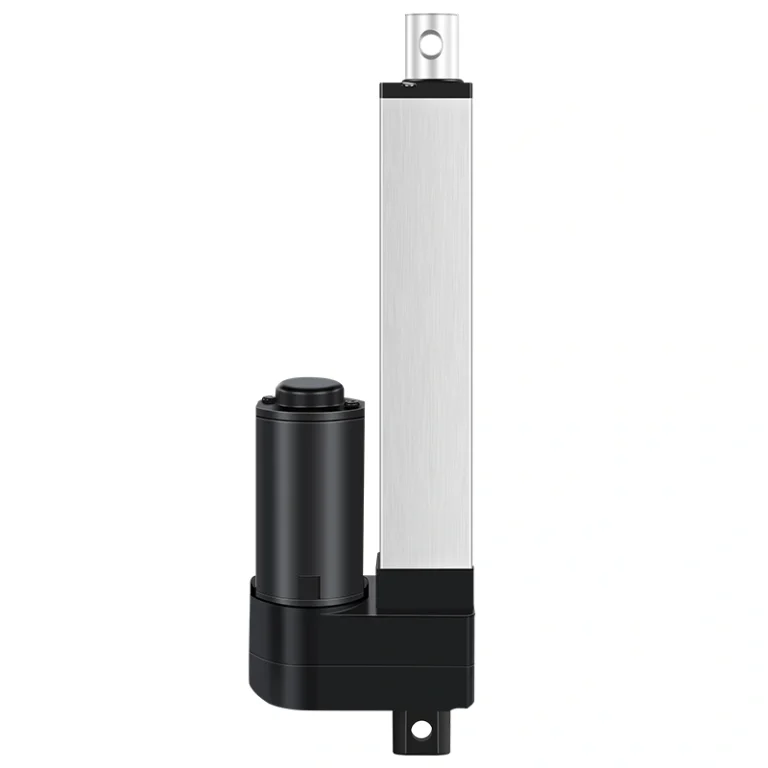
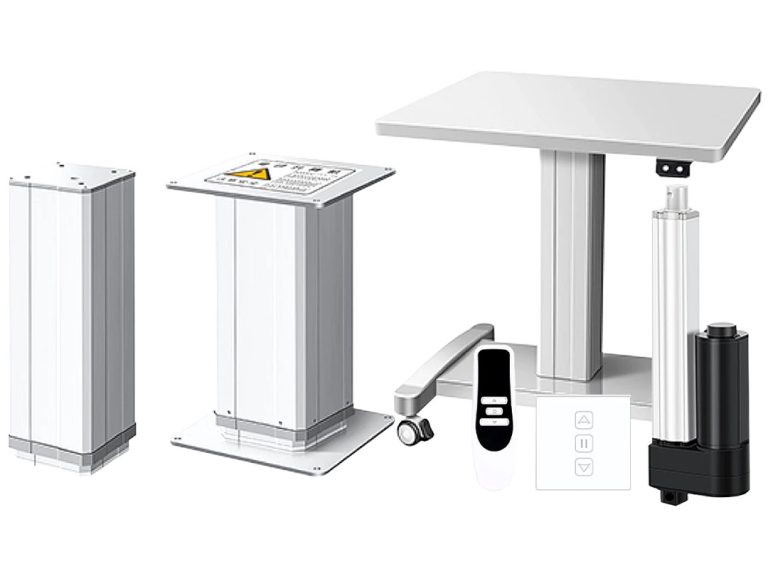
Hiểu về lực tự khóa tĩnh trong thiết bị truyền động tuyến tính: Hướng dẫn kỹ thuật hoàn chỉnh
Learn what static self-locking or holding force means in linear actuators, what can resist back-driving, and how screw geometry, gearing, brakes, load, lubrication, wear and temperature affect selection.
Static self-locking or holding force describes the axial load an unpowered actuator can resist under stated conditions before the external load causes unacceptable movement or back-driving. It is a useful component specification, but it does not by itself prove that an external brake, restraint or other system-level safety measure is unnecessary.
Khoa Học Đằng Sau Lực Tự Khóa
Resistance to back-driving can come from screw geometry and friction, gearbox characteristics, an integrated brake or a combination of mechanisms. For screw systems, the relationship between lead angle and effective friction is a useful screening principle, but actual holding behavior also depends on lubrication, materials, gearing, load, orientation, wear, temperature and vibration.
Scope: This page explains generic static holding and back-driving mechanics across linear actuator designs. For gravity-loaded vertical mechanisms, project-risk checks and validation, see Self-Locking Force in Vertical Lifting Applications. For T-type/trapezoidal screw geometry, friction and transmission trade-offs, see T-Type Lead Screws in Linear Actuators.
Mục lục
Tại Sao Lực Tự Khóa Tĩnh Quan Trọng
Các Ứng Dụng Quan Trọng Đối Với An Toàn
Trong nhiều ứng dụng công nghiệp và thương mại, chuyển động bất ngờ của bộ thực hiện trong thời gian mất điện có thể dẫn đến các nguy cơ an toàn nghiêm trọng. Các bộ thực hiện tự khóa cung cấp:
Position Holding: Define the permitted movement or drift after power is removed and validate it under the project conditions
Fault Behavior: Determine what happens during power loss, controller faults and other foreseeable failures at the complete-system level
Energy Use: A validated passive holding condition may reduce the need for continuous motor torque, but actual system power depends on the selected architecture
Các Ứng Dụng Phổ Biến
Static holding and back-driving behavior can matter in applications such as:
Moving load, holding/back-driving, fault behavior, guards and machine risk controls
Solar tracking
Wind/stow load cases, holding direction, controls and structural load path
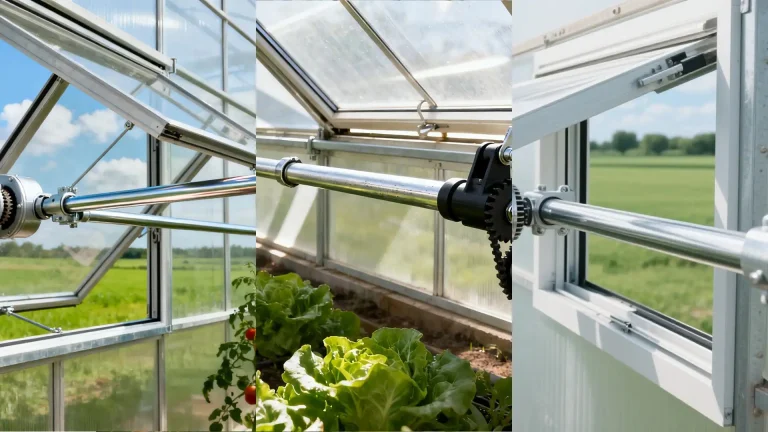
Thiết bị nông nghiệp
Load, vibration, contamination, temperature and service conditions
Aerospace or other regulated equipment
Application-specific safety architecture, qualification and documentation defined by the finished-system manufacturer
Hiểu Biết Về Thông Số Lực
Thuật Ngữ Chính
Khi đánh giá các bộ truyền động tuyến tính cho khả năng tự khóa, việc hiểu các thông số kỹ thuật này là rất quan trọng:
Lực Giữ Tĩnh: Tải trọng tối đa mà bộ truyền động có thể giữ cố định không cần nguồn điện
Khả năng chịu tải động: Lực tối đa trong khi bộ truyền động đang chuyển động
Chu kỳ làm việc: Tỷ lệ phần trăm thời gian bộ truyền động có thể hoạt động ở tải tối đa
Ví Dụ Tính Toán Lực
Do not calculate an unpowered holding rating from motor torque alone. Evaluate screw geometry, friction, gearing, brake/holding elements, load direction and configuration-specific test data.
A theoretical calculation can support design screening, but the rated holding or back-driving value should come from the selected actuator configuration and defined test conditions.
Các Loại Cơ Chế Tự Khóa
1. Tự Khóa Vít Đầu
A lead screw with suitable geometry and friction can resist back-driving when unpowered. Do not treat a shallow thread angle as an automatic guarantee; verify the selected screw, nut, gearing, lubrication, load, orientation and wear condition.
2. Tự Khóa Bánh Răng Sâu
Some worm-gear arrangements can provide useful resistance to back-driving, but not every worm gear is self-locking. Lead angle, friction, lubrication, efficiency, wear, vibration and external torque determine the actual behavior, which should be verified for the selected mechanism.
3. Thiết Kế Kết Hợp Phanh
Một số ứng dụng yêu cầu lực giữ bổ sung ngoài những gì cơ chế vít cung cấp. Phanh cơ tích hợp mang lại khả năng giữ vị trí tốt hơn, mặc dù chúng làm tăng độ phức tạp và chi phí.
Lựa Chọn Bộ Thực Hiện Tuyến Tính Tự Khóa Phù Hợp
Các Yếu Tố Cần Xem Xét
Lực giữ cần thiết: Tính toán tải trọng tối đa mà ứng dụng của bạn cần giữ
Chiều dài hành trình: Xác định khoảng cách mở rộng cần thiết
Yêu cầu về tốc độ: Cân bằng giữa tốc độ và khả năng giữ
Điều kiện môi trường: Xem xét nhiệt độ, độ ẩm và bụi bẩn
Nguồn điện: Đảm bảo tương thích với nguồn điện có sẵn của bạn
Hướng Dẫn Kích Thước
The required margin between expected load and rated holding force should be defined by the equipment designer from the full load case, uncertainty, geometry, shock, vibration, wear, environment, applicable standards and supplier guidance. Do not apply a universal design-factor rule.
Tải động trong quá trình hoạt động
Yếu tố môi trường
Mài mòn và suy giảm lâu dài
Thực Hành Lắp Đặt Tốt Nhất
Cân Nhắc Khi Gắn
Đảm bảo căn chỉnh song song giữa bộ truyền động và đường dẫn tải
Sử dụng phần cứng lắp đặt thích hợp được xếp hạng cho tải trọng dự kiến
Cho phép khoảng trống đầy đủ cho việc kéo dài tối đa
Xem xét việc giảm chấn cho các ứng dụng động
Kết Nối Điện
Việc kết nối dây đúng cách là điều cần thiết cho hoạt động tự khóa đáng tin cậy:
Sử dụng dây điện có kích thước phù hợp cho yêu cầu dòng điện
Triển khai công tắc giới hạn cho bảo vệ cuối hành trình
Xem xét các tùy chọn vượt qua bằng tay cho các tình huống khẩn cấp
Bảo Trì Và Độ Bền
Kéo Dài Tuổi Thọ Dịch Vụ
Để duy trì hiệu suất tự khóa tối ưu:
Bôi trơn định kỳ: Giữ cho vít dẫn và bánh răng được bôi trơn đúng cách
Kiểm tra độ mòn: Kiểm tra bất kỳ dấu hiệu mòn hoặc hư hỏng cơ học nào
Bảo vệ môi trường: Sử dụng các đơn vị kín trong môi trường khắc nghiệt
Giám sát tải: Tránh vượt quá các thông số kỹ thuật được xếp hạng
Các Vấn Đề Thường Gặp Và Giải Pháp
Vấn đề
Nguyên nhân có thể
Giải pháp
Bộ truyền động trôi khi mất nguồn
Giảm tự khóa do mài mòn
Kiểm tra và thay thế các thành phần bị mòn
Tăng tiếng ồn trong quá trình vận hành
Thiếu bôi trơn
Bôi trơn thích hợp
Hiệu suất không đồng nhất
Vấn đề điện
Kiểm tra dây điện và kết nối
So Sánh Bộ Thực Hiện Tự Khóa Và Không Tự Khóa
Bộ Thực Hiện Tự Khóa
Lợi thế:
May provide passive resistance to back-driving when the selected configuration is validated
Can contribute to a holding strategy but does not replace the system risk assessment or independent protection where required
May reduce continuous holding torque in some architectures; verify total system energy use
Cân nhắc:
Speed depends on screw lead, gearing, motor and selected operating point
Cost depends on the complete actuator and holding architecture
Efficiency and thermal limits are configuration-dependent
Bộ Thực Hiện Không Tự Khóa
Lợi thế:
Cost depends on the selected drive, brake/holding strategy and control architecture
Higher speed may be possible in some configurations; confirm the actual operating point
May fit higher-cycle motion where the selected efficiency, thermal and holding strategy are appropriate
Cân nhắc:
Define the required stationary holding method; this may involve a brake, restraint, motor torque or another mechanism
Safety-relevant positioning requires a system-level risk assessment and validated holding architecture regardless of screw category
Liệu bộ thực hiện tự khóa có thể di chuyển nếu tải trọng vượt quá lực giữ tĩnh của nó không?
Yes. External load, vibration, wear, lubrication, temperature or a load above the tested holding condition can cause back-driving or drift. Use the configuration-specific rating and define the required design margin from the complete application risk and load case.
Does self-locking eliminate the need for an electronic or mechanical brake?
Not automatically. Whether a separate brake, restraint or secondary load path is required depends on the failure consequences, permitted drift, load, orientation and machine/device risk assessment. Self-locking is a component characteristic, not a universal safety lock.
Does temperature affect self-locking or holding behavior?
It can. Temperature changes lubricant viscosity and can influence friction, materials and clearances. Validate the selected configuration across the specified temperature range and representative wear or service condition.
Are high-speed actuators always more likely to back-drive?
Not always. Speed can be changed through motor speed, gearing, screw lead or other design choices. Back-driving depends on the complete drivetrain, friction, brake/holding strategy and load, so verify the selected high-speed configuration instead of assuming it is non-self-locking.
Kết luận
Lực tự khóa tĩnh là một thông số quan trọng cho các ứng dụng yêu cầu duy trì vị trí đáng tin cậy mà không cần tiêu thụ điện liên tục. Hiểu rõ về cơ học, tiêu chí chọn lựa phù hợp và các phương pháp lắp đặt tốt nhất sẽ giúp bạn chọn đúng bộ truyền động tuyến tính cho nhu cầu cụ thể của mình.
Để biết thêm thông tin về cách chọn bộ truyền động tuyến tính phù hợp cho ứng dụng của bạn, hãy khám phá Hướng Dẫn Bộ Truyền Động Tuyến Tính 12V so với 24V hoặc liên hệ với đội ngũ kỹ thuật của chúng tôi để được tư vấn cá nhân.
ActuLift hỗ trợ tùy chỉnh từ đầu đến cuối, từ thiết kế cấu trúc và tham số hành trình đến thương hiệu và hoàn thiện vỏ, giúp bạn xây dựng bản sắc thương hiệu mạnh mẽ.
Phản hồi nhanh & Tạo mẫu
Chúng tôi hiểu tầm quan trọng của tốc độ trong việc mua sắm B2B, sử dụng quy trình sản xuất được tối ưu hóa để đảm bảo phản hồi hiệu quả từ phát triển mẫu đến giao hàng số lượng lớn.
Quality Documentation & Traceability
Quality and traceability requirements vary by project. Ask ActuLift for the applicable inspection records, product specifications, drawings and available compliance documentation for the selected model and order.