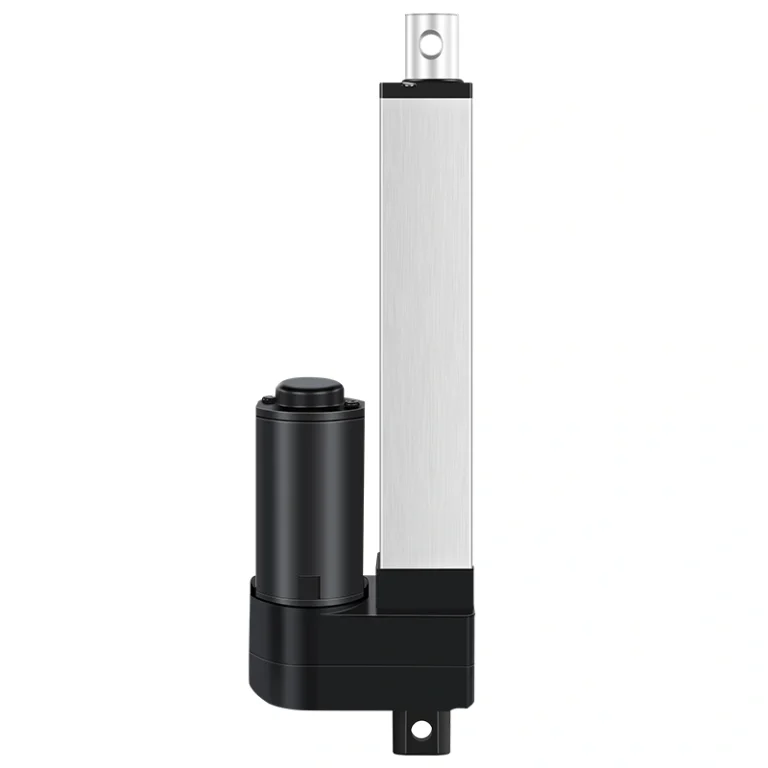
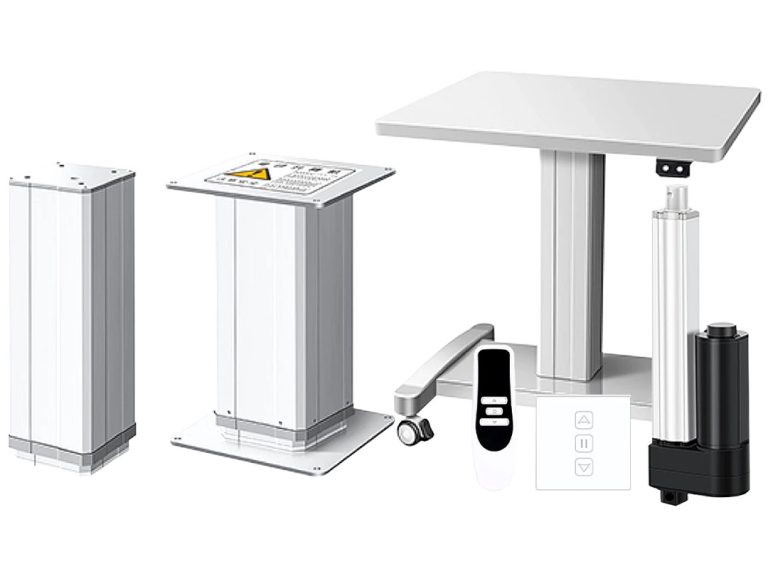
Understanding Static Self-Locking Force in Linear Actuators: A Complete Technical Guide
Learn what static self-locking or holding force means in linear actuators, what can resist back-driving, and how screw geometry, gearing, brakes, load, lubrication, wear and temperature affect selection.
Static self-locking or holding force describes the axial load an unpowered actuator can resist under stated conditions before the external load causes unacceptable movement or back-driving. It is a useful component specification, but it does not by itself prove that an external brake, restraint or other system-level safety measure is unnecessary.
Ilmu di Balik Kunci Diri
Resistance to back-driving can come from screw geometry and friction, gearbox characteristics, an integrated brake or a combination of mechanisms. For screw systems, the relationship between lead angle and effective friction is a useful screening principle, but actual holding behavior also depends on lubrication, materials, gearing, load, orientation, wear, temperature and vibration.
Scope: This page explains generic static holding and back-driving mechanics across linear actuator designs. For gravity-loaded vertical mechanisms, project-risk checks and validation, see Self-Locking Force in Vertical Lifting Applications. For T-type/trapezoidal screw geometry, friction and transmission trade-offs, see T-Type Lead Screws in Linear Actuators.
Daftar Isi
Mengapa Gaya Kunci Diri Statik Penting
Aplikasi yang Krusial untuk Keamanan
Dalam banyak aplikasi industri dan komersial, pergerakan aktuator yang tidak terduga selama kehilangan daya dapat menyebabkan bahaya keselamatan yang serius. Aktuator kunci diri memberikan:
Position Holding: Define the permitted movement or drift after power is removed and validate it under the project conditions
Fault Behavior: Determine what happens during power loss, controller faults and other foreseeable failures at the complete-system level
Energy Use: A validated passive holding condition may reduce the need for continuous motor torque, but actual system power depends on the selected architecture
Aplikasi Umum
Static holding and back-driving behavior can matter in applications such as:
Moving load, holding/back-driving, fault behavior, guards and machine risk controls
Solar tracking
Wind/stow load cases, holding direction, controls and structural load path
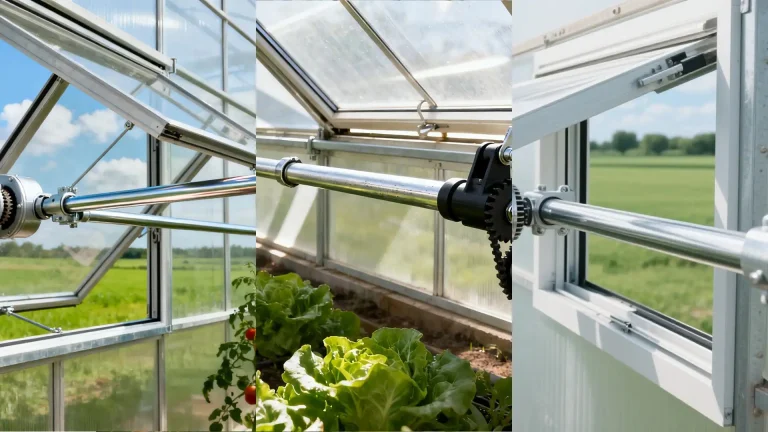
Agricultural equipment
Load, vibration, contamination, temperature and service conditions
Aerospace or other regulated equipment
Application-specific safety architecture, qualification and documentation defined by the finished-system manufacturer
Memahami Spesifikasi Gaya
Terminologi Kunci
Saat mengevaluasi aktuator linier untuk kemampuan penguncian otomatis, memahami spesifikasi ini sangat penting:
Gaya Tahan Statik: Beban maksimum yang dapat ditahan aktuator tanpa daya
Kapasitas Beban Dinamis: Gaya maksimum saat aktuator bergerak
Siklus Kerja: Persentase waktu aktuator dapat beroperasi pada beban penuh
Contoh Perhitungan Gaya
Do not calculate an unpowered holding rating from motor torque alone. Evaluate screw geometry, friction, gearing, brake/holding elements, load direction and configuration-specific test data.
A theoretical calculation can support design screening, but the rated holding or back-driving value should come from the selected actuator configuration and defined test conditions.
Jenis Mekanisme Kunci Diri
1. Kunci Diri Sekrup Ulir
A lead screw with suitable geometry and friction can resist back-driving when unpowered. Do not treat a shallow thread angle as an automatic guarantee; verify the selected screw, nut, gearing, lubrication, load, orientation and wear condition.
2. Kunci Diri Gear Cacing
Some worm-gear arrangements can provide useful resistance to back-driving, but not every worm gear is self-locking. Lead angle, friction, lubrication, efficiency, wear, vibration and external torque determine the actual behavior, which should be verified for the selected mechanism.
3. Desain Terintegrasi Rem
Beberapa aplikasi memerlukan gaya penahanan tambahan di luar yang disediakan oleh mekanisme sekrup. Rem mekanis terintegrasi menawarkan kemampuan penahanan posisi yang lebih baik, meskipun menambah kompleksitas dan biaya.
Memilih Aktuator Linear Kunci Diri yang Tepat
Faktor-faktor yang Diperhatikan
Gaya Penahanan yang Diperlukan: Hitung beban maksimum yang perlu ditahan aplikasi Anda
Panjang Langkah: Tentukan jarak ekstensi yang diperlukan
Persyaratan Kecepatan: Keseimbangan antara kecepatan dan kapasitas penahanan
Kondisi Lingkungan: Pertimbangkan suhu, kelembaban, dan paparan debu
Sumber Daya Listrik: Pastikan kompatibilitas dengan sumber daya listrik yang tersedia
Panduan Ukuran
The required margin between expected load and rated holding force should be defined by the equipment designer from the full load case, uncertainty, geometry, shock, vibration, wear, environment, applicable standards and supplier guidance. Do not apply a universal design-factor rule.
Beban dinamis saat beroperasi
Faktor lingkungan
Keterwearan dan degradasi jangka panjang
Praktik Terbaik Instalasi
Pertimbangan Pemasangan
Pastikan sejajar paralel antara aktuator dan jalur beban
Gunakan perangkat keras pemasangan yang sesuai untuk beban yang diharapkan
Berikan jarak yang cukup untuk ekstensi penuh
Pertimbangkan peredam getaran untuk aplikasi dinamis
Koneksi Elektrik
Pemasangan kabel yang tepat sangat penting untuk operasi penguncian otomatis yang andal:
Gunakan kabel dengan ukuran yang sesuai untuk kebutuhan arus
Terapkan sakelar batas untuk perlindungan akhir perjalanan
Pertimbangkan opsi penggantian manual untuk situasi darurat
Pemeliharaan dan Ketahanan
Memperpanjang Umur Layanan
Untuk mempertahankan kinerja penguncian otomatis yang optimal:
Pelumasan Rutin: Jaga sekrup pemandu dan gear agar tetap dilumasi dengan baik
Periksa Keterwearan: Periksa tanda-tanda keausan atau kerusakan mekanis
Perlindungan Lingkungan: Gunakan unit tertutup di lingkungan yang keras
Pemantauan Beban: Hindari melebihi spesifikasi yang dinilai
Masalah Umum dan Solusi
Masalah
Penyebab Kemungkinan
Solusi
Aktuator melayang saat dimatikan
Penguncian diri yang berkurang akibat keausan
Periksa dan ganti komponen yang aus
Suara meningkat selama operasi
Kurangnya pelumasan
Terapkan pelumas yang sesuai
Kinerja tidak konsisten
Masalah listrik
Periksa kabel dan koneksi
Membandingkan Aktuator Kunci Diri vs Non-Kunci Diri
Aktuator Kunci Diri
Keuntungan:
May provide passive resistance to back-driving when the selected configuration is validated
Can contribute to a holding strategy but does not replace the system risk assessment or independent protection where required
May reduce continuous holding torque in some architectures; verify total system energy use
Pertimbangan:
Speed depends on screw lead, gearing, motor and selected operating point
Cost depends on the complete actuator and holding architecture
Efficiency and thermal limits are configuration-dependent
Aktuator Non-Kunci Diri
Keuntungan:
Cost depends on the selected drive, brake/holding strategy and control architecture
Higher speed may be possible in some configurations; confirm the actual operating point
May fit higher-cycle motion where the selected efficiency, thermal and holding strategy are appropriate
Pertimbangan:
Define the required stationary holding method; this may involve a brake, restraint, motor torque or another mechanism
Safety-relevant positioning requires a system-level risk assessment and validated holding architecture regardless of screw category
Apakah aktuator kunci diri dapat bergerak jika beban melebihi gaya tahan statiknya?
Yes. External load, vibration, wear, lubrication, temperature or a load above the tested holding condition can cause back-driving or drift. Use the configuration-specific rating and define the required design margin from the complete application risk and load case.
Does self-locking eliminate the need for an electronic or mechanical brake?
Not automatically. Whether a separate brake, restraint or secondary load path is required depends on the failure consequences, permitted drift, load, orientation and machine/device risk assessment. Self-locking is a component characteristic, not a universal safety lock.
Does temperature affect self-locking or holding behavior?
It can. Temperature changes lubricant viscosity and can influence friction, materials and clearances. Validate the selected configuration across the specified temperature range and representative wear or service condition.
Are high-speed actuators always more likely to back-drive?
Not always. Speed can be changed through motor speed, gearing, screw lead or other design choices. Back-driving depends on the complete drivetrain, friction, brake/holding strategy and load, so verify the selected high-speed configuration instead of assuming it is non-self-locking.
Kesimpulan
Gaya penguncian diri statis adalah spesifikasi kritis untuk aplikasi yang memerlukan pemeliharaan posisi yang dapat diandalkan tanpa konsumsi daya terus menerus. Memahami mekanika, kriteria pemilihan yang tepat, dan praktik terbaik pemasangan memastikan Anda memilih aktuator linier yang tepat untuk kebutuhan spesifik Anda.
Untuk informasi lebih lanjut tentang cara memilih aktuator linier yang tepat untuk aplikasi Anda, jelajahi Panduan Aktuator Linier 12V vs 24V atau hubungi tim teknis kami untuk rekomendasi yang dipersonalisasi.
[Siklus Tugas Aktuator Linier Dijelaskan] – Memahami batas operasional
[Panduan Instalasi untuk Aktuator Linier] – Praktik terbaik untuk kinerja optimal
Dapatkan Pandangan Para Ahli tentang Kontrol Gerakan Industri
Memilih yang tepat aktuator linier listrik atau kolom pengangkat sangat penting untuk kinerja proyek Anda. Sebagai seorang profesional Produsen Kontrol Gerakan & Otomatisasi, insinyur kami membantu Anda menyesuaikan kapasitas beban, panjang langkah, dan rating IP berdasarkan aplikasi spesifik Anda. Bagikan persyaratan teknis Anda untuk solusi yang disesuaikan.
ActuLift mendukung kustomisasi dari awal hingga akhir, mulai dari desain struktural dan parameter jalur hingga branding dan penyelesaian casing, membantu Anda membangun identitas merek yang kuat.
Respons Cepat & Prototyping
Kami memahami pentingnya kecepatan dalam pengadaan B2B, memanfaatkan alur kerja produksi yang dioptimalkan untuk memastikan respons efisien dari pengembangan sampel hingga pengiriman massal.
Quality Documentation & Traceability
Quality and traceability requirements vary by project. Ask ActuLift for the applicable inspection records, product specifications, drawings and available compliance documentation for the selected model and order.