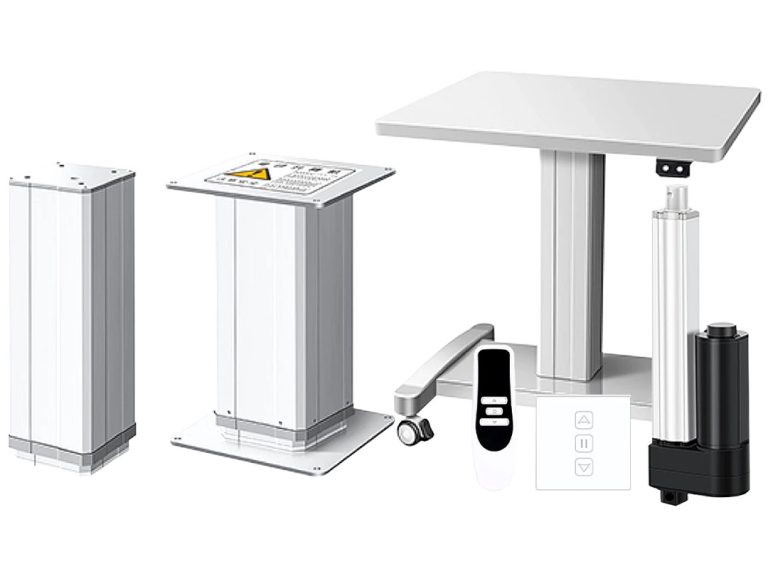
Elektrische vs manuelle Säulen für medizinische Wagen
Die Wahl zwischen elektrischen und manuellen Hebesäulen ist eine entscheidende Entscheidung für das Design von medizinischen Wagen. Dieser Leitfaden vergleicht die IPTT-DD elektrische Säule und die IPTT-SD manuelle Säule, analysiert Kosten, ergonomische Auswirkungen und Effizienz des Arbeitsablaufs, um Gesundheitsversorgungseinrichtungen zu helfen, ihre mobilen Arbeitsstationen zu optimieren.
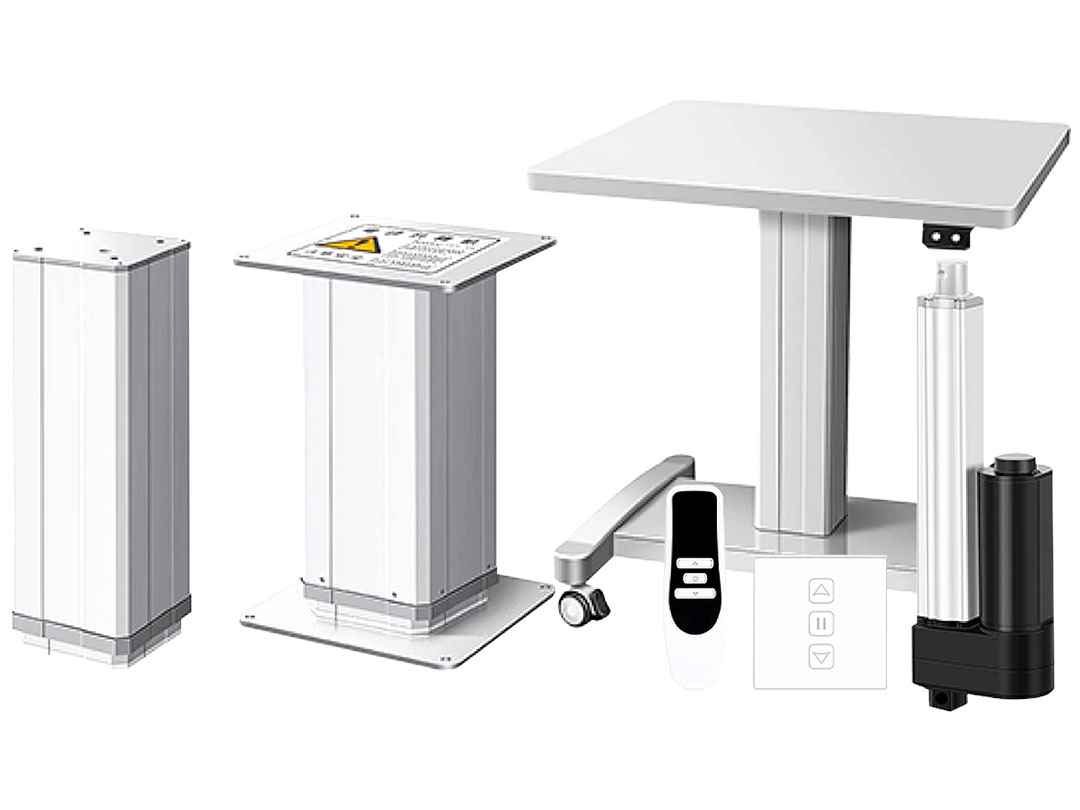
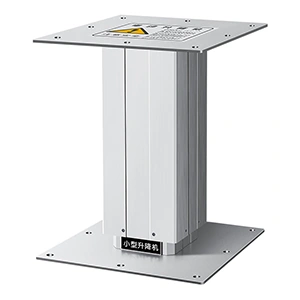
When evaluating height-adjustable carts, desks or workstations for care-related or medical environments, lifting-column architecture is one component decision within the finished equipment. The choice typically comes down to two main categories: elektrische Hubkolonnen (wie die elektrische IPTT-DD-Hubsäule) und manuelle Hebesäulen (wie die IPTT-SD teleskopische Hebesäule).
The comparison should consider adjustment frequency, required load and travel, manual effort, power and control architecture, retention or holding behavior, service access, maintenance and the finished-device validation plan. This article compares IPTT-DD and IPTT-SD as configurable OEM candidates; it does not establish medical suitability for a finished cart, desk or device.
Inhalt
Die beiden Optionen verstehen
Was ist eine manuelle Hebesäule?
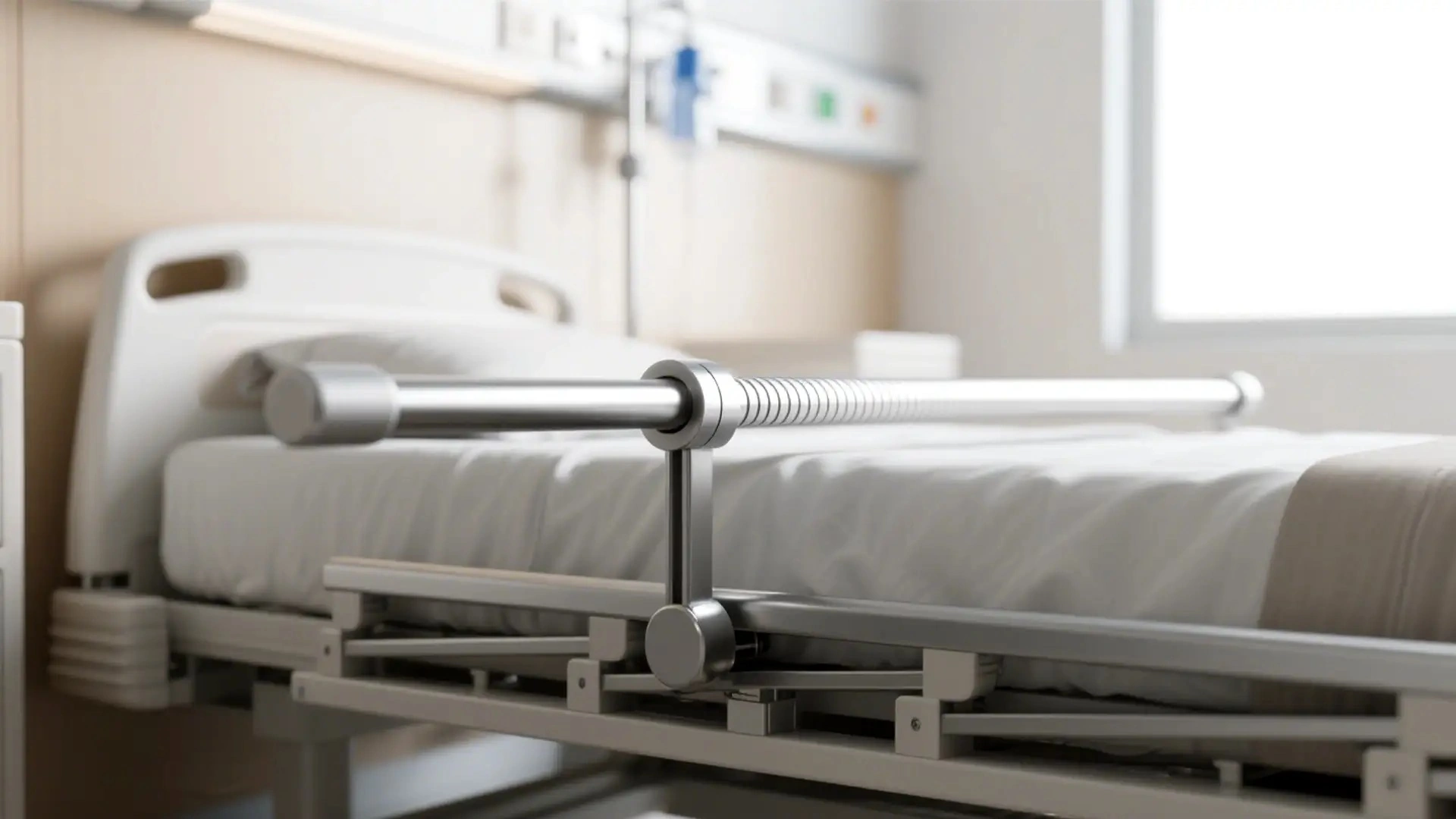
IPTT-SD is a configurable manual telescopic lifting-column platform. Confirm the selected build’s adjustment method, locking or retention method, required operating force, load, travel, mounting geometry, adjustment frequency and lifecycle rather than assuming a spring or gas-strut architecture.
Hauptmerkmale:
Keine Stromquelle erforderlich
Electrical drive and controller may not be required; compare the actual configured BOM and quotation
Manual adjustment and locking/retention method must be confirmed for the selected build
Working/holding load and stability are configuration-specific; do not infer a lighter-duty limit from the manual architecture alone
Was ist eine elektrische Hebesäule?
IPTT-DD is a configurable electric lifting-column platform. Motorized adjustment can support powered height changes, but load, travel, speed, controller, feedback, synchronization, duty cycle and positioning behavior must be confirmed for the selected build and finished mechanism.
Hauptmerkmale:
Angetrieben durch Strom oder Batterie
Höhenverstellung auf Knopfdruck
Control functions, feedback and any preset behavior depend on the selected controller and configuration
Rated load depends on the selected column configuration; do not infer higher capacity from electric drive alone
Kostenanalyse: Erstinvestition vs. langfristiger Wert
Anschaffungspreis
Der offensichtlichste Unterschied ist die Anschaffungskosten. Manuelle Hebesäulen haben in der Regel einen niedrigeren Kaufpreis, da sie keine Motoren, Steuerungssysteme und elektrischen Komponenten haben. Für Einrichtungen mit Budgetbeschränkungen oder solche, die mehrere Wagen ausstatten, kann dies ein erheblicher Vorteil sein.
Do not apply a universal percentage cost gap between manual and electric columns. Compare the quoted column, controller or locking hardware, power system, wiring, assembly, service requirements and expected production quantity for the specific project.
An electric architecture adds motor/control components, while a manual architecture may require different mechanical adjustment and retention hardware. Total cost should be compared at the finished-system level rather than assumed from the column type.
Verborgene Kosten zu berücksichtigen
Neben dem Kaufpreis sollten diese Faktoren berücksichtigt werden:
Comparison item
Manual IPTT-SD
Electric IPTT-DD
Adjustment architecture
Confirm manual adjustment and locking/retention method
Confirm motor, controller and control method
Power / wiring
No electric column drive required; finished equipment may still have other electrical systems
Compatible power supply, wiring and controller required
Load / travel
Configuration-specific; verify selected build
Configuration-specific; verify selected build
Wartung
Inspect mechanical adjustment, locking/retention, mounting and wear
Inspect mechanical system plus motor, wiring and controller as applicable
Commercial comparison
Use current configured quotation and lifecycle/service assumptions
Use current configured quotation and lifecycle/service assumptions
Für Pflegewagen die zwischen Zimmern bewegen, sollte man in Betracht ziehen, ob batteriebetriebene Optionen praktisch sind im Vergleich zu manuellen Systemen, die überall funktionieren.
Bequemlichkeit und Benutzerfreundlichkeit im Gesundheitswesen
Auswirkungen auf den täglichen Arbeitsablauf
In care-related workflows, adjustment frequency, required operator effort, control access and equipment availability can affect usability. Compare the two architectures against the actual use case rather than assuming one is inherently better for healthcare.
Electric lifting columns may be evaluated when:
Mehrere Benutzer das gleiche Gerät im Laufe des Tages teilen
The project defines a positioning requirement that can be validated with the selected column, controller and mechanism
Schnelle Anpassungen zwischen Patienten erforderlich sind
Reduced manual adjustment effort is an explicit equipment requirement
A compatible electric control can reduce the manual effort required to change height. The actual adjustment time, control interface and usability should be measured on the finished cart under representative load and user conditions.
Manual lifting columns may be evaluated when:
A non-powered adjustment architecture fits the project’s risk, service and workflow requirements
Der Zugang zu Strom begrenzt oder unzuverlässig ist
Die Anwendung gelegentliche, nicht häufige Anpassungen erfordert
The configured manual solution meets the project requirements and commercial target
A manual column avoids dependence on the column’s own electric drive and controller, but finished-equipment reliability still depends on the complete mechanical design, locking/retention method, mounting, wear and maintenance.
Ergonomie und Benutzerkomfort
Motorized height adjustment can reduce the manual force needed for the height-change task, but ergonomic benefit depends on control placement, adjustment frequency, cart layout, user population and the complete workflow. Validate the finished equipment rather than assigning a general healthcare ergonomics benefit to the column alone.
For a manual column, measure the actual adjustment force and confirm the locking/retention behavior of the selected configuration. Do not assume a gas spring, a specific operating force or a lighter-duty application unless those details are documented.
Application-Specific Evaluation
Evaluation for Nursing Carts
Für Pflegewagen die sich durch eine Einrichtung bewegen und mehrere Zwecke erfüllen:
Elektrisch (IPTT-DD): Evaluate when frequent powered adjustment is required; confirm controller functions, adjustment time, load, travel and finished-cart validation. Do not assume preset heights unless the selected control configuration provides them.
Manuell (IPTT-SD): Evaluate when a manual adjustment/retention method fits the required adjustment frequency, operator force, load and service model.
Evaluation for Medical Examination Desks
Für medizinische Tische wo Patienten verschiedener Größen untersucht werden:
Elektrisch (IPTT-DD): Evaluate if powered adjustment is required, then define and validate the positioning tolerance, control behavior, load, stability and finished-device safety requirements.
Manuell (IPTT-SD): Evaluate if its manual adjustment force, retention method, load and workflow fit the specific equipment requirements.
Evaluation for Workstations with Limited Power Access
Für Arbeitsplätze in Bereichen, in denen der Zugang zu Strom herausfordernd ist:
Manuell (IPTT-SD): Does not require an electric column drive/controller; confirm that the manual adjustment and retention method fit the use case.
Elektrisch (IPTT-DD): Requires a compatible power/control architecture; confirm supply, wiring, battery strategy if applicable, EMC/electrical integration and service access.
Entscheidung treffen: Wichtige Überlegungen
Bei der Wahl zwischen elektrischen und manuellen Hebesäulen für Ihre medizinischen Wagen und Tische fragen Sie sich diese Fragen:
Wie oft muss die Höhe angepasst werden?
Define the expected adjustments per hour or shift and the required adjustment time. Frequent adjustment may favor powered control, but the decision also depends on load, operator effort, power architecture, control requirements and finished-equipment validation.
Wer wird die Geräte benutzen?
Define the intended user population, reach, control access and acceptable manual adjustment force. Validate the finished cart or workstation with representative users instead of assuming electric or manual is automatically more ergonomic.
What should be included in the cost comparison?
Compare configured column price, controller or locking hardware, power system, wiring, assembly, maintenance, service access, spares and expected lifecycle. Do not apply a universal percentage difference between manual and electric columns.
How should reliability be compared?
Define required lifecycle, load, adjustment frequency, environment, failure behavior and maintenance plan, then validate the selected manual or electric configuration. Mechanical simplicity or electric control alone does not establish finished-equipment reliability.
Sind Stromquellen leicht verfügbar?
For an electric column, confirm supply voltage, wiring, controller and any battery/charging strategy. A manual column removes the electric column drive requirement but still needs validated adjustment, locking/retention and mechanical integration.
Fazit: Welche ist die richtige für Sie?
Beide manuelle Hebesäulen wie das IPTT-SD und elektrische Hubkolonnen wie das IPTT-DD haben ihren Platz im Gesundheitswesen. Die richtige Wahl hängt von Ihren spezifischen Bedürfnissen, dem Budget und der Anwendung ab.
Consider manual IPTT-SD when:
Das Budget eine primäre Sorge ist
Der Zugang zu Strom begrenzt ist
Höhenanpassungen selten sind
The project can validate the manual adjustment, retention, wear and maintenance behavior for the required risk level
Consider electric IPTT-DD when:
Häufige Höhenanpassungen erforderlich sind
Mehrere Benutzer unterschiedlicher Höhen die Geräte teilen
A defined positioning/control requirement can be validated with the selected electric configuration
Powered adjustment is expected to support the documented workflow and is validated on the finished equipment
Neither architecture is universally preferred for healthcare equipment. Compare the selected IPTT-DD or IPTT-SD against the finished equipment’s load, travel, adjustment frequency, controls or retention method, operator effort, power architecture, maintenance, risk controls and validation requirements.
Sind Sie sich noch nicht sicher? Entdecken Sie unser vollständiges Sortiment von Hubkolonnen oder erfahren Sie mehr über elektrische Hubkolonnen für Anwendungen im Gesundheitswesen. Unsere healthcare and medical-equipment project category can be used to review candidate components; final suitability remains a finished-system responsibility.
Planning a height-adjustable cart or workstation? Share the load, travel, adjustment frequency, control or retention method, power architecture, mounting, environment, documentation and validation requirements for configuration review.
Standards & Regulatory Context
IEC 60601-1:2005+A1:2012+A2:2020: General requirements for basic safety and essential performance for medical electrical equipment; applicability to the finished product and any collateral/particular standards must be determined by the responsible manufacturer.
Ergonomics / occupational-safety context: identify the applicable workplace, medical-device and equipment requirements for the target market; do not treat a generic lifting-column comparison as ergonomic or medical approval.
Erhalten Sie Experteneinblicke in die industrielle Bewegungssteuerung
Die Auswahl des richtigen elektrischen linearen Aktuators oder Hebensäule ist entscheidend für die Leistung Ihres Projekts. Als professioneller Hersteller von Bewegungssteuerungen & Automatisierung, helfen unsere Ingenieure Ihnen, die Lastkapazität, den Hub, und die IP-Bewertungen basierend auf Ihrer spezifischen Anwendung anzupassen. Teilen Sie uns Ihre technischen Anforderungen für eine maßgeschneiderte Lösung mit.
ActuLift unterstützt End-to-End-Anpassungen, vom strukturellen Design und Hubparametern bis hin zu Branding und Gehäusefinishes, damit Sie eine starke Markenidentität aufbauen können.
Schnelle Reaktion & Prototyping
Wir verstehen die Bedeutung von Geschwindigkeit in der B2B-Beschaffung und nutzen optimierte Produktionsabläufe, um effiziente Antworten von der Mustentwicklung bis zur Serienlieferung sicherzustellen.
Quality Documentation & Traceability
Quality and traceability requirements vary by project. Ask ActuLift for the applicable inspection records, product specifications, drawings and available compliance documentation for the selected model and order.