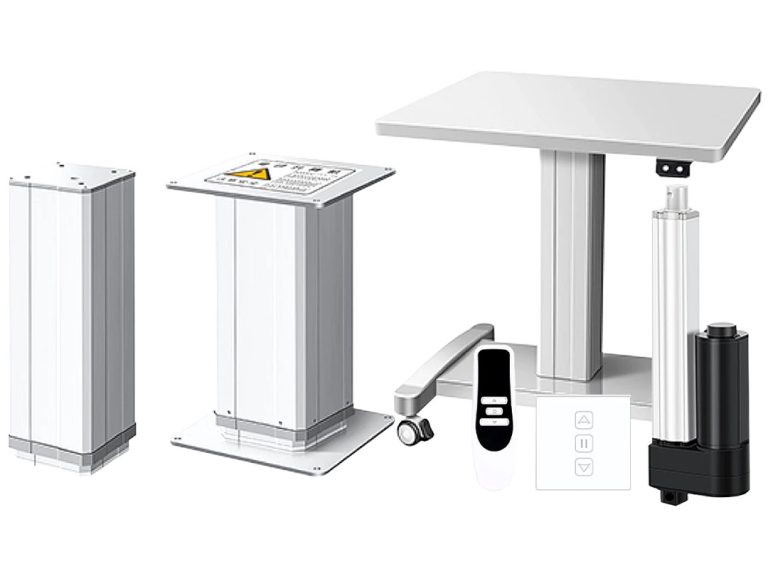
Memilih antara kolom angkat listrik dan manual adalah keputusan penting dalam desain kereta medis. Panduan ini membandingkan kolom listrik IPTT-DD dan kolom manual IPTT-SD, menganalisis biaya, dampak ergonomis, dan efisiensi alur kerja untuk membantu fasilitas kesehatan mengoptimalkan stasiun kerja mobile mereka.
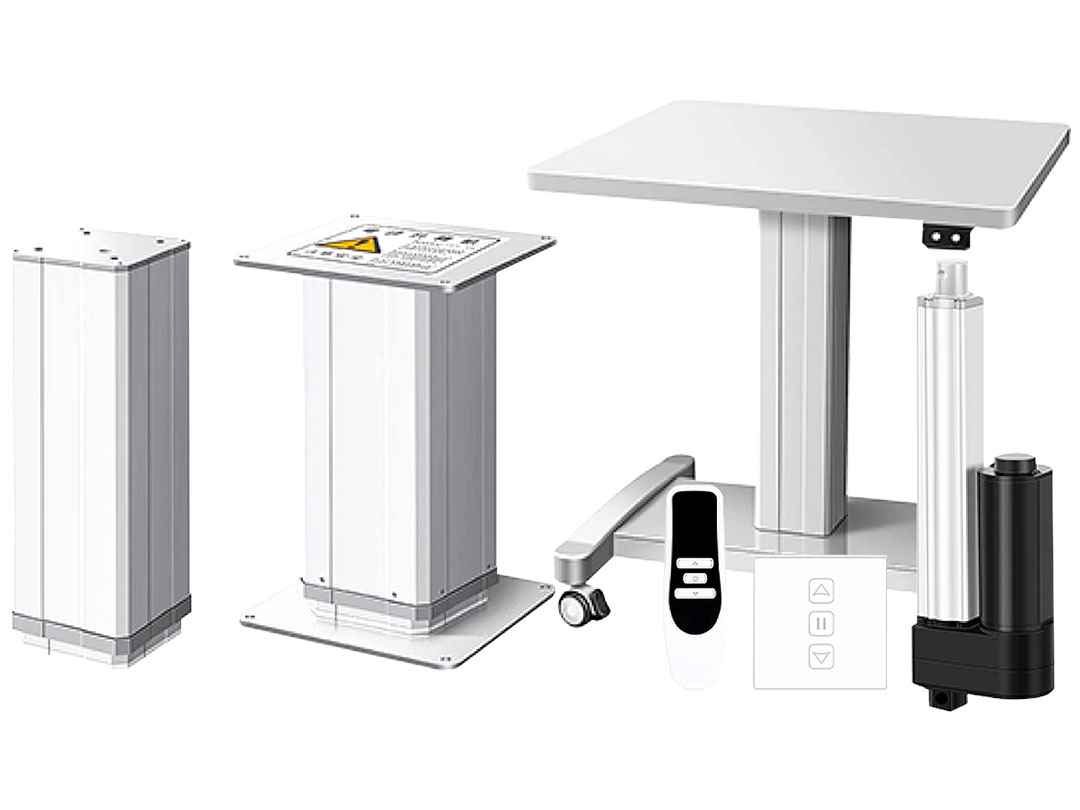
When evaluating height-adjustable carts, desks or workstations for care-related or medical environments, lifting-column architecture is one component decision within the finished equipment. The choice typically comes down to two main categories: kolom pengangkat listrik (seperti Kolom pengangkat listrik IPTT-DD) dan kolom angkat manual (seperti kolom angkat teleskopik IPTT-SD).
The comparison should consider adjustment frequency, required load and travel, manual effort, power and control architecture, retention or holding behavior, service access, maintenance and the finished-device validation plan. This article compares IPTT-DD and IPTT-SD as configurable OEM candidates; it does not establish medical suitability for a finished cart, desk or device.
Daftar Isi
Memahami Dua Pilihan
Apa Itu Kolom Angkat Manual?
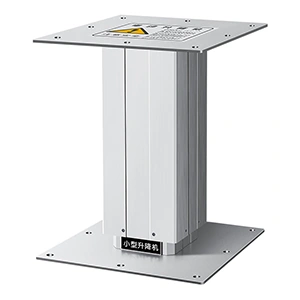
IPTT-SD is a configurable manual telescopic lifting-column platform. Confirm the selected build’s adjustment method, locking or retention method, required operating force, load, travel, mounting geometry, adjustment frequency and lifecycle rather than assuming a spring or gas-strut architecture.
Karakteristik utama:
Tidak memerlukan sumber daya listrik
Electrical drive and controller may not be required; compare the actual configured BOM and quotation
Manual adjustment and locking/retention method must be confirmed for the selected build
Working/holding load and stability are configuration-specific; do not infer a lighter-duty limit from the manual architecture alone
Apa Itu Kolom Angkat Listrik?
IPTT-DD is a configurable electric lifting-column platform. Motorized adjustment can support powered height changes, but load, travel, speed, controller, feedback, synchronization, duty cycle and positioning behavior must be confirmed for the selected build and finished mechanism.
Karakteristik utama:
Digerakkan oleh listrik atau baterai
Penyesuaian ketinggian dengan tombol tekan
Control functions, feedback and any preset behavior depend on the selected controller and configuration
Rated load depends on the selected column configuration; do not infer higher capacity from electric drive alone
Analisis Biaya: Investasi Awal vs. Nilai Jangka Panjang
Harga Pembelian Awal
Perbedaan yang paling mencolok adalah biaya awal. Kolom pengangkatan manual umumnya memiliki harga beli yang lebih rendah karena tidak memiliki motor, sistem kontrol, dan komponen listrik. Untuk fasilitas dengan batasan anggaran atau yang melengkapi beberapa kereta, ini bisa menjadi keunggulan yang signifikan.
Do not apply a universal percentage cost gap between manual and electric columns. Compare the quoted column, controller or locking hardware, power system, wiring, assembly, service requirements and expected production quantity for the specific project.
An electric architecture adds motor/control components, while a manual architecture may require different mechanical adjustment and retention hardware. Total cost should be compared at the finished-system level rather than assumed from the column type.
Biaya Tersembunyi yang Perlu Dipertimbangkan
Selain harga beli, pertimbangkan faktor-faktor ini:
Comparison item
Manual IPTT-SD
Electric IPTT-DD
Adjustment architecture
Confirm manual adjustment and locking/retention method
Confirm motor, controller and control method
Power / wiring
No electric column drive required; finished equipment may still have other electrical systems
Compatible power supply, wiring and controller required
Load / travel
Configuration-specific; verify selected build
Configuration-specific; verify selected build
Pemeliharaan
Inspect mechanical adjustment, locking/retention, mounting and wear
Inspect mechanical system plus motor, wiring and controller as applicable
Commercial comparison
Use current configured quotation and lifecycle/service assumptions
Use current configured quotation and lifecycle/service assumptions
Untuk kereta perawatan yang bergerak antar ruangan, pertimbangkan apakah opsi bertenaga baterai praktis dibandingkan sistem manual yang dapat digunakan di mana saja.
Kenyamanan dan Kemudahan Penggunaan dalam Pengaturan Kesehatan
Dampak Alur Kerja Harian
In care-related workflows, adjustment frequency, required operator effort, control access and equipment availability can affect usability. Compare the two architectures against the actual use case rather than assuming one is inherently better for healthcare.
Electric lifting columns may be evaluated when:
Beberapa pengguna berbagi peralatan yang sama sepanjang hari
The project defines a positioning requirement that can be validated with the selected column, controller and mechanism
Penyesuaian cepat diperlukan antara pasien
Reduced manual adjustment effort is an explicit equipment requirement
A compatible electric control can reduce the manual effort required to change height. The actual adjustment time, control interface and usability should be measured on the finished cart under representative load and user conditions.
Manual lifting columns may be evaluated when:
A non-powered adjustment architecture fits the project’s risk, service and workflow requirements
Akses daya terbatas atau tidak dapat diandalkan
Aplikasi memerlukan penyesuaian yang sesekali, tidak sering
The configured manual solution meets the project requirements and commercial target
A manual column avoids dependence on the column’s own electric drive and controller, but finished-equipment reliability still depends on the complete mechanical design, locking/retention method, mounting, wear and maintenance.
Ergonomi dan Kenyamanan Pengguna
Motorized height adjustment can reduce the manual force needed for the height-change task, but ergonomic benefit depends on control placement, adjustment frequency, cart layout, user population and the complete workflow. Validate the finished equipment rather than assigning a general healthcare ergonomics benefit to the column alone.
For a manual column, measure the actual adjustment force and confirm the locking/retention behavior of the selected configuration. Do not assume a gas spring, a specific operating force or a lighter-duty application unless those details are documented.
Application-Specific Evaluation
Evaluation for Nursing Carts
Untuk kereta perawatan yang bergerak di seluruh fasilitas dan melayani berbagai tujuan:
Listrik (IPTT-DD): Evaluate when frequent powered adjustment is required; confirm controller functions, adjustment time, load, travel and finished-cart validation. Do not assume preset heights unless the selected control configuration provides them.
Manual (IPTT-SD): Evaluate when a manual adjustment/retention method fits the required adjustment frequency, operator force, load and service model.
Evaluation for Medical Examination Desks
Untuk meja medis di mana pasien dengan berbagai ukuran diperiksa:
Listrik (IPTT-DD): Evaluate if powered adjustment is required, then define and validate the positioning tolerance, control behavior, load, stability and finished-device safety requirements.
Manual (IPTT-SD): Evaluate if its manual adjustment force, retention method, load and workflow fit the specific equipment requirements.
Evaluation for Workstations with Limited Power Access
Untuk workstation di area di mana akses daya sulit:
Manual (IPTT-SD): Does not require an electric column drive/controller; confirm that the manual adjustment and retention method fit the use case.
Listrik (IPTT-DD): Requires a compatible power/control architecture; confirm supply, wiring, battery strategy if applicable, EMC/electrical integration and service access.
Membuat Keputusan Anda: Pertimbangan Utama
Saat memilih antara kolom pengangkat listrik dan manual untuk keranjang medis dan meja Anda, tanyakan pada diri Anda pertanyaan-pertanyaan ini:
Seberapa sering ketinggian perlu disesuaikan?
Define the expected adjustments per hour or shift and the required adjustment time. Frequent adjustment may favor powered control, but the decision also depends on load, operator effort, power architecture, control requirements and finished-equipment validation.
Siapa yang akan menggunakan peralatan?
Define the intended user population, reach, control access and acceptable manual adjustment force. Validate the finished cart or workstation with representative users instead of assuming electric or manual is automatically more ergonomic.
What should be included in the cost comparison?
Compare configured column price, controller or locking hardware, power system, wiring, assembly, maintenance, service access, spares and expected lifecycle. Do not apply a universal percentage difference between manual and electric columns.
How should reliability be compared?
Define required lifecycle, load, adjustment frequency, environment, failure behavior and maintenance plan, then validate the selected manual or electric configuration. Mechanical simplicity or electric control alone does not establish finished-equipment reliability.
Apakah sumber daya listrik tersedia dengan mudah?
For an electric column, confirm supply voltage, wiring, controller and any battery/charging strategy. A manual column removes the electric column drive requirement but still needs validated adjustment, locking/retention and mechanical integration.
Kesimpulan: Mana yang Tepat untuk Anda?
Keduanya kolom angkat manual seperti IPTT-SD dan kolom pengangkat listrik seperti IPTT-DD memiliki tempatnya di pengaturan kesehatan. Pilihan yang tepat tergantung pada kebutuhan spesifik Anda, anggaran, dan aplikasi.
Consider manual IPTT-SD when:
Anggaran adalah masalah utama
Akses daya terbatas
Penyesuaian tinggi jarang dilakukan
The project can validate the manual adjustment, retention, wear and maintenance behavior for the required risk level
Consider electric IPTT-DD when:
Penyesuaian tinggi yang sering diperlukan
Beberapa pengguna dengan tinggi badan berbeda berbagi peralatan
A defined positioning/control requirement can be validated with the selected electric configuration
Powered adjustment is expected to support the documented workflow and is validated on the finished equipment
Neither architecture is universally preferred for healthcare equipment. Compare the selected IPTT-DD or IPTT-SD against the finished equipment’s load, travel, adjustment frequency, controls or retention method, operator effort, power architecture, maintenance, risk controls and validation requirements.
Planning a height-adjustable cart or workstation? Share the load, travel, adjustment frequency, control or retention method, power architecture, mounting, environment, documentation and validation requirements for configuration review.
Standards & Regulatory Context
IEC 60601-1:2005+A1:2012+A2:2020: General requirements for basic safety and essential performance for medical electrical equipment; applicability to the finished product and any collateral/particular standards must be determined by the responsible manufacturer.
Ergonomics / occupational-safety context: identify the applicable workplace, medical-device and equipment requirements for the target market; do not treat a generic lifting-column comparison as ergonomic or medical approval.
Dapatkan Pandangan Para Ahli tentang Kontrol Gerakan Industri
Memilih yang tepat aktuator linier listrik atau kolom pengangkat sangat penting untuk kinerja proyek Anda. Sebagai seorang profesional Produsen Kontrol Gerakan & Otomatisasi, insinyur kami membantu Anda menyesuaikan kapasitas beban, panjang langkah, dan rating IP berdasarkan aplikasi spesifik Anda. Bagikan persyaratan teknis Anda untuk solusi yang disesuaikan.
ActuLift mendukung kustomisasi dari awal hingga akhir, mulai dari desain struktural dan parameter jalur hingga branding dan penyelesaian casing, membantu Anda membangun identitas merek yang kuat.
Respons Cepat & Prototyping
Kami memahami pentingnya kecepatan dalam pengadaan B2B, memanfaatkan alur kerja produksi yang dioptimalkan untuk memastikan respons efisien dari pengembangan sampel hingga pengiriman massal.
Quality Documentation & Traceability
Quality and traceability requirements vary by project. Ask ActuLift for the applicable inspection records, product specifications, drawings and available compliance documentation for the selected model and order.