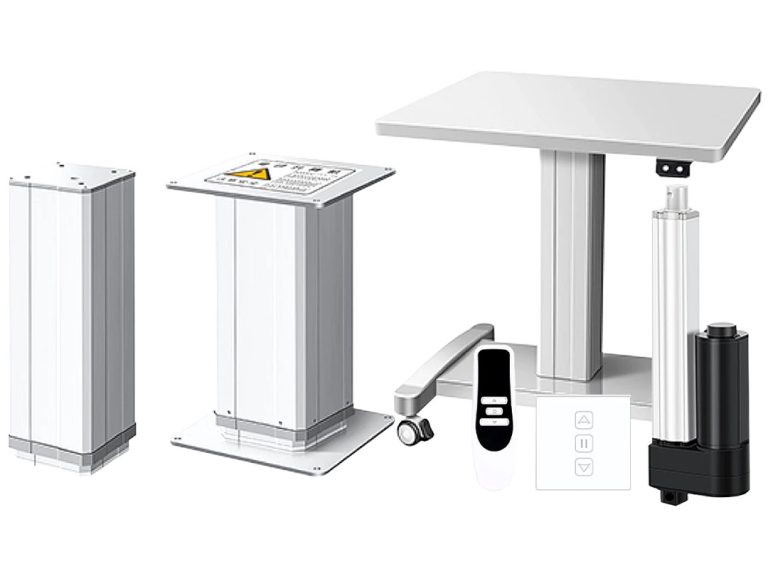
Colonnes élévatrices électriques vs manuelles pour chariots médicaux
Choisir entre des colonnes de levage électriques et manuelles est une décision critique pour la conception des chariots médicaux. Ce guide compare la colonne électrique IPTT-DD et la colonne manuelle IPTT-SD, en analysant le coût, l'impact ergonomique et l'efficacité du flux de travail pour aider les établissements de santé à optimiser leurs postes de travail mobiles.
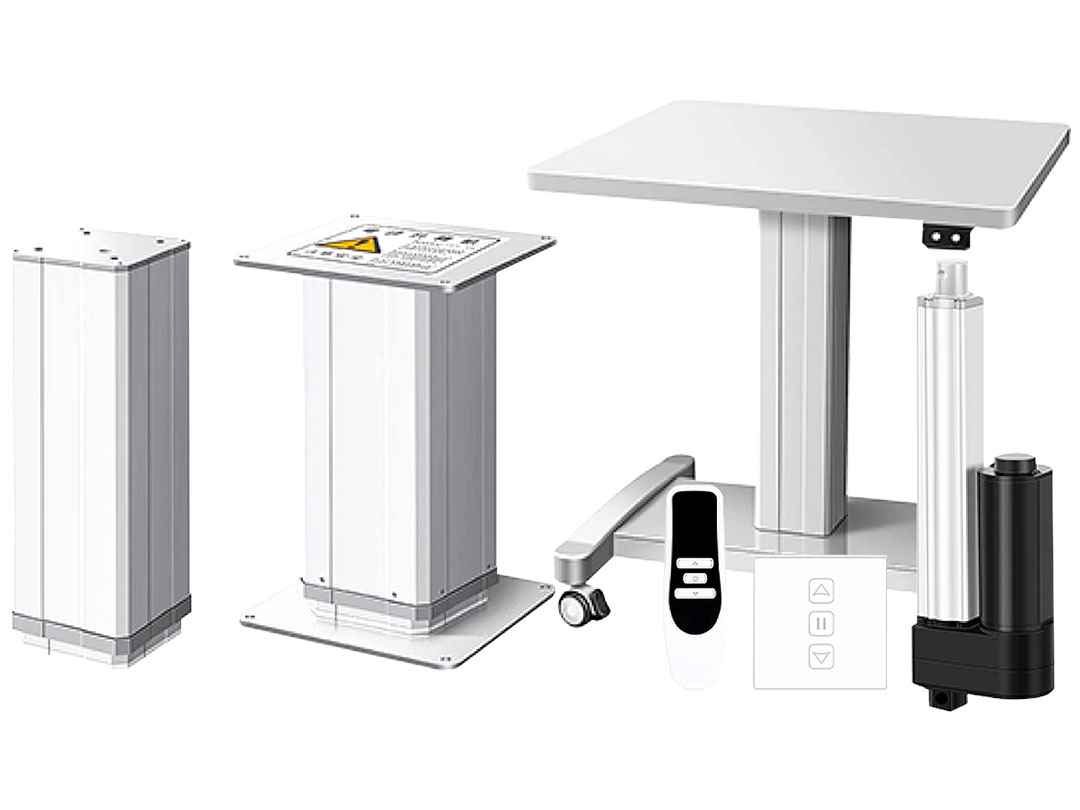
When evaluating height-adjustable carts, desks or workstations for care-related or medical environments, lifting-column architecture is one component decision within the finished equipment. The choice typically comes down to two main categories: colonnes de levage électriques (comme le colonne élévatrice électrique IPTT-DD) et colonnes de levage manuelles (comme le colonne de levage télescopique IPTT-SD).
The comparison should consider adjustment frequency, required load and travel, manual effort, power and control architecture, retention or holding behavior, service access, maintenance and the finished-device validation plan. This article compares IPTT-DD and IPTT-SD as configurable OEM candidates; it does not establish medical suitability for a finished cart, desk or device.
Table des matières
Comprendre les deux options
Qu'est-ce qu'une colonne de levage manuelle ?
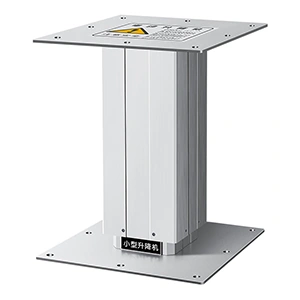
IPTT-SD is a configurable manual telescopic lifting-column platform. Confirm the selected build’s adjustment method, locking or retention method, required operating force, load, travel, mounting geometry, adjustment frequency and lifecycle rather than assuming a spring or gas-strut architecture.
Caractéristiques clés :
Pas de source d'énergie requise
Electrical drive and controller may not be required; compare the actual configured BOM and quotation
Manual adjustment and locking/retention method must be confirmed for the selected build
Working/holding load and stability are configuration-specific; do not infer a lighter-duty limit from the manual architecture alone
Qu'est-ce qu'une colonne de levage électrique ?
IPTT-DD is a configurable electric lifting-column platform. Motorized adjustment can support powered height changes, but load, travel, speed, controller, feedback, synchronization, duty cycle and positioning behavior must be confirmed for the selected build and finished mechanism.
Caractéristiques clés :
Alimenté par électricité ou batterie
Ajustement de la hauteur par bouton-poussoir
Control functions, feedback and any preset behavior depend on the selected controller and configuration
Rated load depends on the selected column configuration; do not infer higher capacity from electric drive alone
Analyse des coûts : investissement initial vs. valeur à long terme
Prix d'achat initial
La différence la plus évidente est le coût initial. Colonnes de levage manuelles ont généralement un prix d'achat inférieur car elles manquent de moteurs, de systèmes de contrôle et de composants électroniques. Pour les établissements ayant des contraintes budgétaires ou ceux qui équipent plusieurs chariots, cela peut être un avantage significatif.
Do not apply a universal percentage cost gap between manual and electric columns. Compare the quoted column, controller or locking hardware, power system, wiring, assembly, service requirements and expected production quantity for the specific project.
An electric architecture adds motor/control components, while a manual architecture may require different mechanical adjustment and retention hardware. Total cost should be compared at the finished-system level rather than assumed from the column type.
Coûts cachés à considérer
Au-delà du prix d'achat, considérez ces facteurs :
Comparison item
Manual IPTT-SD
Electric IPTT-DD
Adjustment architecture
Confirm manual adjustment and locking/retention method
Confirm motor, controller and control method
Power / wiring
No electric column drive required; finished equipment may still have other electrical systems
Compatible power supply, wiring and controller required
Load / travel
Configuration-specific; verify selected build
Configuration-specific; verify selected build
Maintenance
Inspect mechanical adjustment, locking/retention, mounting and wear
Inspect mechanical system plus motor, wiring and controller as applicable
Commercial comparison
Use current configured quotation and lifecycle/service assumptions
Use current configured quotation and lifecycle/service assumptions
Pour chariots de soins qui se déplacent entre les pièces, envisagez si des options alimentées par batterie sont pratiques par rapport aux systèmes manuels qui fonctionnent n'importe où.
Convivialité et utilisabilité dans les environnements de soins de santé
Impact sur le flux de travail quotidien
In care-related workflows, adjustment frequency, required operator effort, control access and equipment availability can affect usability. Compare the two architectures against the actual use case rather than assuming one is inherently better for healthcare.
Electric lifting columns may be evaluated when:
Plusieurs utilisateurs partagent le même équipement tout au long de la journée
The project defines a positioning requirement that can be validated with the selected column, controller and mechanism
Des ajustements rapides sont nécessaires entre les patients
Reduced manual adjustment effort is an explicit equipment requirement
A compatible electric control can reduce the manual effort required to change height. The actual adjustment time, control interface and usability should be measured on the finished cart under representative load and user conditions.
Manual lifting columns may be evaluated when:
A non-powered adjustment architecture fits the project’s risk, service and workflow requirements
L'accès à l'énergie est limité ou peu fiable
L'application nécessite des ajustements occasionnels, pas fréquents
The configured manual solution meets the project requirements and commercial target
A manual column avoids dependence on the column’s own electric drive and controller, but finished-equipment reliability still depends on the complete mechanical design, locking/retention method, mounting, wear and maintenance.
Ergonomie et confort de l'utilisateur
Motorized height adjustment can reduce the manual force needed for the height-change task, but ergonomic benefit depends on control placement, adjustment frequency, cart layout, user population and the complete workflow. Validate the finished equipment rather than assigning a general healthcare ergonomics benefit to the column alone.
For a manual column, measure the actual adjustment force and confirm the locking/retention behavior of the selected configuration. Do not assume a gas spring, a specific operating force or a lighter-duty application unless those details are documented.
Application-Specific Evaluation
Evaluation for Nursing Carts
Pour chariots de soins qui se déplacent dans un établissement et servent à plusieurs fins :
Électrique (IPTT-DD) : Evaluate when frequent powered adjustment is required; confirm controller functions, adjustment time, load, travel and finished-cart validation. Do not assume preset heights unless the selected control configuration provides them.
Manuel (IPTT-SD) : Evaluate when a manual adjustment/retention method fits the required adjustment frequency, operator force, load and service model.
Evaluation for Medical Examination Desks
Pour bureaux médicaux où des patients de tailles variées sont examinés :
Électrique (IPTT-DD) : Evaluate if powered adjustment is required, then define and validate the positioning tolerance, control behavior, load, stability and finished-device safety requirements.
Manuel (IPTT-SD) : Evaluate if its manual adjustment force, retention method, load and workflow fit the specific equipment requirements.
Evaluation for Workstations with Limited Power Access
Pour les postes de travail dans des zones où l'accès à l'électricité est difficile :
Manuel (IPTT-SD) : Does not require an electric column drive/controller; confirm that the manual adjustment and retention method fit the use case.
Électrique (IPTT-DD) : Requires a compatible power/control architecture; confirm supply, wiring, battery strategy if applicable, EMC/electrical integration and service access.
Prendre votre décision : considérations clés
Lorsque vous choisissez entre des colonnes de levage électriques et manuelles pour vos chariots médicaux et bureaux, posez-vous ces questions :
À quelle fréquence la hauteur devra-t-elle être ajustée ?
Define the expected adjustments per hour or shift and the required adjustment time. Frequent adjustment may favor powered control, but the decision also depends on load, operator effort, power architecture, control requirements and finished-equipment validation.
Qui utilisera l'équipement ?
Define the intended user population, reach, control access and acceptable manual adjustment force. Validate the finished cart or workstation with representative users instead of assuming electric or manual is automatically more ergonomic.
What should be included in the cost comparison?
Compare configured column price, controller or locking hardware, power system, wiring, assembly, maintenance, service access, spares and expected lifecycle. Do not apply a universal percentage difference between manual and electric columns.
How should reliability be compared?
Define required lifecycle, load, adjustment frequency, environment, failure behavior and maintenance plan, then validate the selected manual or electric configuration. Mechanical simplicity or electric control alone does not establish finished-equipment reliability.
Les sources d'alimentation sont-elles facilement disponibles ?
For an electric column, confirm supply voltage, wiring, controller and any battery/charging strategy. A manual column removes the electric column drive requirement but still needs validated adjustment, locking/retention and mechanical integration.
Conclusion : laquelle est faite pour vous ?
Les deux colonnes de levage manuelles comme le IPTT-SD et colonnes de levage électriques comme le IPTT-DD ont leur place dans les établissements de santé. Le bon choix dépend de vos besoins spécifiques, de votre budget et de votre application.
Consider manual IPTT-SD when:
Le budget est une préoccupation majeure
L'accès à l'alimentation est limité
Les ajustements de hauteur sont peu fréquents
The project can validate the manual adjustment, retention, wear and maintenance behavior for the required risk level
Consider electric IPTT-DD when:
Des ajustements fréquents de hauteur sont nécessaires
Plusieurs utilisateurs de différentes tailles partagent l'équipement
A defined positioning/control requirement can be validated with the selected electric configuration
Powered adjustment is expected to support the documented workflow and is validated on the finished equipment
Neither architecture is universally preferred for healthcare equipment. Compare the selected IPTT-DD or IPTT-SD against the finished equipment’s load, travel, adjustment frequency, controls or retention method, operator effort, power architecture, maintenance, risk controls and validation requirements.
Planning a height-adjustable cart or workstation? Share the load, travel, adjustment frequency, control or retention method, power architecture, mounting, environment, documentation and validation requirements for configuration review.
Standards & Regulatory Context
IEC 60601-1:2005+A1:2012+A2:2020: General requirements for basic safety and essential performance for medical electrical equipment; applicability to the finished product and any collateral/particular standards must be determined by the responsible manufacturer.
Ergonomics / occupational-safety context: identify the applicable workplace, medical-device and equipment requirements for the target market; do not treat a generic lifting-column comparison as ergonomic or medical approval.
Obtenez des Aperçus d'Experts sur le Contrôle de Mouvement Industriel
Sélectionner le bon vérin linéaire électrique ou colonne de levage est crucial pour la performance de votre projet. En tant que fabricant professionnel de Contrôle de Mouvement & Automatisation, nos ingénieurs vous aident à personnaliser la capacité de charge, la longueur de course et les classes IP en fonction de votre application spécifique. Partagez vos exigences techniques pour une solution sur mesure.
ActuLift prend en charge la personnalisation de bout en bout, de la conception structurelle et des paramètres de course aux finitions de marque et de boîtier, vous aidant à construire une identité de marque puissante.
Réponse rapide et prototypage
Nous comprenons l'importance de la rapidité dans l'approvisionnement B2B, en utilisant des flux de production optimisés pour garantir des réponses efficaces du développement d'échantillons à la livraison en gros.
Quality Documentation & Traceability
Quality and traceability requirements vary by project. Ask ActuLift for the applicable inspection records, product specifications, drawings and available compliance documentation for the selected model and order.