T-Type Lead Screws in Linear Actuators: Self-Locking Conditions & Trade-Offs
Learn how T-type (trapezoidal) lead screws convert rotary motion, when self-locking may occur, and how lead angle, friction, lubrication, efficiency, wear, backlash and load-holding trade-offs affect actuator selection.
When selecting a linear actuator, the transmission architecture affects efficiency, back-driving, speed, wear, backlash and load-holding behavior. T-type or trapezoidal lead screws use sliding contact between the screw and nut; self-locking may occur in some configurations, but it should be evaluated from lead angle, effective friction, lubrication, load, wear and the complete mechanism rather than assumed from the screw type alone.
This comprehensive guide explores how T-type lead screws work, their advantages and limitations, and how this technology should be evaluated within different ActuLift actuator configurations.
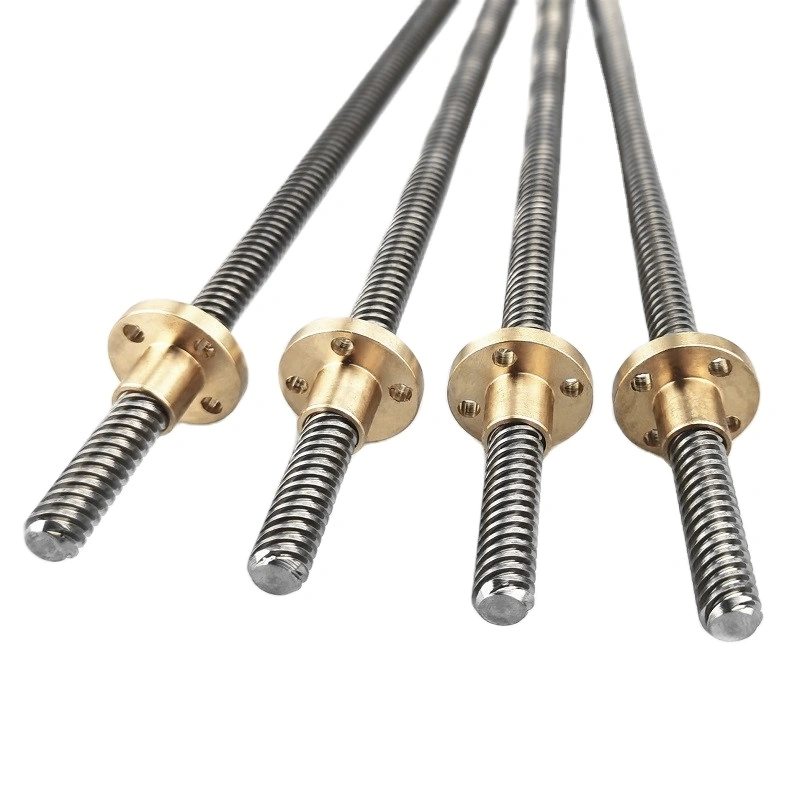
T-Typ-Gewindestangen verfügen über ein charakteristisches trapezförmiges Gewindeprofil mit einem Flankenwinkel von 30 Grad auf jeder Seite. Diese Gewindegeometrie - standardisiert in DIN 103 für trapezförmige Gewinde - schafft eine flache Ober- und Unterseite mit schrägen Seiten, die sie von den V-Gewinden in herkömmlichen Befestigungselementen unterscheidet.
Die trapezförmige Form erfüllt mehrere wesentliche ingenieurtechnische Zwecke:
Erhöhte Kontaktfläche: Die flachen Gewindeoberflächen bieten größere Lagerflächen im Vergleich zu V-Gewinden, wodurch die Lasten effektiver über das gesamte Gewindeengagement verteilt werden.
Reduziertes Einklemmen-Risiko: Die Geometrie verhindert den Einklemm-Effekt, der bei V-Gewinden unter schweren Drucklasten auftreten kann.
Einfache Fertigung: Das einfache Profil ist relativ leicht zu bearbeiten und präzise Toleranzen zu erreichen, was zur Zuverlässigkeit und Kosteneffizienz beiträgt.
T-Typ-Gewindestangen werden aus verschiedenen Materialien wie Edelstahl, Aluminium und Kohlenstoffstahl hergestellt, wobei jedes Material unterschiedliche Kombinationen aus Festigkeit, Korrosionsbeständigkeit und Gewichtseigenschaften bietet.
Wie T-Typ Gewindespindeln in linearen Aktuatoren funktionieren
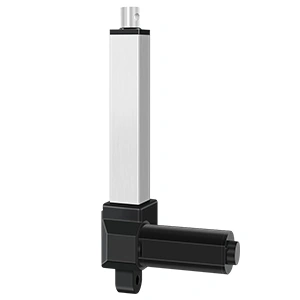
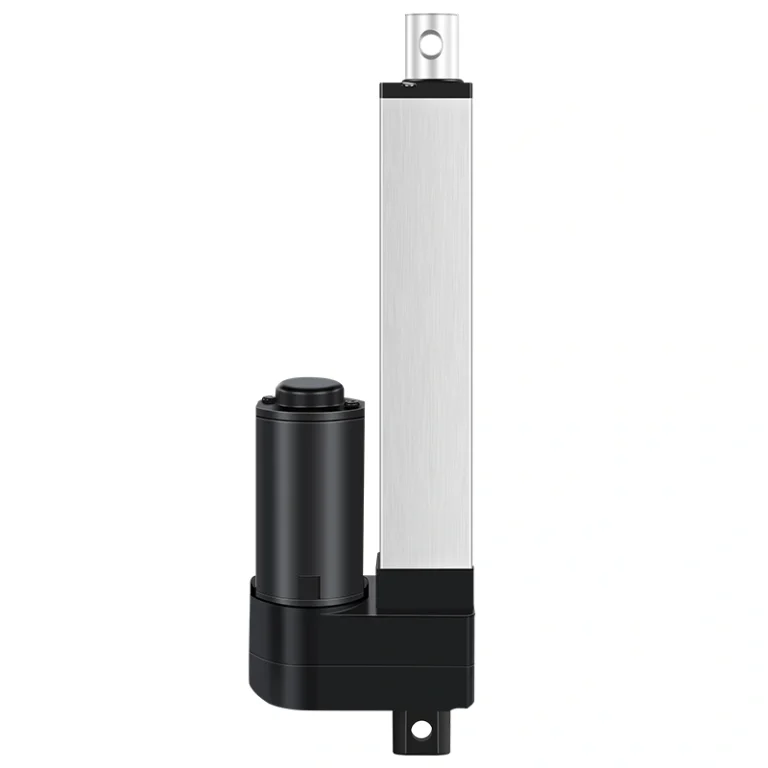
In einem Linearantrieb wandelt die T-Typ-Gewindestange die rotatorische Motorbewegung in eine lineare Bewegung um. Wenn der Motor die Schraubenwelle dreht, bewegt sich die mit den Gewinden verbundene Mutter entlang der Spindel und schiebt oder zieht die Ausgangswelle des Aktuators.
Das Arbeitsprinzip basiert auf der spiraligen Gewindegeometrie:
Rotatorischer Eingang: Ein Elektromotor (AC oder DC) treibt die Gewindestangenwelle an.
Gewindeengagement: Die Mutter bewegt sich entlang der schraubenförmigen Gewinde.
Linearausgang: Rotationsbewegung wird zu linearer Verschiebung.
Kraftübertragung: Der mechanische Vorteil des Gewindes vervielfacht das Eingangsmoment in lineare Kraft.
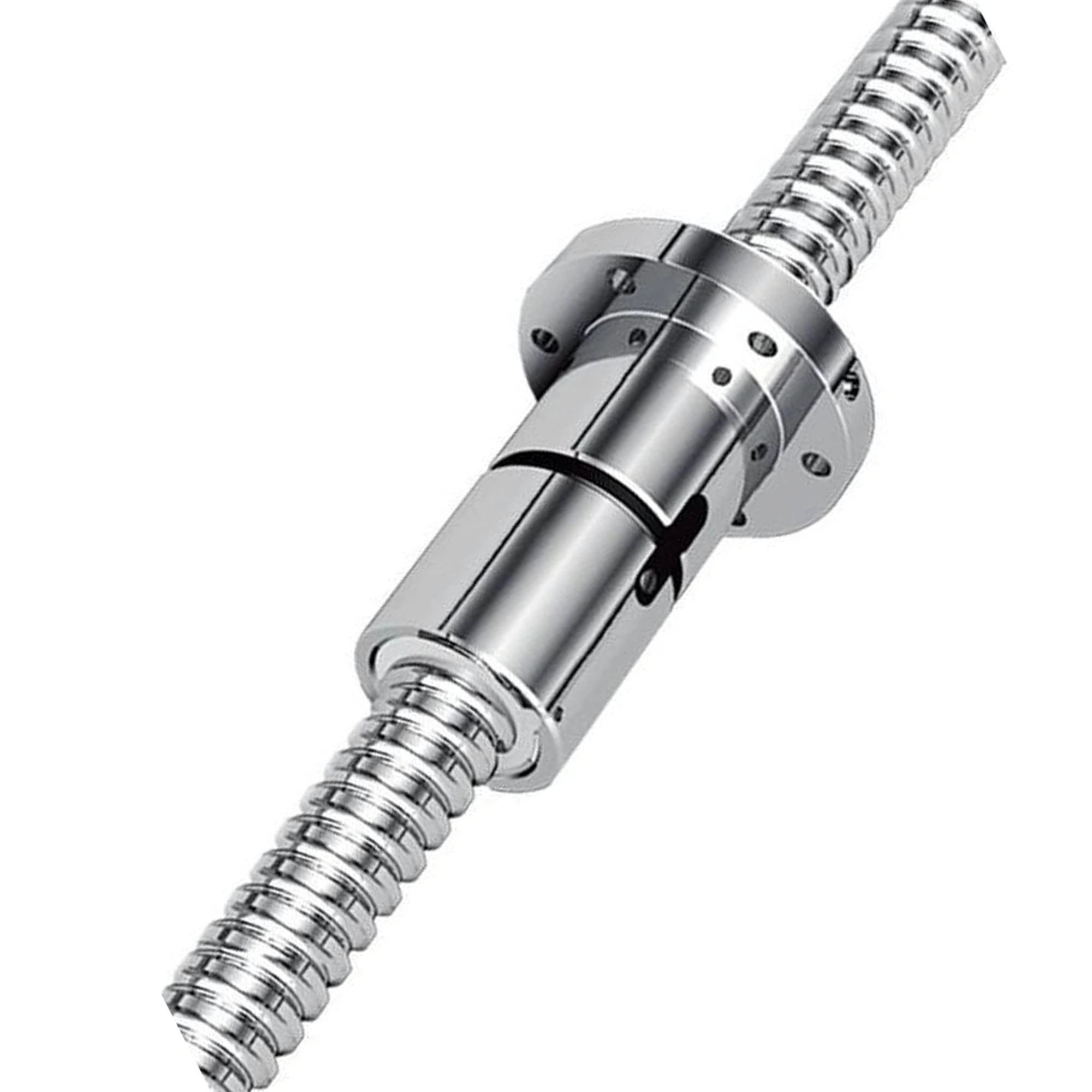
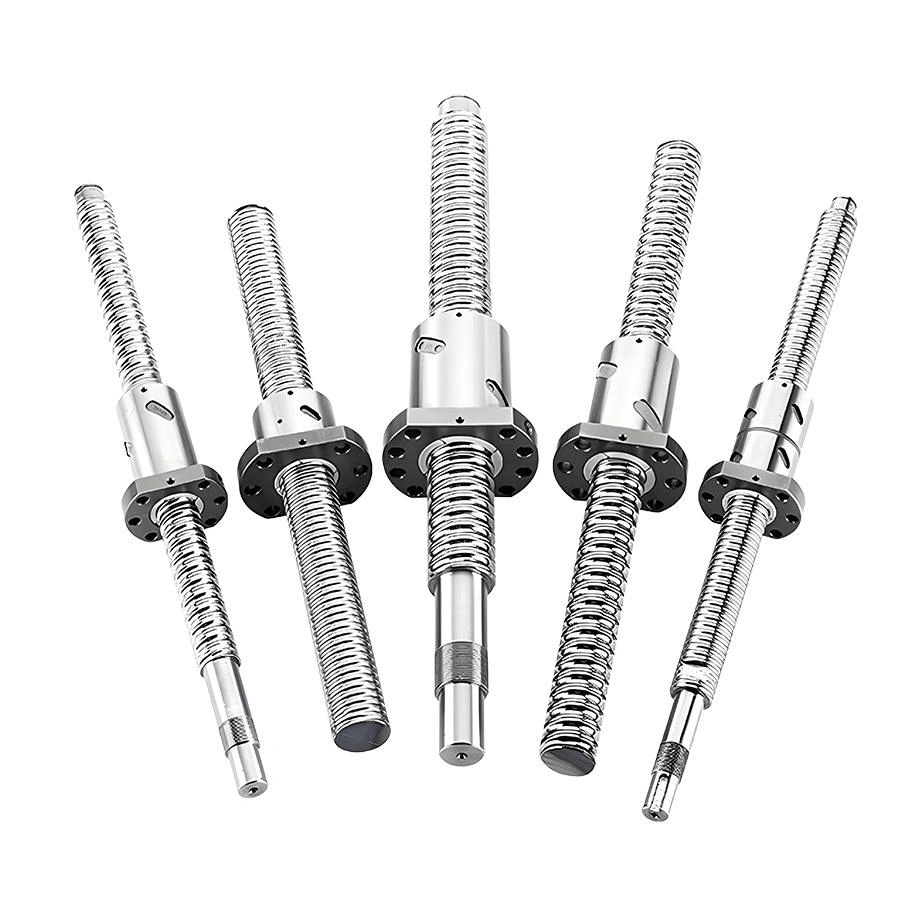
Die Effizienz dieser Umwandlung hängt von mehreren Faktoren ab: Gewindesteigung, Ganghöhe, Reibungskoeffizient zwischen den Materialien von Schraube und Mutter und den Schmierungsbedingungen. Im Gegensatz zu Kugelgewinden, die rollen, arbeiten T-Typ-Gewindestangen durch Gleitreibungen zwischen den Schraubengewinden und dem Innenraum der Mutter.
Self-Locking Conditions and Back-Driving
Eine der bedeutendsten Eigenschaften von T-Typ-Gewindestangen ist ihre mechanische Selbstsperrfähigkeit - eine Eigenschaft, die sie für sicherheitskritische Anwendungen unverzichtbar macht.
Selbstsperrung verstehen
Self-locking means the lead screw maintains its position when rotational force is removed. Under suitable design and friction conditions, the axial load may not readily back-drive the screw. This must be verified for the selected mechanism rather than assumed from the thread family alone. This occurs due to the friction inherent in the sliding contact between the trapezoidal threads.
Der Selbstsperrzustand wird durch das Verhältnis zwischen dem Steigungswinkel und dem Reibungswinkel bestimmt:
Steigungswinkel: Die Neigung der Helix, bestimmt durch Gewindesteigung und Durchmesser.
Reibungswinkel: Bestimmt durch den Reibungskoeffizienten zwischen den Materialien von Mutter und Schraube.
A lower lead angle relative to the effective friction angle can increase resistance to back-driving. Because friction changes with material pairing, lubrication, wear, temperature, vibration and load, there is no universal lead-angle threshold that guarantees self-locking for every actuator.
Warum Selbstsperrung wichtig ist
For applications where the actuator must hold position after power removal—or where unexpected back-driving could create a hazard—define and validate the required holding behavior:
Power-Off Holding: Confirm how much movement is permitted after power loss and validate the selected actuator at the required load and orientation
Static Holding: A validated passive holding condition may reduce the need for continuous motor torque, but actual system power and safety behavior depend on the selected design
System Design: A separate brake, restraint, feedback method or other safety function may still be required by the finished mechanism
Vertical Applications: Evaluate static holding, back-driving, orientation, safety factor and power-off behavior before approval
Potential resistance to back-driving can be useful in vertical or holding applications, but safety-critical positioning must be validated at the complete-system level.
Tragfähigkeit: T-Typ vs. Kugelgewinde
Das Verständnis der Lastmerkmale verschiedener Schraubentechnologien ist entscheidend für die richtige Anwendungsauswahl.
Statische vs. dynamische Tragfähigkeit
Static holding load and dynamic moving load are different ratings. Their relationship is design-specific and must be confirmed for the selected screw, nut, gearing and actuator.
Allowable moving and holding loads depend on screw diameter, nut engagement, materials, bearings, housing, duty cycle, load direction, temperature and test method.
Vergleichende Analyse
Merkmal
What to verify
Efficiency
Configuration-specific geometry, preload, lubrication, load and speed
Back-driving / holding
Lead, friction, gearing, orientation, load, wear and brake strategy
Static / dynamic load
Separate rated values and test conditions for the selected actuator
Precision / backlash
Nut design, manufacturing tolerance, wear, preload and feedback/control method
Geschwindigkeit
Critical speed, heat, lubrication, load and duty-cycle limits
Lifecycle
Defined load, stroke, speed, environment, lubrication and acceptance target
How T-Type Screws Can Fit Load-Holding Applications
T-type lead screw systems can be evaluated for load-holding applications such as:
Schweres Heben: Industrielle Pressen, Aufzüge und Positionierung von schweren Maschinen
Vertikale Bewegung: Anwendungen, bei denen Lasten gegen die Schwerkraft gehalten werden müssen
Kraftfokussierte Anwendungen: Wo Haltekraft wichtiger ist als Geschwindigkeit oder Präzision
Die größere Kontaktfläche zwischen trapezförmigen Gewinden verteilt Lasten über eine größere Fläche, wodurch SpannungsKonzentationen reduziert und höhere statische Tragfähigkeitswerten ermöglicht werden.
Vorteile von T-Typ Gewindespindeln
1. Self-Locking Is Condition-Dependent
Self-locking behavior is condition-dependent. Confirm the selected screw geometry, friction condition, gearing, load, orientation, lubrication and wear state before relying on passive position holding.
2. Hohe statische Tragfähigkeit
A T-type screw system may provide useful static holding capacity, but the allowable static-to-dynamic load relationship must be confirmed from the selected actuator design and test conditions.
3. Kosten-Effizienz
Der einfachere Herstellungsprozess und das Fehlen präziser Kugelbahnen machen T-Typ Gewindespindeln erheblich kostengünstiger als Kugelgewindetriebe. Für Anwendungen, die keine ultrahoch Präzision erfordern, ist dieser Kostenvorteil erheblich.
4. Haltbarkeit und Langlebigkeit
Das robuste Gewindeprofil widersteht Verformungen unter schweren Lasten und das geradlinige Design minimiert Ausfallmodi. Bei ordnungsgemäßer Schmierung bieten T-Typ Gewindespindeln über längere Zeit zuverlässige Dienste.
5. Einfache Wartung
Ohne komplexe Rollelemente oder empfindliche Kugelrückführungssysteme sind T-Typ Gewindespindeln weniger anfällig für Kontamination und benötigen weniger spezialisierte Wartung.
6. Sanfter Betrieb bei niedrigen Geschwindigkeiten
Für Anwendungen, die eine kontrollierte, präzise Bewegung bei niedrigen Geschwindigkeiten erfordern, bieten T-Typ Gewindespindeln eine reibungslose, vorhersehbare Bewegung ohne die Möglichkeit von Kugelgewindetrieb-Geräuschen oder Instabilität bei niedrigen Geschwindigkeiten.
Einschränkungen und Überlegungen
Geringere Effizienz
Sliding friction can reduce efficiency relative to a rolling-element screw, but the actual efficiency of either system depends on geometry, preload, lubrication, load, speed and the selected design. This means:
Mehr Eingangsleistung erforderlich für die gleiche Ausgangskraft
Mehr Wärmeentwicklung während des Betriebs
Höherer Energieverbrauch für kontinuierliche Zyklus-Anwendungen
Begrenzte Geschwindigkeit und Präzision
T-type lead screws are not designed for high-speed operation. Permissible speed and positioning performance are configuration-dependent. Verify screw critical speed, heat generation, backlash, nut design, feedback method and the complete actuator specification for the intended operating point.
Höherer Reibungs- und Verschleiß
Der Gleitkontakt erzeugt mehr Reibung als Rollelemente, was potenziell zu schnellerem Verschleiß bei Hochzyklus-Anwendungen führen kann. Eine ordnungsgemäße Schmierung ist entscheidend für die Maximierung der Lebensdauer.
Überlegungen zu Rückschlägen
Gewindespiel und Verschleiß können im Laufe der Zeit Spiel verursachen. Für Anwendungen, die ein minimales Spiel erfordern, kann eine regelmäßige Anpassung oder Wartung erforderlich sein.
Applications Where T-Type Lead Screws May Fit
T-type lead screws can be suitable for multiple applications when their load, speed, wear, backlash and holding characteristics match the project requirements.
Industrielle Hebesysteme
Heavy-duty lifting platforms, scissor lifts and industrial presses can be candidates for T-type screw systems when the required moving load, static holding, back-driving, duty cycle and brake strategy have been verified for the complete mechanism.
TV-Hebesysteme und Heimkinogeräte
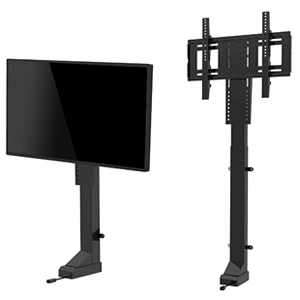
For television lifts, projector lifts and motorized mounting systems, define the required power-off holding behavior and validate the selected mechanism. Do not assume a T-type screw alone prevents movement or satisfies the finished product’s safety requirements.
Stehpulte und ergonomische Möbel
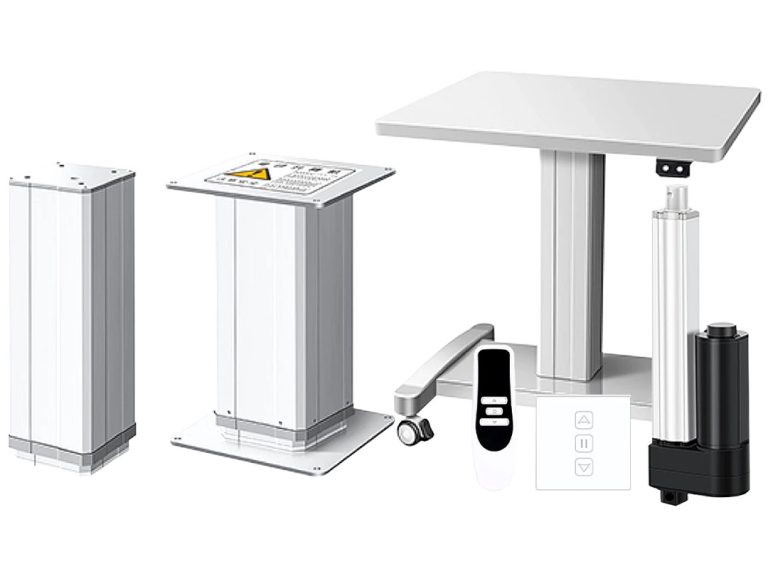
Adjustable-height workstations require controlled motion and reliable holding under their intended loads. T-type screw systems can be evaluated for these requirements, with noise, synchronization and holding verified on the complete desk configuration.
Medizinische und Gesundheitsgeräte
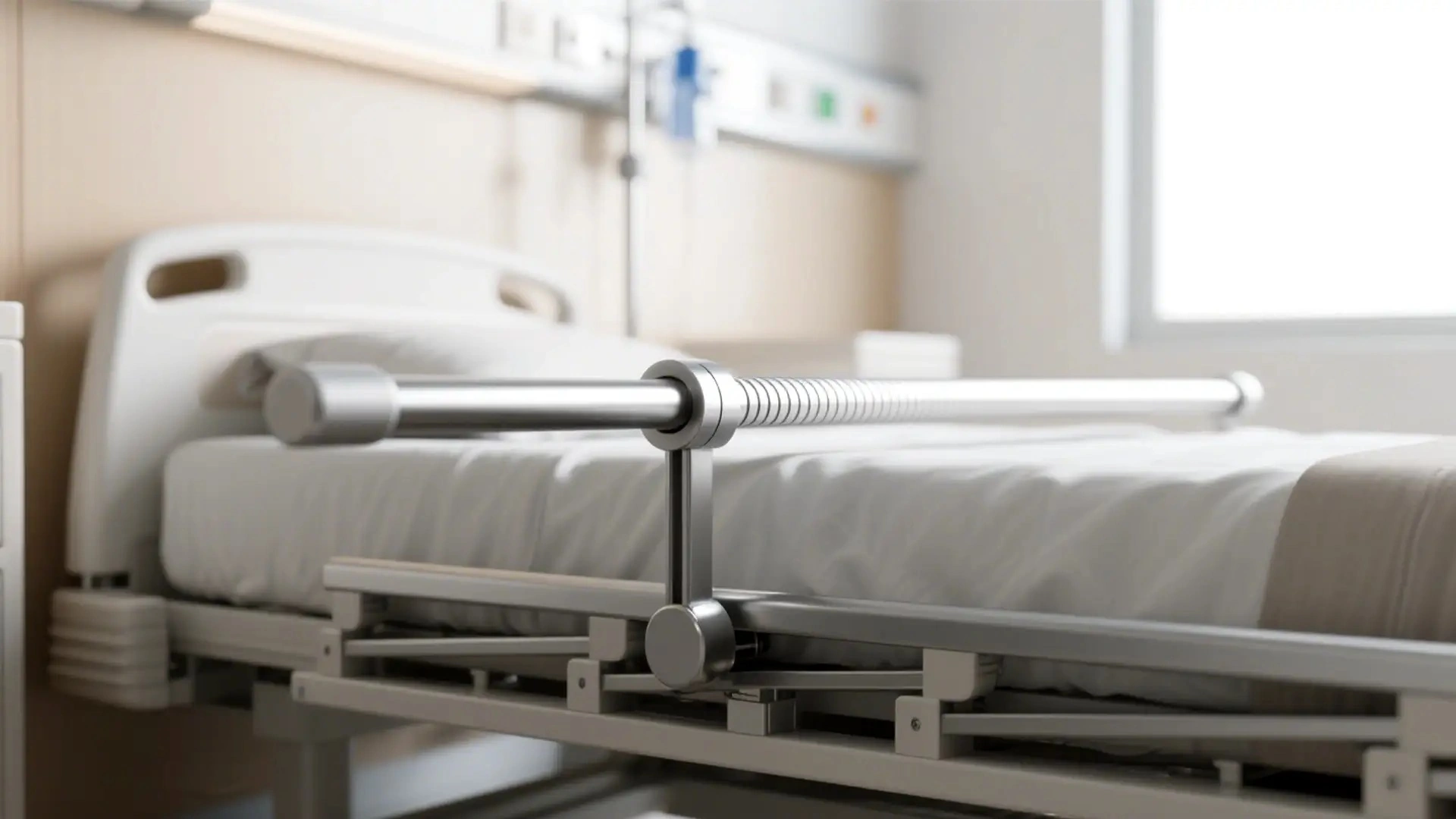
Care-related or medical equipment requires a finished-system safety architecture. A T-type screw may contribute to holding behavior, but it does not by itself establish fail-safe operation, patient safety or regulatory compliance during a power failure.
Agrar- und Außenmaschinen
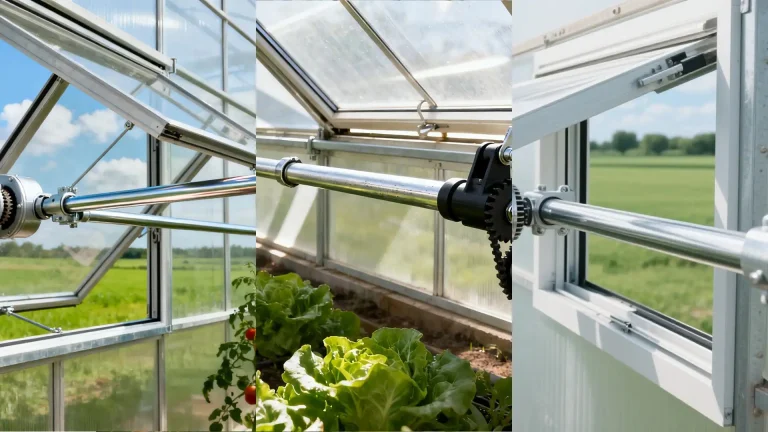
Die Strapazierfähigkeit und Wirtschaftlichkeit von T-Typ Gewindespindeln machen sie geeignet für landwirtschaftliche Geräte, automatisierte Systeme im Freien und Anwendungen, bei denen die Präzisionsanforderungen moderat, aber die Zuverlässigkeit entscheidend ist.
Industrielle Automatisierung
Für automatisierte Systeme, die zuverlässige Positionierung mit moderaten Präzisionsanforderungen erfordern, bieten T-Typ Gewindespindeln eine wirtschaftliche Lösung, die sich leicht mit Standardmotorsteuerungen integrieren lässt.
How to Evaluate Screw Type Across ActuLift Product Lines
ActuLift offers multiple actuator families and configurations. Screw type, gearing and holding behavior should be confirmed for the selected model rather than assumed across the complete portfolio.
Treating Holding as a System Requirement
Resistance to back-driving can support a system’s holding strategy, but end-user safety depends on the complete mechanism, load case, controls, braking or restraint strategy, fault behavior and application-specific validation.
Optimierung für reale Anwendungen
Many applications do not require the same efficiency, speed or precision targets. When holding behavior, cost or packaging are important, compare T-type and ball-screw options against the actual operating requirements instead of assuming one architecture is universally optimal.
Umfassendes Produktangebot
ActuLift offers multiple voltage, load and control families. Confirm the screw type, gearing, moving and holding load, stroke, speed, feedback and environmental requirements for each selected product rather than assuming a common T-type drivetrain across all 12V, 24V or heavy-duty categories.
Kosten-effizienz für Kunden
Cost, reliability, installation and maintenance depend on the selected actuator configuration and production requirements. Do not assume a single transmission technology is standardized across all ActuLift product families.
Zuverlässigkeitsorientierte Ingenieurskunst
A simpler screw-and-nut architecture can reduce component complexity, but failure modes, troubleshooting and long-term performance still depend on materials, lubrication, wear, load, environment and the complete actuator design. For customers requiring Industrielle Automatisierung Lösungen benötigen, ist diese Zuverlässigkeit entscheidend.
Die richtige lineare Aktuatoren auswählen
Bei der Bewertung von linearen Antrieben für Ihre Anwendung sollten Sie folgende Faktoren berücksichtigen:
Consider T-Type Lead Screw Actuators When:
A validated resistance-to-back-driving or holding condition is required
Die statische Haltekraft ist wichtiger als die dynamische Geschwindigkeit
Kosten-Effektivität hat Priorität
The project’s positioning accuracy and backlash requirements match the selected screw and control system
Die Anwendung umfasst vertikale Lasten
Einfachheit und Zuverlässigkeit sind wichtig
Berücksichtigen Sie Kugelgewinde-Aktuatoren, wenn:
Higher efficiency is a primary design objective
Tighter positioning accuracy or lower backlash is required
Der Betrieb mit hoher Geschwindigkeit ist notwendig
Die Anwendung ermöglicht aktive Bremssysteme
For applications involving human interaction, vertical loads or safety-relevant positioning, compare candidate actuator architectures against the actual load, speed, holding, duty-cycle, lifecycle and risk-control requirements before selection.
Was ist der Hauptunterschied zwischen einer T-Typ Gewindespindel und einem Kugelgewinde?
T-type screws use sliding thread contact, while ball screws use recirculating rolling elements. A T-type design may provide more resistance to back-driving under some conditions; a ball-screw system often needs a separate holding strategy. Exact efficiency, load and holding behavior depend on the selected design.
Does a T-type lead screw automatically self-lock?
No. Self-locking and back-driving depend on thread geometry, friction, lubrication, materials, load, orientation, gearing, wear and the complete drivetrain. Confirm the selected actuator under the project conditions.
Do T-type lead screws require maintenance?
Maintenance depends on screw and nut materials, lubrication system, contamination, load, speed and cycle profile. Follow the selected actuator’s inspection and lubrication requirements rather than assuming a universal interval.
Can T-type lead screws be used at high speed?
Allowable speed depends on screw diameter and lead, unsupported length, critical speed, lubrication, heat generation, load and duty cycle. Compare the selected T-type, ball-screw or other drive system against the required operating point.
Fazit
T-type (trapezoidal) lead screws are an established transmission technology that can be useful where their friction, load, speed, wear and holding characteristics fit the application. While ball screws offer higher efficiency and precision for specialized applications, the correct choice depends on the complete load case, required efficiency, speed, backlash, holding behavior, lifecycle and system-level safety architecture.
Across ActuLift’s Linearantrieb range, transmission and holding behavior are configuration-specific. The appropriate screw and drive architecture should be selected from the project’s load, speed, duty-cycle, backlash, holding and safety requirements, then validated on the chosen build.
Ob Sie ein medizinisches Gerät, eine Industriemaschine oder ein Verbrauchsprodukt entwerfen, das Verständnis der Stärken von T-Typ Spindeln hilft Ihnen, die richtige Antriebstechnologie für Ihre spezifischen Anforderungen auszuwählen.
Quellen
ISO 2901/DIN 103 Standards: Technische Spezifikationen für metrische trapezförmige Gewinde, die die Geometrie definieren, die in ActuLift-Antrieben verwendet wird.
Erhalten Sie Experteneinblicke in die industrielle Bewegungssteuerung
Die Auswahl des richtigen elektrischen linearen Aktuators oder Hebensäule ist entscheidend für die Leistung Ihres Projekts. Als professioneller Hersteller von Bewegungssteuerungen & Automatisierung, helfen unsere Ingenieure Ihnen, die Lastkapazität, den Hub, und die IP-Bewertungen basierend auf Ihrer spezifischen Anwendung anzupassen. Teilen Sie uns Ihre technischen Anforderungen für eine maßgeschneiderte Lösung mit.
ActuLift unterstützt End-to-End-Anpassungen, vom strukturellen Design und Hubparametern bis hin zu Branding und Gehäusefinishes, damit Sie eine starke Markenidentität aufbauen können.
Schnelle Reaktion & Prototyping
Wir verstehen die Bedeutung von Geschwindigkeit in der B2B-Beschaffung und nutzen optimierte Produktionsabläufe, um effiziente Antworten von der Mustentwicklung bis zur Serienlieferung sicherzustellen.
Quality Documentation & Traceability
Quality and traceability requirements vary by project. Ask ActuLift for the applicable inspection records, product specifications, drawings and available compliance documentation for the selected model and order.