T-Type Lead Screws in Linear Actuators: Self-Locking Conditions & Trade-Offs
Learn how T-type (trapezoidal) lead screws convert rotary motion, when self-locking may occur, and how lead angle, friction, lubrication, efficiency, wear, backlash and load-holding trade-offs affect actuator selection.
When selecting a linear actuator, the transmission architecture affects efficiency, back-driving, speed, wear, backlash and load-holding behavior. T-type or trapezoidal lead screws use sliding contact between the screw and nut; self-locking may occur in some configurations, but it should be evaluated from lead angle, effective friction, lubrication, load, wear and the complete mechanism rather than assumed from the screw type alone.
This comprehensive guide explores how T-type lead screws work, their advantages and limitations, and how this technology should be evaluated within different ActuLift actuator configurations.
O que são parafusos de avanço do tipo T (trapezoidais)?
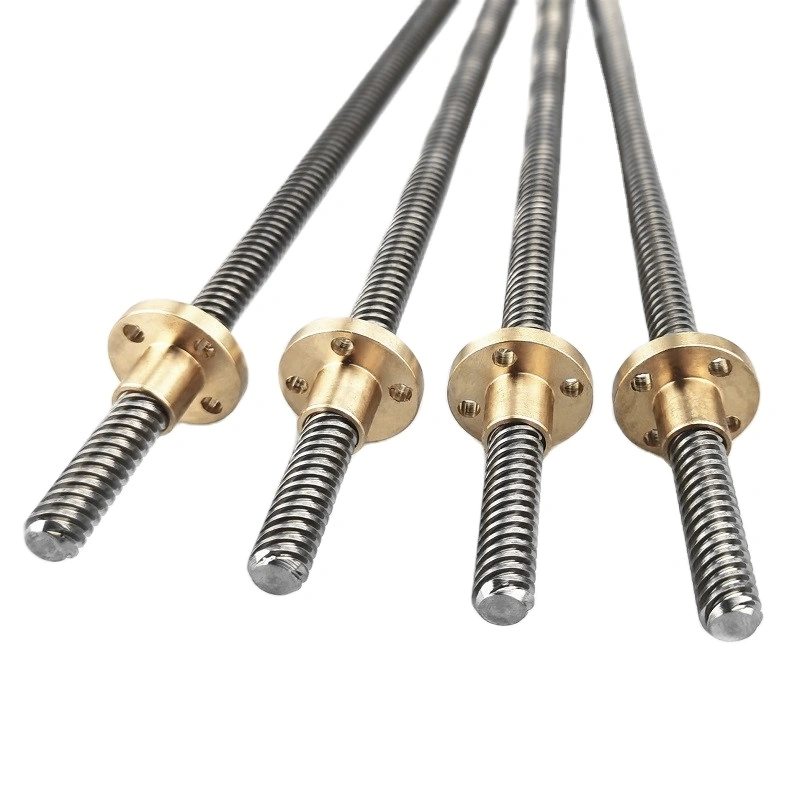
Os parafusos de avanço tipo T apresentam um perfil de rosca trapezoidal distinto com um ângulo de flanco de 30 graus em cada lado. Essa geometria de rosca—padronizada na norma DIN 103 para roscas trapezoidais—cria um topo e uma base achatados com lados inclinados, diferenciando-se das roscas em V encontradas em fixadores convencionais.
A forma trapezoidal serve a várias funções críticas de engenharia:
Aumento da Área de Contato: As superfícies de rosca planas proporcionam superfícies de apoio maiores em comparação com roscas em V, distribuindo cargas de maneira mais eficaz por toda a área de engajamento da rosca.
Redução do Risco de Apreensão: A geometria previne o efeito de apreensão que pode ocorrer com roscas em V sob cargas compressivas pesadas.
Simplicidade de Fabricação: O perfil simples é relativamente fácil de usinar com tolerâncias precisas, contribuindo para a confiabilidade e eficiência de custo.
Os parafusos de avanço tipo T são fabricados a partir de vários materiais, incluindo aço inoxidável, alumínio e aço carbono, cada um oferecendo combinações diferentes de resistência, resistência à corrosão e características de peso.
Como os parafusos de avanço do tipo T funcionam em atuadores lineares
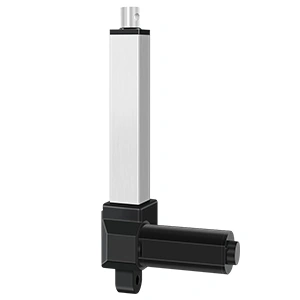
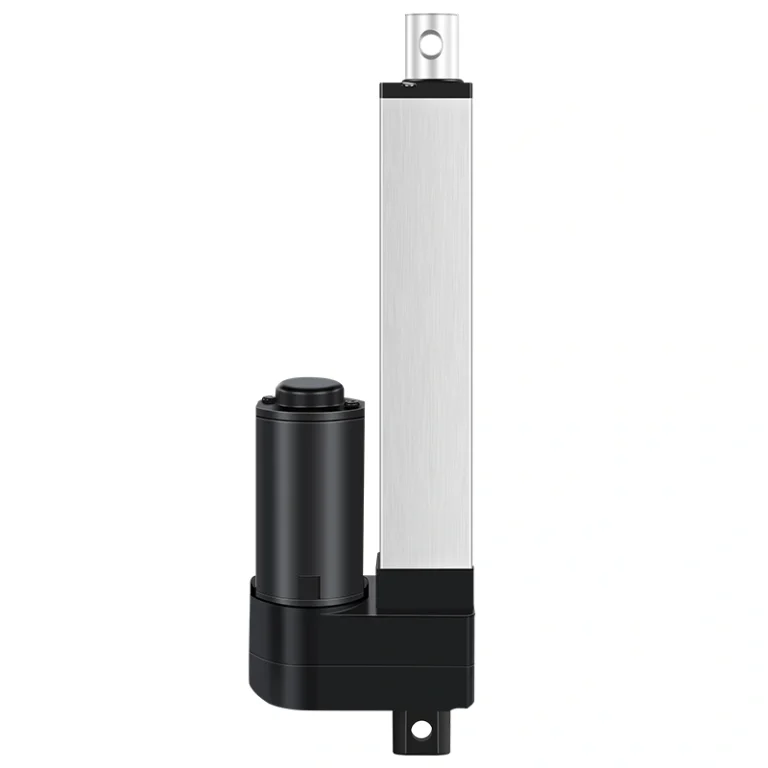
Em um atuador linear, o parafuso de avanço tipo T converte o movimento rotacional do motor em movimento linear. Quando o motor gira o eixo do parafuso, a porca engatada nas roscas se move ao longo do eixo, empurrando ou puxando o eixo de saída do atuador.
O princípio de funcionamento depende da geometria da rosca helicoidal:
Entrada Rotacional: Um motor elétrico (AC ou DC) aciona o eixo do parafuso de avanço.
Engajamento da Rosca: A porca desliza ao longo das roscas helicoidais.
Saída Linear: O movimento rotacional se torna deslocamento linear.
Transmissão de Força: A vantagem mecânica da rosca multiplica o torque de entrada em força linear.
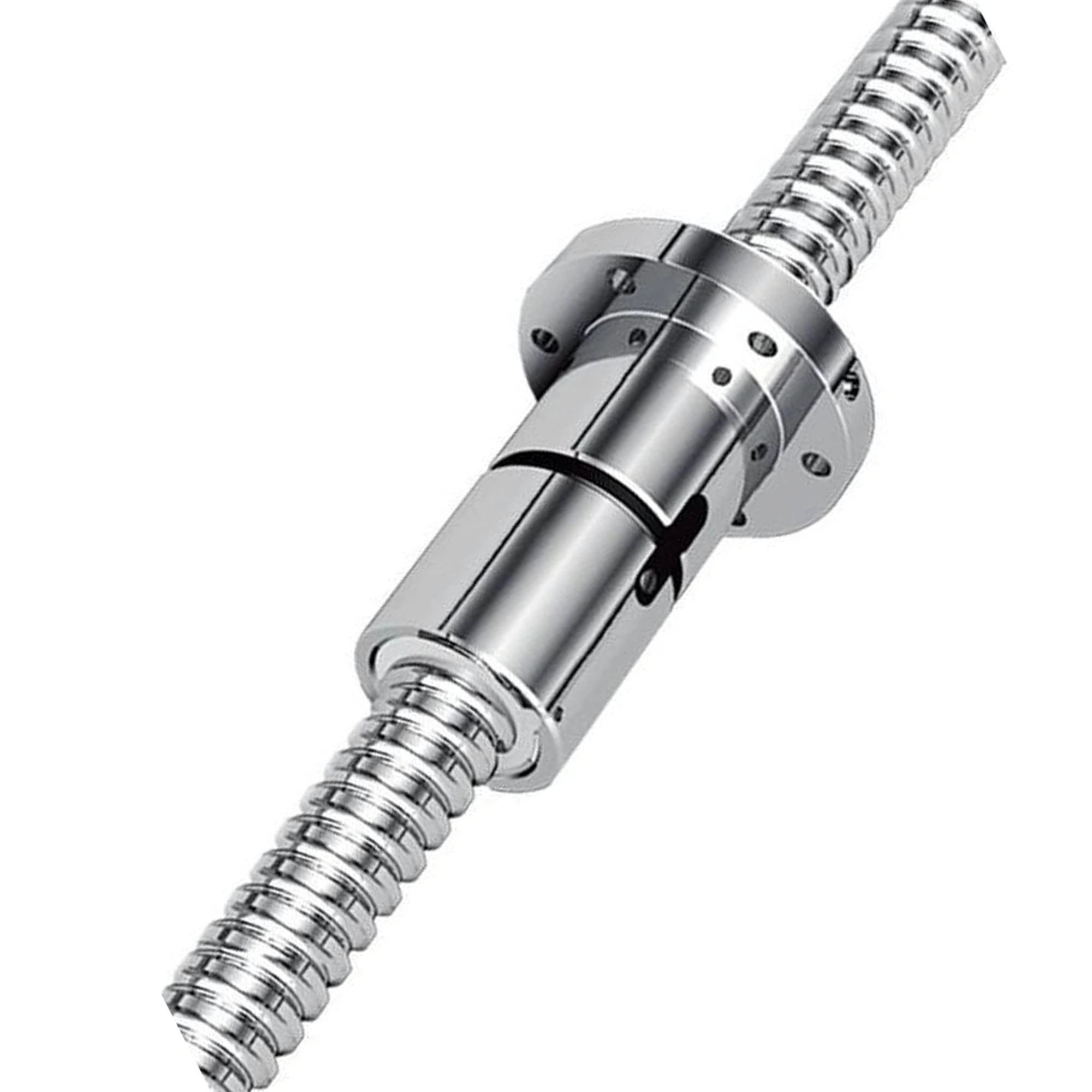
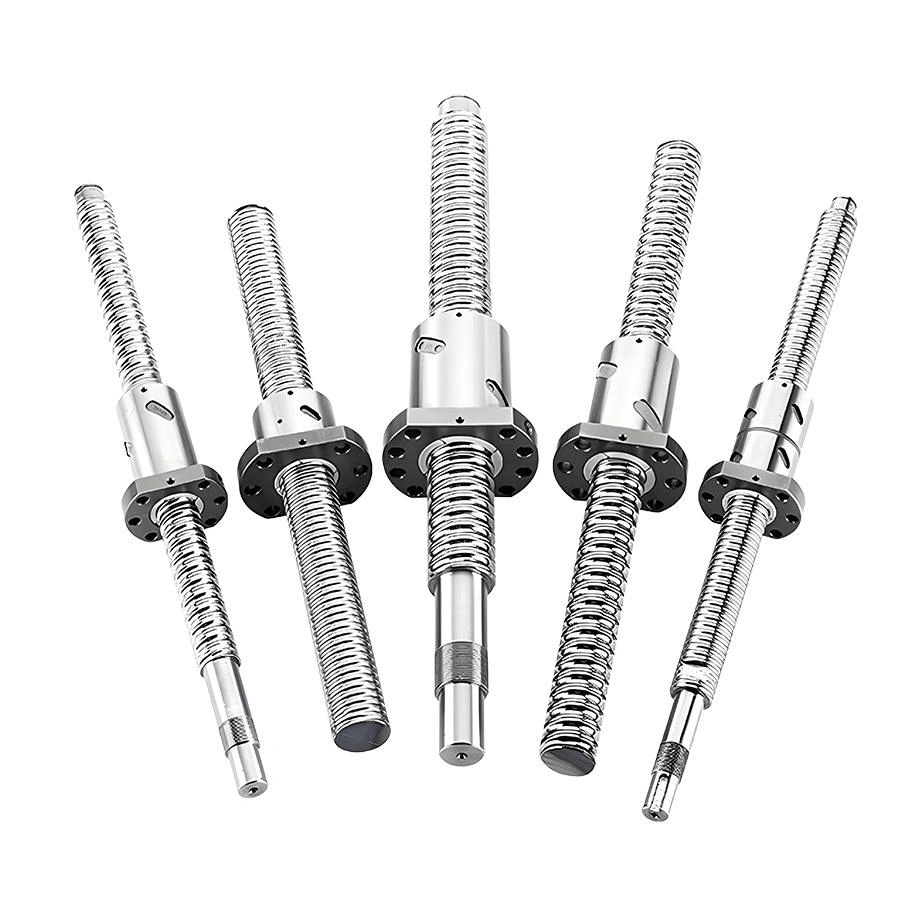
A eficiência dessa conversão depende de vários fatores: passo da rosca, avanço, coeficiente de atrito entre os materiais do parafuso e da porca, e condições de lubrificação. Ao contrário dos parafusos esféricos que utilizam elementos rolantes, os parafusos de avanço tipo T operam através do atrito deslizante entre as roscas e o interior da porca.
Self-Locking Conditions and Back-Driving
Uma das características mais significativas dos parafusos de avanço tipo T é a sua capacidade de auto-bloqueio mecânico—uma propriedade que os torna indispensáveis para aplicações críticas de segurança.
Entendendo a Autolock
Self-locking means the lead screw maintains its position when rotational force is removed. Under suitable design and friction conditions, the axial load may not readily back-drive the screw. This must be verified for the selected mechanism rather than assumed from the thread family alone. This occurs due to the friction inherent in the sliding contact between the trapezoidal threads.
A condição de auto-bloqueio é determinada pela relação entre o ângulo de avanço e o ângulo de atrito:
Ângulo de Avanço: A inclinação da hélice, determinada pelo passo e diâmetro da rosca.
Ângulo de Atrito: Determinado pelo coeficiente de atrito entre os materiais da porca e do parafuso.
A lower lead angle relative to the effective friction angle can increase resistance to back-driving. Because friction changes with material pairing, lubrication, wear, temperature, vibration and load, there is no universal lead-angle threshold that guarantees self-locking for every actuator.
Por que a Autolock é Importante
For applications where the actuator must hold position after power removal—or where unexpected back-driving could create a hazard—define and validate the required holding behavior:
Power-Off Holding: Confirm how much movement is permitted after power loss and validate the selected actuator at the required load and orientation
Static Holding: A validated passive holding condition may reduce the need for continuous motor torque, but actual system power and safety behavior depend on the selected design
System Design: A separate brake, restraint, feedback method or other safety function may still be required by the finished mechanism
Vertical Applications: Evaluate static holding, back-driving, orientation, safety factor and power-off behavior before approval
Potential resistance to back-driving can be useful in vertical or holding applications, but safety-critical positioning must be validated at the complete-system level.
Capacidade de Carga: Parafuso Tipo T vs. Parafusos de Esfera
Entender as características de carga de diferentes tecnologias de parafusos é essencial para a seleção adequada da aplicação.
Capacidade de Carga Estática vs. Dinâmica
Static holding load and dynamic moving load are different ratings. Their relationship is design-specific and must be confirmed for the selected screw, nut, gearing and actuator.
Allowable moving and holding loads depend on screw diameter, nut engagement, materials, bearings, housing, duty cycle, load direction, temperature and test method.
Análise Comparativa
Característica
What to verify
Efficiency
Configuration-specific geometry, preload, lubrication, load and speed
Back-driving / holding
Lead, friction, gearing, orientation, load, wear and brake strategy
Static / dynamic load
Separate rated values and test conditions for the selected actuator
Precision / backlash
Nut design, manufacturing tolerance, wear, preload and feedback/control method
Velocidade
Critical speed, heat, lubrication, load and duty-cycle limits
Lifecycle
Defined load, stroke, speed, environment, lubrication and acceptance target
How T-Type Screws Can Fit Load-Holding Applications
T-type lead screw systems can be evaluated for load-holding applications such as:
Levantamento Pesado: Prensas industriais, elevadores e posicionamento de máquinas pesadas
Movimento Vertical: Aplicações onde as cargas devem ser mantidas contra a gravidade
Aplicações Focadas em Força: Onde a força de sustentação importa mais do que velocidade ou precisão
A maior área de contato entre as roscas trapezoidais distribui as cargas em uma área de superfície maior, reduzindo concentrações de estresse e permitindo classificações de carga estática mais altas.
Vantagens dos Parafusos de Avanço Tipo T
1. Self-Locking Is Condition-Dependent
Self-locking behavior is condition-dependent. Confirm the selected screw geometry, friction condition, gearing, load, orientation, lubrication and wear state before relying on passive position holding.
2. Alta Capacidade de Carga Estática
A T-type screw system may provide useful static holding capacity, but the allowable static-to-dynamic load relationship must be confirmed from the selected actuator design and test conditions.
3. Custo-Benefício
O processo de fabricação mais simples e a ausência de trilhos de esferas de precisão tornam os parafusos tipo T significativamente mais econômicos do que as alternativas de parafusos de esferas. Para aplicações que não exigem precisão ultra-alta, essa vantagem de custo é substancial.
4. Durabilidade e Longevidade
O perfil robusto da rosca resiste à deformação sob cargas pesadas, e o design simples minimiza os modos de falha. Com a lubrificação adequada, os parafusos tipo T oferecem serviço confiável por longos períodos.
5. Manutenção Simples
Sem elementos rolantes complexos ou delicados sistemas de recirculação de esferas, os parafusos tipo T são mais tolerantes à contaminação e requerem menos manutenção especializada.
6. Operação Suave em Baixas Velocidades
Para aplicações que requerem movimento controlado e preciso em velocidades mais baixas, os parafusos tipo T fornecem movimento suave e previsível sem o potencial de vibração ou inabilidade de parafusos de esferas em baixas velocidades.
Limitações e Considerações
Eficiência Inferior
Sliding friction can reduce efficiency relative to a rolling-element screw, but the actual efficiency of either system depends on geometry, preload, lubrication, load, speed and the selected design. This means:
Mais potência de entrada necessária para a mesma força de saída
Mais geração de calor durante a operação
Maior consumo de energia para aplicações de ciclagem contínua
Velocidade e Precisão Limitadas
T-type lead screws are not designed for high-speed operation. Permissible speed and positioning performance are configuration-dependent. Verify screw critical speed, heat generation, backlash, nut design, feedback method and the complete actuator specification for the intended operating point.
Maior Atrito e Desgaste
O contato deslizante cria mais atrito do que elementos rolantes, podendo levar a um desgaste mais rápido em aplicações de ciclo alto. A lubrificação adequada é essencial para maximizar a vida útil.
Considerações sobre Folga
O folga da rosca e o desgaste podem introduzir folga (jogo) ao longo do tempo. Para aplicações que requerem folga mínima, ajustes periódicos ou manutenção podem ser necessários.
Applications Where T-Type Lead Screws May Fit
T-type lead screws can be suitable for multiple applications when their load, speed, wear, backlash and holding characteristics match the project requirements.
Sistemas de Elevação Industrial
Heavy-duty lifting platforms, scissor lifts and industrial presses can be candidates for T-type screw systems when the required moving load, static holding, back-driving, duty cycle and brake strategy have been verified for the complete mechanism.
Elevadores de TV e Equipamentos de Home Theater
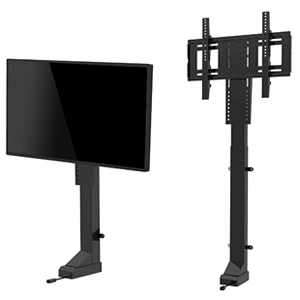
For television lifts, projector lifts and motorized mounting systems, define the required power-off holding behavior and validate the selected mechanism. Do not assume a T-type screw alone prevents movement or satisfies the finished product’s safety requirements.
Mesas Ajustáveis e Móveis Ergonômicos
Adjustable-height workstations require controlled motion and reliable holding under their intended loads. T-type screw systems can be evaluated for these requirements, with noise, synchronization and holding verified on the complete desk configuration.
Equipamentos Médicos e de Saúde
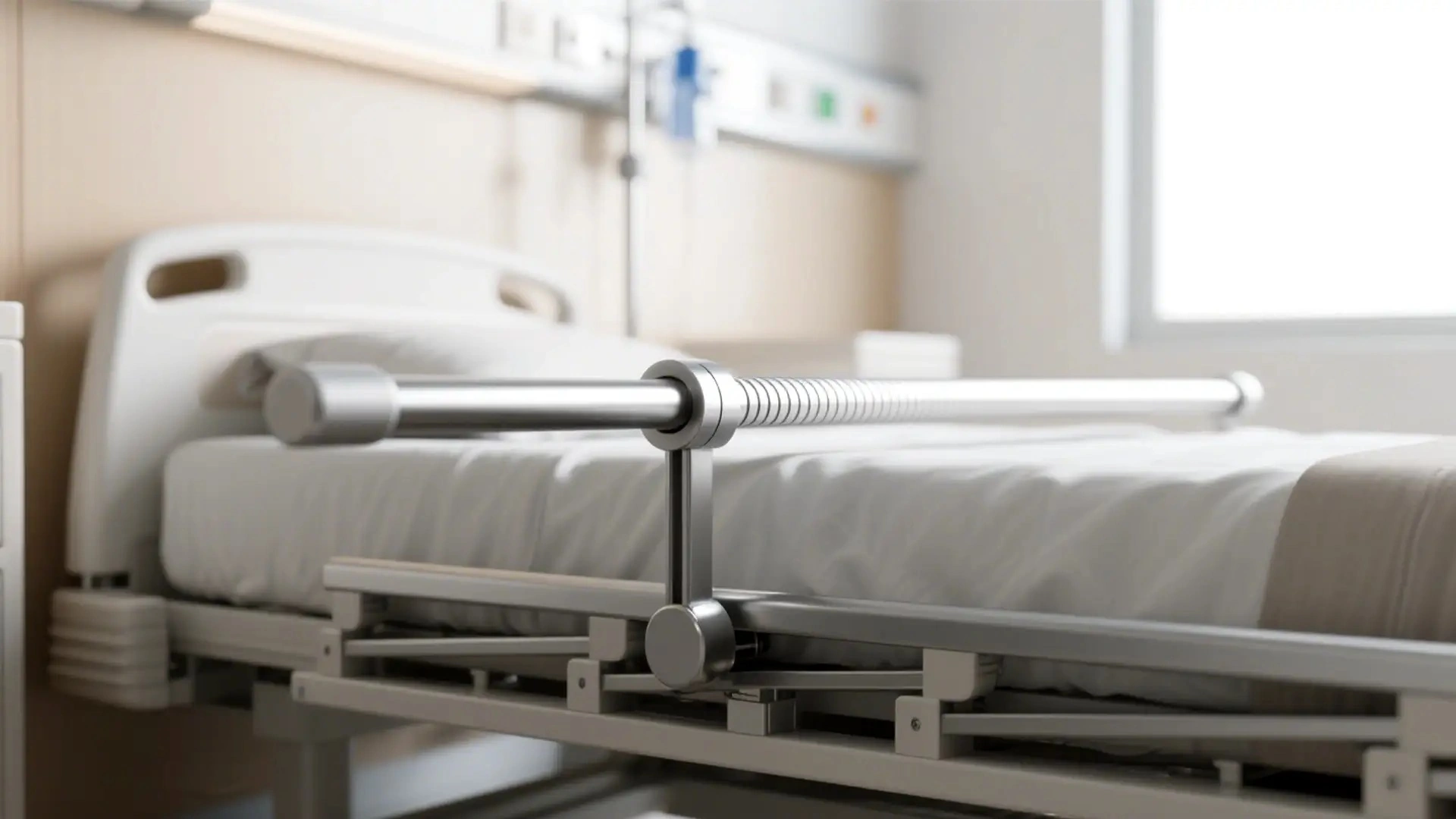
Care-related or medical equipment requires a finished-system safety architecture. A T-type screw may contribute to holding behavior, but it does not by itself establish fail-safe operation, patient safety or regulatory compliance during a power failure.
Máquinas Agrícolas e de Exterior
A durabilidade e a relação custo-benefício dos parafusos tipo T os tornam adequados para equipamentos agrícolas, sistemas automatizados externos e aplicações onde os requisitos de precisão são moderados, mas a confiabilidade é essencial.
Automação Industrial
Para sistemas automatizados que requerem posicionamento confiável com requisitos de precisão moderada, os parafusos tipo T oferecem uma solução econômica que se integra facilmente com controles de motor padrão.
How to Evaluate Screw Type Across ActuLift Product Lines
ActuLift offers multiple actuator families and configurations. Screw type, gearing and holding behavior should be confirmed for the selected model rather than assumed across the complete portfolio.
Treating Holding as a System Requirement
Resistance to back-driving can support a system’s holding strategy, but end-user safety depends on the complete mechanism, load case, controls, braking or restraint strategy, fault behavior and application-specific validation.
Otimização para Aplicações no Mundo Real
Many applications do not require the same efficiency, speed or precision targets. When holding behavior, cost or packaging are important, compare T-type and ball-screw options against the actual operating requirements instead of assuming one architecture is universally optimal.
Linha de Produtos Abrangente
ActuLift offers multiple voltage, load and control families. Confirm the screw type, gearing, moving and holding load, stroke, speed, feedback and environmental requirements for each selected product rather than assuming a common T-type drivetrain across all 12V, 24V or heavy-duty categories.
Eficiência de Custos para Clientes
Cost, reliability, installation and maintenance depend on the selected actuator configuration and production requirements. Do not assume a single transmission technology is standardized across all ActuLift product families.
Engenharia Focada na Confiabilidade
A simpler screw-and-nut architecture can reduce component complexity, but failure modes, troubleshooting and long-term performance still depend on materials, lubrication, wear, load, environment and the complete actuator design. For customers requiring Automação Industrial soluções, essa confiabilidade é essencial.
Escolhendo o Atuador Linear Certo
Ao avaliar atuadores lineares para sua aplicação, considere estes fatores:
Consider T-Type Lead Screw Actuators When:
A validated resistance-to-back-driving or holding condition is required
A capacidade de suporte de carga estática é mais importante do que a velocidade dinâmica
A relação custo-benefício é uma prioridade
The project’s positioning accuracy and backlash requirements match the selected screw and control system
A aplicação envolve cargas verticais
Simplicidade e confiabilidade são valorizadas
Considere Atuadores de Parafuso de Esfera Quando:
Higher efficiency is a primary design objective
Tighter positioning accuracy or lower backlash is required
Operação em alta velocidade é necessária
A aplicação permite sistemas de frenagem ativa
For applications involving human interaction, vertical loads or safety-relevant positioning, compare candidate actuator architectures against the actual load, speed, holding, duty-cycle, lifecycle and risk-control requirements before selection.
Qual é a principal diferença entre um parafuso de avanço tipo T e um parafuso de esfera?
T-type screws use sliding thread contact, while ball screws use recirculating rolling elements. A T-type design may provide more resistance to back-driving under some conditions; a ball-screw system often needs a separate holding strategy. Exact efficiency, load and holding behavior depend on the selected design.
Does a T-type lead screw automatically self-lock?
No. Self-locking and back-driving depend on thread geometry, friction, lubrication, materials, load, orientation, gearing, wear and the complete drivetrain. Confirm the selected actuator under the project conditions.
Do T-type lead screws require maintenance?
Maintenance depends on screw and nut materials, lubrication system, contamination, load, speed and cycle profile. Follow the selected actuator’s inspection and lubrication requirements rather than assuming a universal interval.
Can T-type lead screws be used at high speed?
Allowable speed depends on screw diameter and lead, unsupported length, critical speed, lubrication, heat generation, load and duty cycle. Compare the selected T-type, ball-screw or other drive system against the required operating point.
Conclusão
T-type (trapezoidal) lead screws are an established transmission technology that can be useful where their friction, load, speed, wear and holding characteristics fit the application. While ball screws offer higher efficiency and precision for specialized applications, the correct choice depends on the complete load case, required efficiency, speed, backlash, holding behavior, lifecycle and system-level safety architecture.
Across ActuLift’s atuador linear range, transmission and holding behavior are configuration-specific. The appropriate screw and drive architecture should be selected from the project’s load, speed, duty-cycle, backlash, holding and safety requirements, then validated on the chosen build.
Se você está projetando um dispositivo médico, máquina industrial ou produto de consumo, entender as forças dos parafusos trapezoidais do tipo T ajuda você a selecionar a tecnologia de atuador certa para suas necessidades específicas.
Fontes
Normas ISO 2901/DIN 103: Especificações técnicas para roscas trapezoidais métricas, definindo a geometria utilizada nos atuadores ActuLift.
Obtenha Insights de Especialistas em Controle de Movimento Industrial
Selecionar o atuador linear elétrico ou coluna de elevação é crítico para o desempenho do seu projeto. Como um fabricante profissional de Controle de Movimento & Automação, nossos engenheiros ajudam você a personalizar a capacidade de carga, comprimento de curso e classificações IP com base em sua aplicação específica. Compartilhe seus requisitos técnicos para uma solução sob medida.
A ActuLift apoia a personalização de ponta a ponta, desde o design estrutural e parâmetros de curso até branding e acabamentos de carcaça, ajudando você a construir uma identidade de marca poderosa.
Resposta Rápida & Prototipagem
Entendemos a importância da rapidez na aquisição B2B, utilizando fluxos de produção otimizados para garantir respostas eficientes desde o desenvolvimento de amostras até a entrega em massa.
Quality Documentation & Traceability
Quality and traceability requirements vary by project. Ask ActuLift for the applicable inspection records, product specifications, drawings and available compliance documentation for the selected model and order.