T-Type Lead Screws in Linear Actuators: Self-Locking Conditions & Trade-Offs
Learn how T-type (trapezoidal) lead screws convert rotary motion, when self-locking may occur, and how lead angle, friction, lubrication, efficiency, wear, backlash and load-holding trade-offs affect actuator selection.
When selecting a linear actuator, the transmission architecture affects efficiency, back-driving, speed, wear, backlash and load-holding behavior. T-type or trapezoidal lead screws use sliding contact between the screw and nut; self-locking may occur in some configurations, but it should be evaluated from lead angle, effective friction, lubrication, load, wear and the complete mechanism rather than assumed from the screw type alone.
This comprehensive guide explores how T-type lead screws work, their advantages and limitations, and how this technology should be evaluated within different ActuLift actuator configurations.
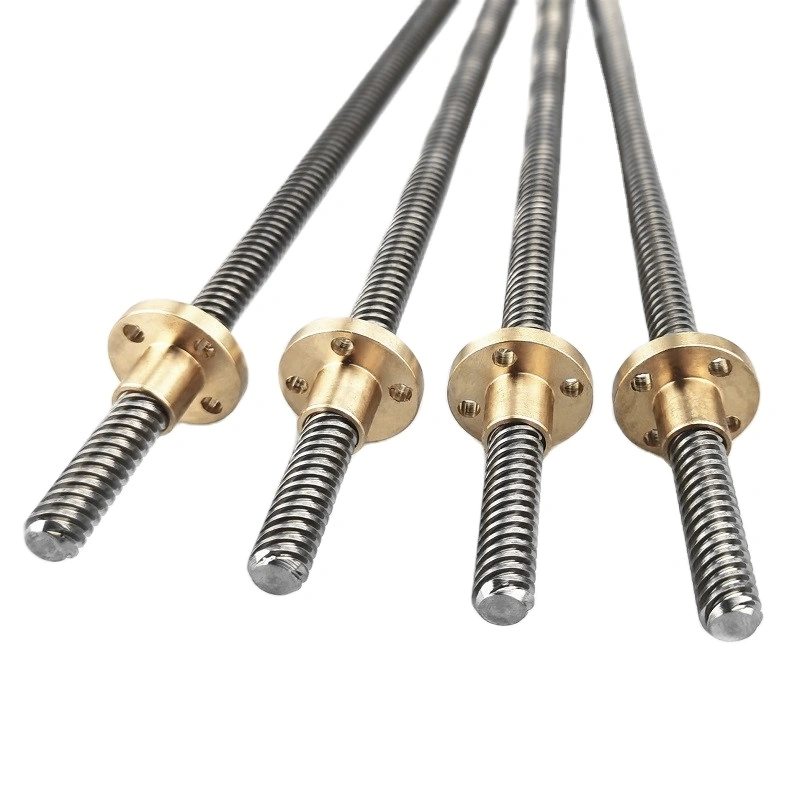
Los tornillos de tracción tipo T presentan un perfil de hilo trapezoidal distintivo con un ángulo de flank de 30 grados en cada lado. Esta geometría del hilo—estandarizada en la norma DIN 103 para hilos trapezoidales—crea una parte superior e inferior plana con lados inclinados, distinguiéndolo de los hilos en V que se encuentran en los sujetadores convencionales.
La forma trapezoidal cumple varias funciones críticas de ingeniería:
Aumento del área de contacto: Las superficies de hilo planas proporcionan superficies de apoyo más grandes en comparación con los hilos en V, distribuyendo las cargas de manera más efectiva a lo largo de toda la unión del hilo
Reducción del riesgo de cuñas: La geometría previene el efecto de cuña que puede ocurrir con los hilos en V bajo cargas compresivas pesadas
Simplicidad de fabricación: El perfil sencillo es relativamente fácil de mecanizar a tolerancias precisas, contribuyendo a la fiabilidad y la eficiencia de costos
Los tornillos de tracción tipo T se fabrican a partir de varios materiales, incluidos acero inoxidable, aluminio y acero al carbono, cada uno ofreciendo diferentes combinaciones de resistencia, resistencia a la corrosión y características de peso.
Cómo funcionan los tornillos de paso T en los actuadores lineales
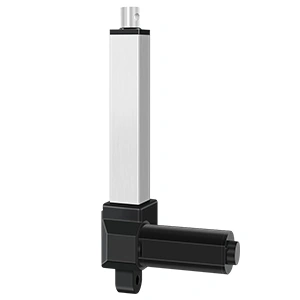
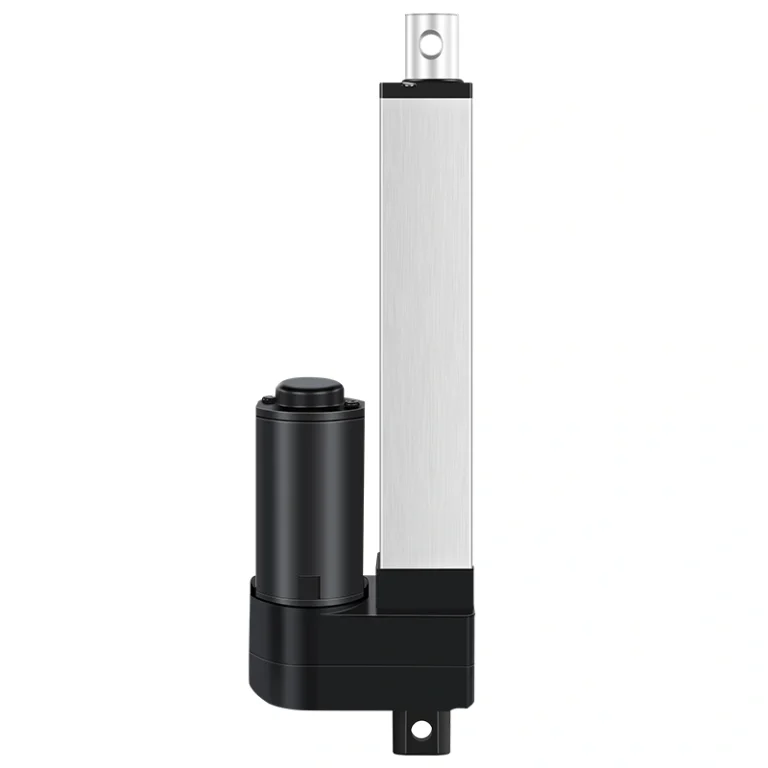
En un actuador lineal, el tornillo de tracción tipo T convierte el movimiento rotacional del motor en movimiento lineal. Cuando el motor rota el eje del tornillo, la tuerca enganchada con los hilos se mueve a lo largo del husillo, empujando o tirando del eje de salida del actuador.
El principio de funcionamiento se basa en la geometría del hilo helicoidal:
Entrada rotacional: Un motor eléctrico (AC o DC) impulsa el eje del tornillo de tracción
Compromiso del hilo: La tuerca se desplaza a lo largo de los hilos helicoidales
Salida lineal: El movimiento rotacional se convierte en desplazamiento lineal
Transmisión de fuerza: La ventaja mecánica del hilo multiplica el par de entrada en fuerza lineal
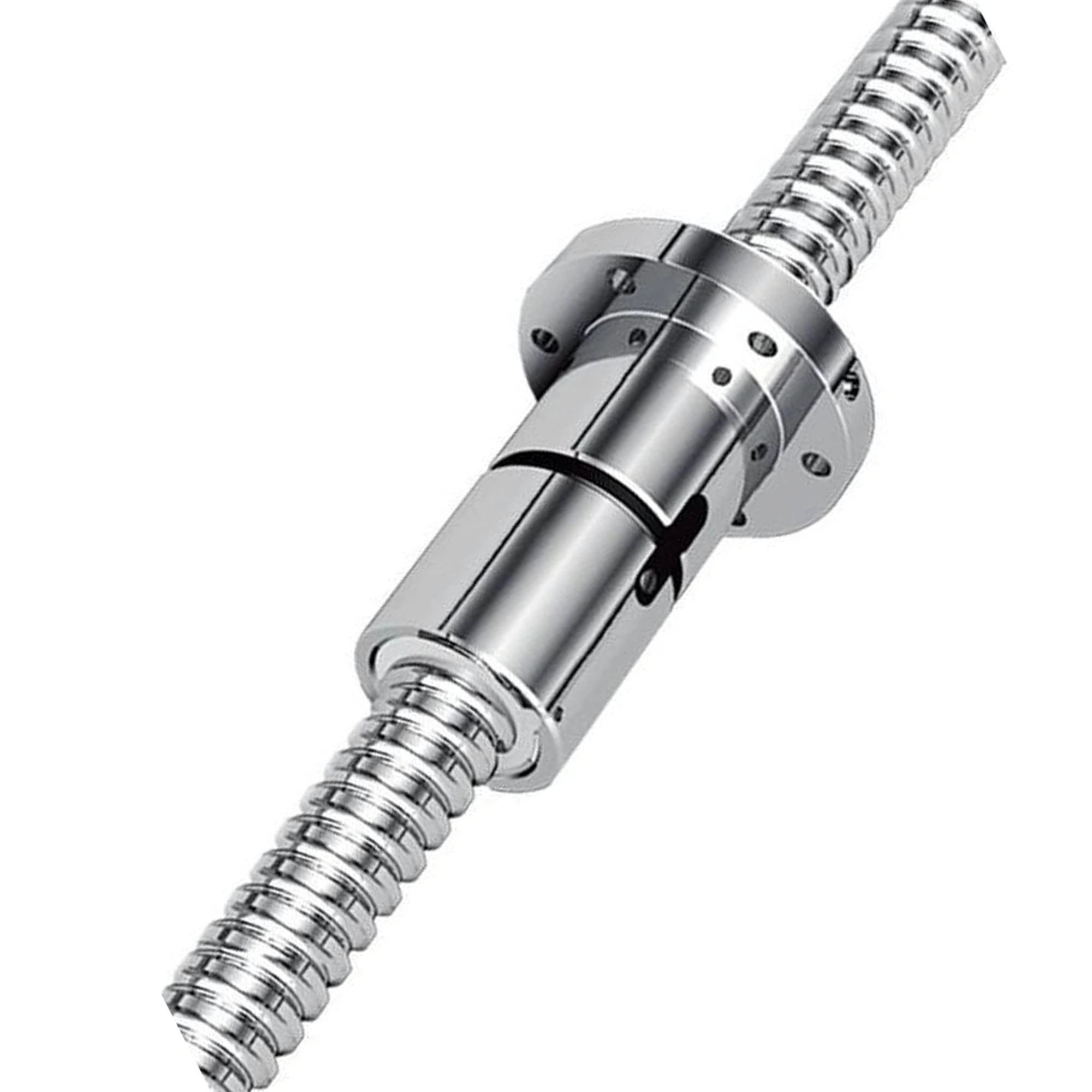
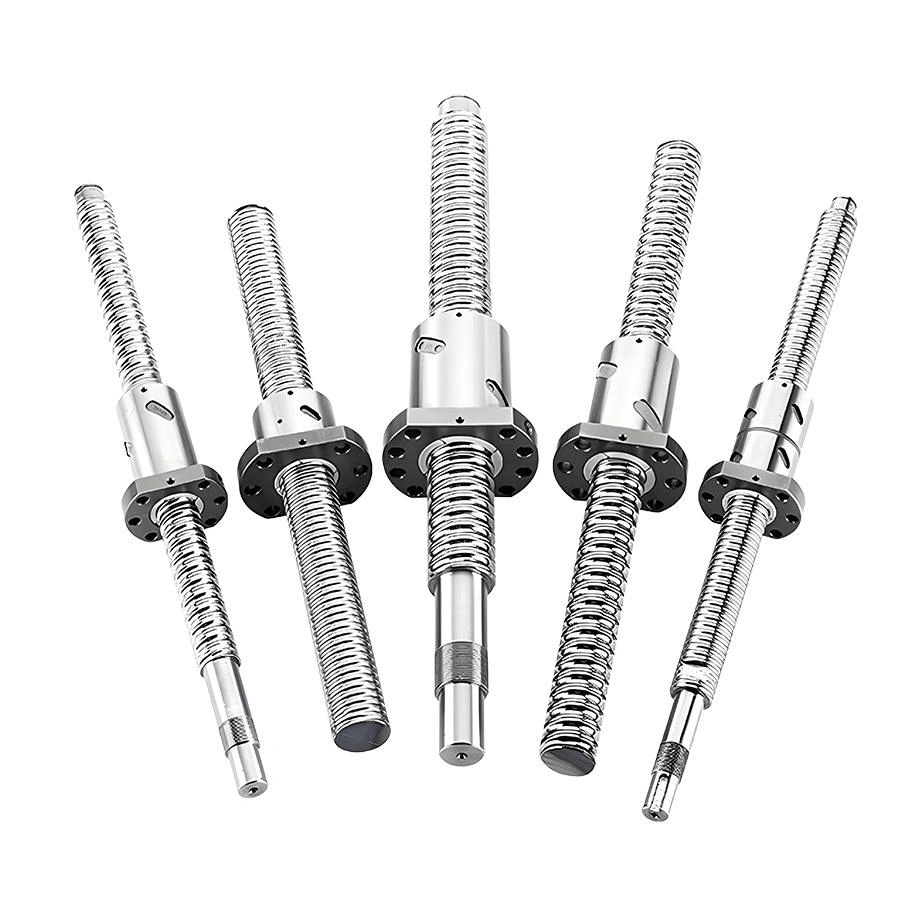
La eficiencia de esta conversión depende de varios factores: la paso del hilo, el paso, el coeficiente de fricción entre los materiales del tornillo y la tuerca, y las condiciones de lubricación. A diferencia de los tornillos de bolas que utilizan elementos rodantes, los tornillos de tracción tipo T operan a través de la fricción deslizante entre los hilos del tornillo y el interior de la tuerca.
Self-Locking Conditions and Back-Driving
Una de las características más significativas de los tornillos de tracción tipo T es su capacidad de auto-bloqueo mecánico, una propiedad que los hace indispensables para aplicaciones críticas de seguridad.
Entendiendo el Auto-Bloqueo
Self-locking means the lead screw maintains its position when rotational force is removed. Under suitable design and friction conditions, the axial load may not readily back-drive the screw. This must be verified for the selected mechanism rather than assumed from the thread family alone. This occurs due to the friction inherent in the sliding contact between the trapezoidal threads.
La condición de auto-bloqueo está determinada por la relación entre el ángulo de paso y el ángulo de fricción:
Ángulo de paso: La inclinación de la hélice, determinada por el paso y el diámetro del hilo
Ángulo de fricción: Determinado por el coeficiente de fricción entre los materiales de la tuerca y el tornillo
A lower lead angle relative to the effective friction angle can increase resistance to back-driving. Because friction changes with material pairing, lubrication, wear, temperature, vibration and load, there is no universal lead-angle threshold that guarantees self-locking for every actuator.
Por qué importa el Auto-Bloqueo
For applications where the actuator must hold position after power removal—or where unexpected back-driving could create a hazard—define and validate the required holding behavior:
Power-Off Holding: Confirm how much movement is permitted after power loss and validate the selected actuator at the required load and orientation
Static Holding: A validated passive holding condition may reduce the need for continuous motor torque, but actual system power and safety behavior depend on the selected design
System Design: A separate brake, restraint, feedback method or other safety function may still be required by the finished mechanism
Vertical Applications: Evaluate static holding, back-driving, orientation, safety factor and power-off behavior before approval
Potential resistance to back-driving can be useful in vertical or holding applications, but safety-critical positioning must be validated at the complete-system level.
Capacidad de Carga: Tornillos Tipo T vs. Tornillos de Bola
Comprender las características de carga de diferentes tecnologías de tornillos es esencial para una selección adecuada de aplicación.
Capacidad de Carga Estática vs. Dinámica
Static holding load and dynamic moving load are different ratings. Their relationship is design-specific and must be confirmed for the selected screw, nut, gearing and actuator.
Allowable moving and holding loads depend on screw diameter, nut engagement, materials, bearings, housing, duty cycle, load direction, temperature and test method.
Análisis Comparativo
Característica
What to verify
Efficiency
Configuration-specific geometry, preload, lubrication, load and speed
Back-driving / holding
Lead, friction, gearing, orientation, load, wear and brake strategy
Static / dynamic load
Separate rated values and test conditions for the selected actuator
Precision / backlash
Nut design, manufacturing tolerance, wear, preload and feedback/control method
Velocidad
Critical speed, heat, lubrication, load and duty-cycle limits
Lifecycle
Defined load, stroke, speed, environment, lubrication and acceptance target
How T-Type Screws Can Fit Load-Holding Applications
T-type lead screw systems can be evaluated for load-holding applications such as:
Levantamiento Pesado: Prensas industriales, elevadores y posicionamiento de maquinaria pesada
Movimiento Vertical: Aplicaciones donde las cargas deben mantenerse contra la gravedad
Aplicaciones Enfocadas en Fuerza: Donde la fuerza de sujeción importa más que la velocidad o precisión
El área de contacto más grande entre los hilos trapezoidales distribuye las cargas a través de una mayor área superficial, reduciendo las concentraciones de estrés y permitiendo calificaciones de carga estática más altas.
Ventajas de los tornillos de paso T
1. Self-Locking Is Condition-Dependent
Self-locking behavior is condition-dependent. Confirm the selected screw geometry, friction condition, gearing, load, orientation, lubrication and wear state before relying on passive position holding.
2. Alta Capacidad de Carga Estática
A T-type screw system may provide useful static holding capacity, but the allowable static-to-dynamic load relationship must be confirmed from the selected actuator design and test conditions.
3. Rentabilidad
El proceso de fabricación más simple y la ausencia de pistas de bolas de precisión hacen que los tornillos de avance tipo T sean significativamente más económicos que las alternativas de tornillo de bola. Para aplicaciones que no requieren ultra alta precisión, esta ventaja de costo es sustancial.
4. Durabilidad y Longevidad
El robusto perfil del hilo resiste la deformación bajo cargas pesadas, y el diseño sencillo minimiza los modos de falla. Con una lubricación adecuada, los tornillos de avance tipo T ofrecen un servicio confiable durante períodos prolongados.
5. Mantenimiento Sencillo
Sin elementos rodantes complejos ni delicados sistemas de recirculación de bolas, los tornillos de avance tipo T son más tolerantes a la contaminación y requieren menos mantenimiento especializado.
6. Operación Suave a Bajas Velocidades
Para aplicaciones que requieren movimiento controlado y preciso a bajas velocidades, los tornillos de avance tipo T proporcionan un movimiento suave y predecible sin el potencial de vibración o inestabilidad del tornillo de bola a bajas velocidades.
Limitaciones y Consideraciones
Eficiencia Inferior
Sliding friction can reduce efficiency relative to a rolling-element screw, but the actual efficiency of either system depends on geometry, preload, lubrication, load, speed and the selected design. This means:
Más potencia de entrada requerida para la misma fuerza de salida
Más generación de calor durante la operación
Mayor consumo de energía para aplicaciones de ciclo continuo
Velocidad y Precisión Limitadas
T-type lead screws are not designed for high-speed operation. Permissible speed and positioning performance are configuration-dependent. Verify screw critical speed, heat generation, backlash, nut design, feedback method and the complete actuator specification for the intended operating point.
Mayor Fricción y Desgaste
El contacto deslizante crea más fricción que los elementos rodantes, lo que puede llevar a un desgaste más rápido en aplicaciones de alto ciclo. La lubricación adecuada es esencial para maximizar la vida útil.
Consideraciones de Juego
El juego y el desgaste del hilo pueden introducir retroceso (juego) con el tiempo. Para aplicaciones que requieren un retroceso mínimo, pueden ser necesarios ajustes o mantenimiento periódico.
Applications Where T-Type Lead Screws May Fit
T-type lead screws can be suitable for multiple applications when their load, speed, wear, backlash and holding characteristics match the project requirements.
Sistemas de Elevación Industrial
Heavy-duty lifting platforms, scissor lifts and industrial presses can be candidates for T-type screw systems when the required moving load, static holding, back-driving, duty cycle and brake strategy have been verified for the complete mechanism.
Elevadores de TV y Equipos de Cine en Casa
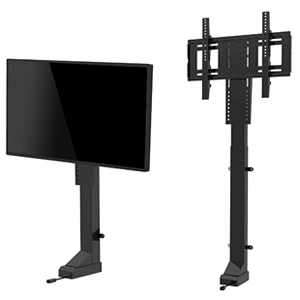
For television lifts, projector lifts and motorized mounting systems, define the required power-off holding behavior and validate the selected mechanism. Do not assume a T-type screw alone prevents movement or satisfies the finished product’s safety requirements.
Escritorios de Pie y Muebles Ergonómicos
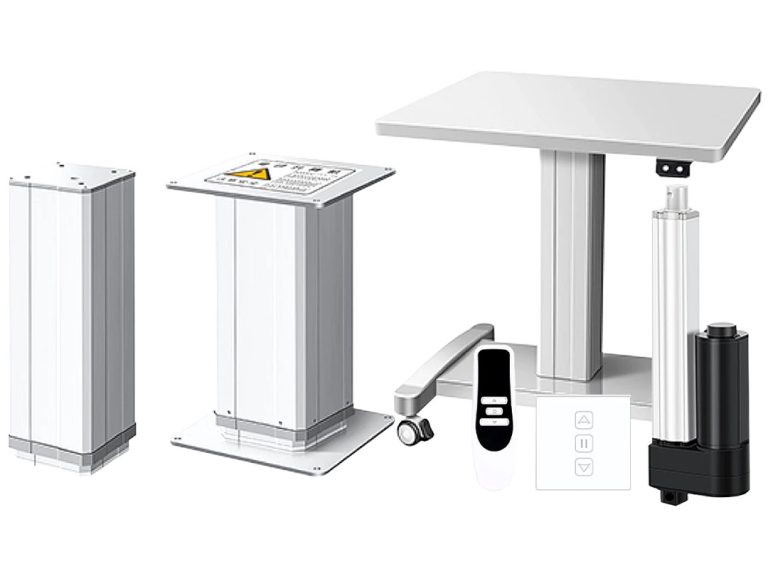
Adjustable-height workstations require controlled motion and reliable holding under their intended loads. T-type screw systems can be evaluated for these requirements, with noise, synchronization and holding verified on the complete desk configuration.
Equipos Médicos y de Salud
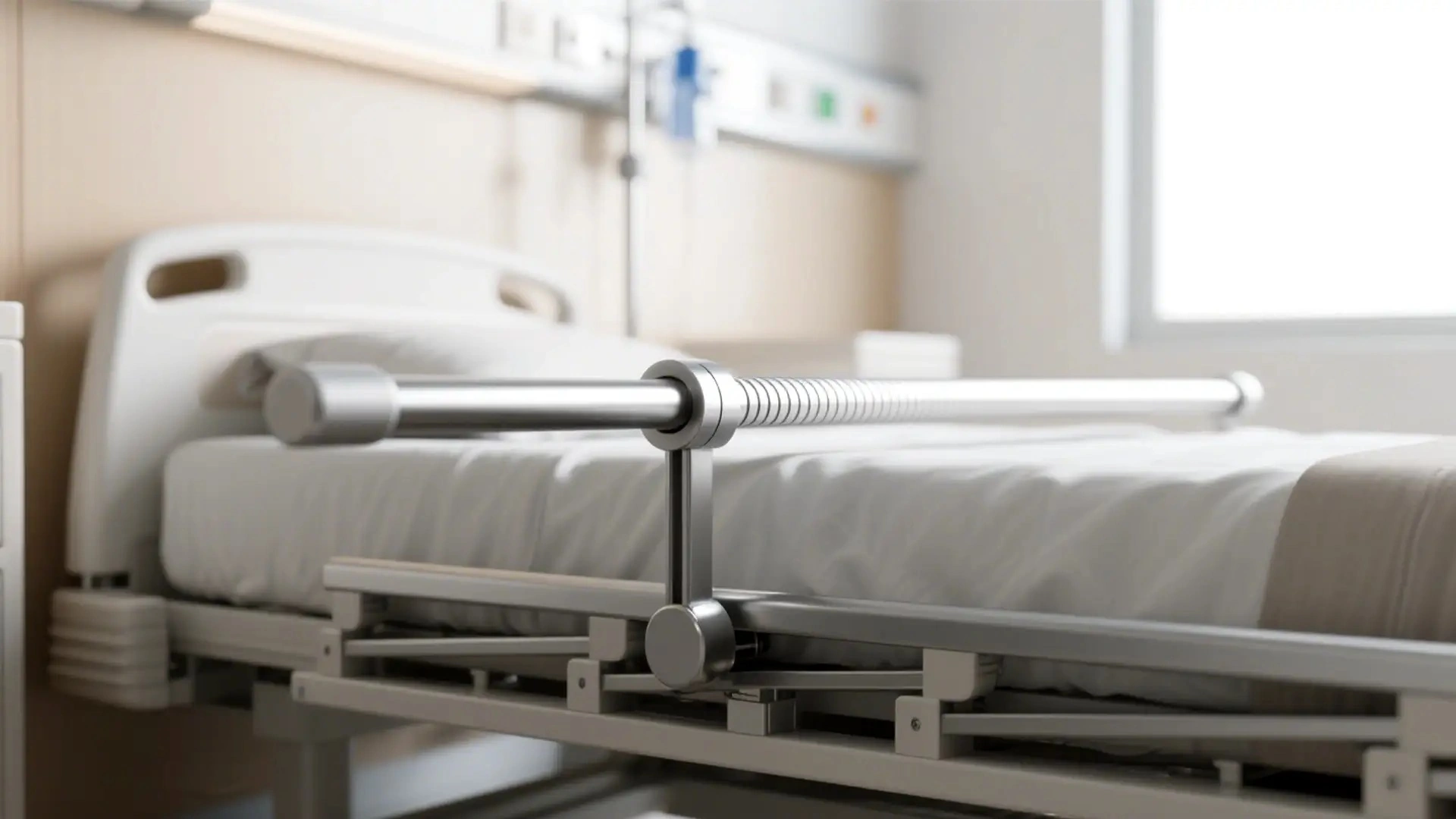
Care-related or medical equipment requires a finished-system safety architecture. A T-type screw may contribute to holding behavior, but it does not by itself establish fail-safe operation, patient safety or regulatory compliance during a power failure.
Maquinaria Agrícola y de Exterior
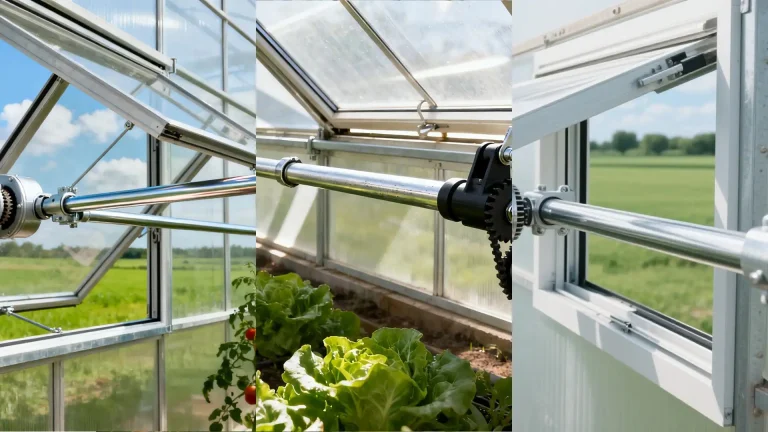
La durabilidad y la rentabilidad de los tornillos de avance tipo T los hacen adecuados para equipos agrícolas, sistemas automatizados al aire libre y aplicaciones donde los requisitos de precisión son moderados pero la fiabilidad es esencial.
Automatización industrial
Para sistemas automatizados que requieren posicionamiento confiable con requisitos de precisión moderados, los tornillos de avance tipo T ofrecen una solución económica que se integra fácilmente con controles de motor estándar.
How to Evaluate Screw Type Across ActuLift Product Lines
ActuLift offers multiple actuator families and configurations. Screw type, gearing and holding behavior should be confirmed for the selected model rather than assumed across the complete portfolio.
Treating Holding as a System Requirement
Resistance to back-driving can support a system’s holding strategy, but end-user safety depends on the complete mechanism, load case, controls, braking or restraint strategy, fault behavior and application-specific validation.
Optimizando para Aplicaciones del Mundo Real
Many applications do not require the same efficiency, speed or precision targets. When holding behavior, cost or packaging are important, compare T-type and ball-screw options against the actual operating requirements instead of assuming one architecture is universally optimal.
Rango de Productos Integral
ActuLift offers multiple voltage, load and control families. Confirm the screw type, gearing, moving and holding load, stroke, speed, feedback and environmental requirements for each selected product rather than assuming a common T-type drivetrain across all 12V, 24V or heavy-duty categories.
Eficiencia de Costos para los Clientes
Cost, reliability, installation and maintenance depend on the selected actuator configuration and production requirements. Do not assume a single transmission technology is standardized across all ActuLift product families.
Ingeniería Centrada en la Fiabilidad
A simpler screw-and-nut architecture can reduce component complexity, but failure modes, troubleshooting and long-term performance still depend on materials, lubrication, wear, load, environment and the complete actuator design. For customers requiring Automatización industrial soluciones, esta confiabilidad es esencial.
Eligiendo el Actuador Lineal Correcto
Al evaluar actuadores lineales para su aplicación, considere estos factores:
Consider T-Type Lead Screw Actuators When:
A validated resistance-to-back-driving or holding condition is required
La retención de carga estática es más importante que la velocidad dinámica
La rentabilidad es una prioridad
The project’s positioning accuracy and backlash requirements match the selected screw and control system
La aplicación implica cargas verticales
Se valoran la simplicidad y la fiabilidad
Considera Actuadores de Tornillo de Bola Cuando:
Higher efficiency is a primary design objective
Tighter positioning accuracy or lower backlash is required
La operación a alta velocidad es necesaria
La aplicación permite sistemas de frenado activo
For applications involving human interaction, vertical loads or safety-relevant positioning, compare candidate actuator architectures against the actual load, speed, holding, duty-cycle, lifecycle and risk-control requirements before selection.
¿Cuál es la principal diferencia entre un tornillo de paso T y un tornillo de bola?
T-type screws use sliding thread contact, while ball screws use recirculating rolling elements. A T-type design may provide more resistance to back-driving under some conditions; a ball-screw system often needs a separate holding strategy. Exact efficiency, load and holding behavior depend on the selected design.
Does a T-type lead screw automatically self-lock?
No. Self-locking and back-driving depend on thread geometry, friction, lubrication, materials, load, orientation, gearing, wear and the complete drivetrain. Confirm the selected actuator under the project conditions.
Do T-type lead screws require maintenance?
Maintenance depends on screw and nut materials, lubrication system, contamination, load, speed and cycle profile. Follow the selected actuator’s inspection and lubrication requirements rather than assuming a universal interval.
Can T-type lead screws be used at high speed?
Allowable speed depends on screw diameter and lead, unsupported length, critical speed, lubrication, heat generation, load and duty cycle. Compare the selected T-type, ball-screw or other drive system against the required operating point.
Conclusión
T-type (trapezoidal) lead screws are an established transmission technology that can be useful where their friction, load, speed, wear and holding characteristics fit the application. While ball screws offer higher efficiency and precision for specialized applications, the correct choice depends on the complete load case, required efficiency, speed, backlash, holding behavior, lifecycle and system-level safety architecture.
Across ActuLift’s actuador lineal range, transmission and holding behavior are configuration-specific. The appropriate screw and drive architecture should be selected from the project’s load, speed, duty-cycle, backlash, holding and safety requirements, then validated on the chosen build.
Ya sea que esté diseñando un dispositivo médico, una máquina industrial o un producto de consumo, comprender las fortalezas de los tornillos de paso T le ayuda a seleccionar la tecnología de actuador adecuada para sus requisitos específicos.
Fuentes
Normas ISO 2901/DIN 103: Especificaciones técnicas para roscas de tornillos trapezoidales métricos, definiendo la geometría utilizada en los actuadores ActuLift.
Diseño de Máquina - Guía de Actuador Lineal: Un recurso confiable de la industria para comparar la eficiencia mecánica de los tornillos de paso frente a los tornillos de bola.
Obtenga Perspectivas Expertas sobre Control del Movimiento Industrial
Seleccionar el actuador lineal eléctrico o columna de elevación es crítico para el rendimiento de su proyecto. Como fabricante profesional de Control de Movimiento y Automatización, nuestros ingenieros le ayudan a personalizar la capacidad de carga, la longitud de la carrera y las clasificaciones IP según su aplicación específica. Comparta sus requisitos técnicos para una solución a medida.
ActuLift apoya la personalización de extremo a extremo, desde el diseño estructural y los parámetros de recorrido hasta la marca y los acabados de la carcasa, ayudándote a construir una potente identidad de marca.
Respuesta rápida y prototipado
Entendemos la importancia de la rapidez en la adquisición B2B, utilizando flujos de trabajo de producción optimizados para asegurar respuestas eficientes desde el desarrollo de muestras hasta la entrega a granel.
Quality Documentation & Traceability
Quality and traceability requirements vary by project. Ask ActuLift for the applicable inspection records, product specifications, drawings and available compliance documentation for the selected model and order.