T-Type Lead Screws in Linear Actuators: Self-Locking Conditions & Trade-Offs
Learn how T-type (trapezoidal) lead screws convert rotary motion, when self-locking may occur, and how lead angle, friction, lubrication, efficiency, wear, backlash and load-holding trade-offs affect actuator selection.
When selecting a linear actuator, the transmission architecture affects efficiency, back-driving, speed, wear, backlash and load-holding behavior. T-type or trapezoidal lead screws use sliding contact between the screw and nut; self-locking may occur in some configurations, but it should be evaluated from lead angle, effective friction, lubrication, load, wear and the complete mechanism rather than assumed from the screw type alone.
This comprehensive guide explores how T-type lead screws work, their advantages and limitations, and how this technology should be evaluated within different ActuLift actuator configurations.
Qu'est-ce que les vis à tête en T (trapézoïdale) ?
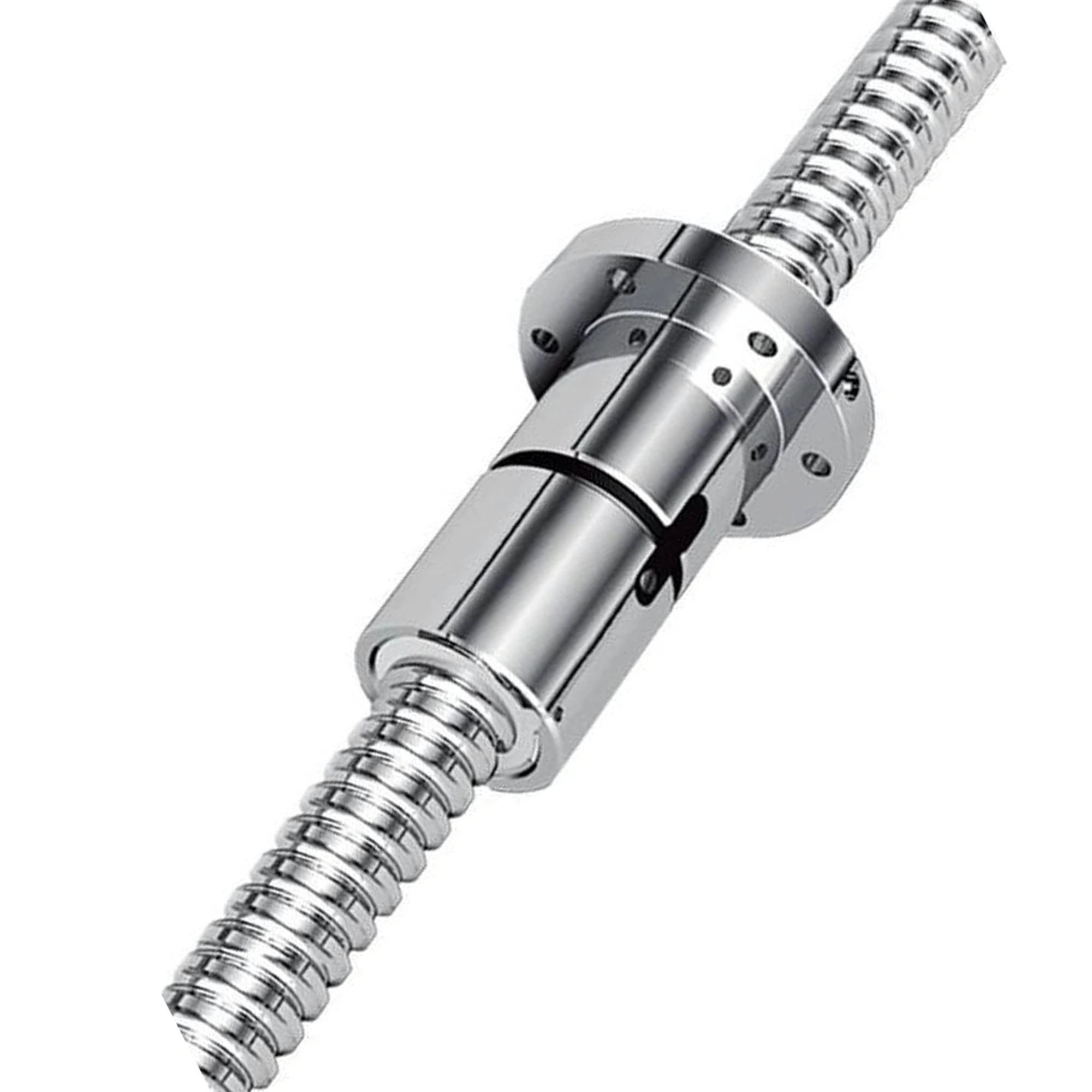
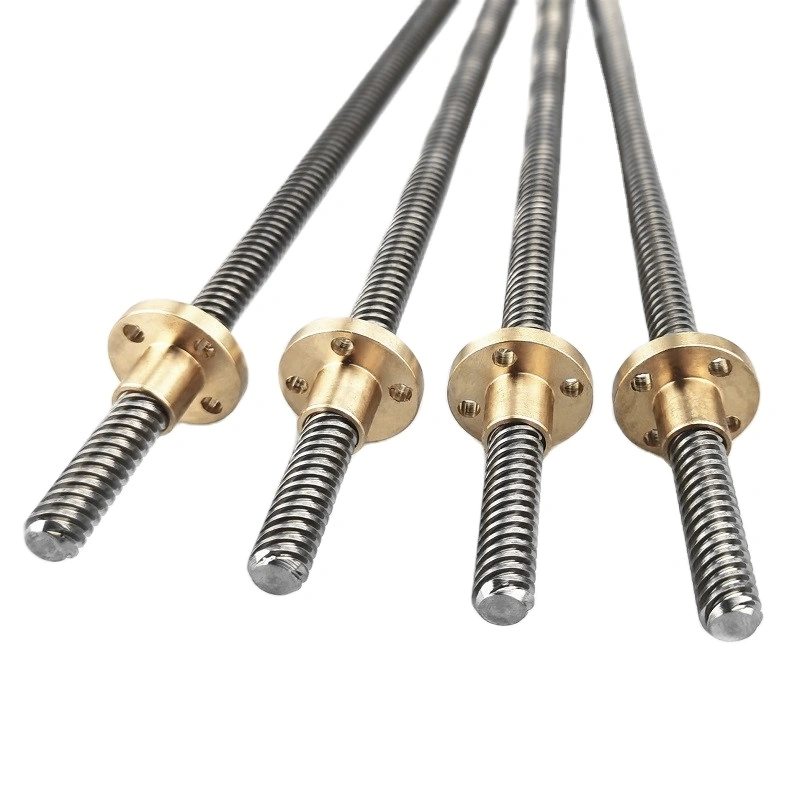
Les vis à filet de type T présentent un profil de filetage trapézoïdal distinctif avec un angle de flanc de 30 degrés de chaque côté. Cette géométrie de filetage—normalisée dans DIN 103 pour les filets trapézoïdaux—crée une partie supérieure et inférieure aplatie avec des côtés inclinés, la distinguant des filets en V que l'on trouve dans les éléments de fixation conventionnels.
La forme trapézoïdale remplit plusieurs fonctions d'ingénierie critiques :
Augmentation de la surface de contact: Les surfaces de filetage plates offrent des surfaces d'appui plus grandes par rapport aux filets en V, répartissant les charges plus efficacement sur l'ensemble de l'engagement de filetage.
Réduction du risque de coinçage: La géométrie empêche l'effet de coinçage qui peut se produire avec des filets en V sous des charges de compression élevées.
Simplicité de fabrication: Le profil simple est relativement facile à usiner avec des tolérances précises, contribuant à la fiabilité et à l'efficacité des coûts.
Les vis à filet de type T sont fabriquées à partir de divers matériaux, y compris l'acier inoxydable, l'aluminium et l'acier au carbone, chacun offrant différentes combinaisons de résistance, de résistance à la corrosion et de caractéristiques de poids.
Comment fonctionnent les vis à tête en T dans les actionneurs linéaires
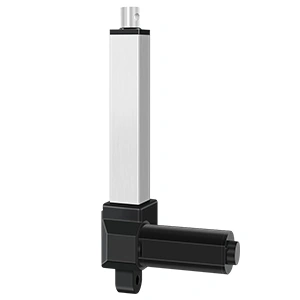
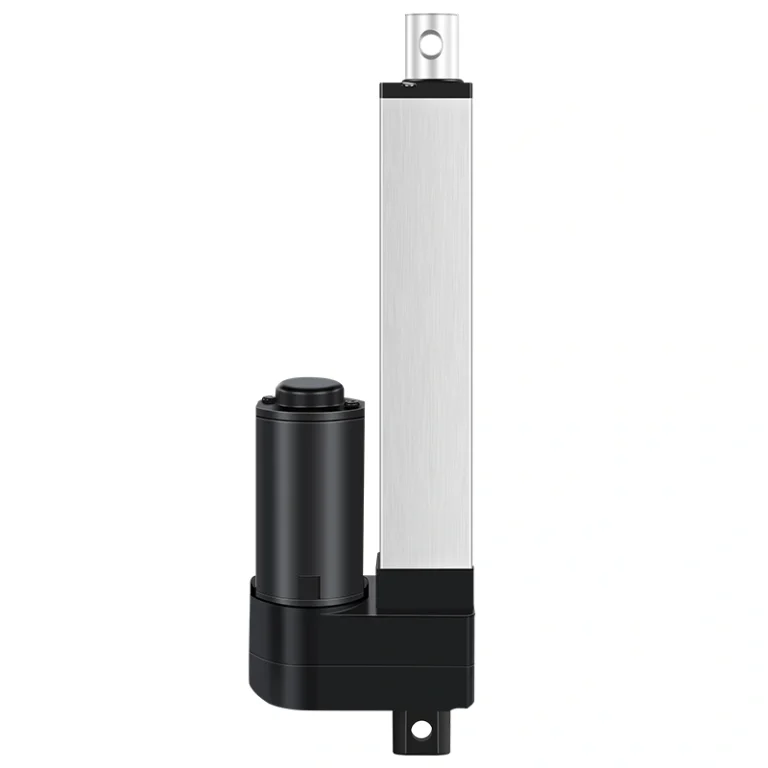
Dans un actionneur linéaire, la vis à filet de type T convertit le mouvement rotatif du moteur en mouvement linéaire. Lorsque le moteur fait pivoter l'arbre de vis, l'écrou engagé avec les filets se déplace le long de la broche, poussant ou tirant l'arbre de sortie de l'actionneur.
Le principe de fonctionnement repose sur la géométrie du filetage hélicoïdal :
Entrée rotationnelle: Un moteur électrique (AC ou DC) entraîne l'arbre de la vis à filet.
Engagement du filetage: L'écrou glisse le long des filets hélicoïdaux.
Sortie linéaire: Le mouvement rotatif devient un déplacement linéaire.
Transmission de force: L'avantage mécanique du filetage multiplie le couple d'entrée en force linéaire.
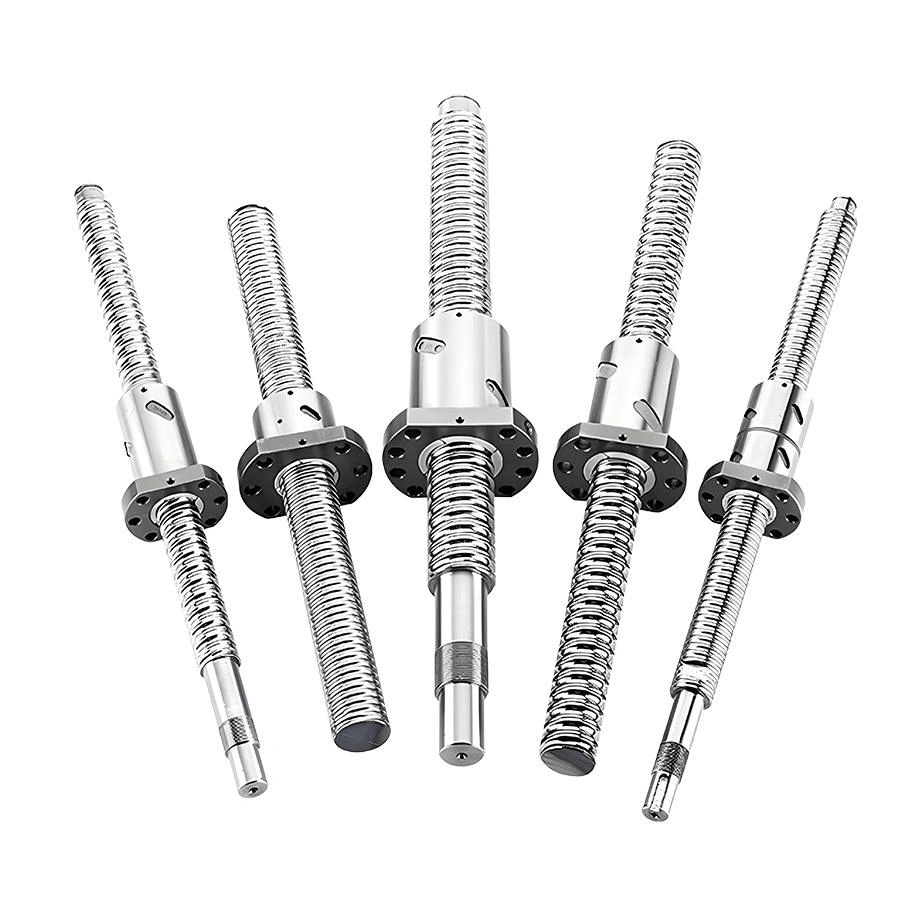
L'efficacité de cette conversion dépend de plusieurs facteurs : pas du filetage, pas, coefficient de friction entre les matériaux de vis et d'écrou, et conditions de lubrification. Contrairement aux vis à billes qui utilisent des éléments roulants, les vis à filet de type T fonctionnent par frottement glissant entre les filets de vis et l'intérieur de l'écrou.
Self-Locking Conditions and Back-Driving
Une des caractéristiques les plus significatives des vis à filet de type T est leur capacité d'auto-bloquage mécanique—une propriété qui les rend indispensables pour les applications critiques en matière de sécurité.
Comprendre le verrouillage automatique
Self-locking means the lead screw maintains its position when rotational force is removed. Under suitable design and friction conditions, the axial load may not readily back-drive the screw. This must be verified for the selected mechanism rather than assumed from the thread family alone. This occurs due to the friction inherent in the sliding contact between the trapezoidal threads.
L'état d'auto-bloquage est déterminé par la relation entre l'angle de montée et l'angle de friction :
Angle de montée: La pente de l'hélice, déterminée par le pas et le diamètre du filetage.
Angle de friction: Déterminé par le coefficient de friction entre les matériaux de l'écrou et de la vis.
A lower lead angle relative to the effective friction angle can increase resistance to back-driving. Because friction changes with material pairing, lubrication, wear, temperature, vibration and load, there is no universal lead-angle threshold that guarantees self-locking for every actuator.
Pourquoi le verrouillage automatique est important
For applications where the actuator must hold position after power removal—or where unexpected back-driving could create a hazard—define and validate the required holding behavior:
Power-Off Holding: Confirm how much movement is permitted after power loss and validate the selected actuator at the required load and orientation
Static Holding: A validated passive holding condition may reduce the need for continuous motor torque, but actual system power and safety behavior depend on the selected design
System Design: A separate brake, restraint, feedback method or other safety function may still be required by the finished mechanism
Vertical Applications: Evaluate static holding, back-driving, orientation, safety factor and power-off behavior before approval
Potential resistance to back-driving can be useful in vertical or holding applications, but safety-critical positioning must be validated at the complete-system level.
Capacité de charge : vis en T vs. vis à billes
Comprendre les caractéristiques de charge des différentes technologies de vis est essentiel pour une sélection d'application appropriée.
Capacité de charge statique vs. dynamique
Static holding load and dynamic moving load are different ratings. Their relationship is design-specific and must be confirmed for the selected screw, nut, gearing and actuator.
Allowable moving and holding loads depend on screw diameter, nut engagement, materials, bearings, housing, duty cycle, load direction, temperature and test method.
Analyse comparative
Caractéristique
What to verify
Efficiency
Configuration-specific geometry, preload, lubrication, load and speed
Back-driving / holding
Lead, friction, gearing, orientation, load, wear and brake strategy
Static / dynamic load
Separate rated values and test conditions for the selected actuator
Precision / backlash
Nut design, manufacturing tolerance, wear, preload and feedback/control method
Vitesse
Critical speed, heat, lubrication, load and duty-cycle limits
Lifecycle
Defined load, stroke, speed, environment, lubrication and acceptance target
How T-Type Screws Can Fit Load-Holding Applications
T-type lead screw systems can be evaluated for load-holding applications such as:
Levé Lourd: Presses industrielles, ascenseurs et positionnement de machines lourdes
Mouvement Vertical: Applications où des charges doivent être maintenues contre la gravité
Applications Axées sur la Force: Où la force de maintien compte plus que la vitesse ou la précision
La plus grande surface de contact entre les filets trapézoïdaux répartit les charges sur une plus grande surface, réduisant les concentrations de stress et permettant des capacités de charge statique plus élevées.
Avantages des vis à tête en T
1. Self-Locking Is Condition-Dependent
Self-locking behavior is condition-dependent. Confirm the selected screw geometry, friction condition, gearing, load, orientation, lubrication and wear state before relying on passive position holding.
2. Haute capacité de charge statique
A T-type screw system may provide useful static holding capacity, but the allowable static-to-dynamic load relationship must be confirmed from the selected actuator design and test conditions.
3. Rentabilité
Le processus de fabrication plus simple et l'absence de pistes à billes précises rendent les vis à filet en T significativement plus économiques que les alternatives à vis à billes. Pour les applications ne nécessitant pas une ultra haute précision, cet avantage de coût est substantiel.
4. Durabilité et longévité
Le profil de filetage robuste résiste à la déformation sous de lourdes charges, et la conception simple minimise les modes de défaillance. Avec une lubrification appropriée, les vis à filet en T offrent un service fiable sur de longues périodes.
5. Entretien simple
Sans éléments roulants complexes ni systèmes de recirculation à billes délicats, les vis à filet en T sont plus tolérantes à la contamination et nécessitent moins d'entretien spécialisé.
6. Fonctionnement fluide à basse vitesse
Pour les applications nécessitant un mouvement contrôlé et précis à basse vitesse, les vis à filet en T offrent un mouvement fluide et prévisible sans le risque de vibration ou d'instabilité des vis à billes à faibles vitesses.
Limitations et considérations
Efficacité inférieure
Sliding friction can reduce efficiency relative to a rolling-element screw, but the actual efficiency of either system depends on geometry, preload, lubrication, load, speed and the selected design. This means:
Plus de puissance d'entrée requise pour la même force de sortie
Plus de chaleur générée pendant le fonctionnement
Consommation d'énergie plus élevée pour les applications de cyclage continu
Vitesse et précision limitées
T-type lead screws are not designed for high-speed operation. Permissible speed and positioning performance are configuration-dependent. Verify screw critical speed, heat generation, backlash, nut design, feedback method and the complete actuator specification for the intended operating point.
Friction et usure plus élevées
Le contact glissant génère plus de friction que les éléments roulants, ce qui peut entraîner une usure plus rapide dans les applications à cycles élevés. Une lubrification appropriée est essentielle pour maximiser la durée de vie.
Considérations sur le jeu
Le jeu de filetage et l'usure peuvent introduire du jeu au fil du temps. Pour les applications nécessitant un minimum de jeu, des ajustements ou un entretien périodique peuvent être nécessaires.
Applications Where T-Type Lead Screws May Fit
T-type lead screws can be suitable for multiple applications when their load, speed, wear, backlash and holding characteristics match the project requirements.
Systèmes de levage industriels
Heavy-duty lifting platforms, scissor lifts and industrial presses can be candidates for T-type screw systems when the required moving load, static holding, back-driving, duty cycle and brake strategy have been verified for the complete mechanism.
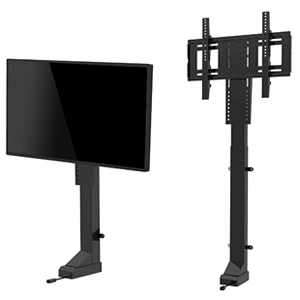
Monte-télévisions et équipements home cinéma
For television lifts, projector lifts and motorized mounting systems, define the required power-off holding behavior and validate the selected mechanism. Do not assume a T-type screw alone prevents movement or satisfies the finished product’s safety requirements.
Bureaux debout et mobilier ergonomique
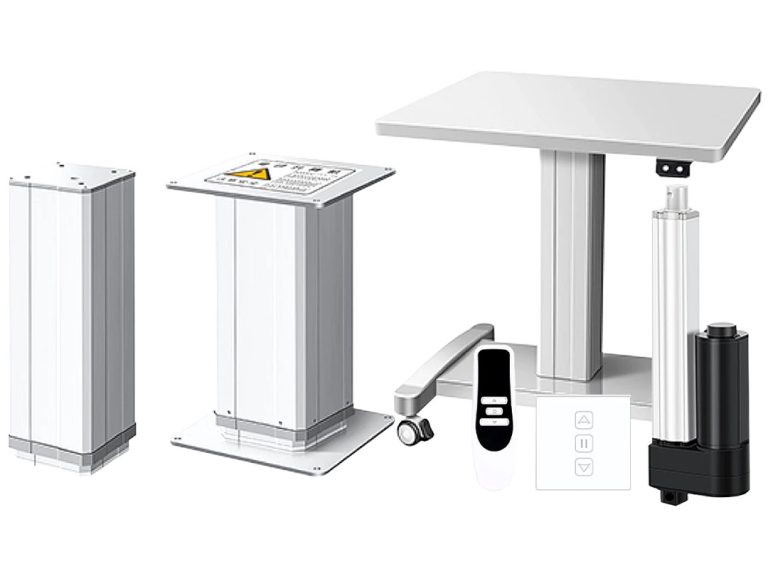
Adjustable-height workstations require controlled motion and reliable holding under their intended loads. T-type screw systems can be evaluated for these requirements, with noise, synchronization and holding verified on the complete desk configuration.
Équipement médical et de santé
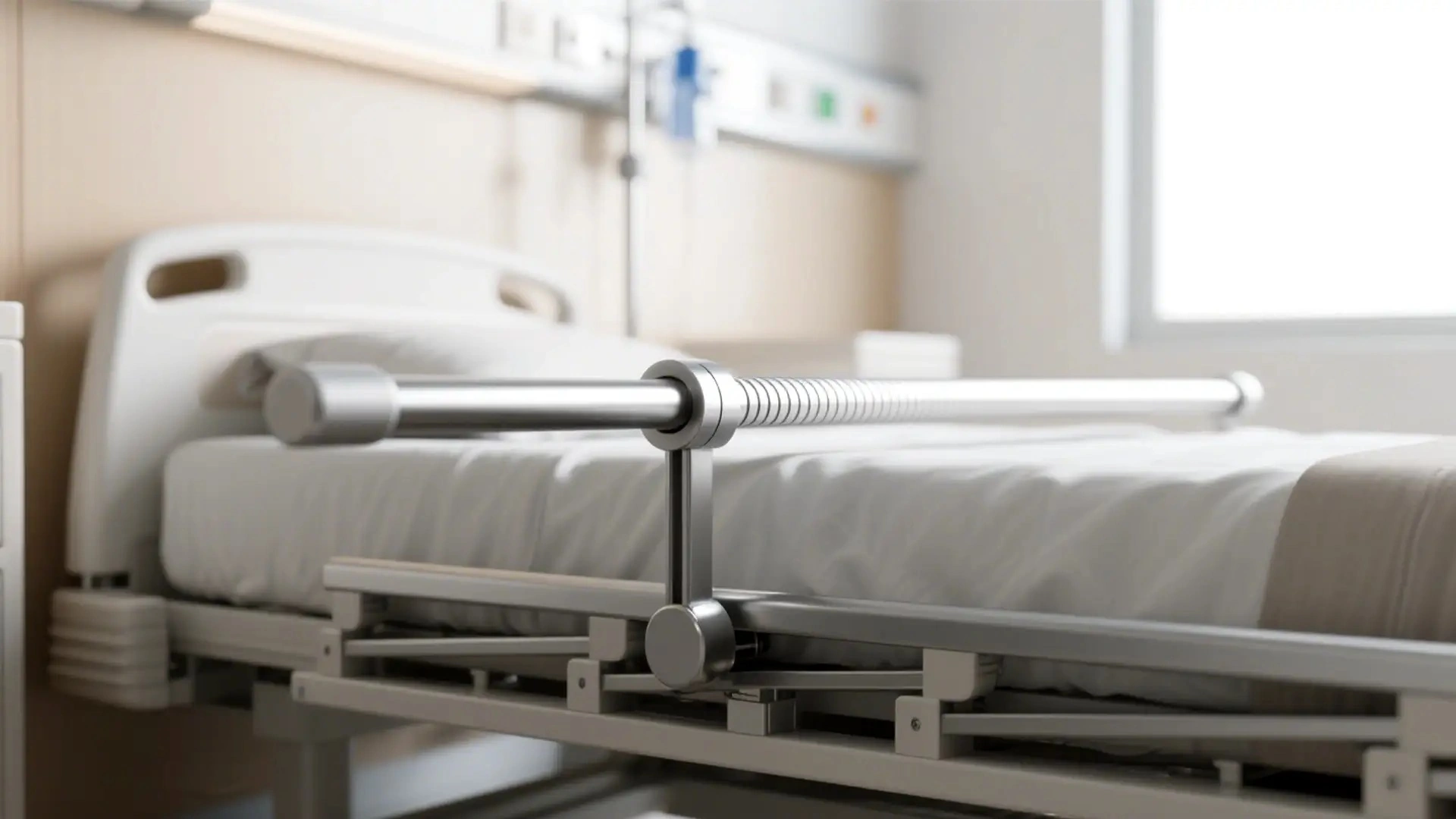
Care-related or medical equipment requires a finished-system safety architecture. A T-type screw may contribute to holding behavior, but it does not by itself establish fail-safe operation, patient safety or regulatory compliance during a power failure.
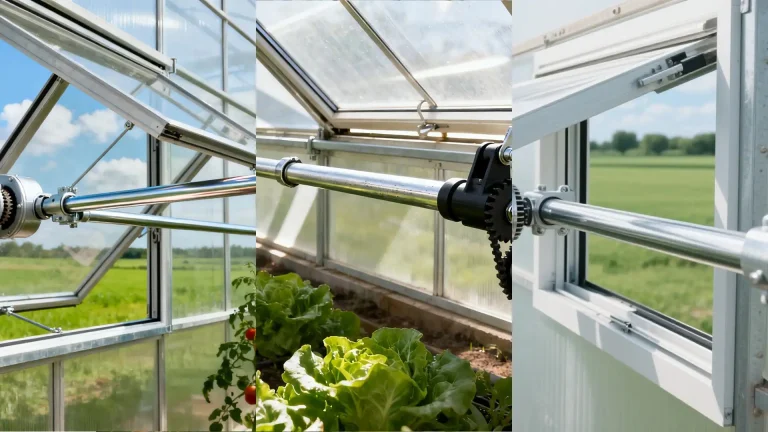
Machinerie agricole et de plein air
La durabilité et le rapport coût-efficacité des vis à filet en T les rendent adaptées aux équipements agricoles, aux systèmes automatisés d'extérieur et aux applications où les exigences de précision sont modérées mais la fiabilité est essentielle.
Automatisation industrielle
Pour les systèmes automatisés nécessitant un positionnement fiable avec des exigences de précision modérées, les vis à filet en T offrent une solution économique qui s'intègre facilement avec les commandes de moteur standard.
How to Evaluate Screw Type Across ActuLift Product Lines
ActuLift offers multiple actuator families and configurations. Screw type, gearing and holding behavior should be confirmed for the selected model rather than assumed across the complete portfolio.
Treating Holding as a System Requirement
Resistance to back-driving can support a system’s holding strategy, but end-user safety depends on the complete mechanism, load case, controls, braking or restraint strategy, fault behavior and application-specific validation.
Optimiser pour des applications réelles
Many applications do not require the same efficiency, speed or precision targets. When holding behavior, cost or packaging are important, compare T-type and ball-screw options against the actual operating requirements instead of assuming one architecture is universally optimal.
Gamme de produits complète
ActuLift offers multiple voltage, load and control families. Confirm the screw type, gearing, moving and holding load, stroke, speed, feedback and environmental requirements for each selected product rather than assuming a common T-type drivetrain across all 12V, 24V or heavy-duty categories.
Efficacité des coûts pour les clients
Cost, reliability, installation and maintenance depend on the selected actuator configuration and production requirements. Do not assume a single transmission technology is standardized across all ActuLift product families.
Ingénierie axée sur la fiabilité
A simpler screw-and-nut architecture can reduce component complexity, but failure modes, troubleshooting and long-term performance still depend on materials, lubrication, wear, load, environment and the complete actuator design. For customers requiring Automatisation industrielle des solutions, cette fiabilité est essentielle.
Choisir le bon actionneur linéaire
Lors de l'évaluation des vérins linéaires pour votre application, tenez compte des facteurs suivants :
Consider T-Type Lead Screw Actuators When:
A validated resistance-to-back-driving or holding condition is required
Le maintien de la charge statique est plus important que la vitesse dynamique
La rentabilité est une priorité
The project’s positioning accuracy and backlash requirements match the selected screw and control system
L'application implique des charges verticales
La simplicité et la fiabilité sont des valeurs importantes
Considérez les actionneurs à vis à billes lorsque :
Higher efficiency is a primary design objective
Tighter positioning accuracy or lower backlash is required
Un fonctionnement à grande vitesse est nécessaire
L'application permet des systèmes de freinage actifs
For applications involving human interaction, vertical loads or safety-relevant positioning, compare candidate actuator architectures against the actual load, speed, holding, duty-cycle, lifecycle and risk-control requirements before selection.
Quelle est la principale différence entre une vis à tête en T et une vis à billes ?
T-type screws use sliding thread contact, while ball screws use recirculating rolling elements. A T-type design may provide more resistance to back-driving under some conditions; a ball-screw system often needs a separate holding strategy. Exact efficiency, load and holding behavior depend on the selected design.
Does a T-type lead screw automatically self-lock?
No. Self-locking and back-driving depend on thread geometry, friction, lubrication, materials, load, orientation, gearing, wear and the complete drivetrain. Confirm the selected actuator under the project conditions.
Do T-type lead screws require maintenance?
Maintenance depends on screw and nut materials, lubrication system, contamination, load, speed and cycle profile. Follow the selected actuator’s inspection and lubrication requirements rather than assuming a universal interval.
Can T-type lead screws be used at high speed?
Allowable speed depends on screw diameter and lead, unsupported length, critical speed, lubrication, heat generation, load and duty cycle. Compare the selected T-type, ball-screw or other drive system against the required operating point.
Conclusion
T-type (trapezoidal) lead screws are an established transmission technology that can be useful where their friction, load, speed, wear and holding characteristics fit the application. While ball screws offer higher efficiency and precision for specialized applications, the correct choice depends on the complete load case, required efficiency, speed, backlash, holding behavior, lifecycle and system-level safety architecture.
Across ActuLift’s actionneur linéaire range, transmission and holding behavior are configuration-specific. The appropriate screw and drive architecture should be selected from the project’s load, speed, duty-cycle, backlash, holding and safety requirements, then validated on the chosen build.
Que vous conceviez un dispositif médical, une machine industrielle ou un produit de consommation, comprendre les forces des vis à plomb de type T vous aide à sélectionner la bonne technologie de vérin pour vos exigences spécifiques.
Sources
Normes ISO 2901/DIN 103: Spécifications techniques pour les filetages de vis trapézoïdales métriques, définissant la géométrie utilisée dans les vérins ActuLift.
Obtenez des Aperçus d'Experts sur le Contrôle de Mouvement Industriel
Sélectionner le bon vérin linéaire électrique ou colonne de levage est crucial pour la performance de votre projet. En tant que fabricant professionnel de Contrôle de Mouvement & Automatisation, nos ingénieurs vous aident à personnaliser la capacité de charge, la longueur de course et les classes IP en fonction de votre application spécifique. Partagez vos exigences techniques pour une solution sur mesure.
ActuLift prend en charge la personnalisation de bout en bout, de la conception structurelle et des paramètres de course aux finitions de marque et de boîtier, vous aidant à construire une identité de marque puissante.
Réponse rapide et prototypage
Nous comprenons l'importance de la rapidité dans l'approvisionnement B2B, en utilisant des flux de production optimisés pour garantir des réponses efficaces du développement d'échantillons à la livraison en gros.
Quality Documentation & Traceability
Quality and traceability requirements vary by project. Ask ActuLift for the applicable inspection records, product specifications, drawings and available compliance documentation for the selected model and order.