The Ultimate Guide to Choosing Between 12V and 24V Linear Actuators
Choosing between 12V and 24V for your linear actuator project? This guide explores the critical differences in efficiency, wiring distance, and application suitability. Learn why 24V is the industrial standard and when 12V is the perfect fit for mobile or DIY projects.
When selecting a linear actuator for your project, the voltage choice is one of the most critical decisions you’ll make. Whether you’re an engineer designing an industrial automation system, a DIY enthusiast building a custom application, or a procurement specialist sourcing components, understanding the difference between 12V and 24V linear actuators can mean the difference between a successful implementation and a problematic one.
This comprehensive guide breaks down everything you need to know about voltage selection, from the fundamental physics to practical application considerations, helping you make an informed decision for your specific use case.
Table of Contents
Understanding Voltage in Linear Actuators
Linear actuators are electromechanical devices that convert electrical energy into linear motion. The voltage you choose determines how the actuator receives and processes power, which directly impacts performance characteristics like speed, thrust, and efficiency.
At its core, electrical power follows a simple formula:
Power (W) = Voltage (V) × Current (A)
This relationship is fundamental to understanding why voltage choice matters. When you need a specific amount of power to move a load, you can achieve it through different combinations of voltage and current. A 24V system can deliver the same power as a 12V system while drawing only half the current. This has profound implications for system design.
The physics becomes even more important when considering wire losses. Electrical resistance in wiring causes power to be lost as heat, following the formula:
Power Lost = I²R
Because power lost increases with the square of current, a system running at half the current (24V vs 12V) experiences 75% less power loss in the wiring. This efficiency difference becomes particularly significant in installations with longer cable runs.
Technical Comparison: 12V vs 24V Linear Actuators
Thrust and Force Output
A common misconception is that higher voltage automatically means more thrust. In reality, thrust and force capacity are determined by motor wattage, gear ratio, and lead screw type—not voltage. Most manufacturers offer identical force ratings across both 12V and 24V versions of the same actuator model.
However, 24V systems can sustain higher continuous loads due to better thermal performance from lower current draw. When comparing the same model line, both voltages can achieve similar maximum force outputs, but the 24V version may handle prolonged heavy-duty operation more efficiently.
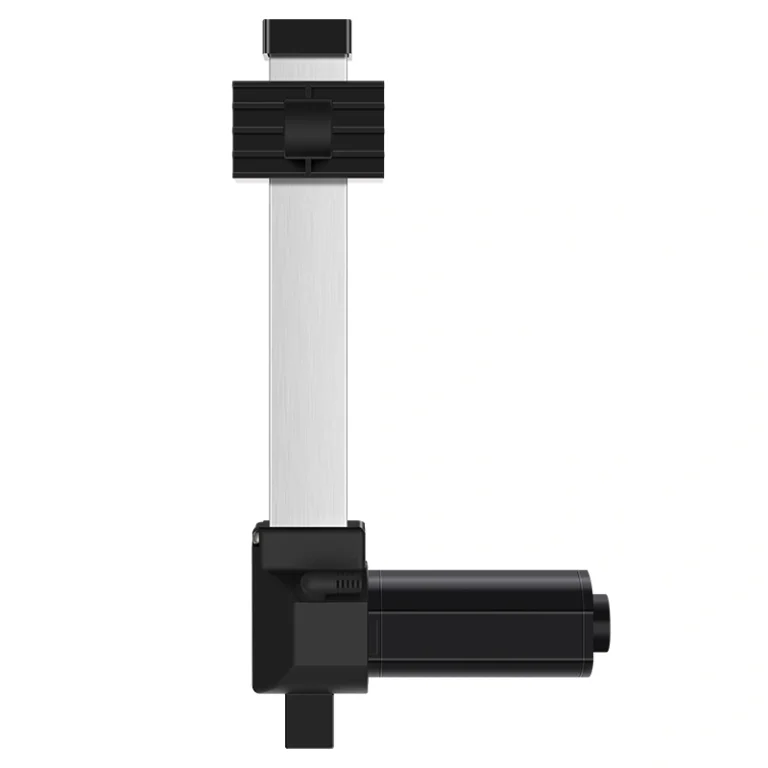
For example, the IP80 24V actuator is designed for industrial applications requiring substantial force delivery, while the IP60 12V actuator caters to lighter-duty applications where 12V power is more convenient.
Speed Performance
The relationship between voltage and speed is more nuanced than often portrayed. Many manufacturers design 12V and 24V versions of the same model to have identical speed ratings at maximum load. However, 24V actuators can often achieve higher speeds in certain conditions—particularly at lighter loads or where voltage drop affects 12V performance.
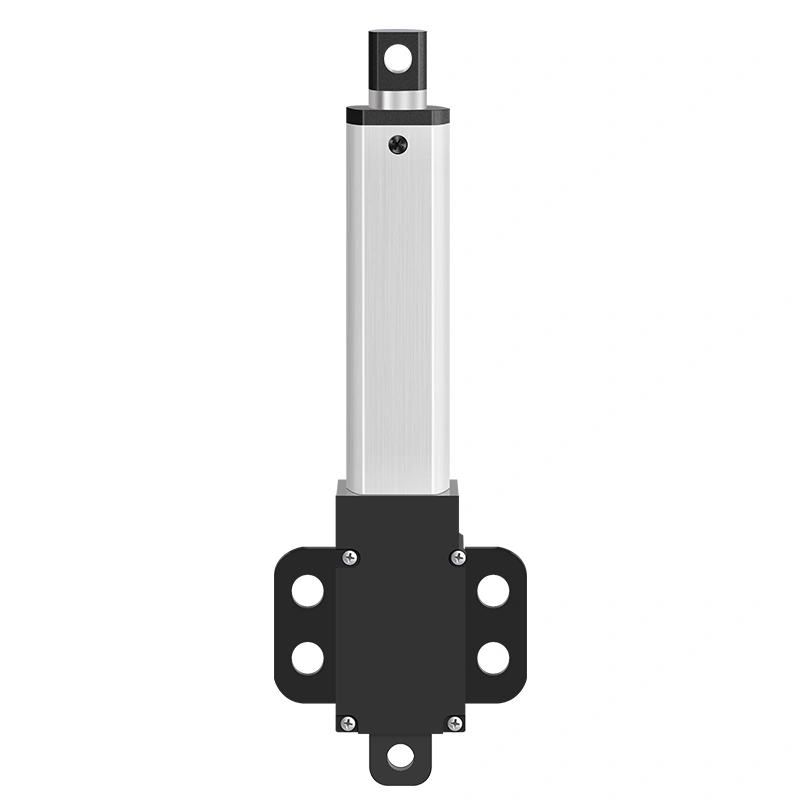
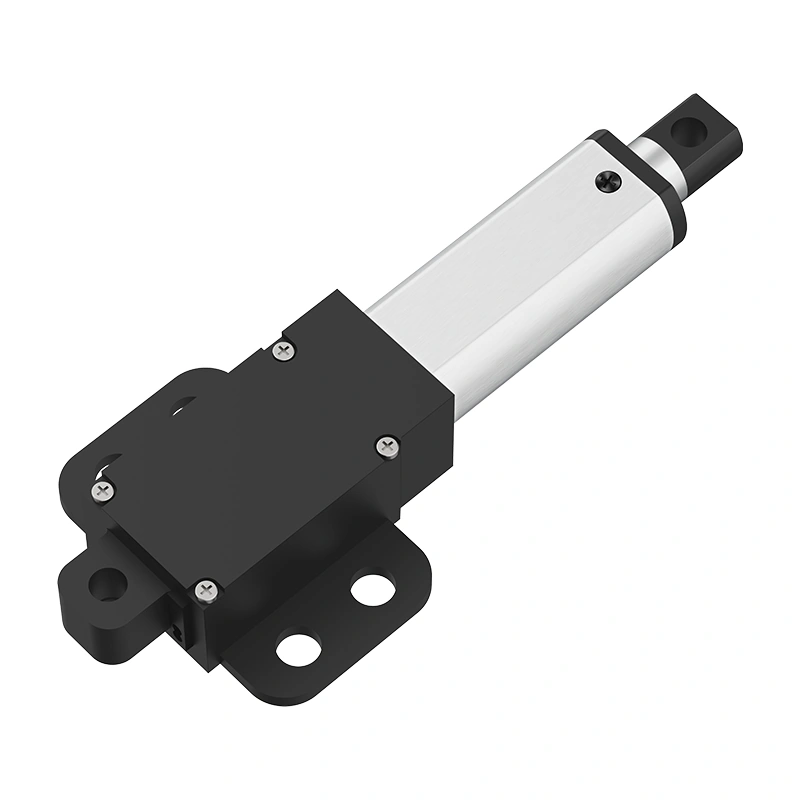
This makes 24V actuators particularly valuable for applications requiring rapid linear motion, such as conveyor systems, automated doors, or industrial equipment where cycle time matters. The HR61 mini linear actuator demonstrates the capabilities of compact 12V actuators, offering reliable performance for applications where size constraints are critical and extreme speed is not required.
Cable Length and Wiring Distance
Perhaps the most practical consideration for many installations is how far you can run wiring from the power source to the actuator. This is where the physics we discussed earlier becomes immediately relevant.
12V systems are generally limited to shorter wiring runs, typically under 15 feet (approximately 4-5 meters). Beyond this distance, voltage drop becomes significant, resulting in reduced actuator performance and increased heat generation in the wiring.
24V systems can handle significantly longer cable runs, making them the clear choice for large machinery, distributed industrial systems, or any application where the actuator is located far from the power supply. This capability also simplifies installation in complex systems where multiple actuators need to be powered from a central source.
Application Suitability: When to Choose Each Voltage
12V Linear Actuators: Automotive, Marine, and DIY Applications
12V linear actuators are the standard choice for mobile applications, automotive projects, marine use, and DIY installations where 12V power is readily available.
Best suited for:
Automotive installations (truck bed covers, roof racks, adjustable seats)
The 12V DC linear actuators category at Actulift offers numerous options designed specifically for these applications, emphasizing convenience of power supply and ease of installation.
24V Linear Actuators: Industrial and Commercial Applications
24V is the standard industrial voltage in many regions, making 24V linear actuators the natural choice for factory automation, commercial equipment, and systems requiring PLC integration.
Best suited for:
Factory automation and assembly lines
Industrial machinery and equipment
Automated doors and gates (commercial)
Medical equipment
Aerospace applications
Systems requiring multiple actuators synchronized together
Long cable run installations
PLC-controlled automation systems
The 24V linear actuators category provides industrial-grade options built to withstand demanding continuous operation cycles.
The Case for Multi-Actuator Synchronization
In many industrial applications, multiple linear actuators must work together in perfect coordination. This presents a compelling argument for choosing 24V systems.
When operating multiple actuators from a single power supply, the lower current draw of 24V systems reduces the total current requirements, simplifies wiring harness design, and minimizes heat management concerns. Additionally, 24V controllers and PLC systems offer more precise control capabilities, making synchronization easier to achieve and maintain.
For applications requiring synchronized movement—such as adjustable platforms, lifting systems, or automated assembly equipment—24V actuators provide a more reliable and scalable solution.
PLC Integration and Industrial Control
Modern industrial automation relies heavily on Programmable Logic Controllers (PLCs) to manage equipment operation. The 24V voltage standard is ubiquitous in industrial control systems for several reasons:
Noise immunity: Higher voltage signals are less susceptible to electromagnetic interference
Standardization: Industrial sensors, solenoids, and control devices commonly operate on 24V
Safety: 24V is considered safe for operator interaction in most industrial settings
Integration ease: PLC output modules are designed with 24V in mind
When your linear actuator needs to integrate with an industrial control system, choosing a 24V actuator like the IP80 24V actuator streamlines installation and ensures compatibility with existing control infrastructure.
Critical Warnings: Voltage Mismatch
Never Exceed Rated Voltage
Applying voltage higher than the actuator’s rating can cause immediate and severe damage. Overvoltage leads to excessive current draw, overheating, motor winding failure, and complete actuator failure—often within seconds. Never connect a 24V actuator to a 24V power supply that spikes above the rated voltage, and always use appropriate voltage regulation.
Undervoltage Risks
While less immediately destructive, undervoltage can also cause problems. When an actuator receives insufficient voltage, it may:
Stall under load, drawing excessive current and overheating
Fail to complete strokes reliably
Experience premature wear due to increased mechanical stress
Operate inconsistently, making system control difficult
Polarity Matters
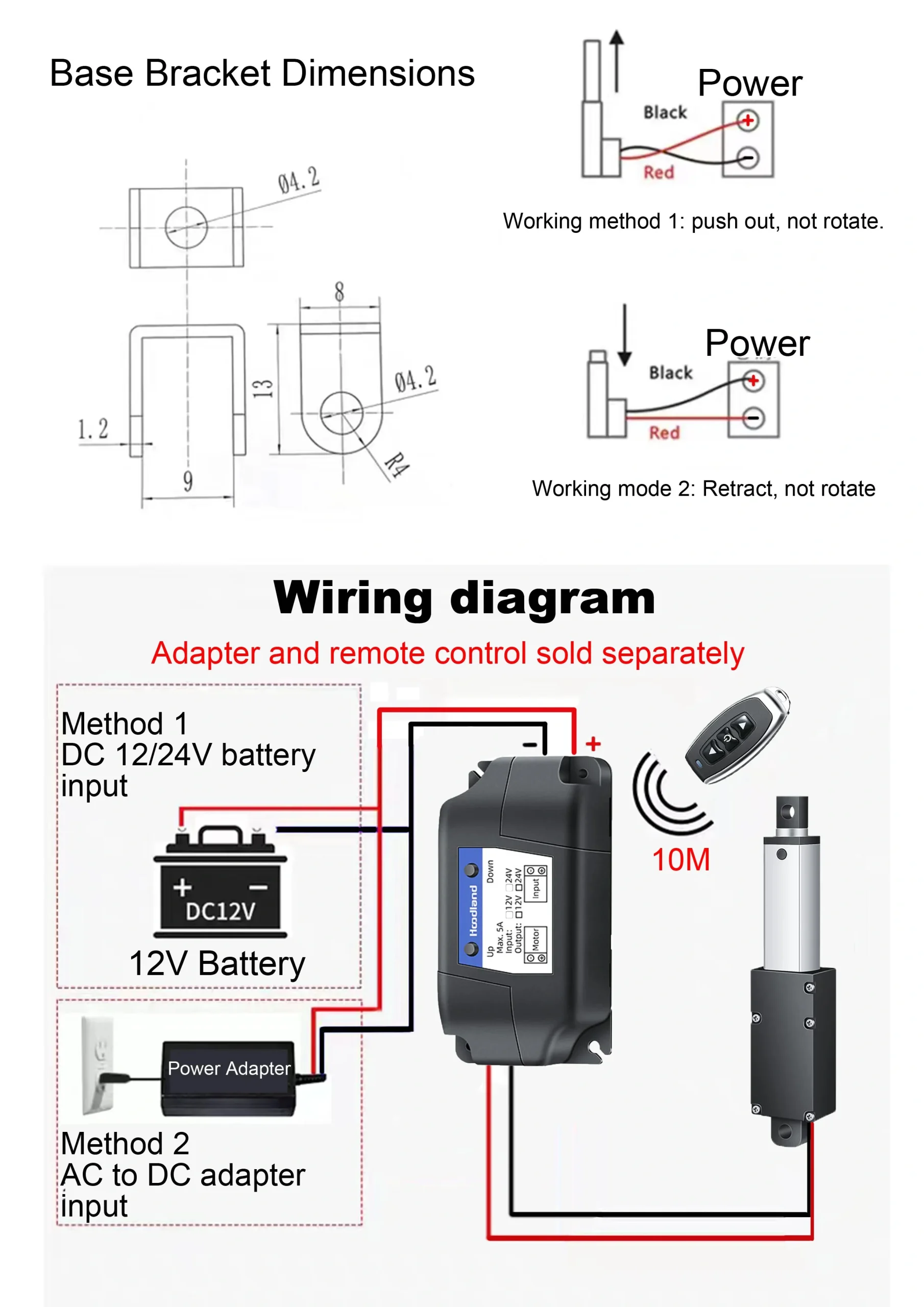
For DC linear actuators, correct polarity is essential. Reversed polarity can cause the actuator to run in reverse, potentially creating safety hazards in your application. In some cases, polarity reversal can also damage control electronics.
Recommendations for Safe Operation
Always verify voltage ratings before connecting power
Use appropriate power supplies with proper voltage regulation
Include appropriate fusing to protect against fault conditions
Install voltage surge protection in industrial environments
Test with low voltage first before full operational deployment
Making Your Selection: A Practical Decision Framework
Choosing between 12V and 24V linear actuators doesn’t have to be complicated. Consider this decision framework:
Choose 12V if:
Your application uses 12V power (vehicle, boat, RV)
Cable runs will be under 15 feet
Light to moderate thrust requirements
Speed is not critical
Cost is a primary concern
Single actuator, simple installation
DIY or hobby application
Choose 24V if:
Industrial or commercial application
Long cable runs required
High thrust force needed (sustained continuous operation)
Faster operation is important (lighter loads)
Multiple actuators must synchronize
PLC or industrial control integration needed
Continuous duty cycle required
Can I run a 12V linear actuator on a 24V power supply?
No. Applying 24V to a 12V motor will likely cause immediate overheating and permanent damage to the internal windings. Always match the power supply to the actuator’s rated voltage.
Does a 24V actuator provide more pushing force than a 12V version?
Not necessarily. Force is determined by the motor wattage and gearing. However, 24V systems are more efficient for continuous heavy-duty cycles due to lower current draw and less heat buildup.
Why is 24V preferred for long cable runs?
Higher voltage results in lower current ($I$) for the same power. Since voltage drop is proportional to current, 24V systems experience significantly less power loss over distance compared to 12V systems.
Are 12V actuators better for battery-powered applications?
Yes, because 12V batteries (like those in cars, RVs, and boats) are standard. Using a 12V actuator avoids the need for complex voltage converters.
Conclusion
The choice between 12V and 24V linear actuators ultimately depends on your specific application requirements. While both voltages can perform similar basic functions, the differences in efficiency, wiring distance, and system integration capabilities make each better suited for particular use cases.
For automotive, marine, and DIY applications where 12V power is readily available and requirements are moderate, 12V actuators like the IP60 12V actuator or HR61 mini linear actuator offer convenient, reliable solutions.
For industrial applications demanding higher performance, longer cable runs, multiple actuator synchronization, or PLC integration, 24V actuators like the IP80 24V actuator provide the capabilities necessary for demanding installations.
Remember the fundamental principle: Power = Voltage × Current. Understanding this relationship helps you appreciate why voltage choice affects not just performance, but also system design, efficiency, and long-term reliability. By matching your voltage selection to your application’s requirements, you’ll achieve optimal results and avoid the common pitfalls that come from mismatched systems.
Need further assistance selecting the right actuator for your project? Actulift offers comprehensive technical support and a wide range of both 12V and 24V linear actuators to meet virtually any application requirement.
Selecting the right electric linear actuator or lifting column is critical for your project's performance. As a professional Motion Control & Automation Manufacturer, our engineers help you customize load capacity, stroke length, and IP ratings based on your specific application. Share your technical requirements for a tailored solution.
ActuLift supports end-to-end customization, from structural design and stroke parameters to branding and casing finishes, helping you build a powerful brand identity.
Rapid Response & Prototyping
We understand the importance of speed in B2B procurement, utilizing optimized production workflows to ensure efficient responses from sample development to bulk delivery.
Stable Quality & Traceability
With ISO9001 quality assurance, every product—from material entry to final factory testing—is recorded in our electronic logs, ensuring high consistency in delivered goods.