Understanding Static Self-Locking Force in Linear Actuators: A Complete Technical Guide
Master the fundamentals of static self-locking force in linear actuators. This technical guide explores how lead screw angles and gear mechanics maintain position without power, ensuring safety and energy efficiency in industrial, medical, and aerospace applications.
Static self-locking force refers to an actuator’s ability to hold its position when power is removed, without the need for external braking systems or continuous power consumption. This fundamental characteristic makes self-locking linear actuators essential for applications where position maintenance is critical during power outages or when energy efficiency is a priority.
The Science Behind Self-Locking
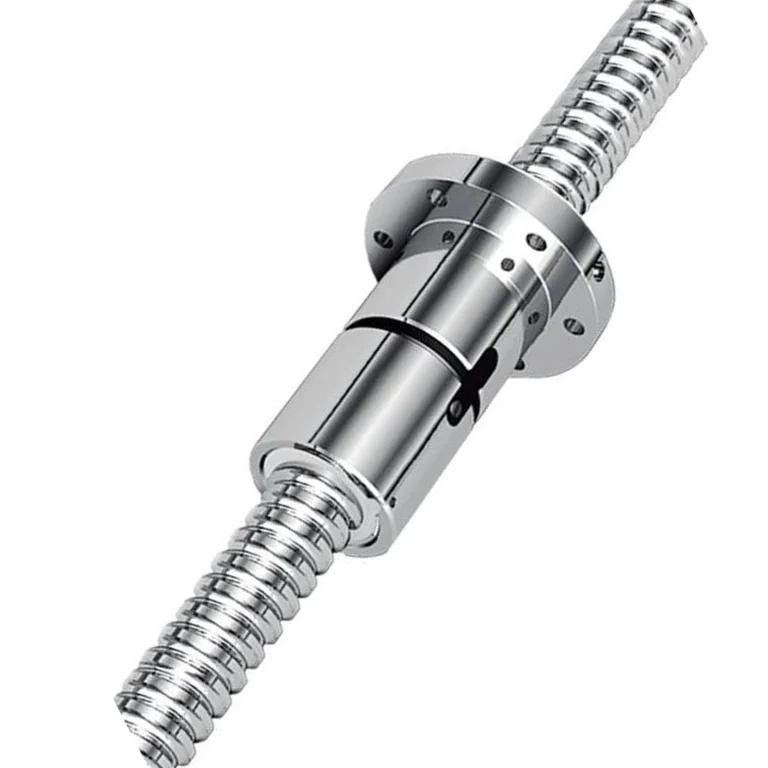
The self-locking capability in linear actuators is achieved through the mechanical design of the lead screw or worm gear system. When the screw thread angle is shallower than the friction angle of the materials used, the load creates friction that prevents backward movement—this is the principle that enables static self-locking.
Table of Contents
Why Static Self-Locking Force Matters
Safety Critical Applications
In many industrial and commercial applications, unexpected actuator movement during power loss can lead to serious safety hazards. Self-locking actuators provide:
Position Integrity: Maintains exact position when power is disconnected
Fail-Safe Operation: No unintended movement during system failures
Energy Efficiency: No power required to hold position
Common Applications
Static self-locking linear actuators are essential in:
Application
Why Self-Locking Matters
Medical Equipment
Patient safety during power failures
Industrial Automation
Prevents process disruption
Solar Tracking Systems
Maintains optimal panel angle
Agricultural Equipment
Reliable positioning in remote locations
Aerospace Components
Critical safety requirements
Understanding Force Specifications
Key Terminology
When evaluating linear actuators for self-locking capability, understanding these specifications is crucial:
Static Holding Force: The maximum load the actuator can hold stationary without power
Dynamic Load Capacity: The maximum force while the actuator is in motion
Duty Cycle: The percentage of time the actuator can operate at full load
Force Calculation Example
Static Self-Locking Force = (Motor Torque × Efficiency × Gear Ratio) / Lead Screw Pitch
This calculation helps determine the holding capacity of a self-locking actuator system.
Types of Self-Locking Mechanisms
1. Lead Screw Self-Locking
The most common self-locking mechanism uses a lead screw with a shallow thread angle. This design inherently prevents backdriving when the motor is not energized.
2. Worm Gear Self-Locking
Worm gear systems provide excellent self-locking properties due to the high friction at the worm-gear interface. Once the worm stops rotating, the gear cannot drive the worm backward.
3. Brake-Integrated Designs
Some applications require additional holding force beyond what the screw mechanism provides. Integrated mechanical brakes offer enhanced position holding, though they add complexity and cost.
Selecting the Right Self-Locking Linear Actuator
Factors to Consider
Required Holding Force: Calculate the maximum load your application needs to hold
Stroke Length: Determine the extension distance required
Speed Requirements: Balance between speed and holding capacity
Environmental Conditions: Consider temperature, moisture, and dust exposure
Power Supply: Ensure compatibility with your available power source
Sizing Guidelines
A properly sized actuator should have a static holding force rating at least 1.5 to 2 times higher than the maximum expected load. This safety factor accounts for:
Dynamic loads during operation
Environmental factors
Long-term wear and degradation
Installation Best Practices
Mounting Considerations
Ensure parallel alignment between actuator and load path
Use appropriate mounting hardware rated for expected loads
Allow adequate clearance for full stroke extension
Consider vibration damping for dynamic applications
Electrical Connections
Proper wiring is essential for reliable self-locking operation:
Use appropriate gauge wiring for current requirements
Implement limit switches for end-of-travel protection
Consider manual override options for emergency situations
Maintenance and Durability
Extending Service Life
To maintain optimal self-locking performance:
Regular Lubrication: Keep lead screws and gears properly lubricated
Inspect for Wear: Check for signs of mechanical wear or damage
Environmental Protection: Use sealed units in harsh environments
Comparing Self-Locking vs Non-Self-Locking Actuators
Self-Locking Actuators
Advantages:
No power required to hold position
Safer for critical applications
Lower energy consumption
Considerations:
Typically slower speeds
Higher cost due to mechanical complexity
Less efficient for continuous cycling
Non-Self-Locking Actuators
Advantages:
Lower cost
Faster operation possible
Better for continuous back-and-forth motion
Considerations:
Requires external braking or power to hold position
Not suitable for safety-critical static positioning
Can a self-locking actuator move if the load exceeds its static holding force?
Yes. If the external load exceeds the rated Static Holding Force, the mechanical friction may be overcome, leading to “backdriving.” It is crucial to select an actuator with a safety factor of 1.5 to 2 times your maximum load.
Does self-locking eliminate the need for an electronic brake?
In most applications, yes. However, for high-vibration environments or safety-critical vertical lifts, an integrated mechanical or electronic brake is recommended to provide redundant holding power.
Does temperature affect the self-locking capability?
Yes. Temperature changes can affect the viscosity of the lubricant on the lead screw or worm gear, which slightly alters the friction coefficient. In extreme cold or heat, the self-locking reliability should be re-verified.
Why are high-speed actuators usually not self-locking?
High-speed actuators typically use steep screw thread angles (high pitch) to achieve velocity. These steep angles reduce friction, making them prone to backdriving compared to slow, shallow-angle screws.
Conclusion
Static self-locking force is a critical specification for applications requiring reliable position maintenance without continuous power consumption. Understanding the mechanics, proper selection criteria, and installation best practices ensures you choose the right linear actuator for your specific needs.
For more information about selecting the right linear actuator for your application, explore our 12V vs 24V Linear Actuator Guide or contact our technical team for personalized recommendations.
[Installation Guide for Linear Actuators] – Best practices for optimal performance
Get Expert Insights on Industrial Motion Control
Selecting the right electric linear actuator or lifting column is critical for your project's performance. As a professional Motion Control & Automation Manufacturer, our engineers help you customize load capacity, stroke length, and IP ratings based on your specific application. Share your technical requirements for a tailored solution.
ActuLift supports end-to-end customization, from structural design and stroke parameters to branding and casing finishes, helping you build a powerful brand identity.
Rapid Response & Prototyping
We understand the importance of speed in B2B procurement, utilizing optimized production workflows to ensure efficient responses from sample development to bulk delivery.
Stable Quality & Traceability
With ISO9001 quality assurance, every product—from material entry to final factory testing—is recorded in our electronic logs, ensuring high consistency in delivered goods.