T-Type Lead Screws in Linear Actuators: Complete Guide
Discover the engineering advantages of T-type (trapezoidal) lead screws in linear actuators. This guide covers their unique self-locking capabilities, high static load capacity, and why they are the preferred choice for safety-critical industrial and medical applications.
When selecting a linear actuator for your application, the type of transmission system inside the actuator determines its performance characteristics, safety features, and ideal use cases. Among the most common transmission technologies, trapezoidal lead screws—also known as T-type or ACME screws—stand out for their unique combination of self-locking capability, high load capacity, and cost-effectiveness.
This comprehensive guide explores how T-type lead screws work, their advantages and limitations, and why ActuLift implements this technology across their complete product lineup.
Table of Contents
What Are T-Type (Trapezoidal) Lead Screws?
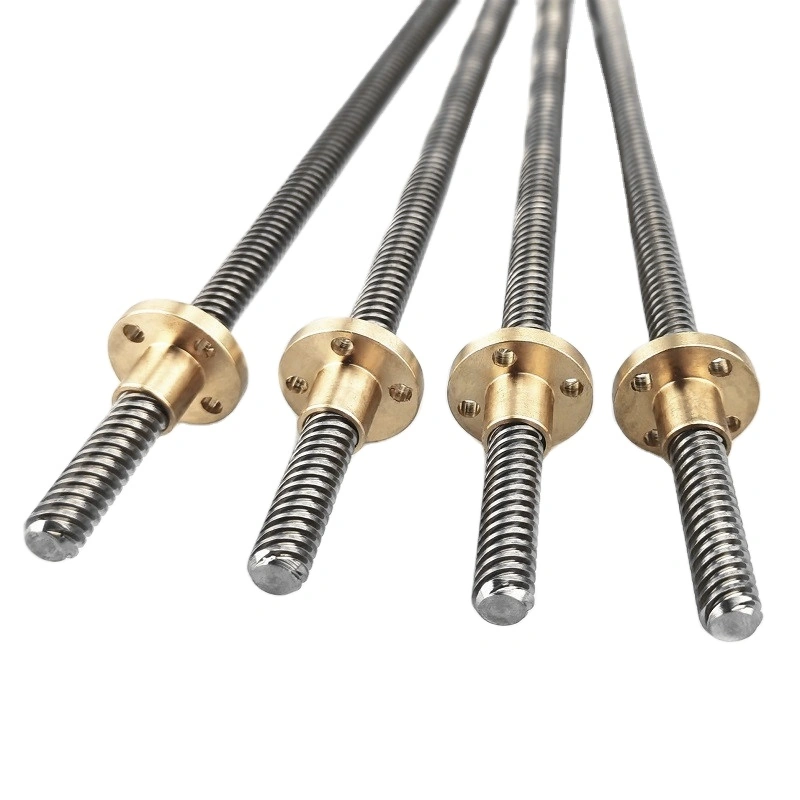
T-type lead screws feature a distinctive trapezoidal thread profile with a 30-degree flank angle on each side. This thread geometry—standardized in DIN 103 for trapezoidal threads—creates a flattened top and bottom with sloped sides, distinguishing it from the V-threads found in conventional fasteners.
The trapezoidal shape serves several critical engineering purposes:
Increased Contact Area: The flat thread surfaces provide larger bearing surfaces compared to V-threads, distributing loads more effectively across the entire thread engagement
Reduced Wedging Risk: The geometry prevents the wedging effect that can occur with V-threads under heavy compressive loads
Manufacturing Simplicity: The straightforward profile is relatively easy to machine to precise tolerances, contributing to reliability and cost efficiency
T-type lead screws are manufactured from various materials including stainless steel, aluminum, and carbon steel, each offering different combinations of strength, corrosion resistance, and weight characteristics.
How T-Type Lead Screws Work in Linear Actuators
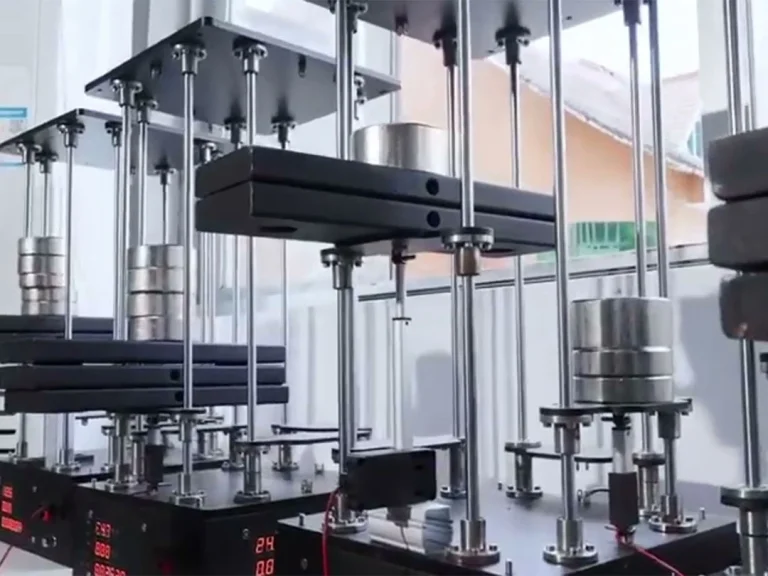
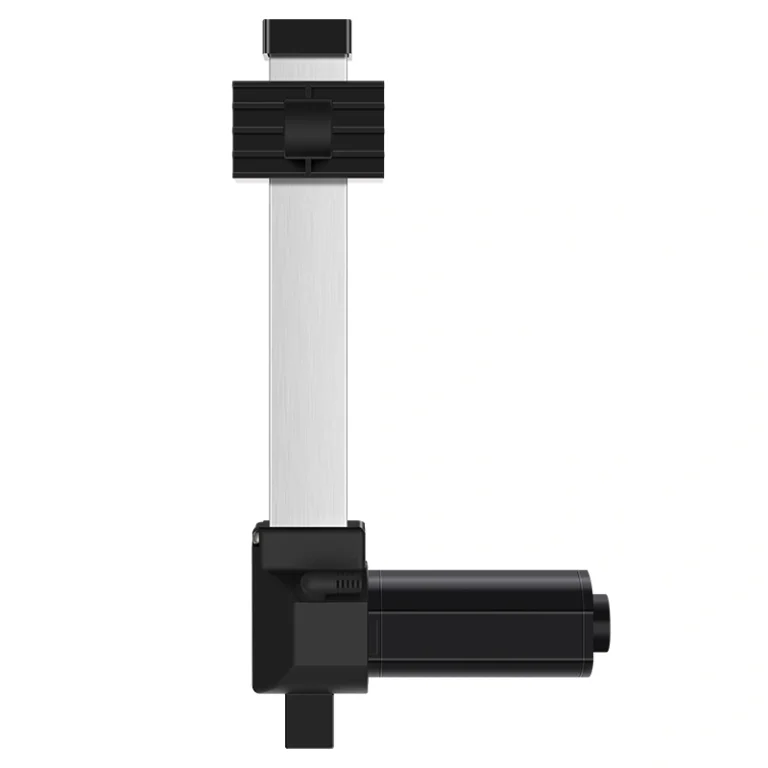
In a linear actuator, the T-type lead screw converts rotational motor motion into linear motion. When the motor rotates the screw shaft, the nut engaged with the threads moves along the spindle, pushing or pulling the actuator’s output shaft.
The working principle relies on the helical thread geometry:
Rotational Input: An electric motor (AC or DC) drives the lead screw shaft
Thread Engagement: The nut rides along the helical threads
Linear Output: Rotational motion becomes linear displacement
Force Transmission: The mechanical advantage of the thread multiplies input torque into linear force
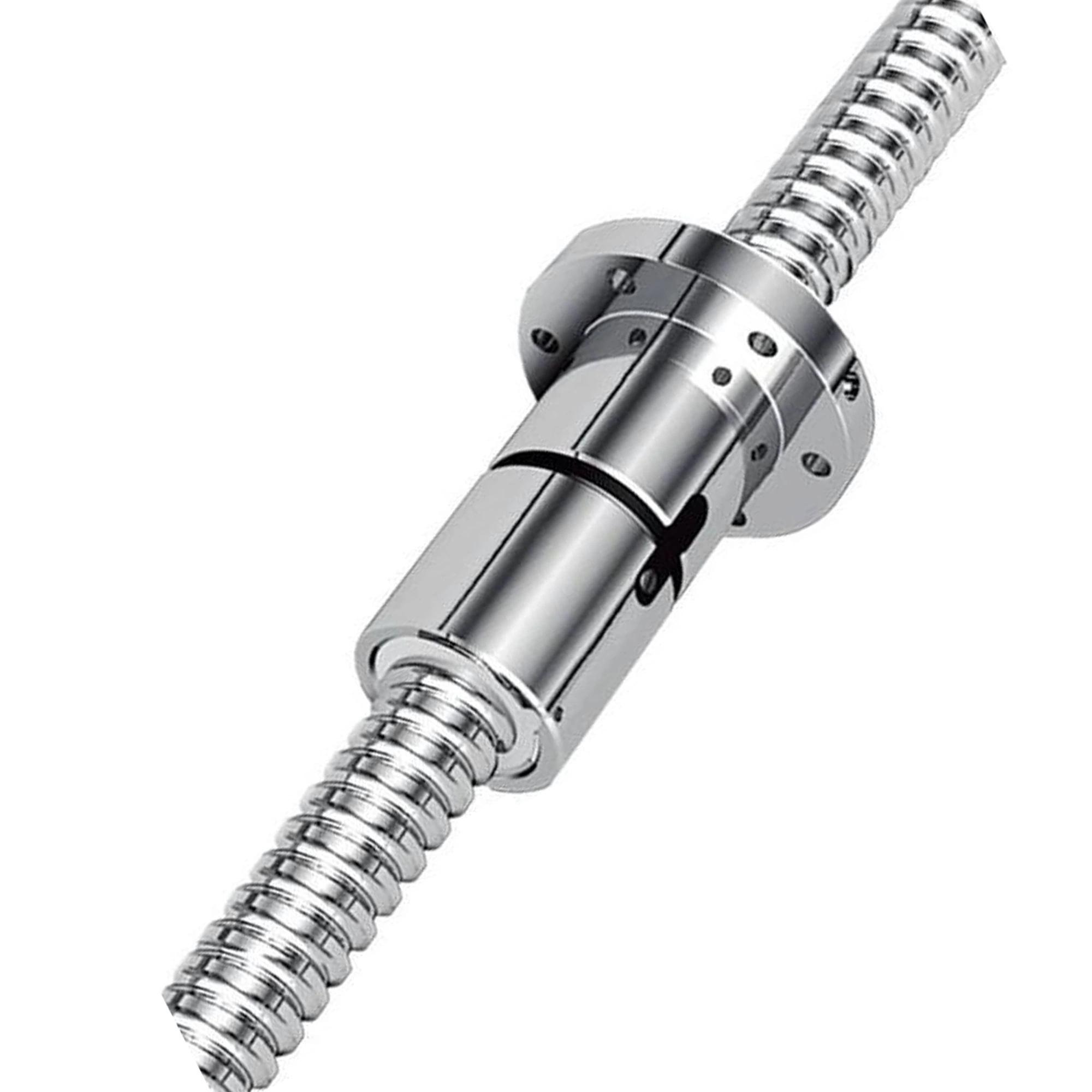
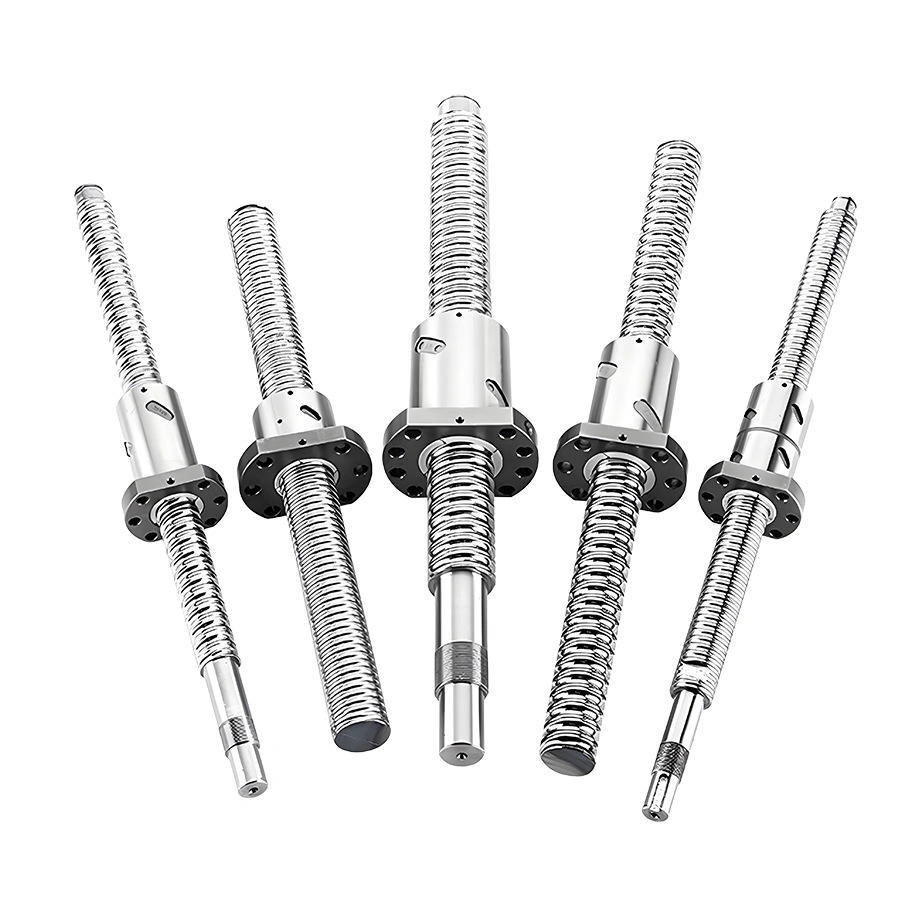
The efficiency of this conversion depends on several factors: thread lead, pitch, friction coefficient between the screw and nut materials, and lubrication conditions. Unlike ball screws that use rolling elements, T-type lead screws operate through sliding friction between the screw threads and the nut interior.
Self-Locking Mechanism: The Key Advantage
One of the most significant characteristics of T-type lead screws is their mechanical self-locking capability—a property that makes them indispensable for safety-critical applications.
Understanding Self-Locking
Self-locking means the lead screw maintains its position when rotational force is removed. The load cannot cause the screw to rotate backward, even without external braking mechanisms. This occurs due to the friction inherent in the sliding contact between the trapezoidal threads.
The self-locking condition is determined by the relationship between the lead angle and the friction angle:
Lead Angle: The slope of the helix, determined by thread pitch and diameter
Friction Angle: Determined by the coefficient of friction between nut and screw materials
When the lead angle is smaller than the friction angle—typically requiring a lead angle below 4.5 degrees—self-locking is guaranteed. This is a fundamental mechanical property, not an optional feature.
Why Self-Locking Matters
For applications where the actuator must hold position without continuous power consumption—or where unexpected backdriving could create safety hazards—self-locking is essential:
Power Failure Safety: If power is cut, the actuator holds its position without the load dropping
Energy Efficiency: No energy required to maintain position in static applications
Simpler Control Systems: No need for brake mechanisms or continuous position feedback
Vertical Application Suitability: Ideal for lifting and lowering operations where loads must be held steady
This self-locking capability is the primary reason many engineers specify T-type lead screws over ball screws for safety-critical positioning applications.
Load-Bearing Capacity: T-Type vs. Ball Screws
Understanding the load characteristics of different screw technologies is essential for proper application selection.
Static vs. Dynamic Load Capacity
T-type lead screws typically exhibit static load capacities two to three times higher than their dynamic load ratings. Static load refers to the maximum force the screw can hold without moving, while dynamic load relates to the force during active motion.
This significant difference exists because moving loads create wear, vibration, and additional stresses that reduce capacity during operation.
Comparative Analysis
Characteristic
T-Type Lead Screw
Ball Screw
Typical Efficiency
30-60%
90%+
Self-Locking
Yes (guaranteed)
No (requires brake)
Static Load Capacity
Very High
Moderate
Dynamic Load Capacity
Moderate
Very High
Cost
Lower
Higher
Precision
Moderate (0.1-0.5mm)
High (0.01-0.02mm)
Speed Capability
Limited
Excellent
Why T-Type Screws Excel in Load Applications
The high static load capacity of T-type lead screws makes them ideal for:
Heavy Lifting: Industrial presses, lifts, and heavy machinery positioning
Vertical Movement: Applications where loads must be held against gravity
Force-Focused Applications: Where holding force matters more than speed or precision
The larger contact area between trapezoidal threads distributes loads across more surface area, reducing stress concentrations and enabling higher static load ratings.
Advantages of T-Type Lead Screws
1. Guaranteed Self-Locking
The mechanical self-locking property is inherent to the design, not an optional add-on. This provides predictable, reliable position holding without additional components or control systems.
2. High Static Load Capacity
T-type lead screws can typically handle two to three times more static load than dynamic load, making them exceptional for holding and positioning heavy objects.
3. Cost-Effectiveness
The simpler manufacturing process and absence of precision ball tracks make T-type lead screws significantly more economical than ball screw alternatives. For applications not requiring ultra-high precision, this cost advantage is substantial.
4. Durability and Longevity
The robust thread profile resists deformation under heavy loads, and the straightforward design minimizes failure modes. With proper lubrication, T-type lead screws provide reliable service over extended periods.
5. Simple Maintenance
Without complex rolling elements or delicate ball recirculation systems, T-type lead screws are more forgiving of contamination and require less specialized maintenance.
6. Smooth Operation at Low Speeds
For applications requiring controlled, precise movement at lower speeds, T-type lead screws provide smooth, predictable motion without the potential for ball screw chatter or instability at low velocities.
Limitations and Considerations
Lower Efficiency
The sliding friction that enables self-locking also reduces efficiency to approximately 30-60%, compared to 90%+ for ball screws. This means:
More input power required for the same output force
More heat generation during operation
Higher energy consumption for continuous cycling applications
Limited Speed and Precision
T-type lead screws are not designed for high-speed operation. Maximum speeds typically remain below 100mm/s, and positioning accuracy is generally in the 0.1-0.5mm range—suitable for many industrial applications but not for precision machining or nanotechnology.
Higher Friction and Wear
The sliding contact creates more friction than rolling elements, potentially leading to faster wear in high-cycle applications. Proper lubrication is essential for maximizing service life.
Backlash Considerations
Thread clearance and wear can introduce backlash (play) over time. For applications requiring minimal backlash, periodic adjustment or maintenance may be necessary.
Applications Where T-Type Lead Screws Excel
T-type lead screws are the preferred choice for numerous applications where their unique combination of characteristics provides optimal performance.
Industrial Lifting Systems
Heavy-duty lifting platforms, scissor lifts, and industrial presses benefit from the high static load capacity and self-locking capability. Loads can be held securely at any position without continuous power consumption or brake systems.
TV Lifts and Home Theater Equipment
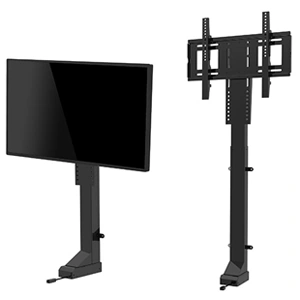
The self-locking feature is critical for television lifts, projector lifts, and motorized mounting systems. When power is removed, the screen or projector stays precisely where positioned—no unexpected movement or safety concerns.
Standing Desks and Ergonomic Furniture
Adjustable-height workstations require reliable position holding under varying loads. T-type lead screws provide smooth, quiet operation with secure position locking at any height setting.
Medical and Healthcare Equipment
Hospital beds, patient lifts, and medical imaging equipment require fail-safe position holding. The self-locking characteristic ensures patient safety even during power failures.
Agricultural and Outdoor Machinery
The durability and cost-effectiveness of T-type lead screws make them suitable for agricultural equipment, outdoor automated systems, and applications where precision requirements are moderate but reliability is essential.
Industrial Automation
For automated systems requiring reliable positioning with moderate precision requirements, T-type lead screws offer an economical solution that integrates easily with standard motor controls.
Why ActuLift Uses T-Type Lead Screws Across Product Lines
ActuLift has strategically implemented T-type lead screws throughout their complete product portfolio, and this choice reflects deliberate engineering philosophy.
Prioritizing Safety Through Self-Locking
The self-locking characteristic provides inherent safety for end users. Whether in a medical device, industrial press, or consumer product, the ability to hold position without power failure is a critical safety feature that cannot be compromised.
Optimizing for Real-World Applications
Many real-world applications don’t require the ultra-high precision or speed that ball screws provide. For applications where holding force, reliability, and cost-effectiveness matter more than extreme precision, T-type lead screws deliver optimal value.
Comprehensive Product Range
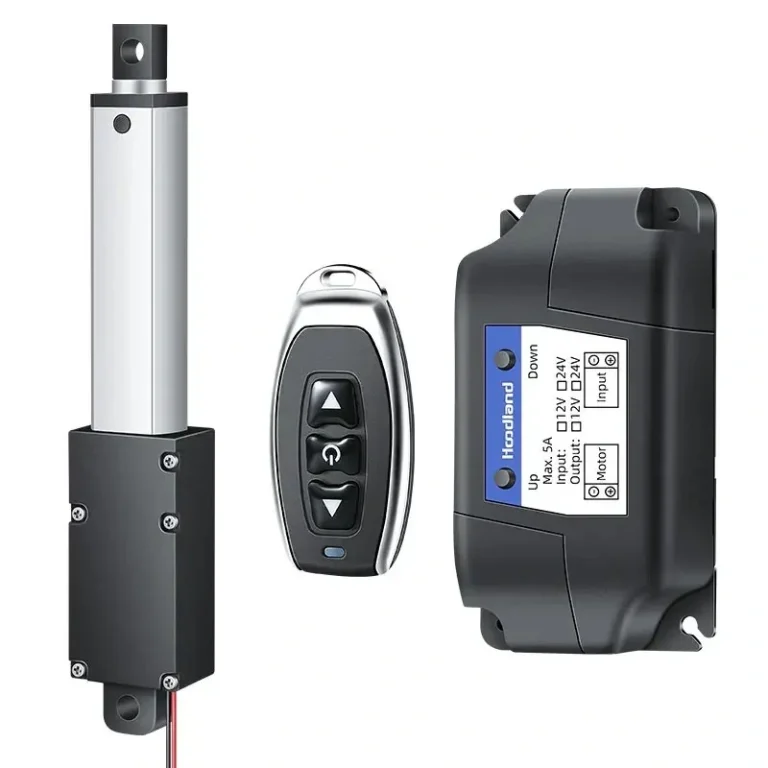
ActuLift offers 12V Linear Actuators and 24V Linear Actuators with T-type lead screws, providing solutions for both consumer and industrial voltage requirements. Their Heavy Duty Linear Actuators leverage the high static load capacity for demanding applications, while more compact models handle lighter loads with equal reliability.
Cost Efficiency for Customers
By using a consistent transmission technology across product lines, ActuLift can offer cost-effective solutions without sacrificing quality or reliability. This standardization also simplifies selection, installation, and maintenance for customers.
Reliability-Focused Engineering
The robust simplicity of T-type lead screws means fewer potential failure modes, easier troubleshooting, and more predictable long-term performance. For customers requiring Industrial Automation solutions, this reliability is essential.
Choosing the Right Linear Actuator
When evaluating linear actuators for your application, consider these factors:
Choose T-Type Lead Screw Actuators When:
Self-locking is required for safety or convenience
Static load-holding is more important than dynamic speed
Cost-effectiveness is a priority
Positioning precision of 0.1mm or greater is acceptable
The application involves vertical loads
Simplicity and reliability are valued
Consider Ball Screw Actuators When:
Maximum efficiency is critical (>90%)
Ultra-high precision is required (<0.05mm)
High-speed operation is necessary
The application allows for active braking systems
For most applications involving human interaction, safety-critical positioning, or heavy loads, T-type lead screw actuators provide the optimal balance of performance, safety, and value.
What is the main difference between a T-type lead screw and a ball screw?
The primary difference lies in friction and efficiency. T-type screws use sliding friction, which allows for inherent self-locking, while ball screws use rolling ball bearings for high efficiency (>90%) but require external brakes to hold position.
Why is the 30-degree flank angle important in trapezoidal threads?
The 30-degree angle (standardized in DIN 103) provides a larger contact surface area, which helps distribute heavy loads more evenly and reduces the risk of thread “wedging” under high pressure.
Do T-type lead screws require frequent maintenance?
They are relatively low-maintenance due to their simple design. However, because they rely on sliding friction, regular lubrication is essential to reduce wear and prevent heat buildup during high-cycle operations.
Can T-type lead screws achieve high speeds?
Generally, no. Due to the heat generated by sliding friction, they are best suited for speeds below 100mm/s. For high-speed applications, ball screws or belt drives are typically preferred.
Conclusion
T-type (trapezoidal) lead screws represent a mature, reliable transmission technology that excels in applications requiring self-locking capability, high static load capacity, and cost-effectiveness. While ball screws offer higher efficiency and precision for specialized applications, the inherent safety features and robust simplicity of T-type lead screws make them the preferred choice for countless industrial, commercial, and consumer applications.
ActuLift’s commitment to T-type lead screw technology across their Linear Actuators product line reflects a focus on safety, reliability, and customer value. By leveraging the proven advantages of trapezoidal lead screws, they deliver actuators that perform reliably in real-world conditions while providing the peace of mind that comes from inherent self-locking position holding.
Whether you’re designing a medical device, industrial machine, or consumer product, understanding the strengths of T-type lead screws helps you select the right actuator technology for your specific requirements.
Sources
ISO 2901/DIN 103 Standards: Technical specifications for metric trapezoidal screw threads, defining the geometry used in ActuLift actuators.
Selecting the right electric linear actuator or lifting column is critical for your project's performance. As a professional Motion Control & Automation Manufacturer, our engineers help you customize load capacity, stroke length, and IP ratings based on your specific application. Share your technical requirements for a tailored solution.
ActuLift supports end-to-end customization, from structural design and stroke parameters to branding and casing finishes, helping you build a powerful brand identity.
Rapid Response & Prototyping
We understand the importance of speed in B2B procurement, utilizing optimized production workflows to ensure efficient responses from sample development to bulk delivery.
Stable Quality & Traceability
With ISO9001 quality assurance, every product—from material entry to final factory testing—is recorded in our electronic logs, ensuring high consistency in delivered goods.